
Greetings and salutations, everyone; yes, once again it is I, Mani the purebred border collie, filling in for the guy I live with, and here today to talk about the three out of four.
You may remember me from such posts as “The Box”, among so many, many others.
Here I am in a characteristic pose.
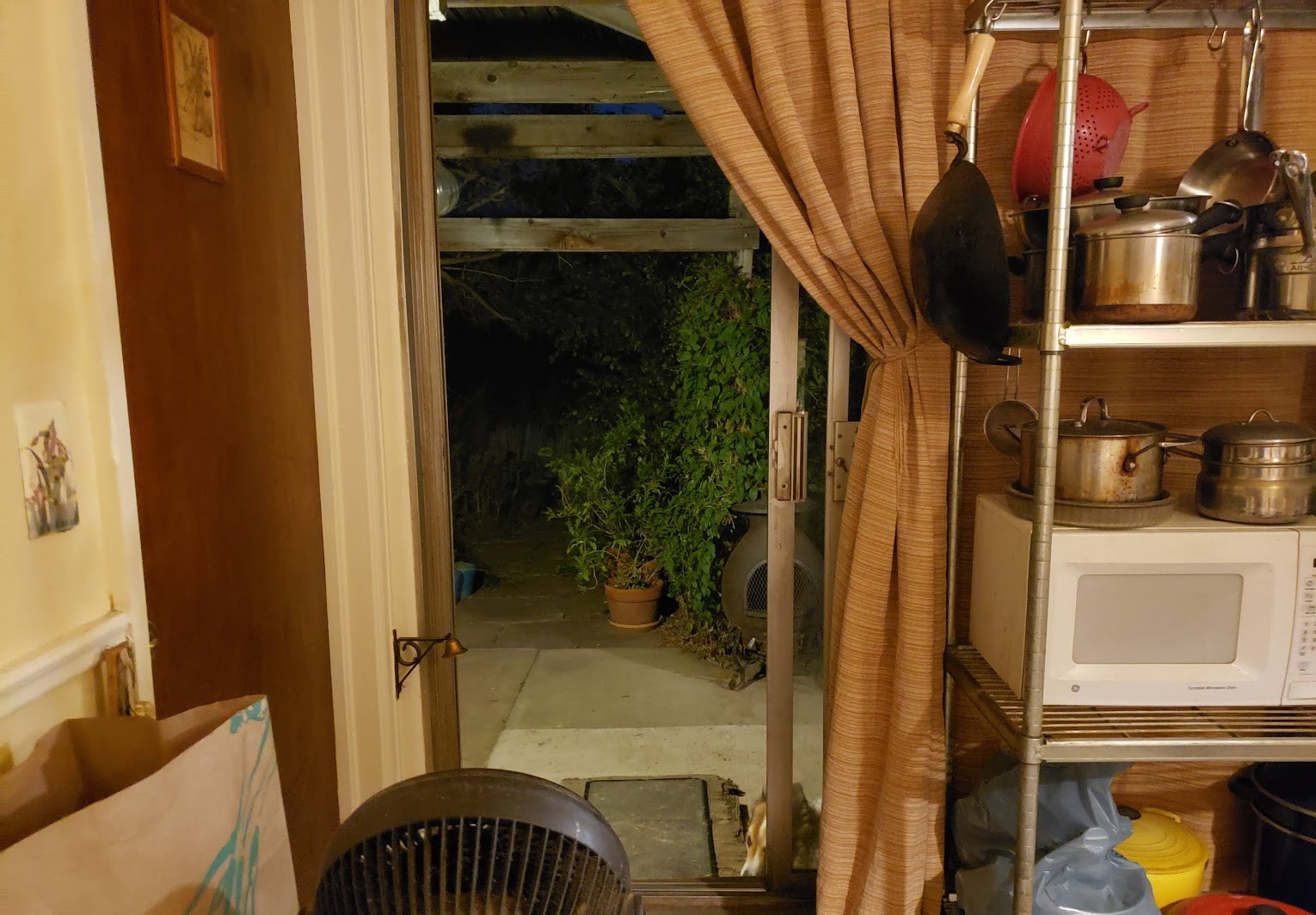 It’s been so hot here that the best time for me is in the evening, lounging on the patio rug.
We’ve had no rain (ten drops almost every day don’t count) for twenty-eight days now, and the guy I live with isn’t happy about this. He has been watering, though; much more than he usually does.
The “blazing star” (Mentzelia decapetala) isn’t as tall as some plants have been, but you can see it still has a lot of buds.
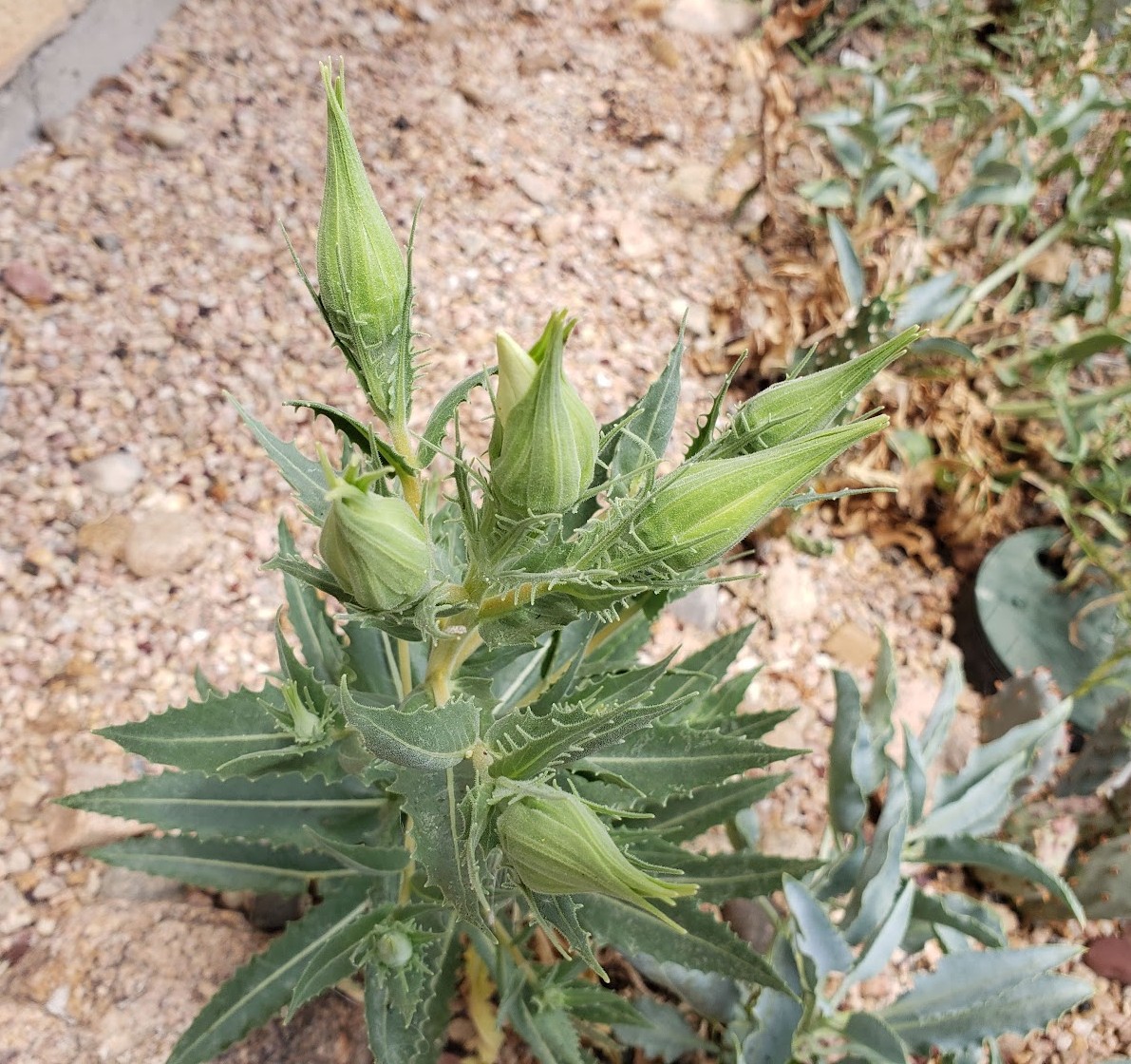 It flowers at night and this was the best picture he could get last night. Tonight’s pictures weren’t as good.
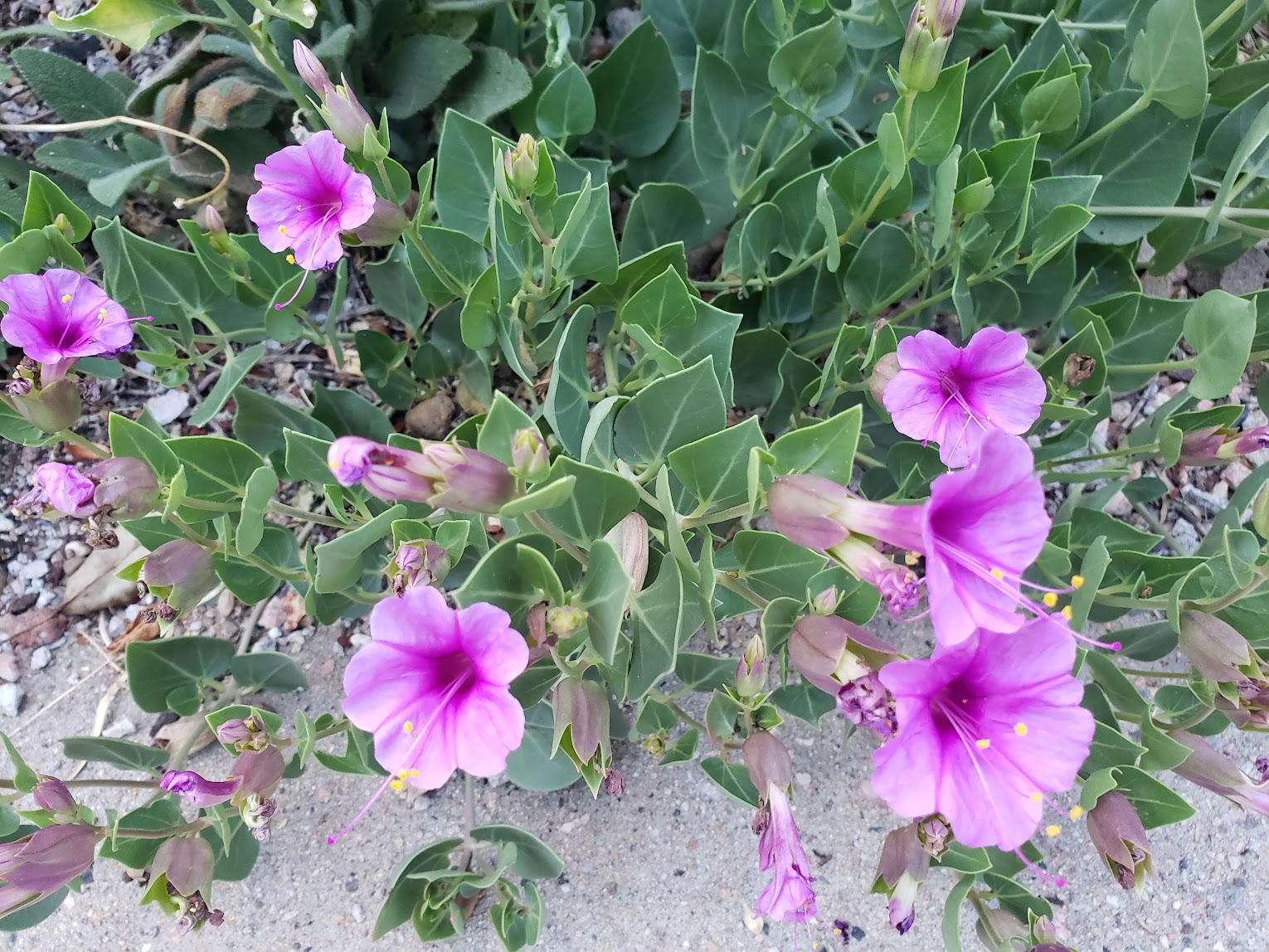
 He took a picture of the Colorado four o’clock, Mirabilis multiflora, as we started on my evening walk.
 We’ve been seeing a lot of hummingbirds in our garden lately. I mean a whole lot.
The guy I live with had a feeder out for most of the summer, but the last time he went to clean and refill it, it was full of dead giant ants, which made him feel bad, so he decided not to put up the feeder any more.
Because of all the watering, we have lots of plants in flower that hummingbirds like.
The most common hummingbird here is the broadtailed, Selasphorus platycercus, and if the guy I live with had had his phone camera on he would have gotten a nice close-up picture of one just today.
We also have black-chinned hummingbirds, Archilochus alexandri; they like to dive-bomb the guy I live with, and me, sometimes.
You can see a picture of a black-chinned on the post “How To Avoid Gardening”.
Also today, since he obviously didn’t learn his lesson (he is kind of old), the guy I live with was standing around looking at some agastaches that needed watering, and a broad-tailed hummingbird came to look at the flowers, and it was chased away by a rufous hummingbird, Selasphorus rufus. The rufus are kind of bossy and territorial but we don’t see them that often.
The only one we haven’t seen, and the guy I live with thinks he’s only seen one once or twice, is the calliope hummingbirds, Selasphorus calliope.
This is the smallest bird in North America and we would only see one when it was on its migration south to Mexico.
The migration is probably starting about now, which may explain why we’re seeing so many hummingbirds (we do have an open bar for them), so maybe we’ll see a calliope.
These are the only pictures we have for now.
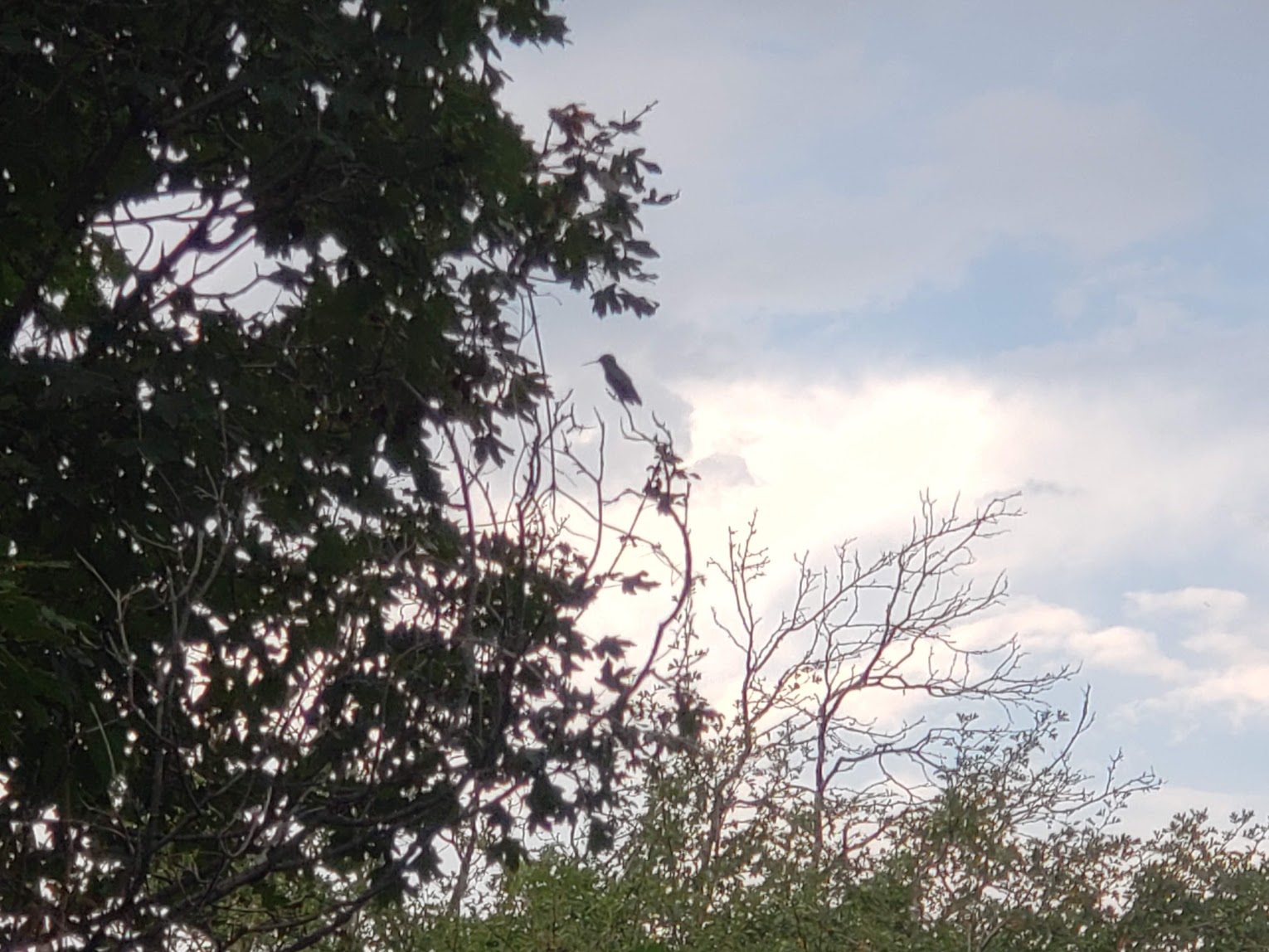
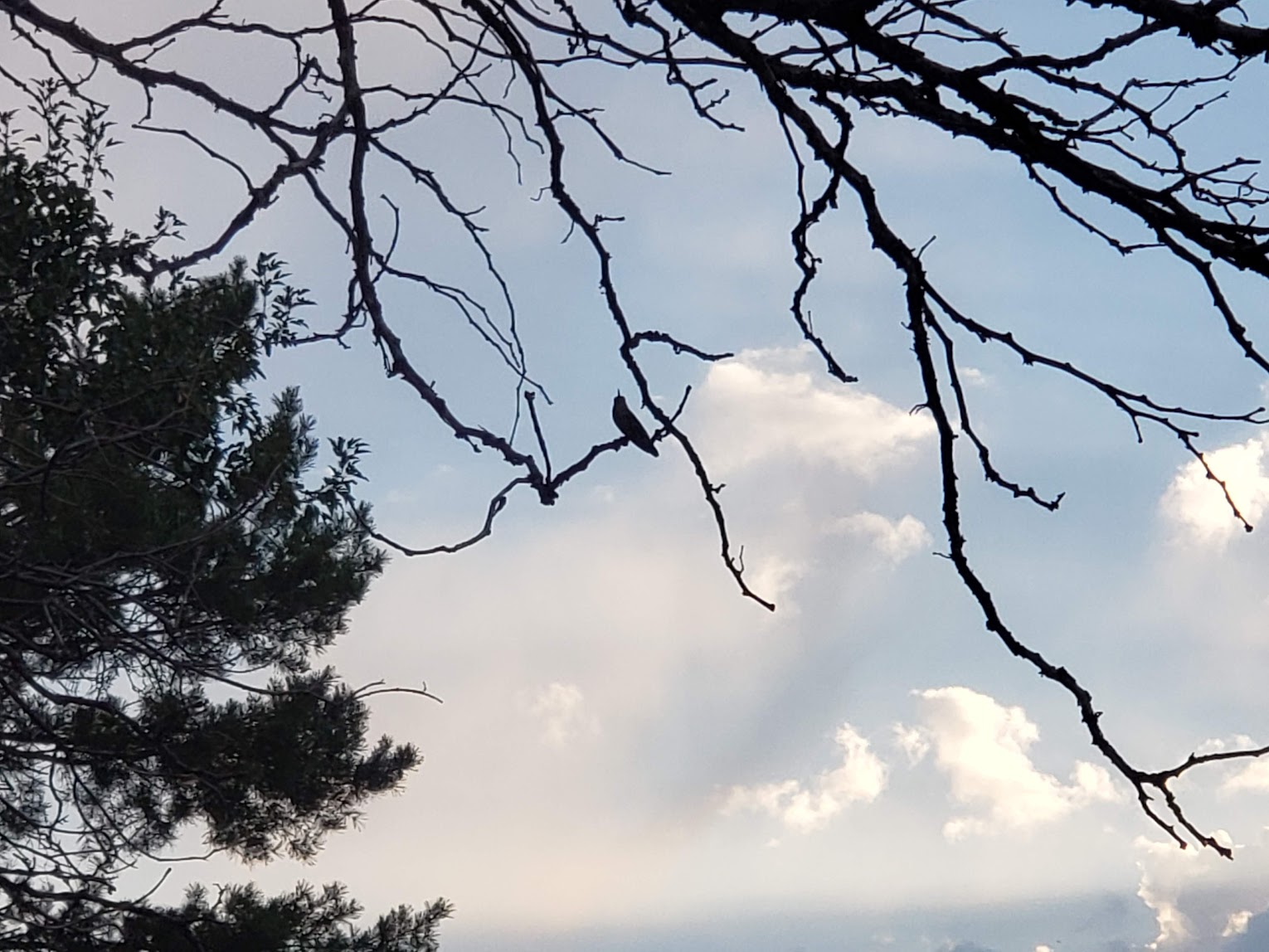 And that’s all I have for today. We’ve seen three out of the four possible species of hummingbird that come to our garden.
That almost makes up for how hot and dry it is.
Until next time, then.

 the miserable gardener
Mirabilis multiflora is a new one to me. Its foliage is very different from the common four o’clock. Some sort of blazing star is native here. Actually, a few species are native here or near here. I never see them though, probably because they are nocturnal. I should be more observant.
The guy I live with says that the four o’clock is also native to California. It makes a very large, but not tall, plant. There was another one, near the one pictured, which gave up because it mostly laid on the driveway and it probably got tired of the zillion-degree heat it was exposed to.
There are lots of mentzelias in the west. The one pictured has the largest flowers, but Mentzelia nuda is also very nice, found on deep sand on the Great Plains, including parts of the Denver metro area.
The common one on the west coast is M. lindleyi, yellow flowers, but there are some cool annuals too, difficult to grow, and a bunch of species with very small flowers probably only of interest to botanists.
Oh yes, (I just looked on Bonap.) the four o’clock is native to San Luis Obispo County and southward. I should have known that. I do not recognize it at all. I will if I see it now. I believe that some sort of blazing star was native where I went to school, but only because I think I remember that a professor pointed it out. There were many species that we learned about but never saw again afterward, probably because they are not practical for home gardens. If they are difficult to grow, that would be a good reason for them to not be commonly available from nurseries that grow native species. They grow mostly what they can, and what they can sell.
The guy I live with says Calflora has better maps.
There’s also another mirabilis, M. longiflora, which is hardy here, but we don’t grow it.
It’s right on time for the bossy little Rufous hummingbirds to start heading south from the PNW. You’re lucky you have 4 types, we only have Anna’s and Rufous, although I think once I saw a black- chinned.
The guy I live with says the black-chinned reminds him of Gorey’s Doubtful Guest. And they like to fly up high and then dive-bomb us and the flowers.
Three out of four is awfully good, Mani. We see broadtails where I live, and if another species has visited, I’ve missed it. One rested for a good long while on a tomato cage last week, which was fun to see.
I have also been watering. No rain more than several hundreds of an inch since June 6 in my garden.
The guy I live with says there’s something to be said for watering when you get no rain, especially if you want hummingbirds.
There are a lot of red-flowered salvias in the front garden (‘Raspberry Delight’, Salvia darcyi, ‘Windwalker’) that haven’t flowered much, or at all, because the front garden isn’t watered, so he decided to water those plants and he got a few flowers after that.
But it’s been so hot and dry it’s like the watering doesn’t take.
Hi Mani,
Tell TGYLW that a Calliope Hummingbird can easily be identified by a very short tail as well as size. In a melee of hummers, it helps to pick one out. We use the flat hummingbird feeders with a little well at the top where the hook goes in, that is to be filled with water. When the ants come down the hook they fall in and drown.
The local New Mexico Mirabelis is a light purple. I don’t grow it because it thrives at the Albuquerque Nature Center in the silty sand soil and spreads so much, making for a tedious fall cleanup. I’m a garden volunteer there.
Looking for rain here as well. Cheers.
The guy I live with says the male calliopes look like they’ve gotten into raspberry jam, but it’s not likely we’ll see one because it’s been so hot neither of us want to go outside.
We do mostly see hummingbirds later in the day when it isn’t so hot.
3 outta 4 iss grate Mani an Guy! 10 rain dropss purr day iss NOT GRATE!!! It has been a ruff Summer fore so many of us…..Wee keep hopin an purrayin fore rain fore youss’! Yore flowerss look guud. Mistur Guy iss doin guud with waterin….. ***nose bopss*** BellaDharma an ((hugss)) BellaSita Mum
Thanks. No drops of rain yesterday or today.
It’s hot, dry, with total cloud cover. If that sounds icky, it is.
Cloduy can bee guud to keep THE *hot* Sun away butt ouss’ need rain outta them cloudss two! So wee get it iss ‘icky’ Mani! 😉
Definitely icky.
Supurr ICKY Mani an Guy!! With Hue-midex it feelss like 84 F heer. Not bad butt still no rain eether…..where ISS THE rain?
We don’t know. The one thing it isn’t here is humid, though.
It feelss like allmost 90 F with hue-midex now Mani. BellaSita sat out for a while butt shee iss back innside now…
The guy I live with is not in favor of humidity, though dry air is hard on plants.
Wee keep purrayin fore RAIN Mani an Guy……fore yore plantss!
Thanks, but we expect nothing for all of next week.
CATFISH! Mee gonna get BellaSita to due a ‘rain dance’ fore youss’!
Thanks. The situation here seems a bit hopeless right now.
With 38 days until the official arrival day of autumn (and yes, we are most definitely counting!), I’m contemplating doing a raindance because it’s been so hot and dry. Hope you guys are able to stay cool this next 10 days which have no moisture forecast the last time I checked. No bueno.
The guy I live with says this is a total drag.
We have had worse summers, though, like 2002. One inch of precipitation in 11 months, but four inches in September of that year.
He also said he was ready for snow. Four inches of snow fell on September 3, 1961.
There was snow on the ground when he moved here in April of that year; first snow he’d ever seen.
I’m with the guy you live with, Mani and am also looking forward to snow. Bring on the sweaters!
If the guy I live with had his way, which he never does, it would rain every afternoon here until early November.
I’d second that emotion!
Our water bill is going to be high, but it’s better than letting everything dry to a crisp.
One out of eleven. Have only seen ruby-throated hummingbirds here in NE North Carolina over the years. There have been reports of eleven species being spotted in North Carolina but that is rare or exteremely rare. Jealous!
The guy I live with says eleven seems like a lot.
We aren’t in the native range of the calliope (that’s western Colorado), but we’re close enough to the foothills that we could see one when they migrate to Mexico, especially if rumors of our open bar get passed around.
“eleven seems like a lot.”
Yeah! We live along the “Atlantic Flyway” where neotropical’s migrate to their breeding grounds and I suspect that several, or maybe more, of the reported hummingbird sightings are from so called “vagrants”, and the reported sightings can be counted on one hand. Further West are the Blue Ridge mountains where other rare species might be uncommonly found.
I see.
The guy I live with said he was almost impaled by a crazed rufous just a few minutes ago.
Hummingbirds are so cool and curious. We get caliopes here from mid July onwards. Once the penstemon are blooming I know the hummers will be coming soon. We too have a hummingbird smorgasbord which encourages them to return year after year. Apparently once your garden is on their radar they will return reliably. I don’t bother with feeders anymore as I am not diligent enough to clean and refill them daily. Will send you some rain. Doesn’t seem to want to stop here. Mosquitoes are loving it though
Thanks; we could use some rain. Especially on the days when they predict rain and it looks like rain and nothing happens.
The guy I live with says that’s the problem with feeder; you have to empty, clean, and refill them every day when it’s hot.
He says he heard or read that hummingbirds born near feeders or lots of flowers remember the place, too.