
Greetings and salutations, everyone; yes, once again it is I, Mani the purebred border collie, filling in for the guy I live with, and here today to talk about the lights and some other stuff. You may remember me from such posts as “Cats In A Basket”, among so many, many others.
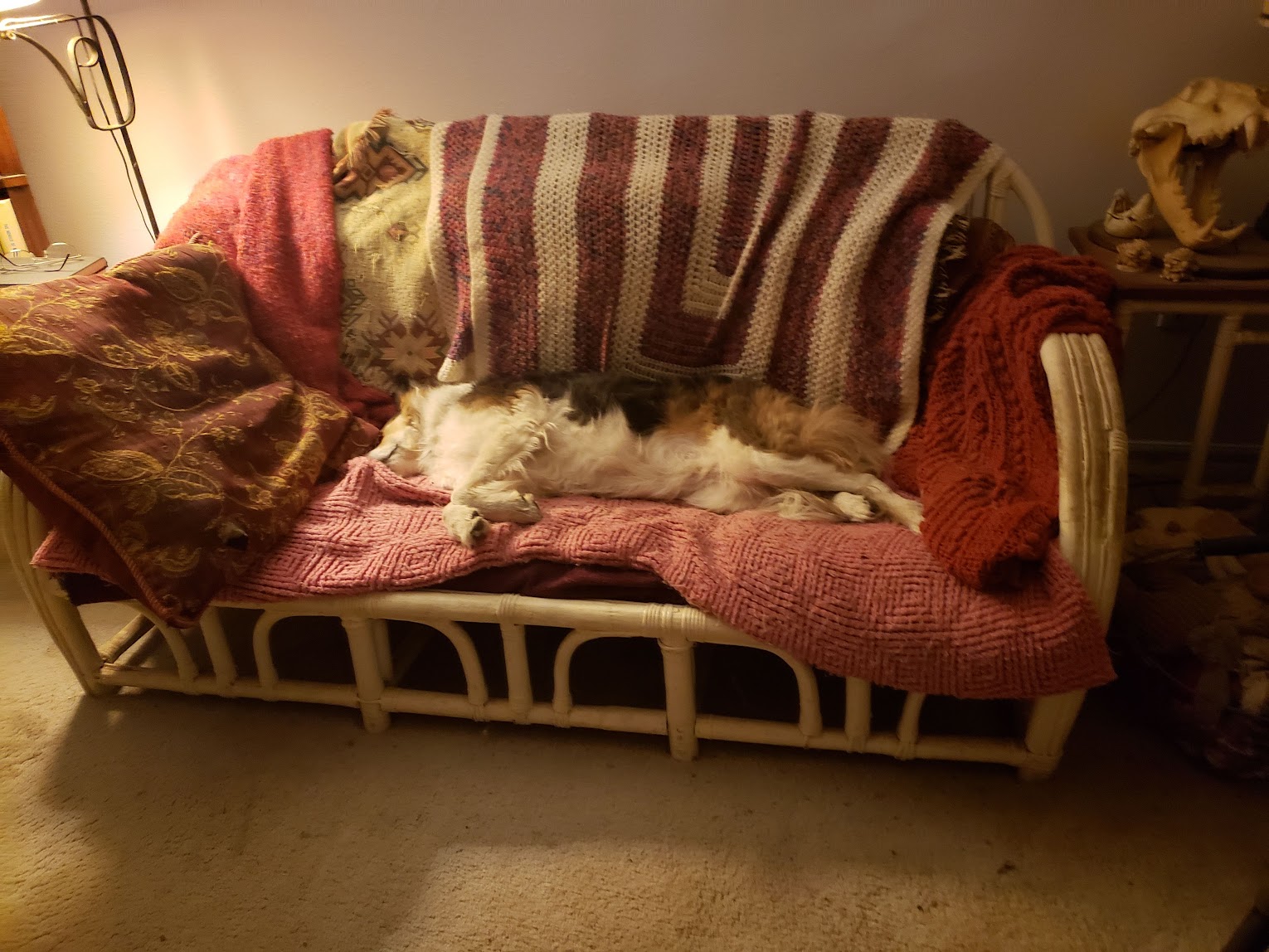
Here I am in a characteristic pose. Maybe not quite a pose.
This is one of my favorite games.
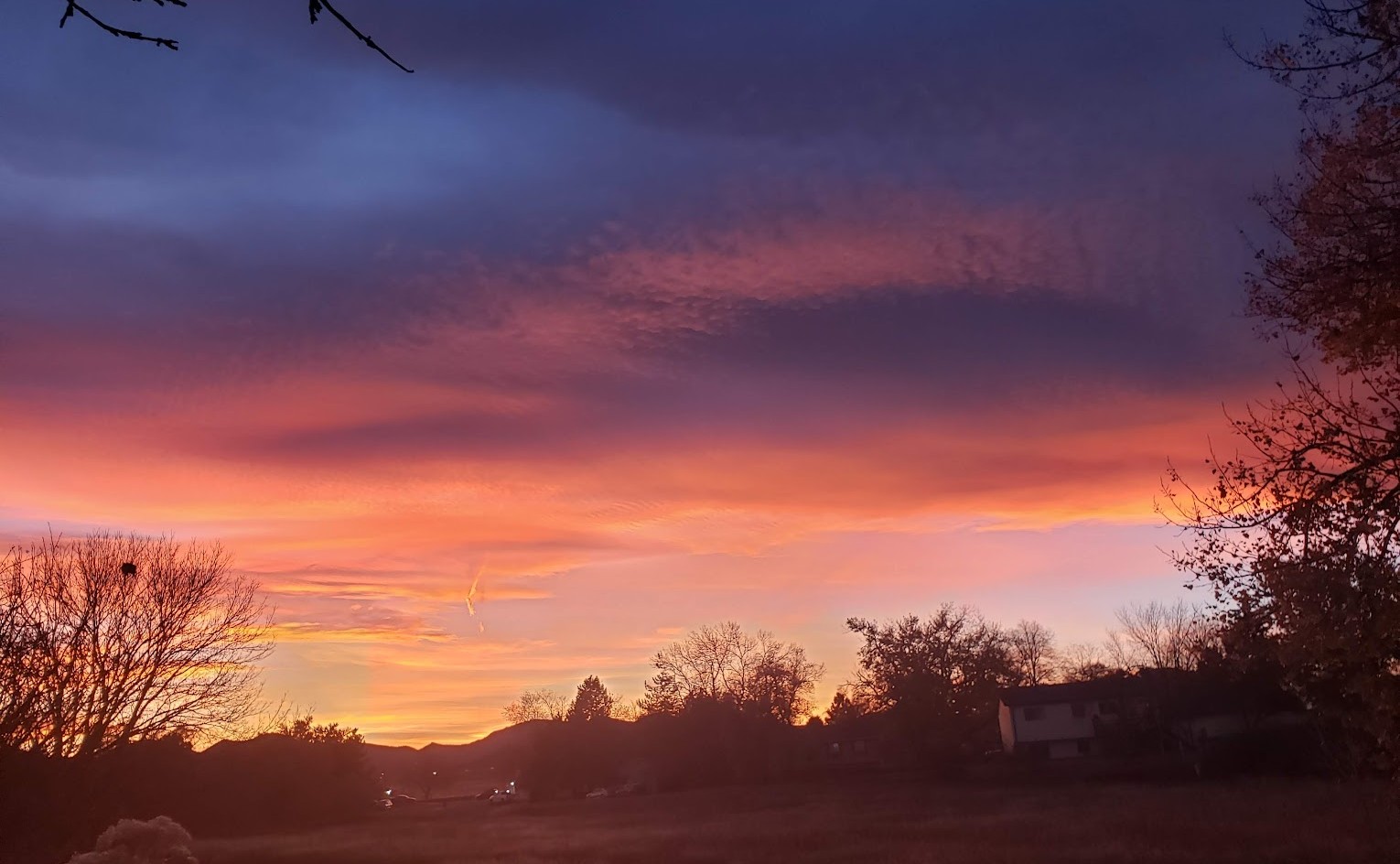
November is one of the best times for excellent sunsets here.
 The snowdrops are still flowering.
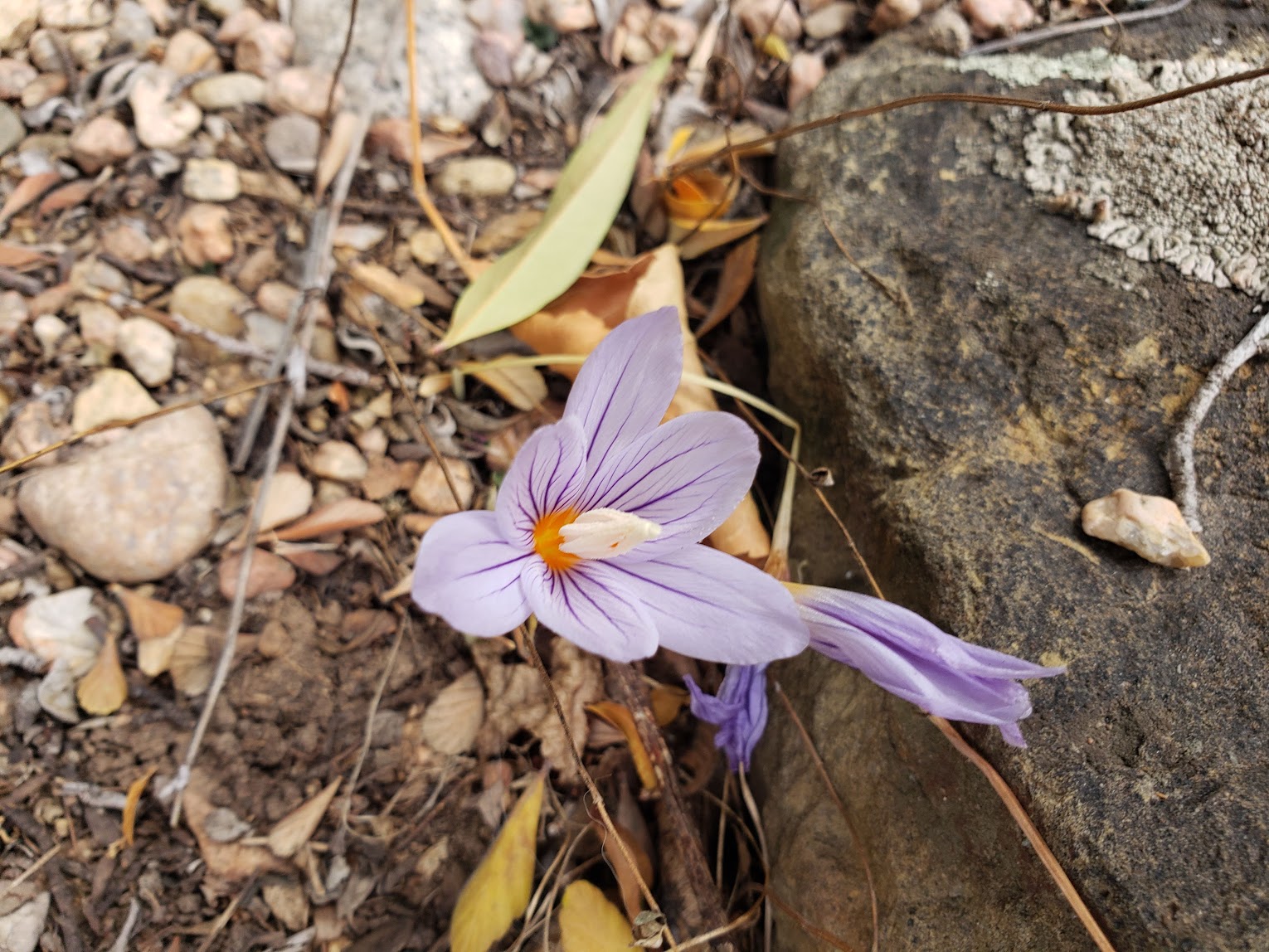
 And some of the sphaeralceas decided to flower again.
 Mainly, though, the theme here is fallen leaves, and the work the guy I live with has been doing.
There’s a maple in the garden here that doesn’t have much autumn color (the guy I live with has no idea what species it is); the leaves just fall, but they make a good backdrop to the dwarf conifers.
This is Pinus strobiformis ‘Coronado’, one the the late Jerry Morris’s conifers.
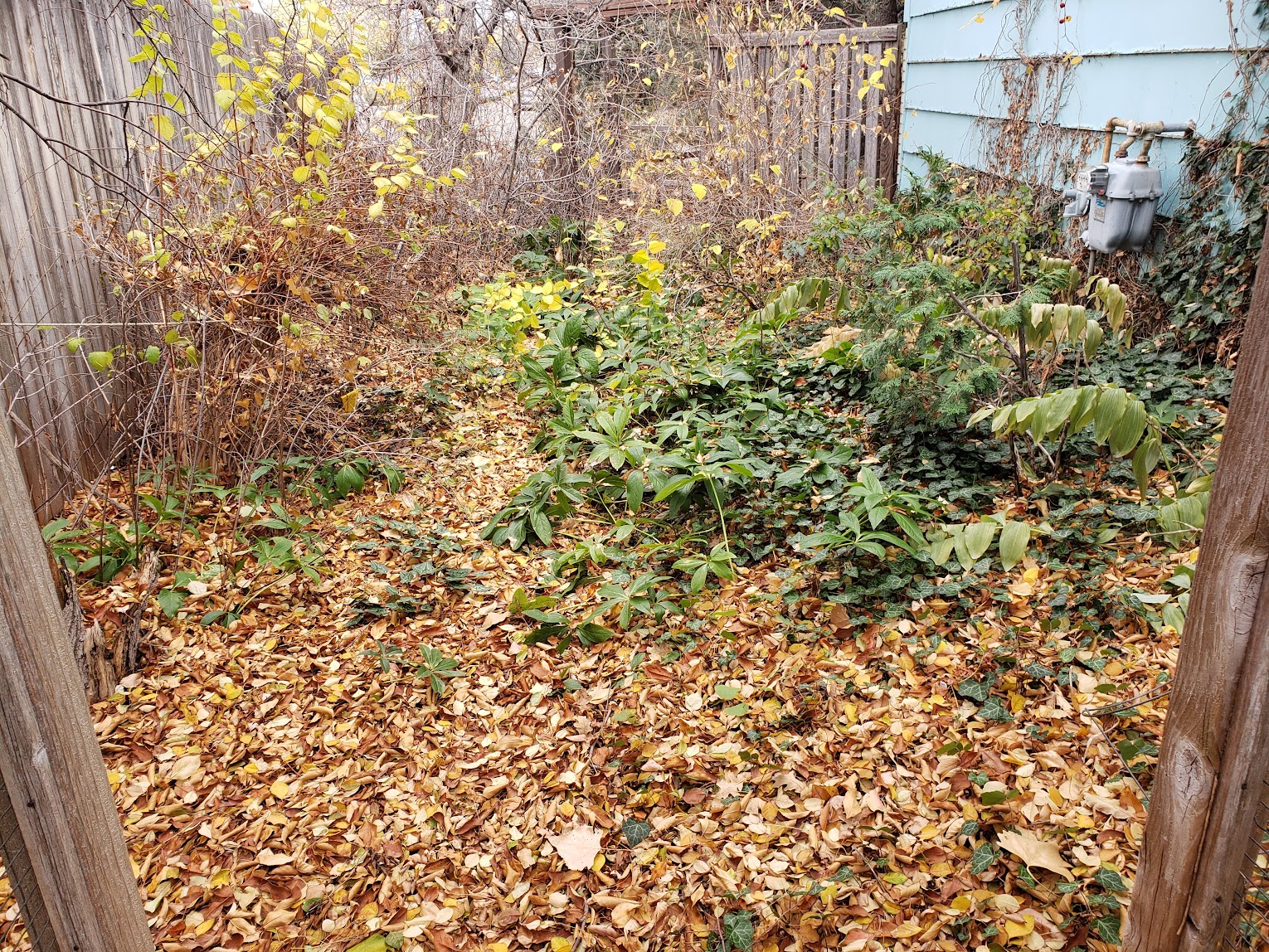
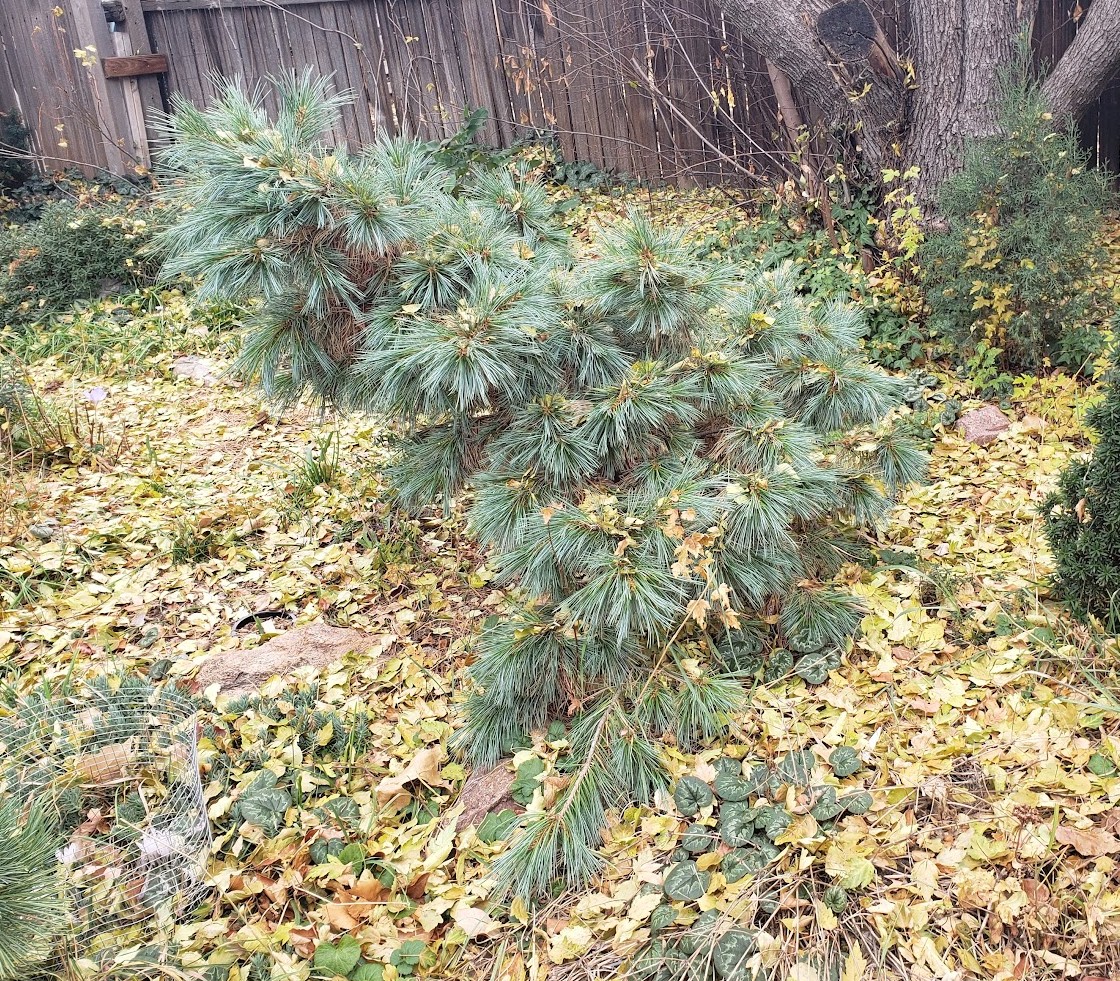 The enclosure is full of leaves, too. A lot of the leaves were raked into this little garden.
You may notice that more cedar slats were removed from the fence. The fence needs to be replaced (yes, I know…) so he made “the gesture” of removing the slats to make the low fences you’ll see in just a bit.

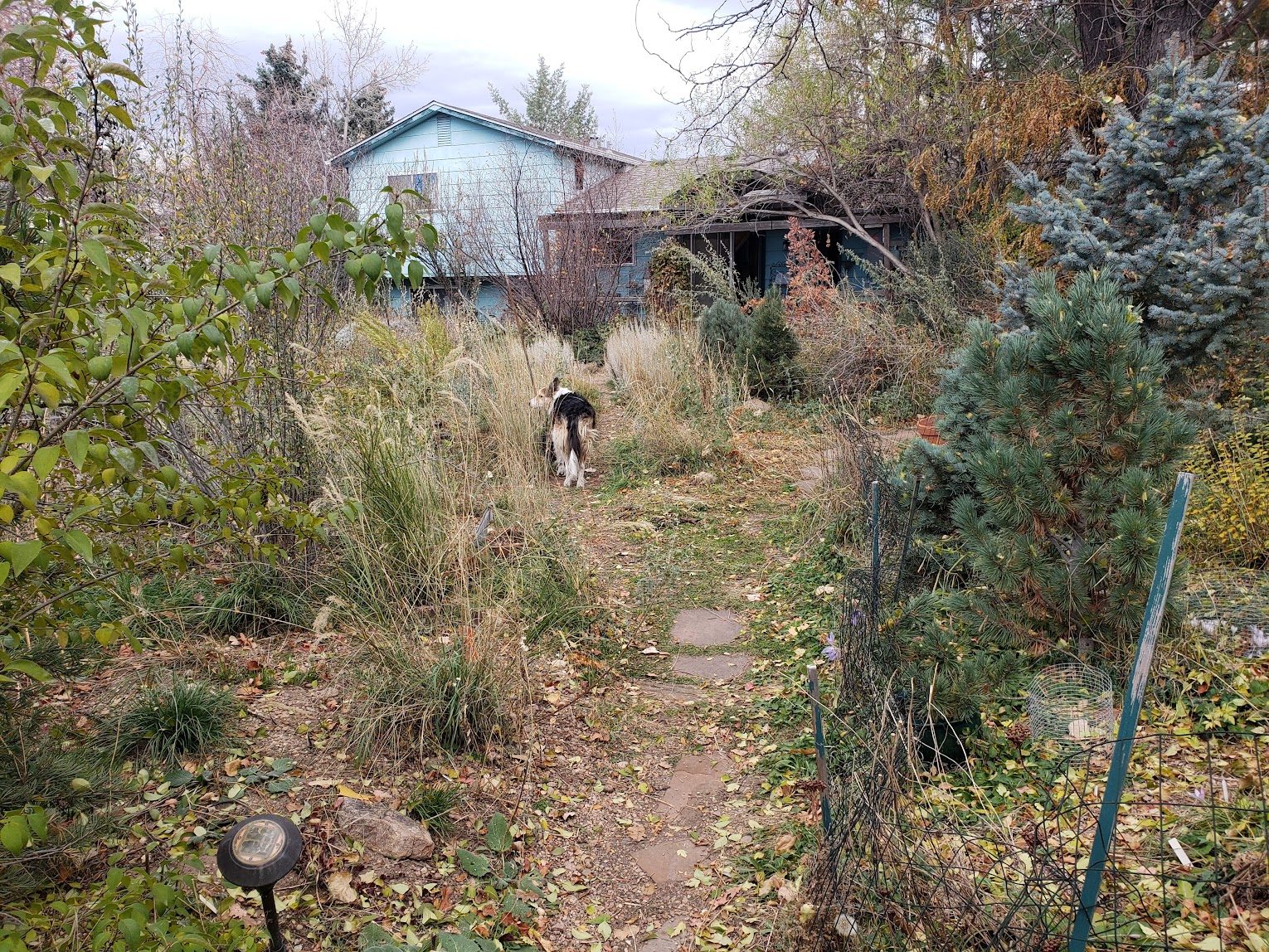
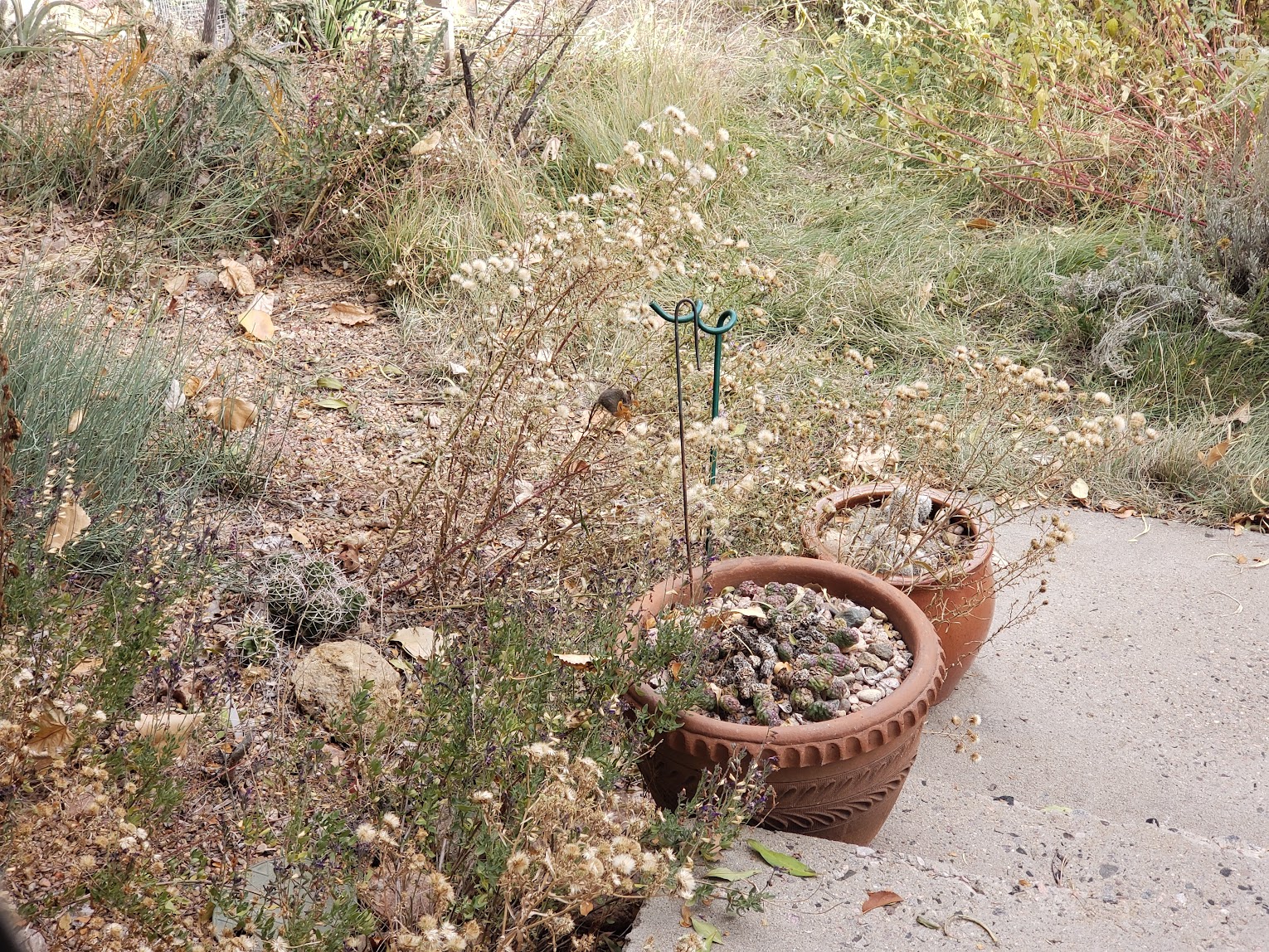
 The area behind the fence there is kind of brown and desolate now.
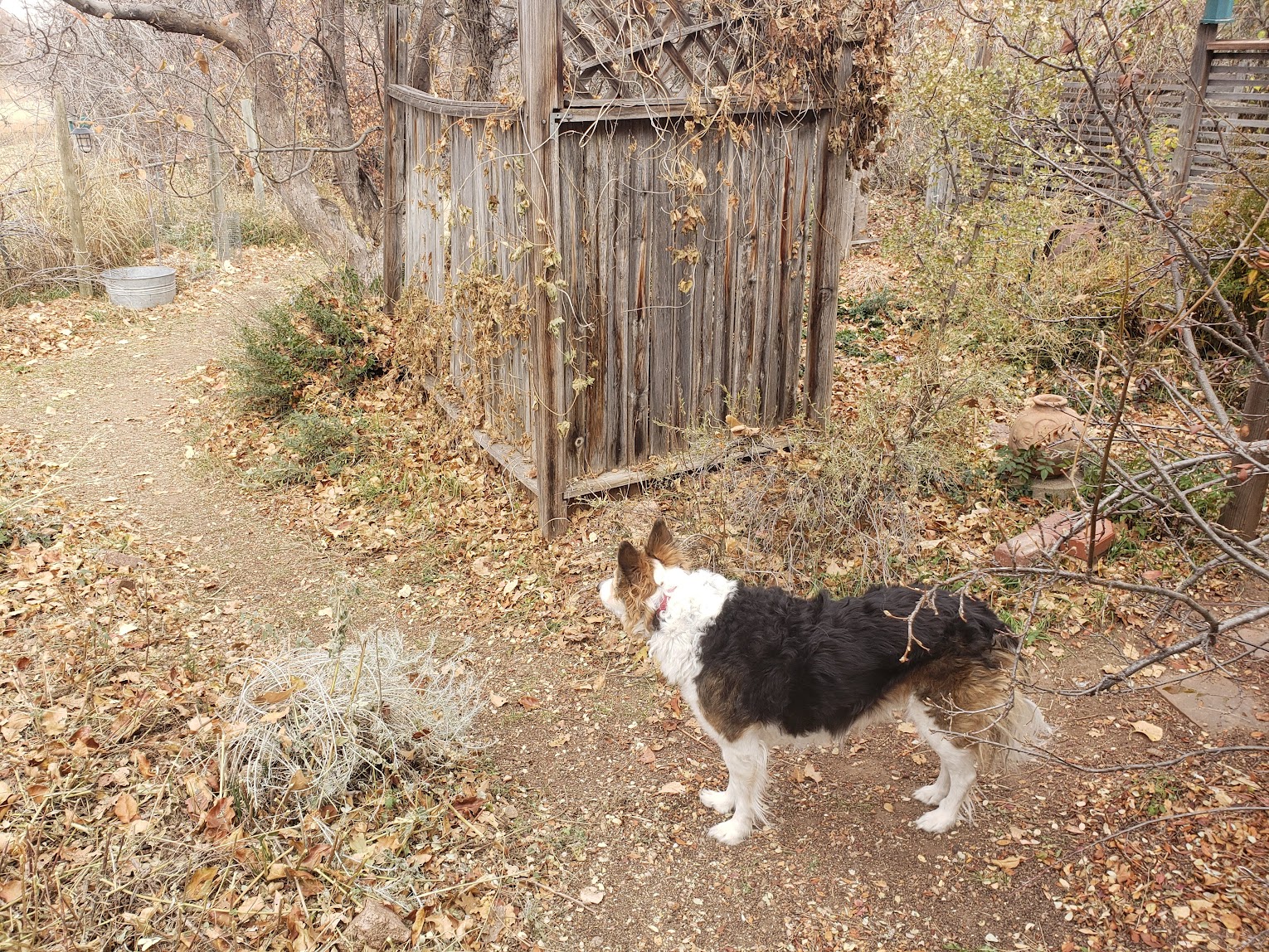 That green clump is Jasminum fruticans (it has no scent) and then a dwarf culinary sage in front of it. There are also Egyptian walking onions there.
The silver thing is a rabbitbrush.
This is a long way from the house, about a hundred feet or more. The guy I live with does drag a hose to the enclosure but, really, this part of the garden, from where I’m standing to the stock tank in the distance, never gets watered. It’s just too much trouble.
That picture of me was taken from the trough patio, which the guy I live with’s wife built so that there could be a bunch of troughs back here.
There were a bunch of troughs, for years, but eventually, for a few reasons, most of the plants in the troughs died, so the troughs were given away, and the patio was used for seed frames. The guy I live with would sow seeds in pots about this time of year, put them into the frames, and there would be seedlings the following spring.
For the last two springs, germination was, mysteriously, really poor, so the guy I live with decided mostly to give up growing plants from seeds and clean up the patio, since this has been bothering him for quite some time.
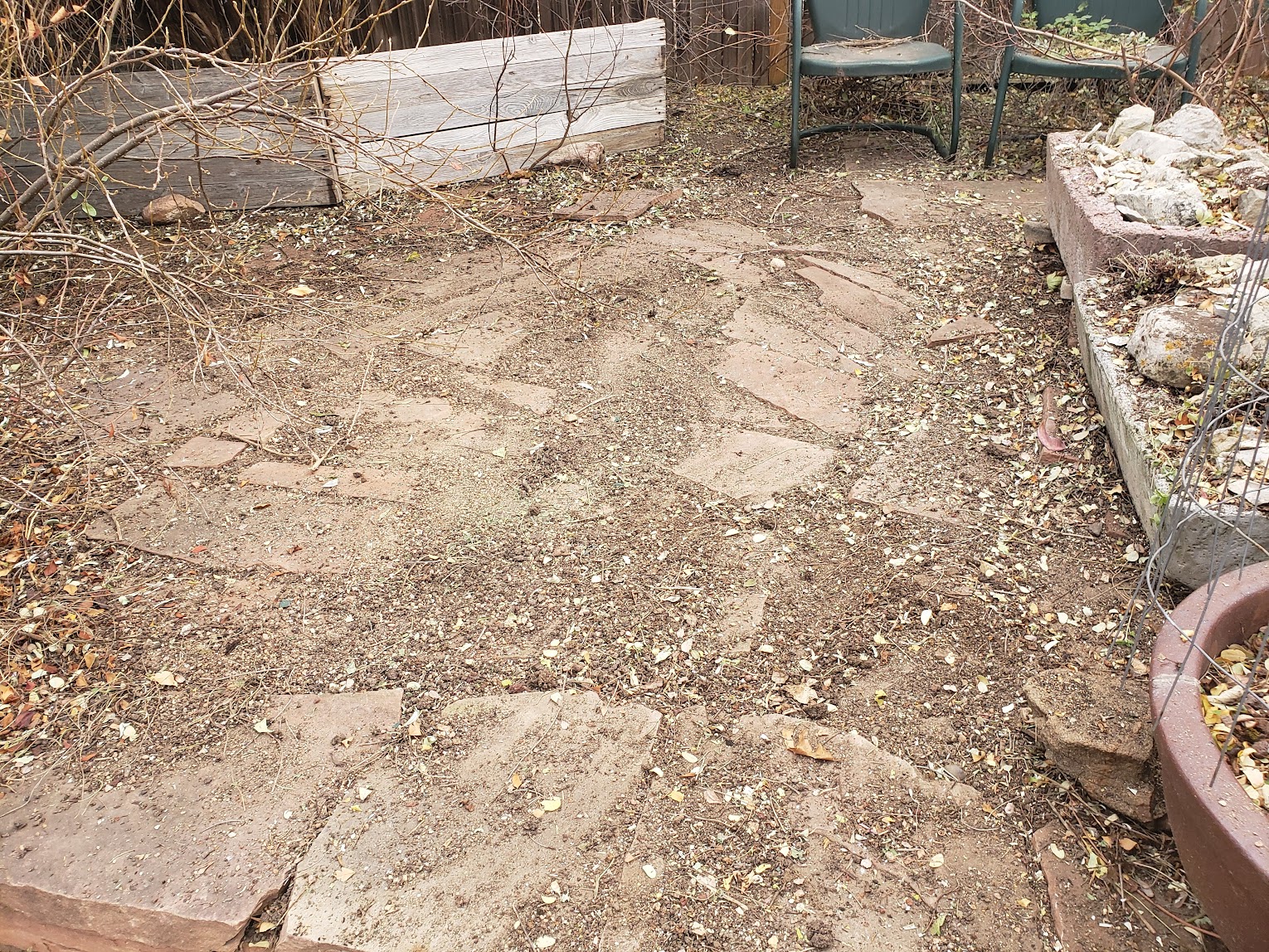 The low fences hide a bunch of cinder blocks on which the troughs sat. You can see that there are still two troughs, on the right. There are two eriogonums in the closest trough, but the farthest trough has no plants in it. For now.
All the dirt is from the soil-less mix from the seed pots. When this is all swept up it will be apparent that the narrow triangular pieces of flagstone are laid out like the rays of the sun.
The guy I live with said he thought about planting thymes between the flagstones; thymes often fry in our hot winter sun but the patio is in shade all winter, so it might work.
So that’s the gardening stuff.
Yesterday evening, the guy I live with got a text from his neighbor to go out and look at the northern lights. He went out and didn’t see anything.
Then he got another text, at a quarter to ten, to try again, and he got this picture, looking through all the light pollution of the Denver metro area.
 This was the first time he’d ever seen such a thing. I of course was sleeping on the couch, but the guy I live with said that the sun was going berserk.
I didn’t like the idea that there’s this gigantic ball of plasma a long way away controlling almost every aspect of our lives; I certainly do know about the sun, but I definitely prefer just taking it for granted instead of thinking about it.
Like, for instance, here.
Until next time, then.




 the miserable gardener