
Greetings and salutations, everyone; yes, once again it is I, Mani the purebred border collie, filling in for the guy I live with, and here today to talk about an object lesson. You may remember me from such posts as “Creeped Out”, among so many, many others.
Here I am in a characteristic pose.
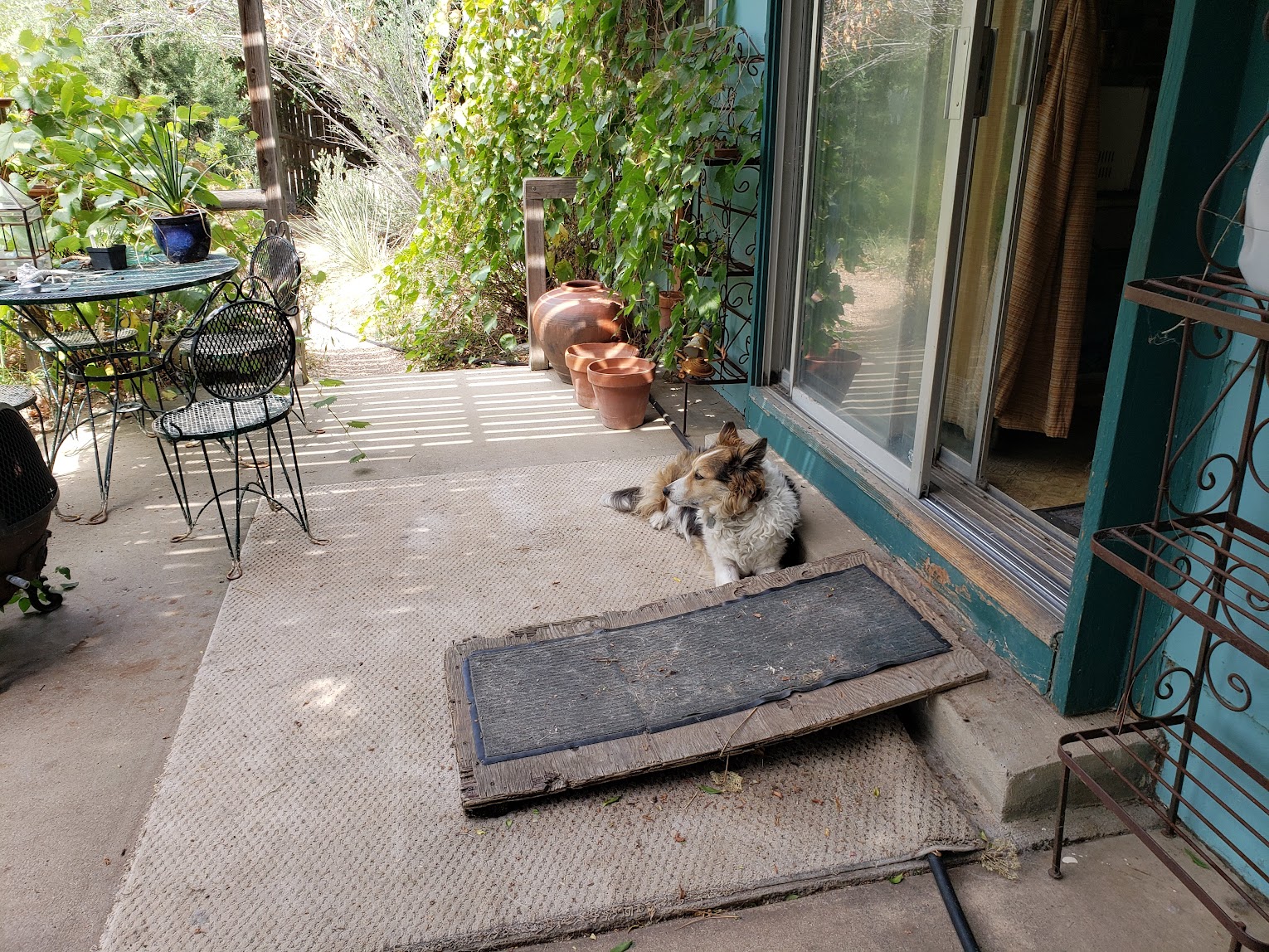 You can see how hard I am at work, gardening.
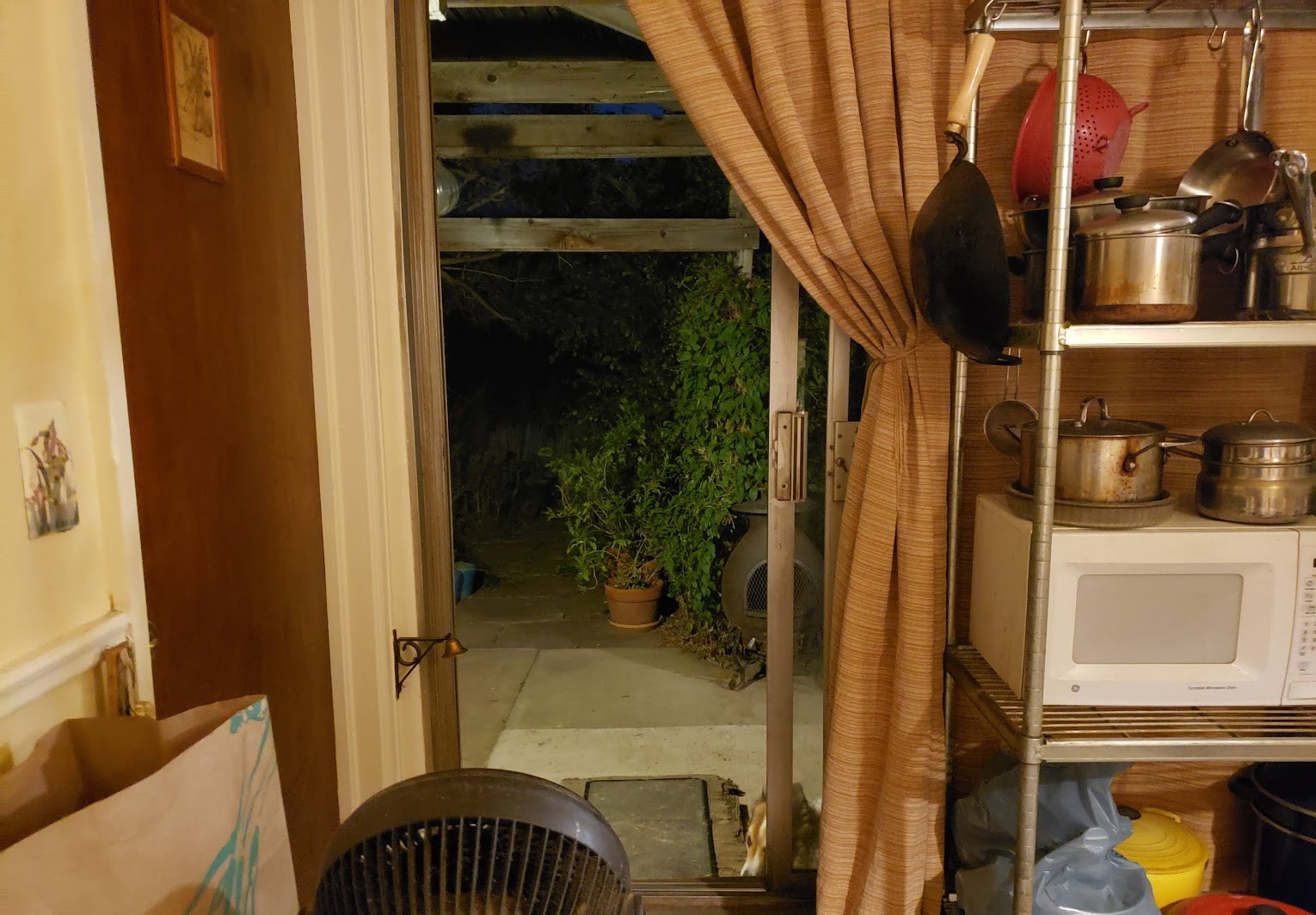
The guy I live with said it may be about time to replace that ramp. The guy I live with’s wife built it for Flurry, the first purebred border collie who lived here, when he was getting on in years. There’s little space to step out onto the patio because a previous owner added an extra sliding glass door and never thought about a way to extend the concrete step.
The ramp bounces now.
Anyway, our streak of hot, rainless days continues. All the rain is falling to the south or east of us now.
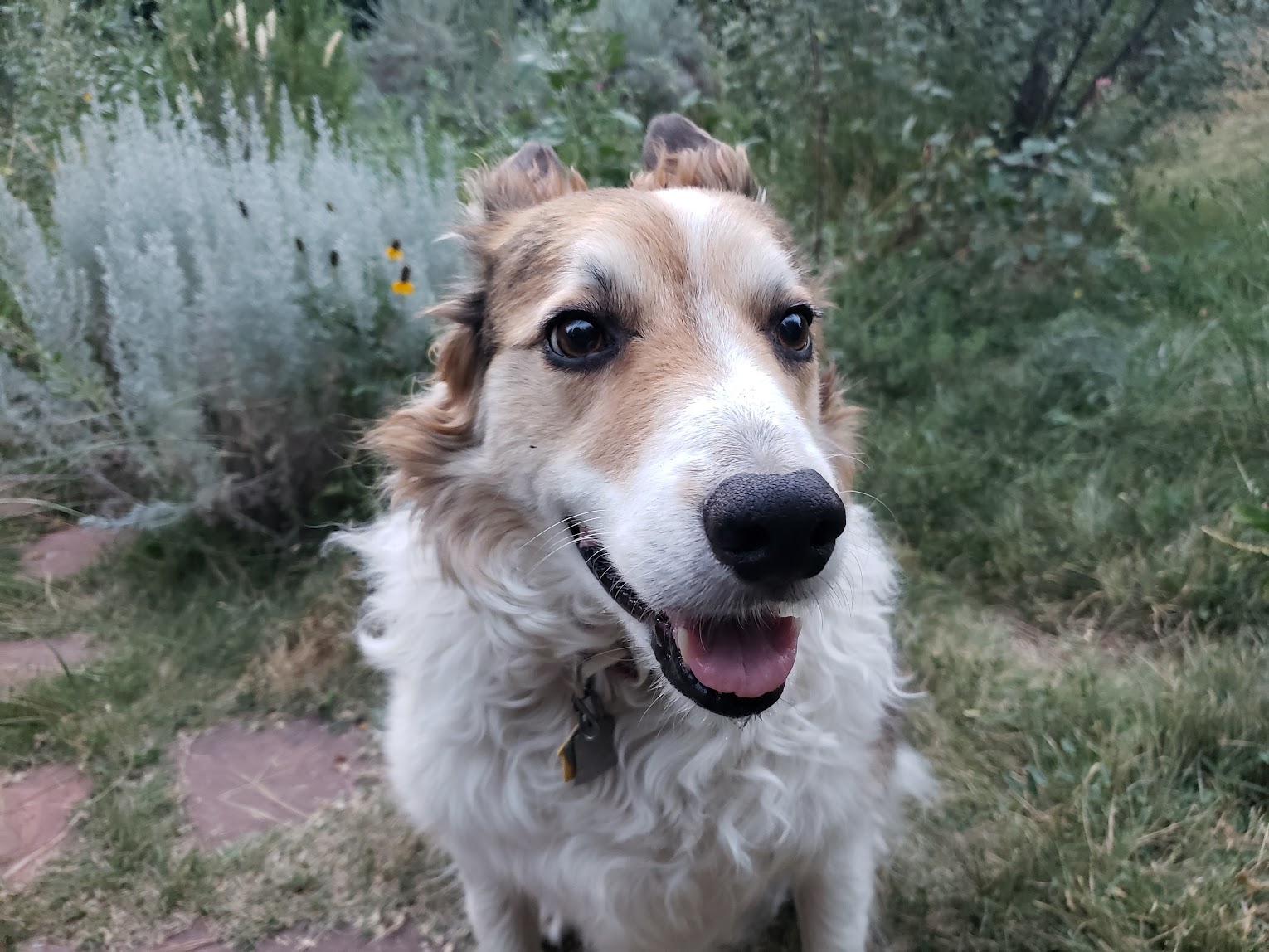
Here I am putting a brave face on this situation.
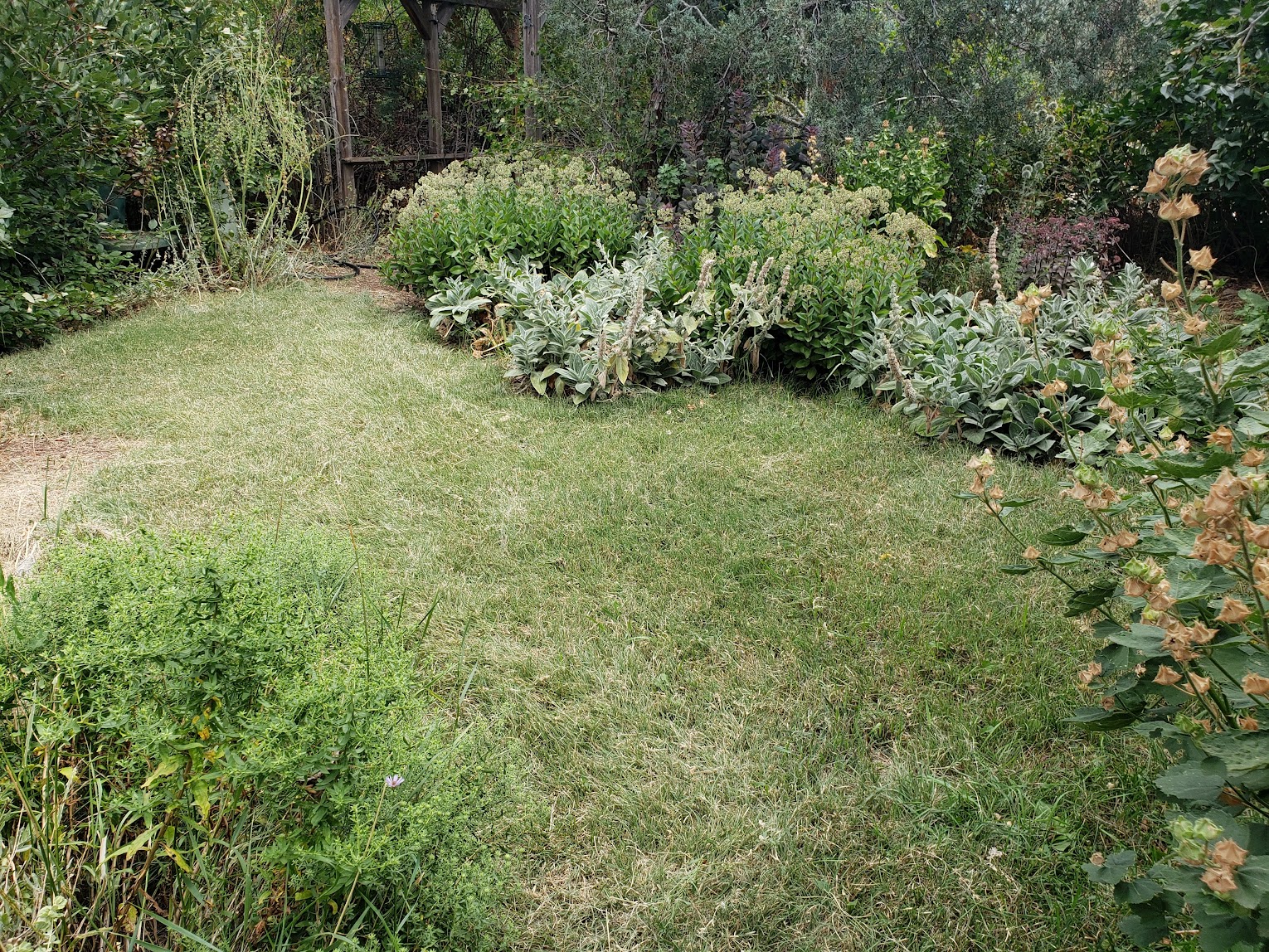
 Before I talk about the object lesson, here’s a picture of my Private Lawn. This is ‘Cody’ buffalo grass.
That line is from the hose, because he mowed the lawn a few days ago, and buffalo grass does need to be watered after mowing.
Other than that, it just grows, assuming at least some rain falls, which is an assumption we can no longer make.
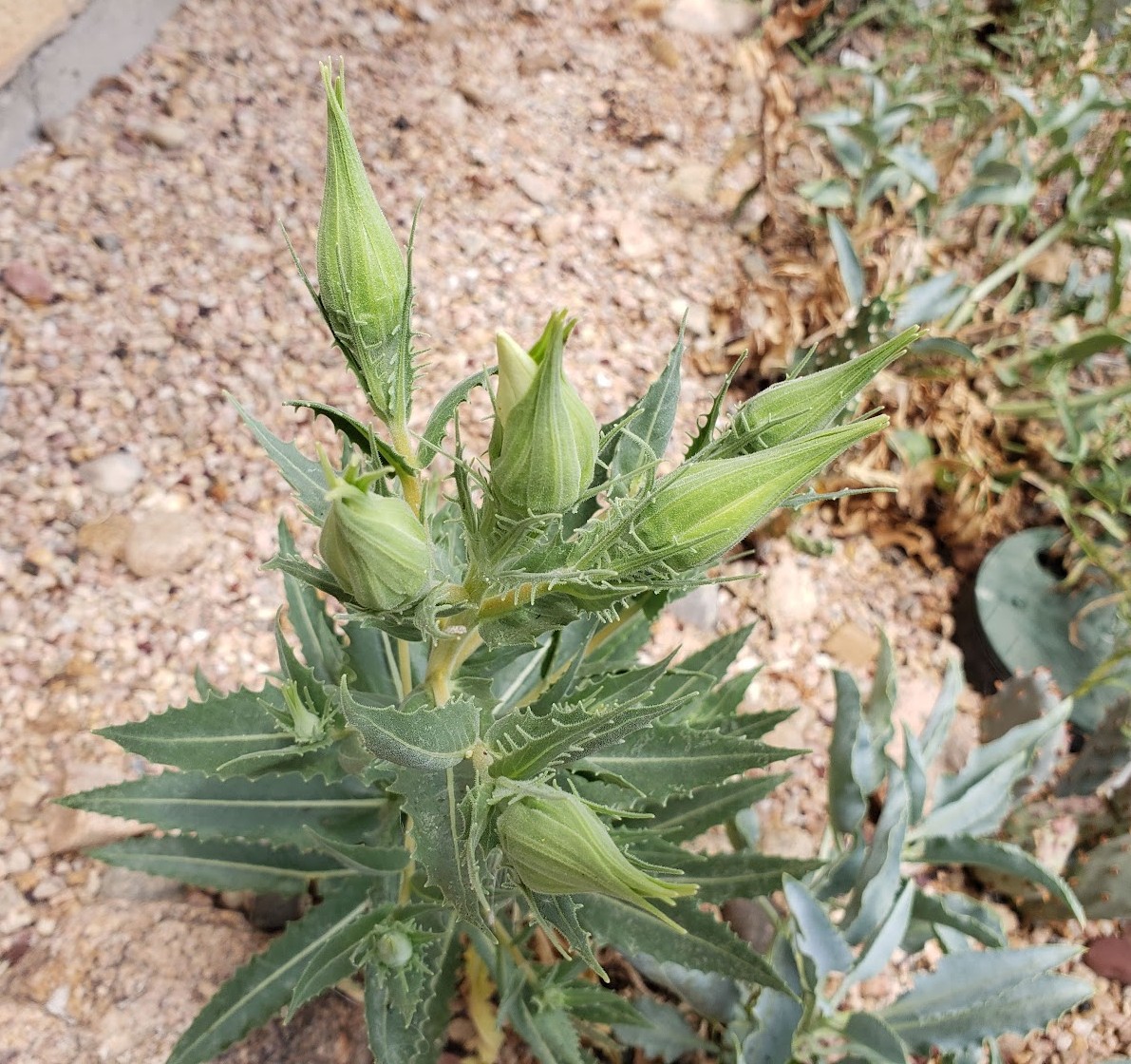
 And another picture of Mentzelia decapetala taken right before I went on my evening walk.
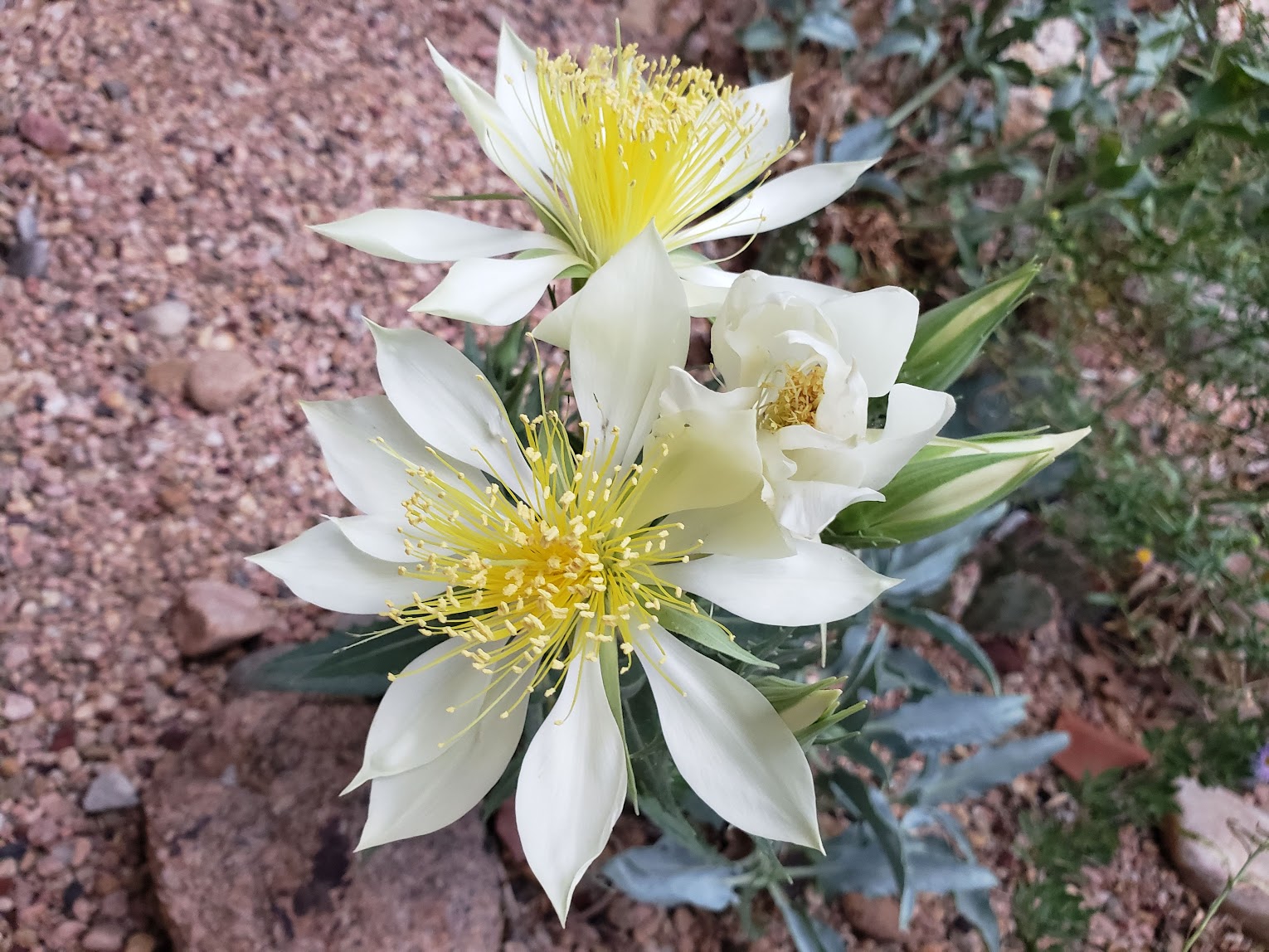 Hopefully this plant will produce some viable seeds, because it behaves like a biennial here, though it can also be perennial.
Claude Barr wrote that an excess of moisture would cause the plant to die, but it’s clear that this plant would have benefited from more rain.
In most summers, the guy I live with would just let the garden dry out, but during the grasshopper infestation last summer he started watering more, because he read that grasshoppers attack drought-stricken plants.
The watering didn’t stop the grasshoppers, but it made the plants look healthier.
So this year he decided to water more. He bought a nice Melnor oscillating sprinkler (the one with a metal base) which he says is a good one, and now we have a lot of plants in flower for the hummingbirds.
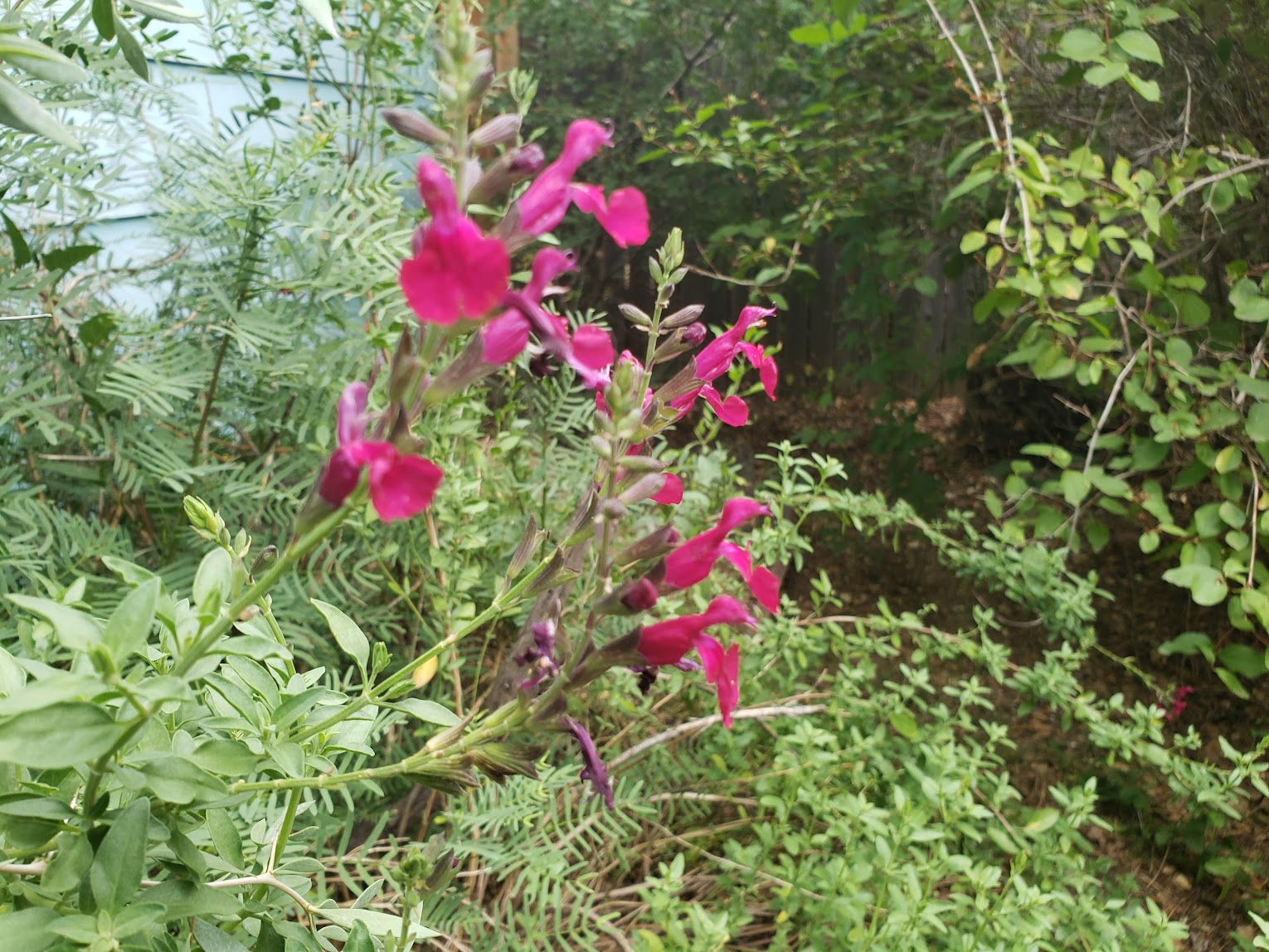
Salvia greggii won’t flower in dry soil, so he set a smaller sprinkler in the side yard and the plants started flowering almost immediately, which makes sense since they’re native to west Texas and adjacent Mexico where monsoon rains fall, almost coinciding with the flight of hummingbirds back to Mexico.
 Normally Penstemon barbatus stops flowering in a hot July, but look at it now, after watering. An object lesson for the guy I live with.
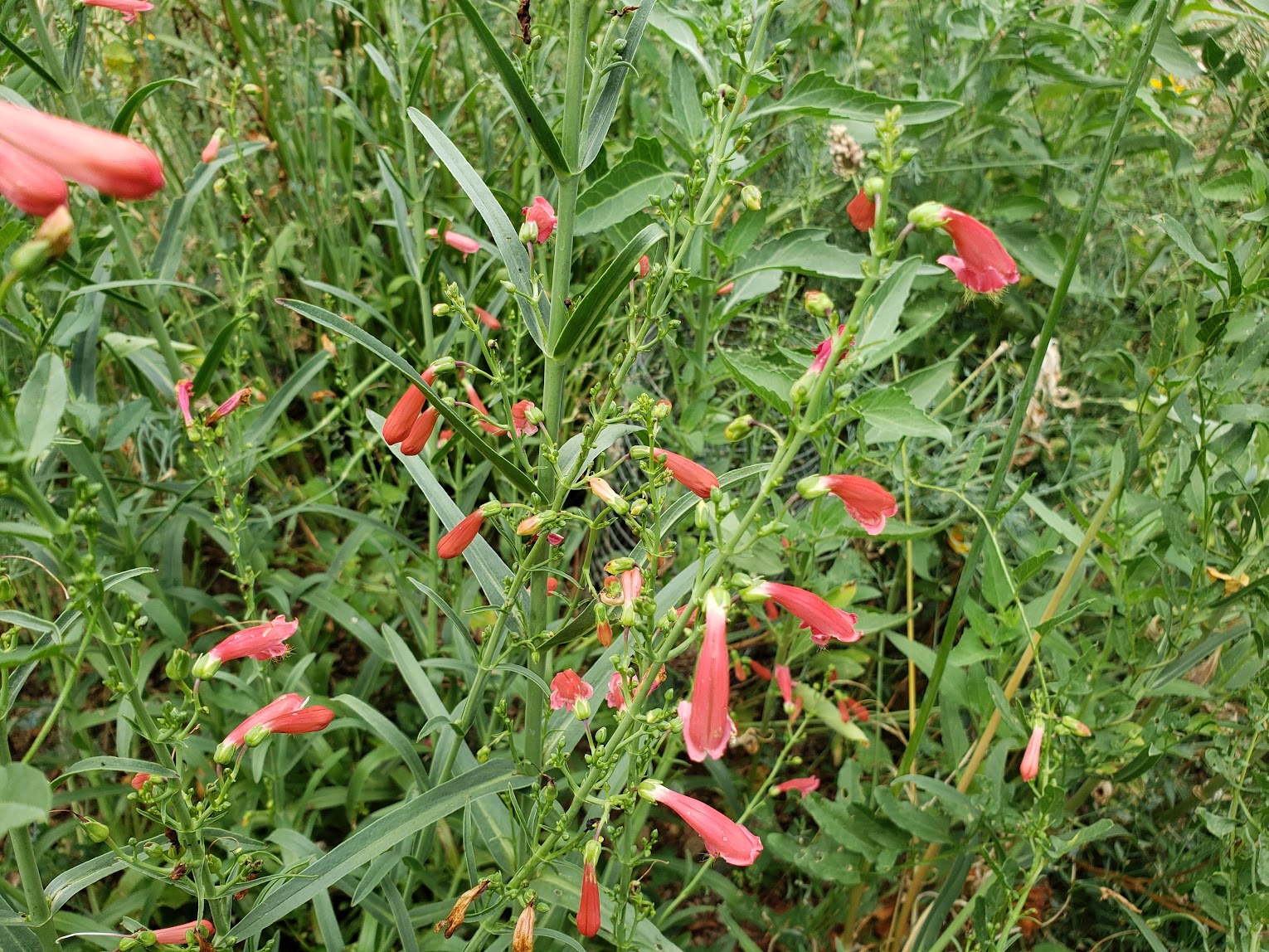 There are other red-flowered penstemons, and Penstemon eatonii, P. cardinalis, and P. rostriflorus are often available in the trade as plants or seeds, but there are others, like P. centranthifolius, P. superbus, P. utahensis, P. floridus, and P. rubicundus that have to be grown from seed.
And quite a few Mexican species which are difficult to come by. The guy I live with grew a few of these a long time ago.
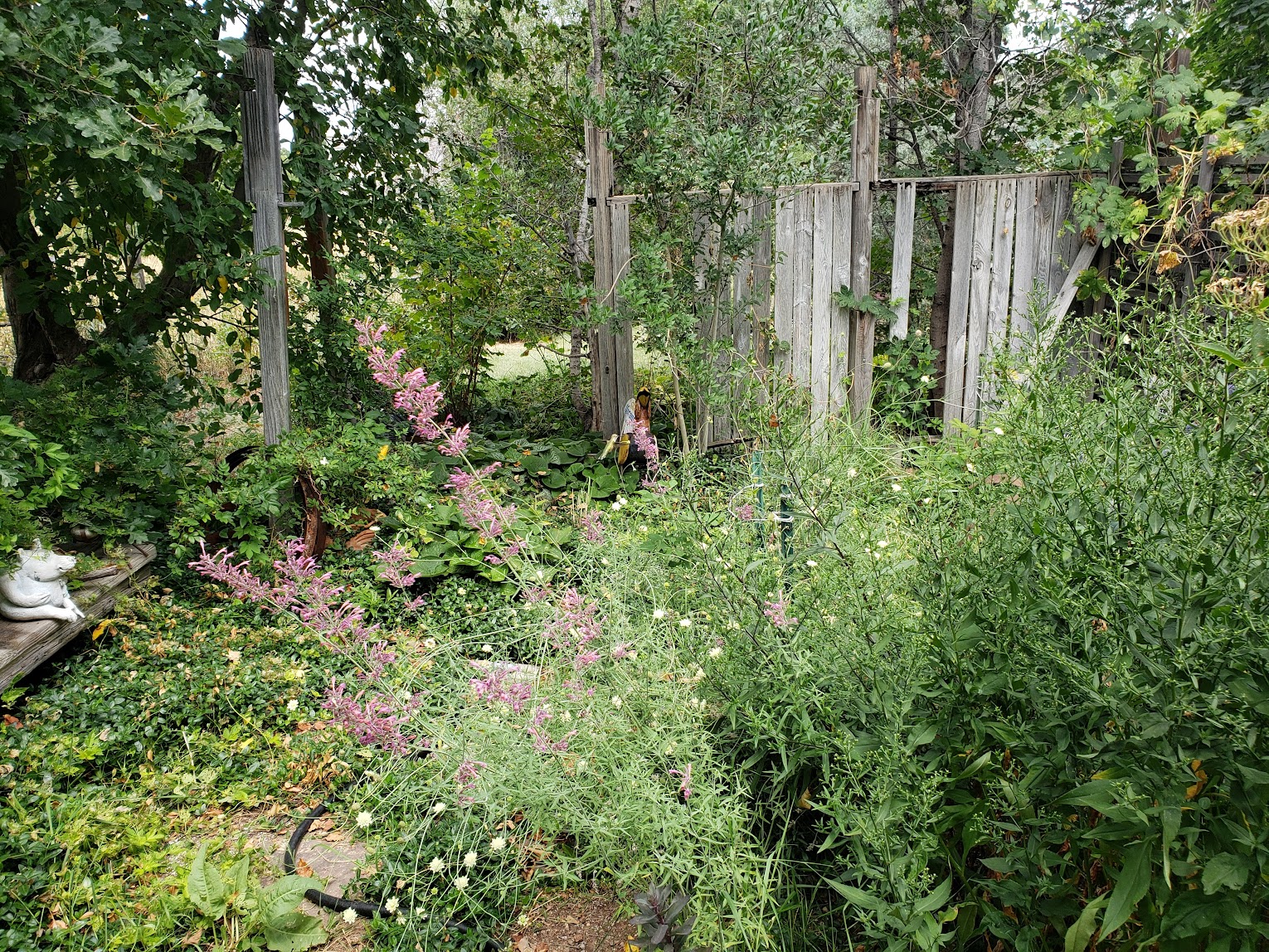
The agastaches in “the enclosure” are very happy with the extra watering.
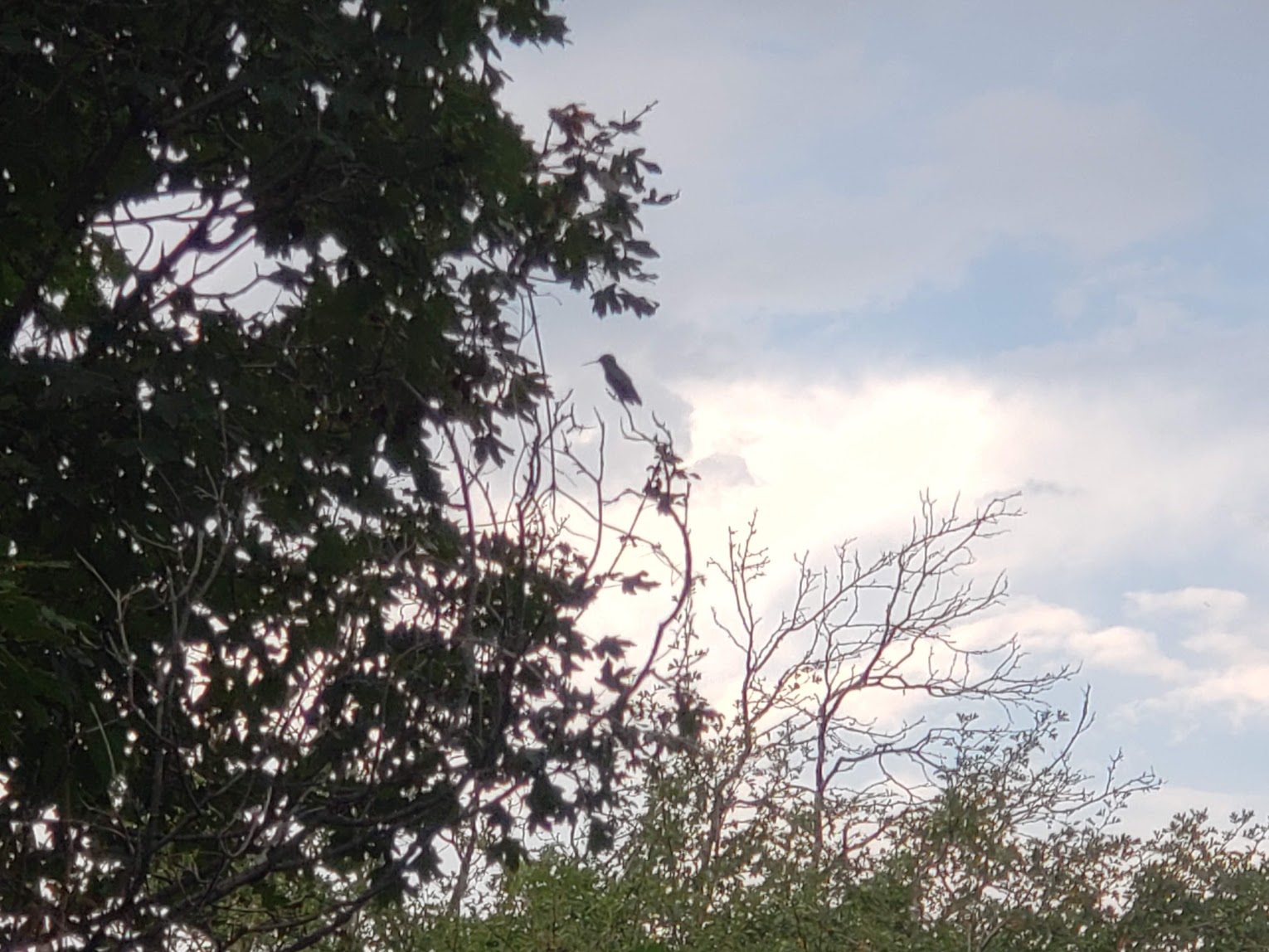
If you look closely, or enlarge this picture, you can see a broadtailed hummingbird, just to the left of the big metal chicken.
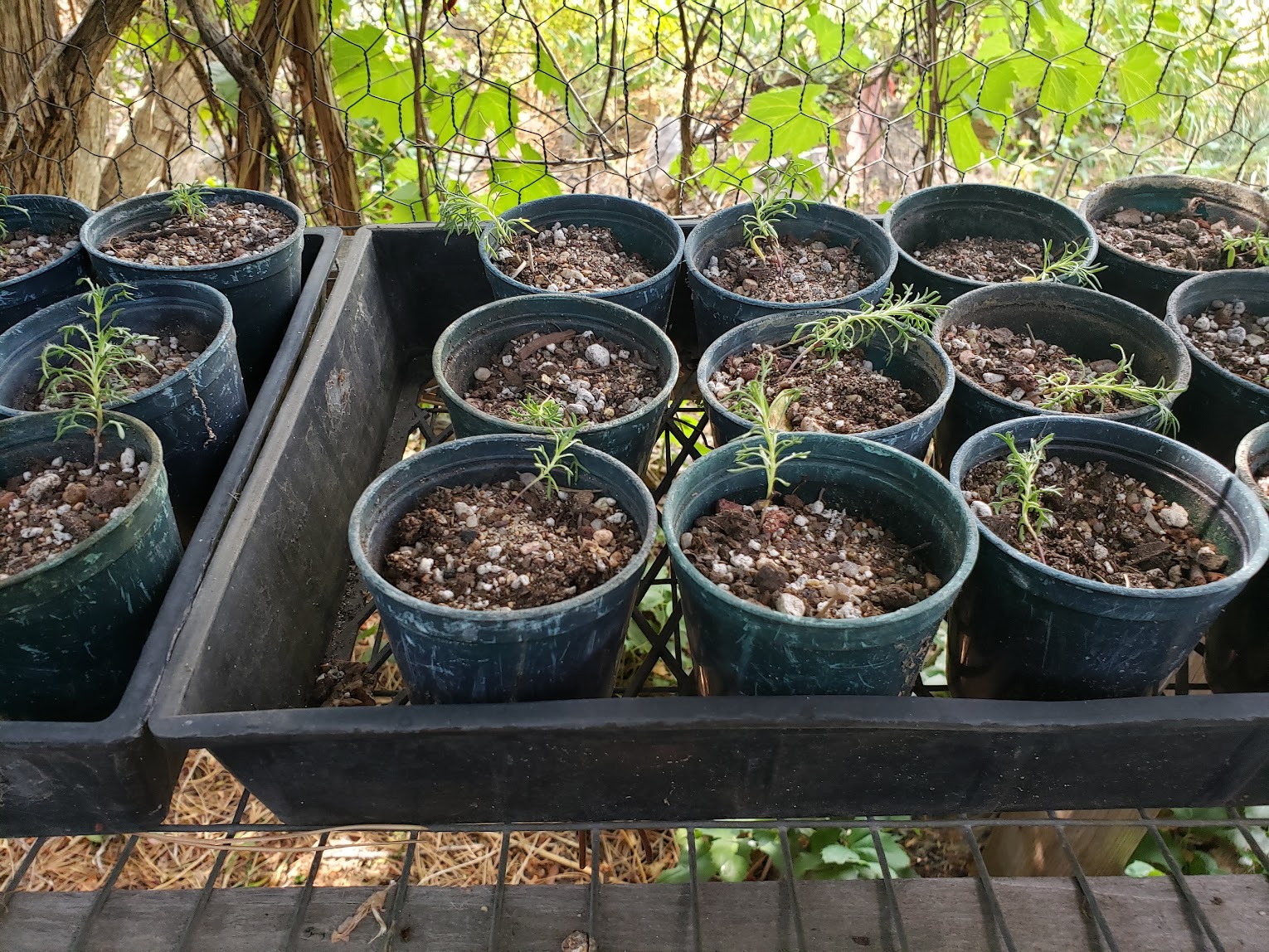
 In keeping with the hummingbird theme, the guy I live with had a pot of Ipomopsis aggregata seedlings which he repotted just today. Hopefully these will have red flowers, though populations with pink flowers and with white flowers are common in the foothills here. This is a biennial.
The pots will be surfaced with fine gravel.
 This is the soil mix he used. I’ve shown pictures of this before, but I think it’s worthwhile to show how different this is from commercial mixes.
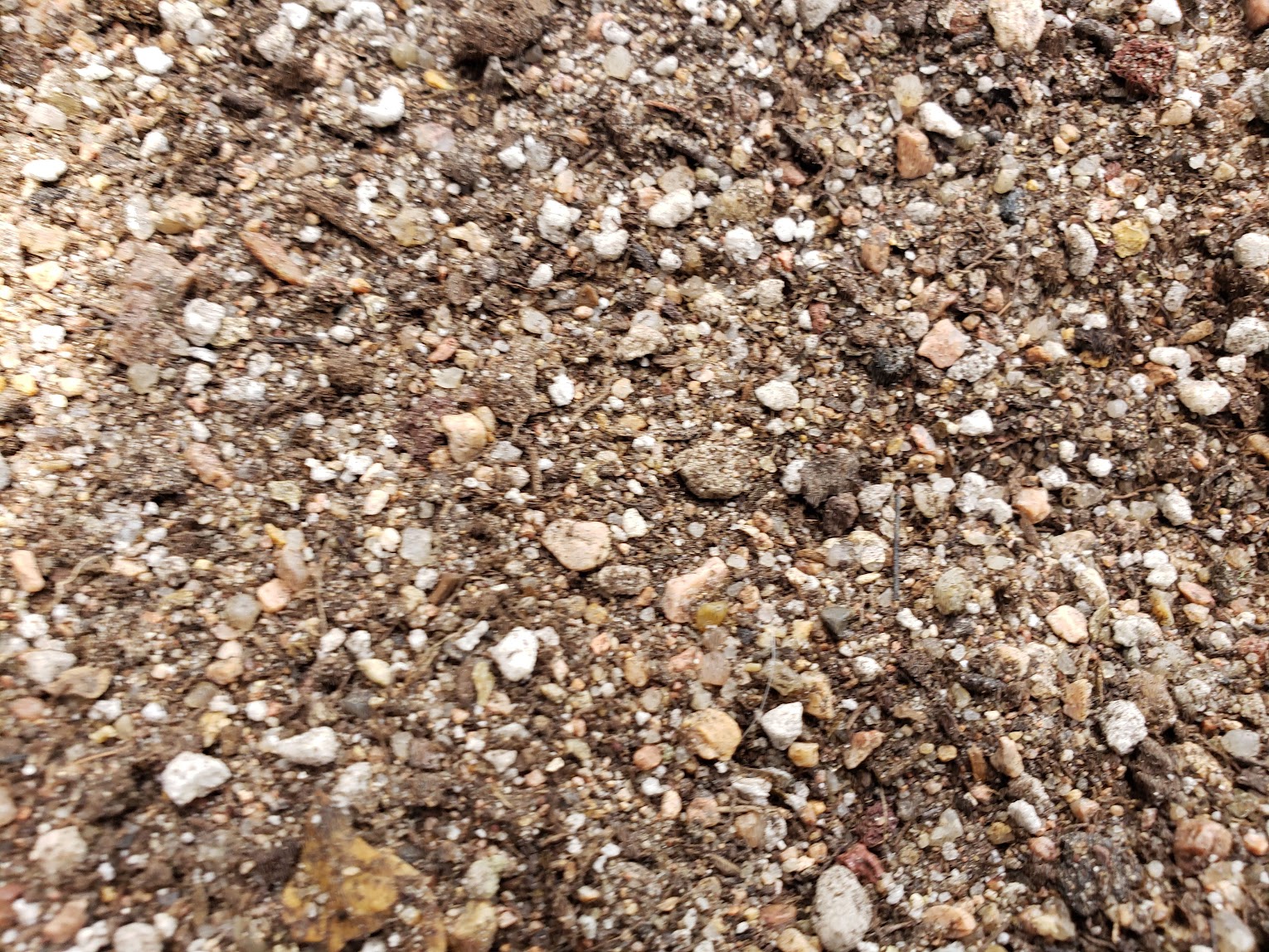 This is a highly porous mix which allows all the water to go straight to the roots.
The mix was used for troughs, most of which are at the Chatfield Arboretum now.
And I have one other hummingbird-related item. A swing.
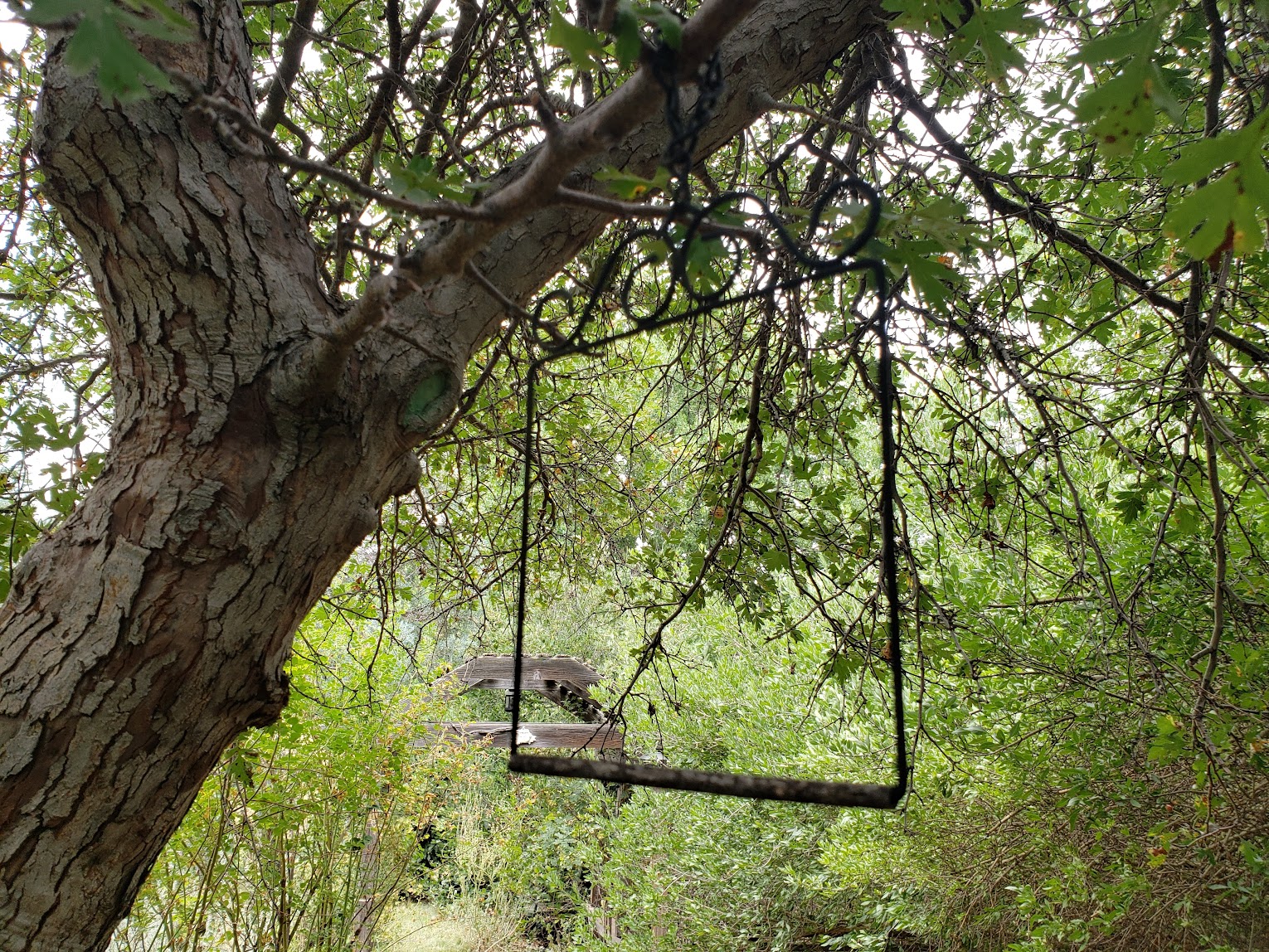 That’s right, this is a hummingbird swing.
It’s supposed to be close to a food source but it isn’t, right now.
So that’s all I have for today.
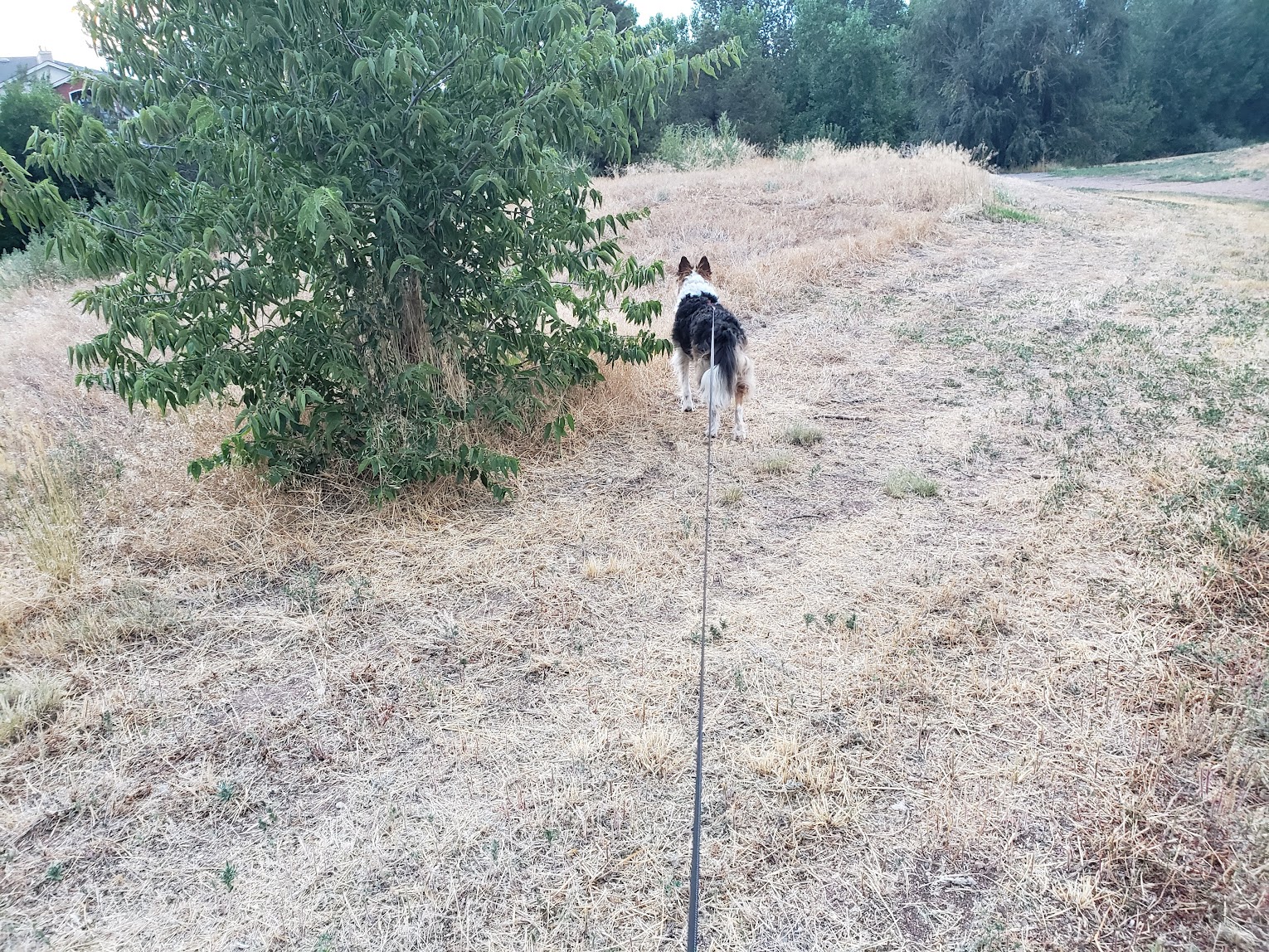
I’ll leave you with a picture of me next to an unhappy hackberry tree in the little field to the north of us.
Until next time, then.

 the miserable gardener