
Greetings and salutations, everyone; yes, once again it is I, Mani the purebred border collie, filling in for the guy I live with, and here today with something a little different.
You may remember me from such posts as “A Nice Day”, among so many, many others.
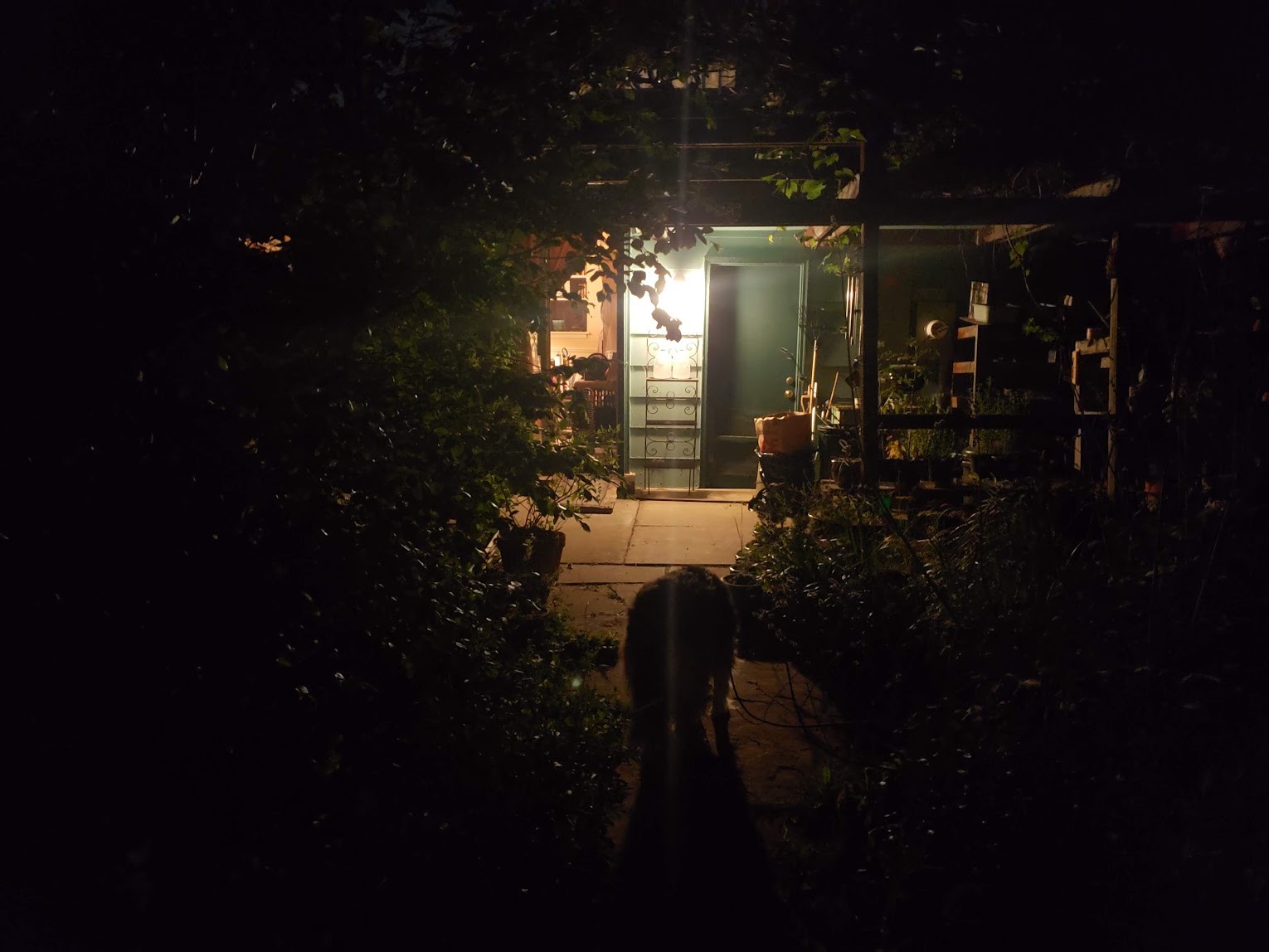
Here I am in a characteristic pose. 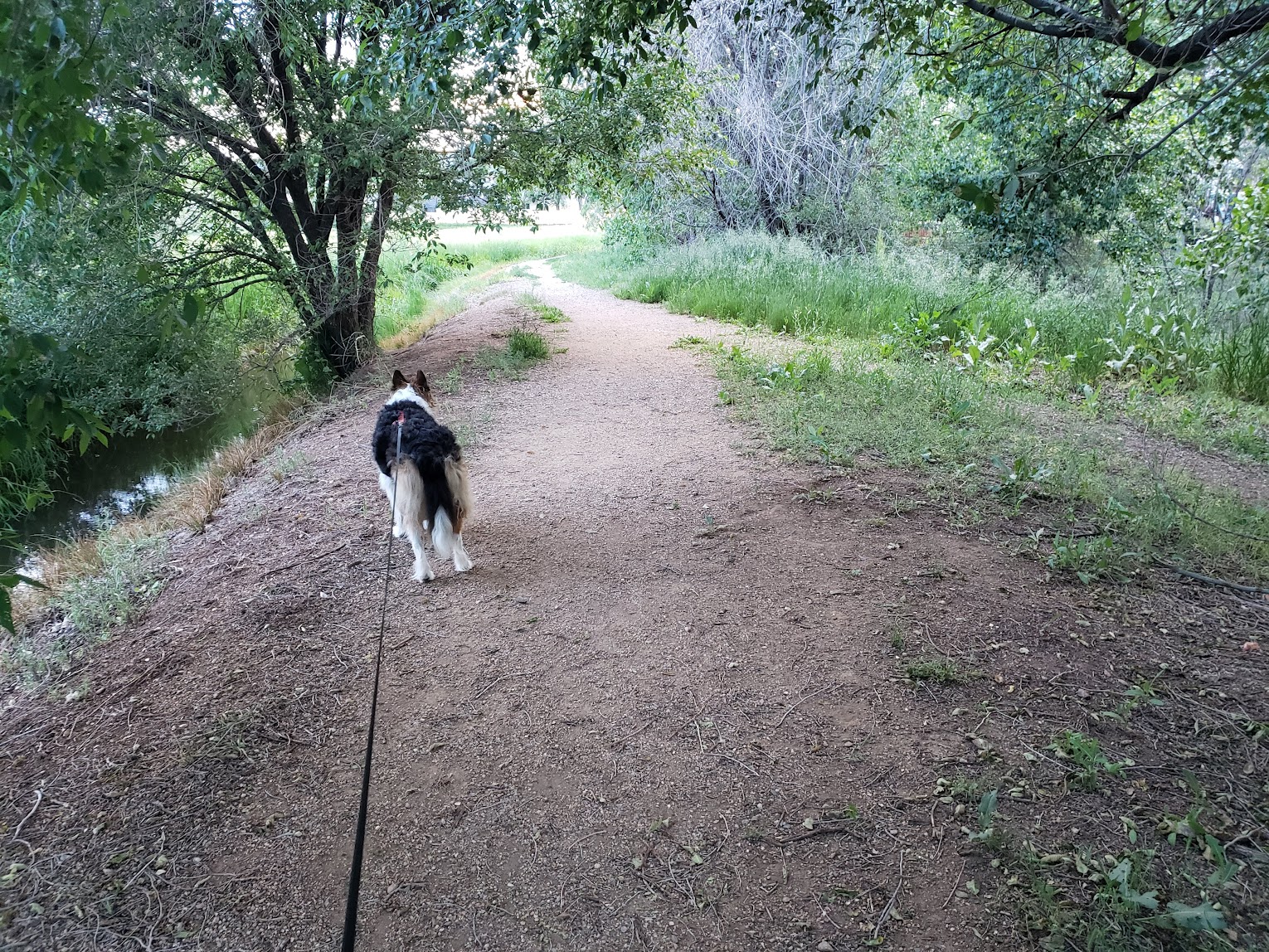 I’m making sure no dogs are coming toward me, and so nobly protecting the guy I live with.
The green belt is flowering. It’s a golden yellow belt now.
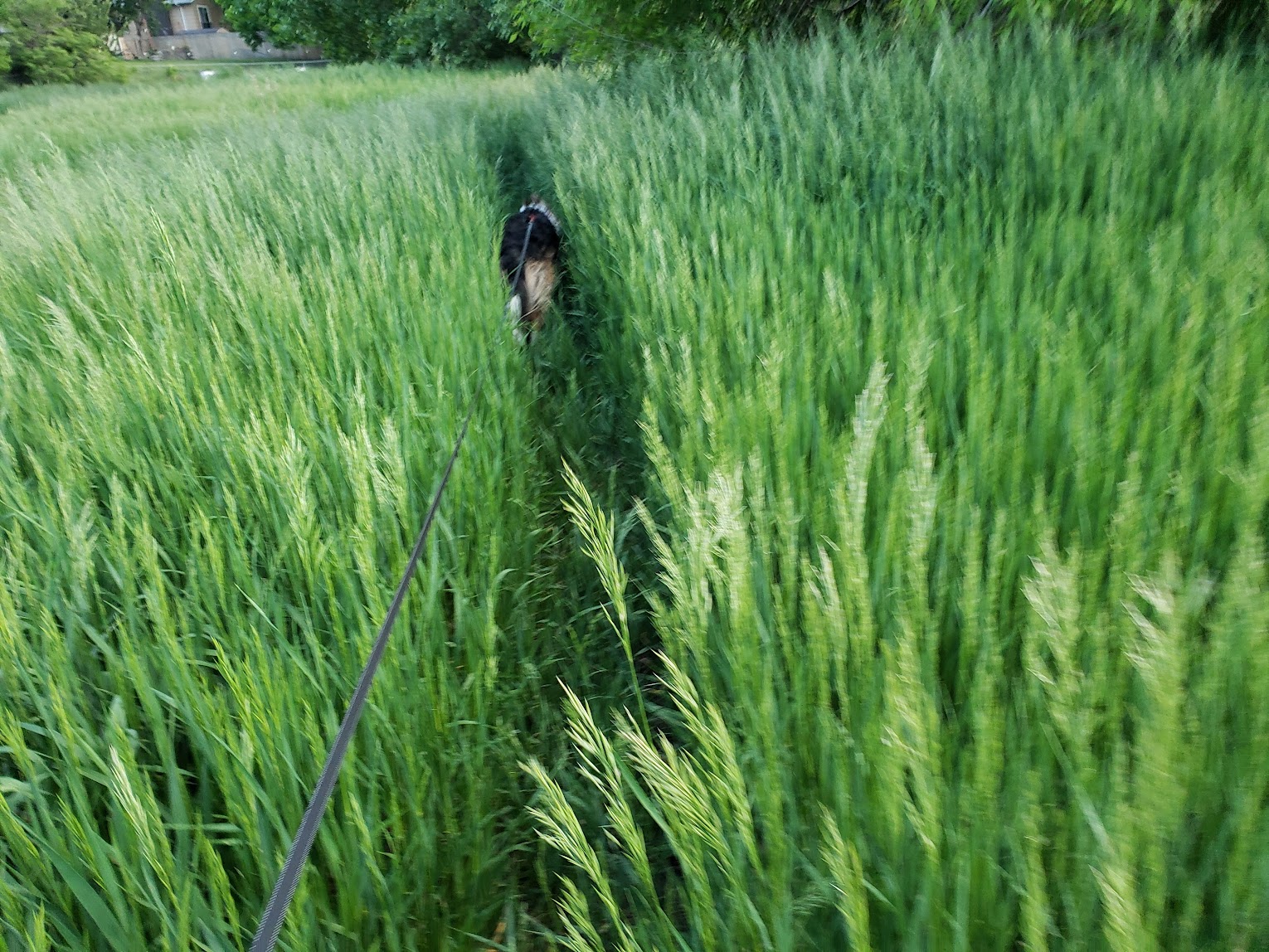
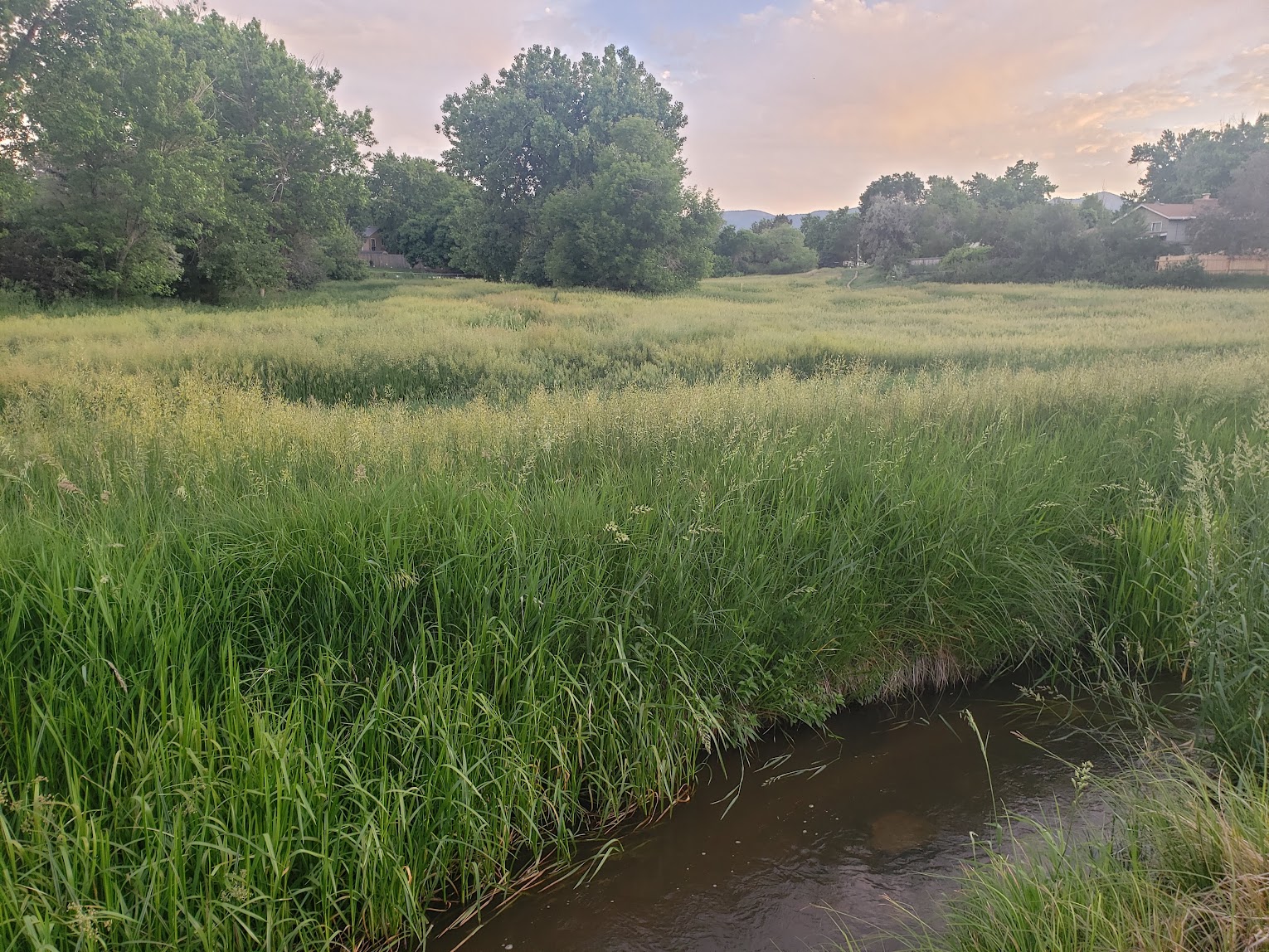 I got covered with grass flowers on my walk this evening.
This morning or yesterday morning we went to look at the prickly poppies in flower.
Argemone platyacanthos.
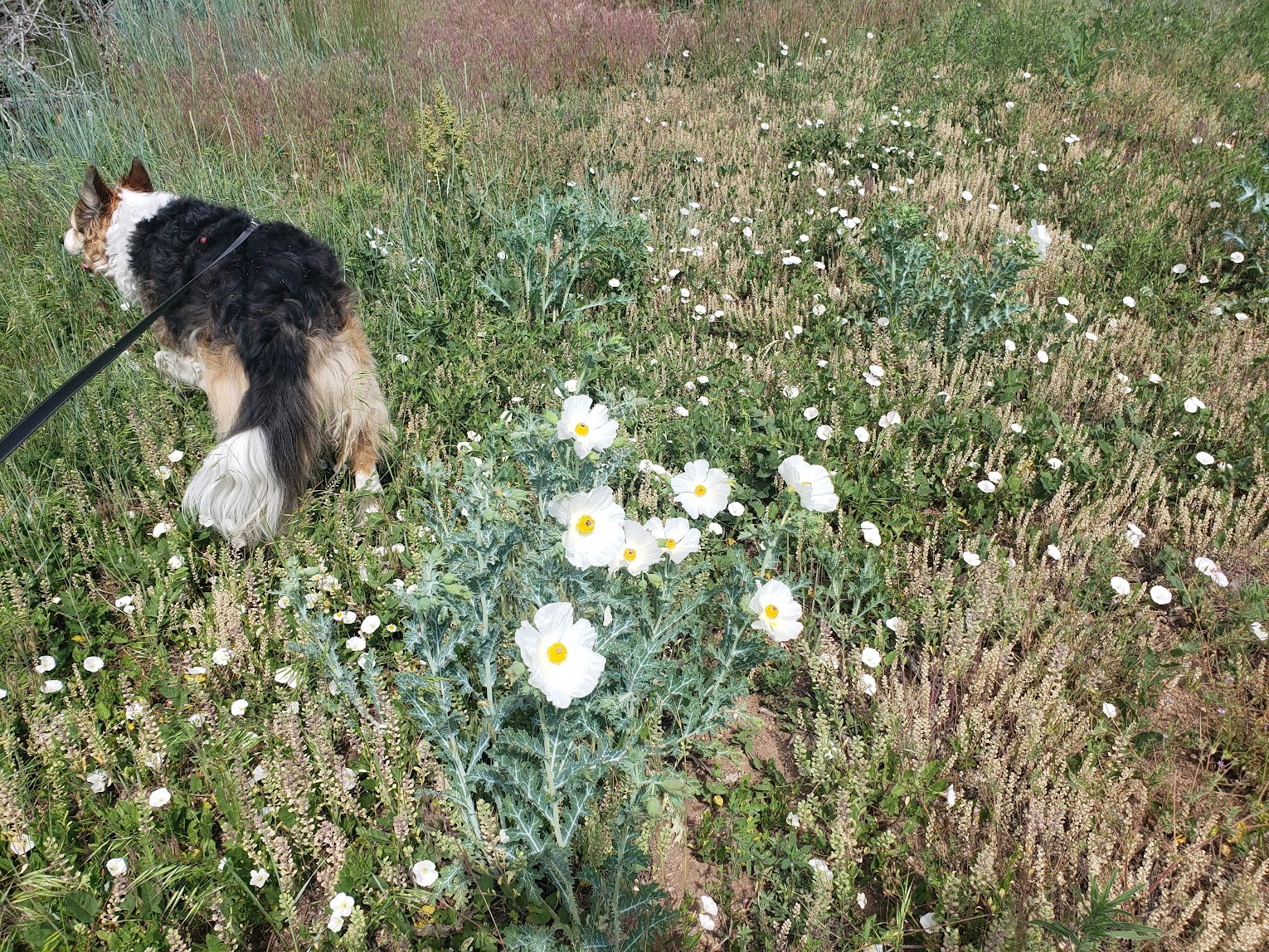 The rest of the pictures were posted on Facebook, but here they are again.
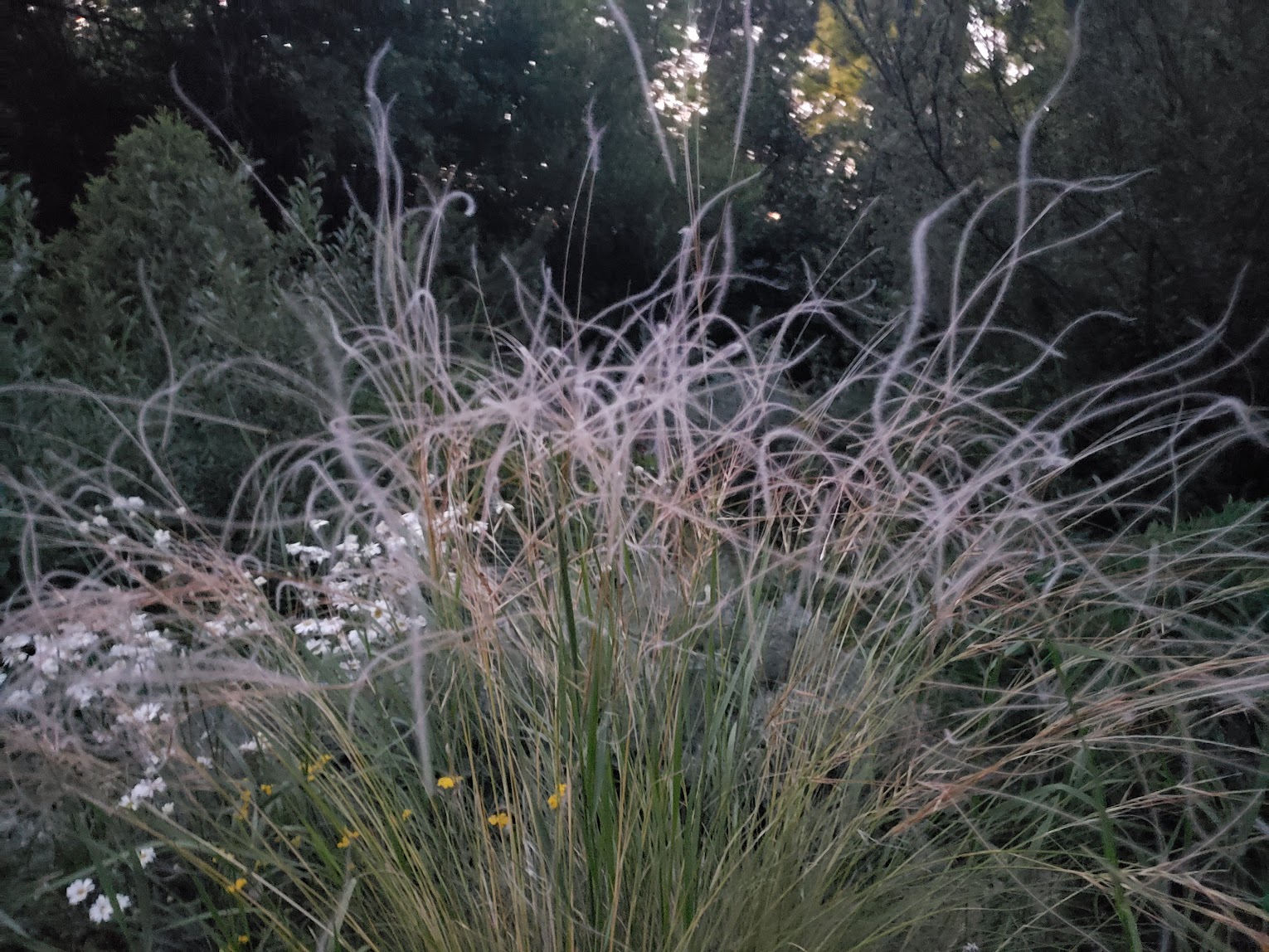
This is Stipa ucrainica; the picture was taken at twilight.
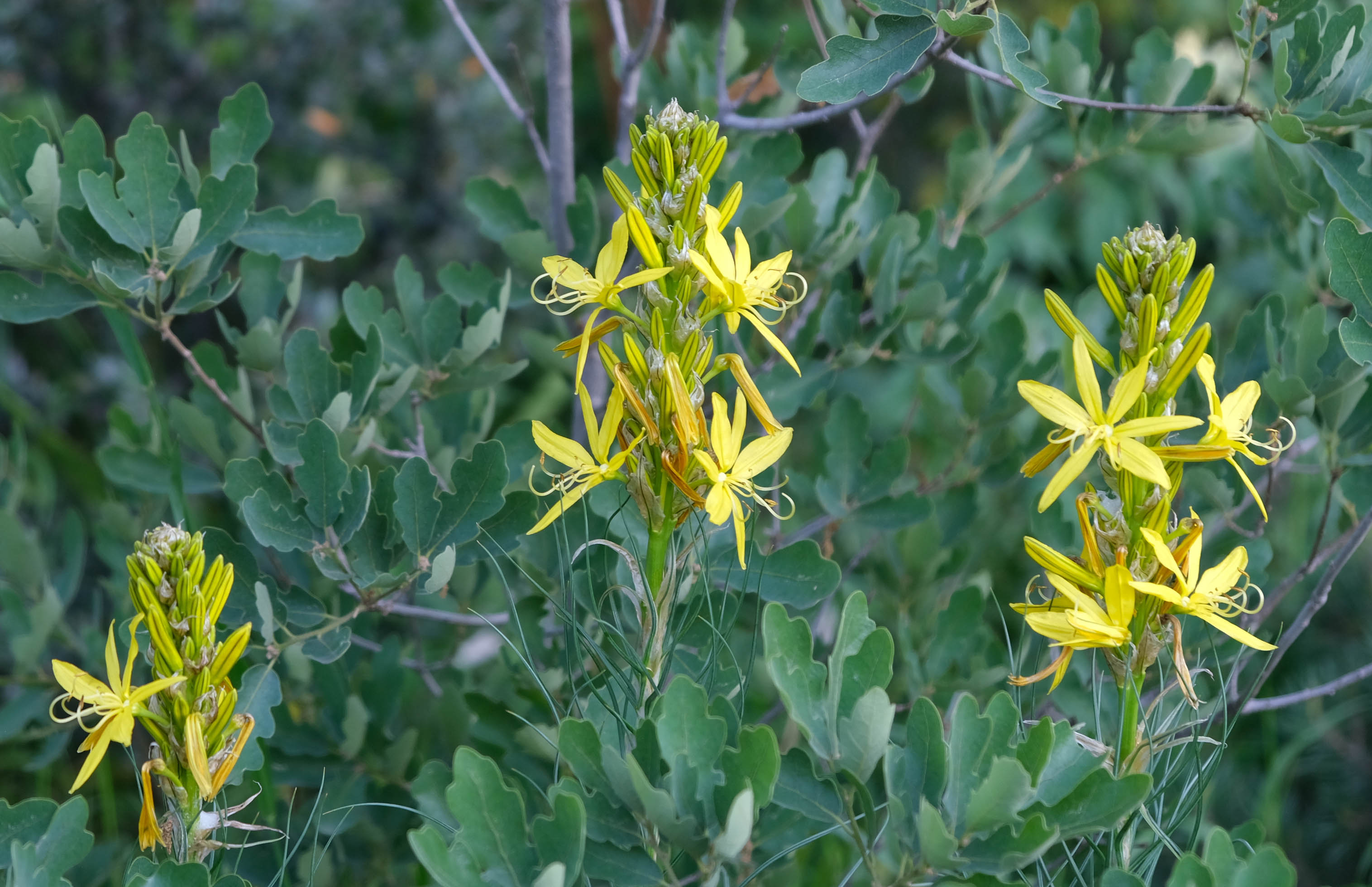
 Asphodeline lutea coming up through a dwarf oak the guy I live with got from the late Jerry Morris:
 The flowering stalk on Yucca reverchonii:
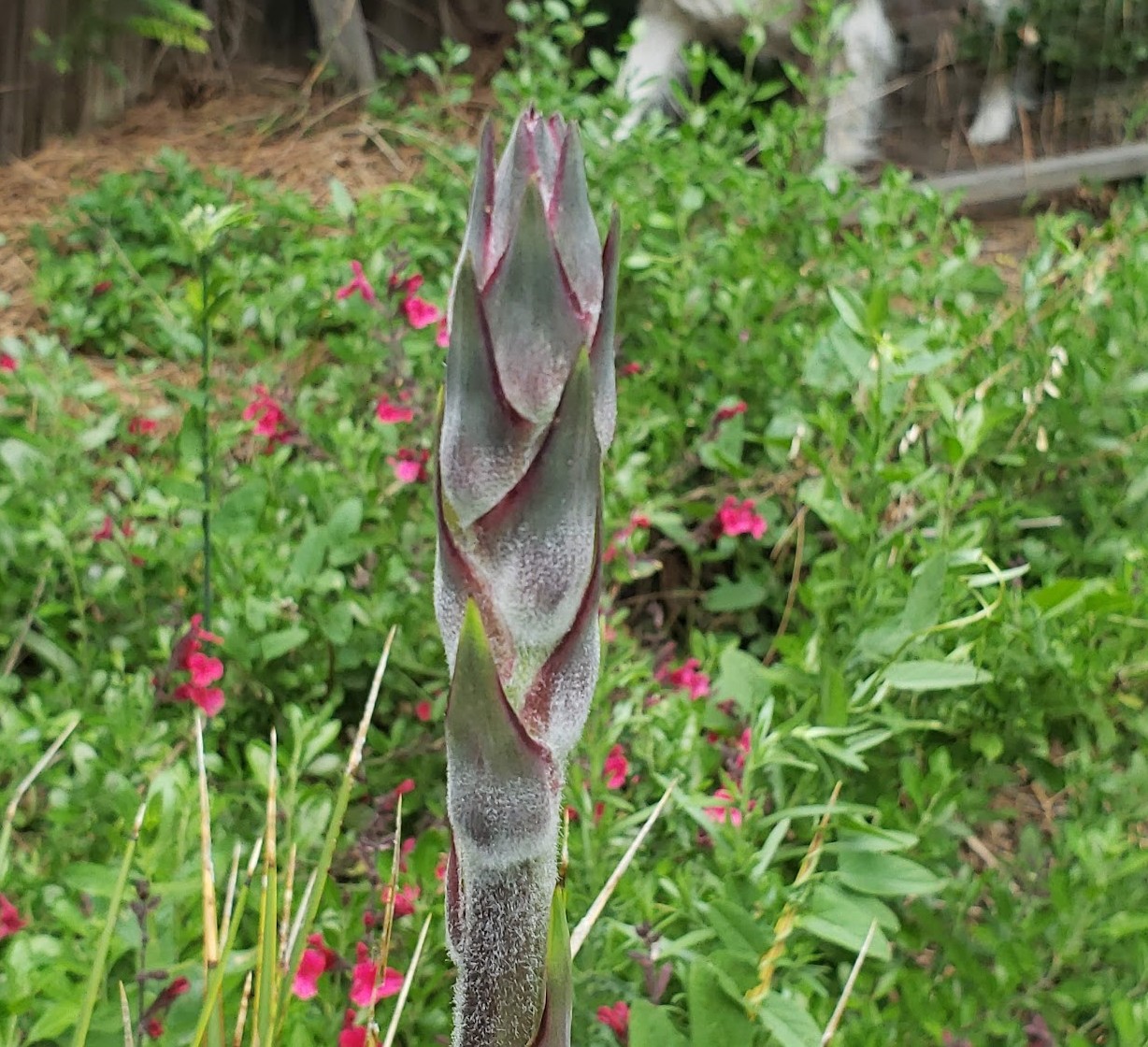 The guy I live with said “someone photobombed this picture”.
And the first calochortus. This is Calochortus venustus.
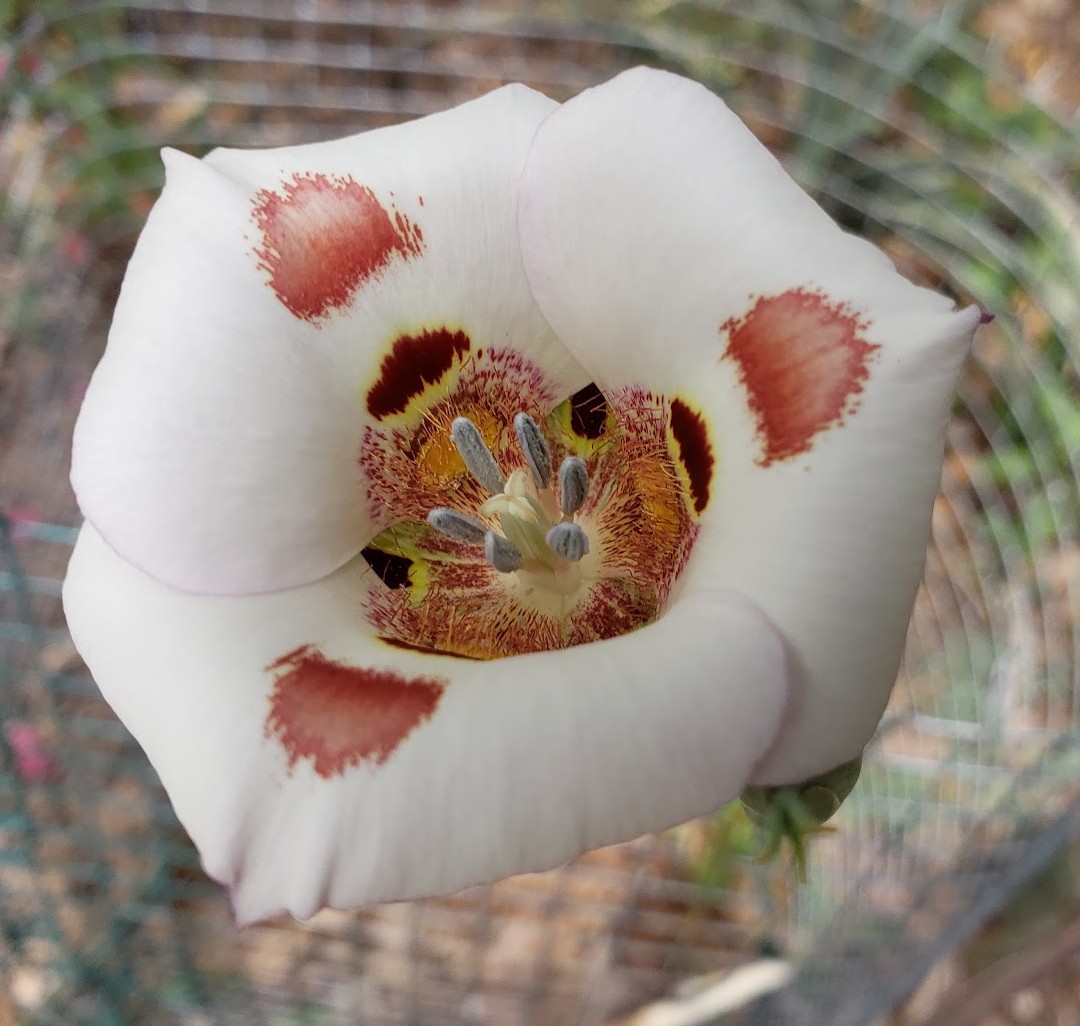 It’s in a cage to protect it from being eaten by rabbits, which kills the bulbs because they can’t photosynthesize.
There are some other calochortus which may flower here soon.
Most of the guy I live with’s attempts to grow calochortuses have been complete failures. Every so often one will appear, the guy I live with will get all excited, and then we don’t see them for years.
But maybe it’s because we’ve had so much rain that we’re seeing them again.
One other thing. The guy I live with says yes this is native to California, but that doesn’t mean anything about its hardiness if the leaves don’t emerge so soon that they get frozen (same effect as being eaten by rabbits) or there are no overwintering leaves and the species hasn’t evolved to manufacture cryoprotective sugars (“antifreeze”).
Like snowdrops have overwintering leaves but they manufacture antifreeze, so they’re fine.
Calochortus come up, flower, and then die down. No issues.
If it gets really cold, and it certainly does here, the bulbs are insulated because they’re in the ground, and if the soil freezes here, it doesn’t freeze very deeply.
Now that it’s getting warmer and raining less, the talk is turning to penstemons, and the guy I live with posted this didactic picture of a semi-dissected flower. He used the phone camera for this, which maybe you’ll agree is pretty impressive.
This shows how to identify a penstemon.
First, you need to know where you are. Like you would never see this species in Colorado.
Second, you need to look at the basal and stem leaves.
Third, the inflorescence, whether it’s in a whorl, or secund (flowers on just one side of the flowering stalk), and so on.
And fourth, you need to look at the anthers and the sterile staminode.
We’ll just look at the flower here.
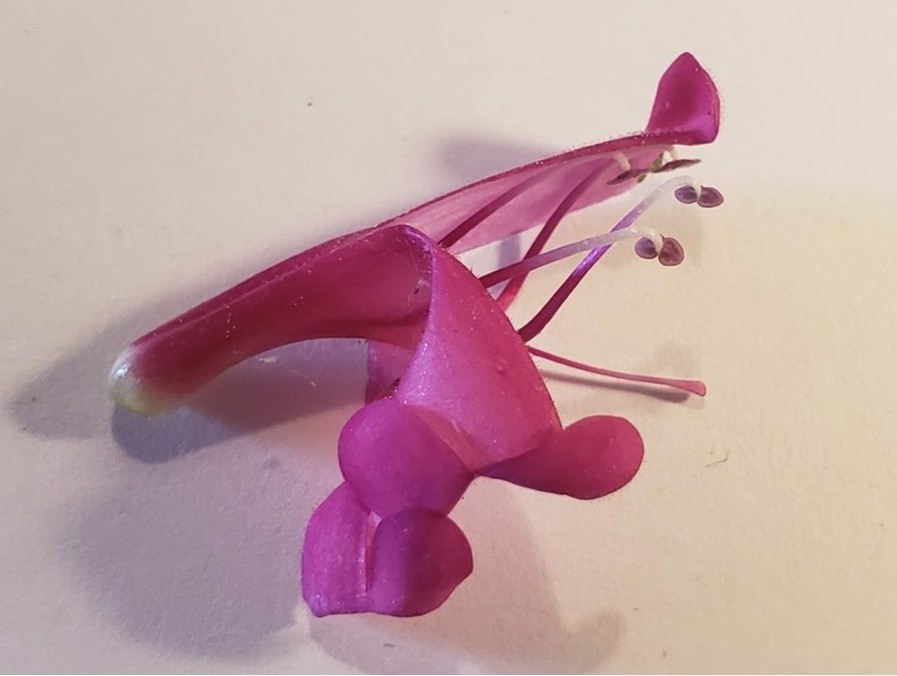 You can see the little hairs on the corolla. The anthers, the little brown things, are peltate-explanate (from the Latin pelta, a little shield; you can see how it looks sort of like a Roman centurion holding a small flat–explanate–shield).
This puts this in Section Peltanthera. Other species in this section are Penstemon palmeri, which I showed last time; P. clutei and P. parryi from Arizona; P. grinnelli, P. clevelandii, P.centranthifolius, and P. spectabilis from California.
And quite a few less well-known species.
The rose-red corolla and its shape makes this Penstemon pseudospectabilis, from Nevada, Arizona, and New Mexico.
But here’s an odd thing. Take a look at the staminode, the thing sort of hanging down. No beard. The subspecies with a bearded staminode is subsp. connatifolius, the most common subspecies (probably now considered just variety); the term connate means leaves clasping the stem.
So this is subspecies (or variety) pseudospectabilis, which is the rarer of the two, and yet this is the one common in the nursery trade.
Whew, huh. I’ve learned a lot about penstemons, don’t you think?
For years the guy I live with had issues with people asking for identification of penstemons, like ones they’ve seen on hikes, and so on. It brought up too many memories of him and his wife working on books, but now I guess he’s okay with it.
Well, that’s all I have for today. I hope the penstemon business wasn’t too much
Until next time, then.


 the miserable gardener