
Greetings and salutations, everyone; yes, once again it is I, Chess the purebred border collie, filling in for the guy I live with, and hear to bring you some, well, at least moderately interesting news. You may remember me from such posts as “Guarding The Fort” and “Show And Tell”, among so many, many others.
Here I am in a characteristic pose. You can probably see how things are going with me. The guy I live with has been obsessing again, or still, and so today’s post will be frightfully didactic, and yet mercifully short.
Remember the business about soaking oncocyclus iris seeds, well, this has now been taken a step further. The seeds come with an aril, or collar, which is why they’re called aril irises. (Someone who did seed germination for a living said that this process can be done with all other irises, though there isn’t a collar. You would cut the seed at the hilum, where the seed attached to the seed pod.)
The collar is the whitish thing on the right. It gets pulled off with a dental pick, which is why the seed is soaked, to make it softer.
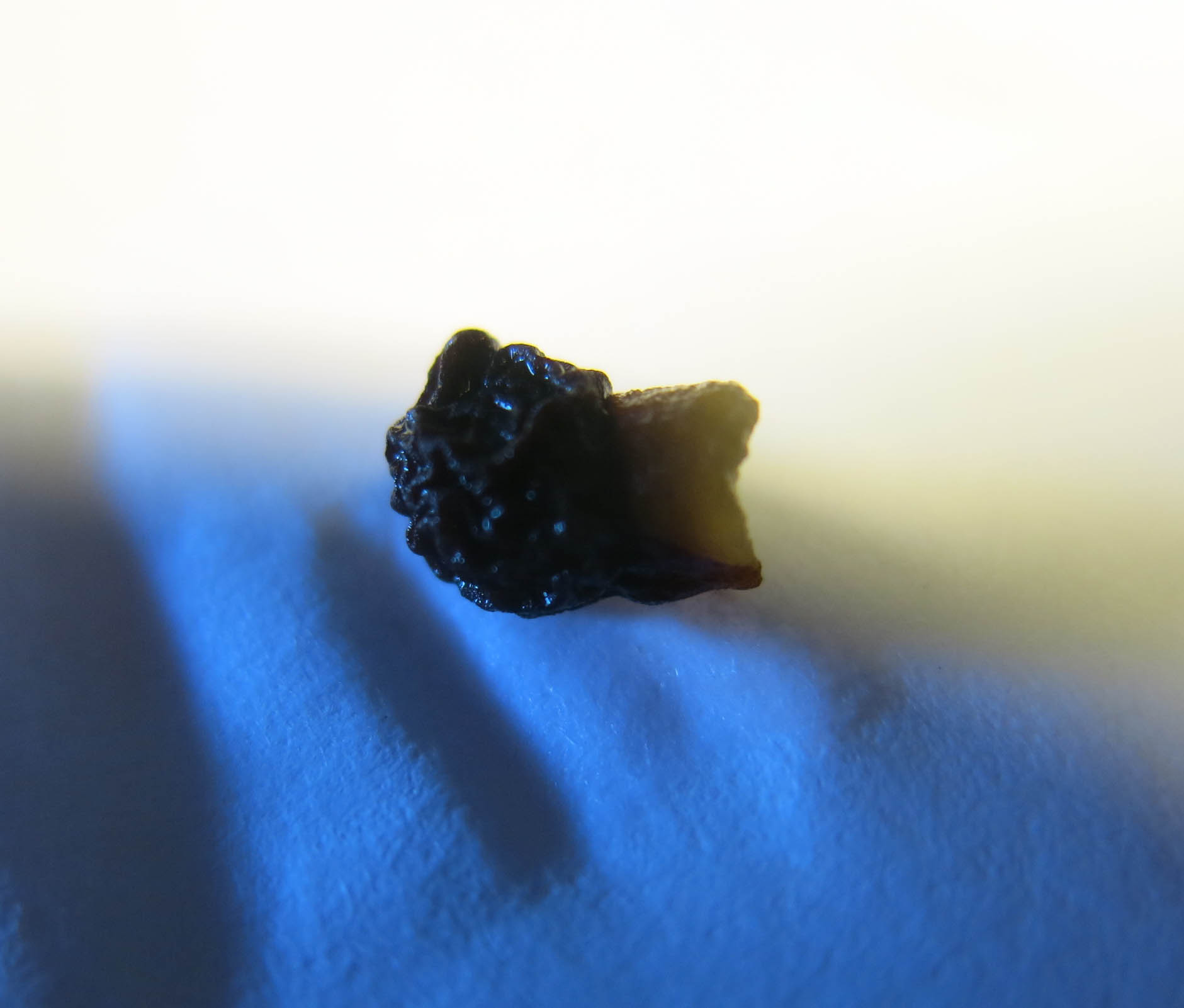 Removing the aril exposes the endosperm; or, if it doesn’t, a small amount of seed coat can be carefully pulled away to reveal it. The endosperm should be white, or off-white, and healthy-looking. (It’s easy to tell.)
Then a small (less than a millimeter) slice is taken off the tip of the endosperm, and you keep doing this, until you have also cut a portion of the embryo. Like cutting across both the white and the yolk of a hard-boiled egg. Use a razor blade, with masking tape covering one side. The seed in the picture below is probably not healthy, since you can see a brown ring around the embryo (brown is almost always bad in gardening), but it does show the embryo, surrounded by the endosperm, surrounded by the seed coat.
I know this sounds like hyper-counterintuitive, actually slicing the embryo, but this is the root end of the plant, and if you remove just a little, things will be okay.
What you are actually doing is cutting across the micropylar barrier in the endosperm; this barrier is so strong that sometimes it will heal, after the seed has been cut.  And then the cut seeds are put in a folded, damp, if not actually moist, coffee filter (the underwear-looking thing in the last post, though some people just use a bag with perlite in it), and put in a freezer bag, and left in the vegetable drawer of the refrigerator for a month or so. (Not in the freezer.)
Then stuff starts to happen. Sometimes. 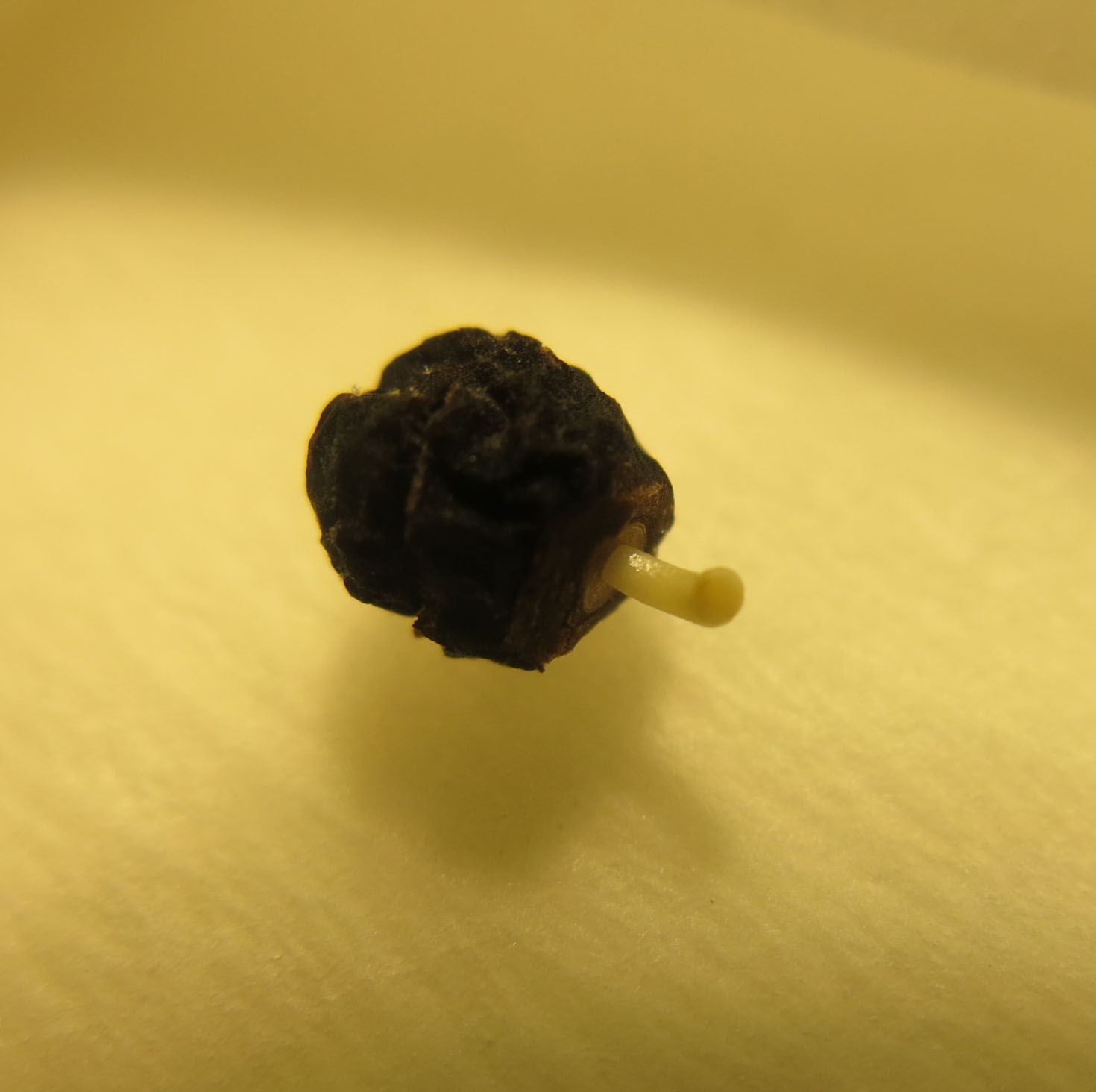 At this point the seeds can be planted, though the guy I live with said that Prof. Deno suggested leaving them in the filters until the first leaf has emerged. The guy I live with is not that patient.
Well, that’s all. See, it wasn’t so bad, was it?
Until next time, then.






 the miserable gardener