
Greetings and salutations, everyone; yes, once again it is I, Mani the purebred border collie, filling in for the guy I live with, and here today to talk about frozen soil. You may remember me from such posts as “Still Not Much Happening”, among so many, many others.
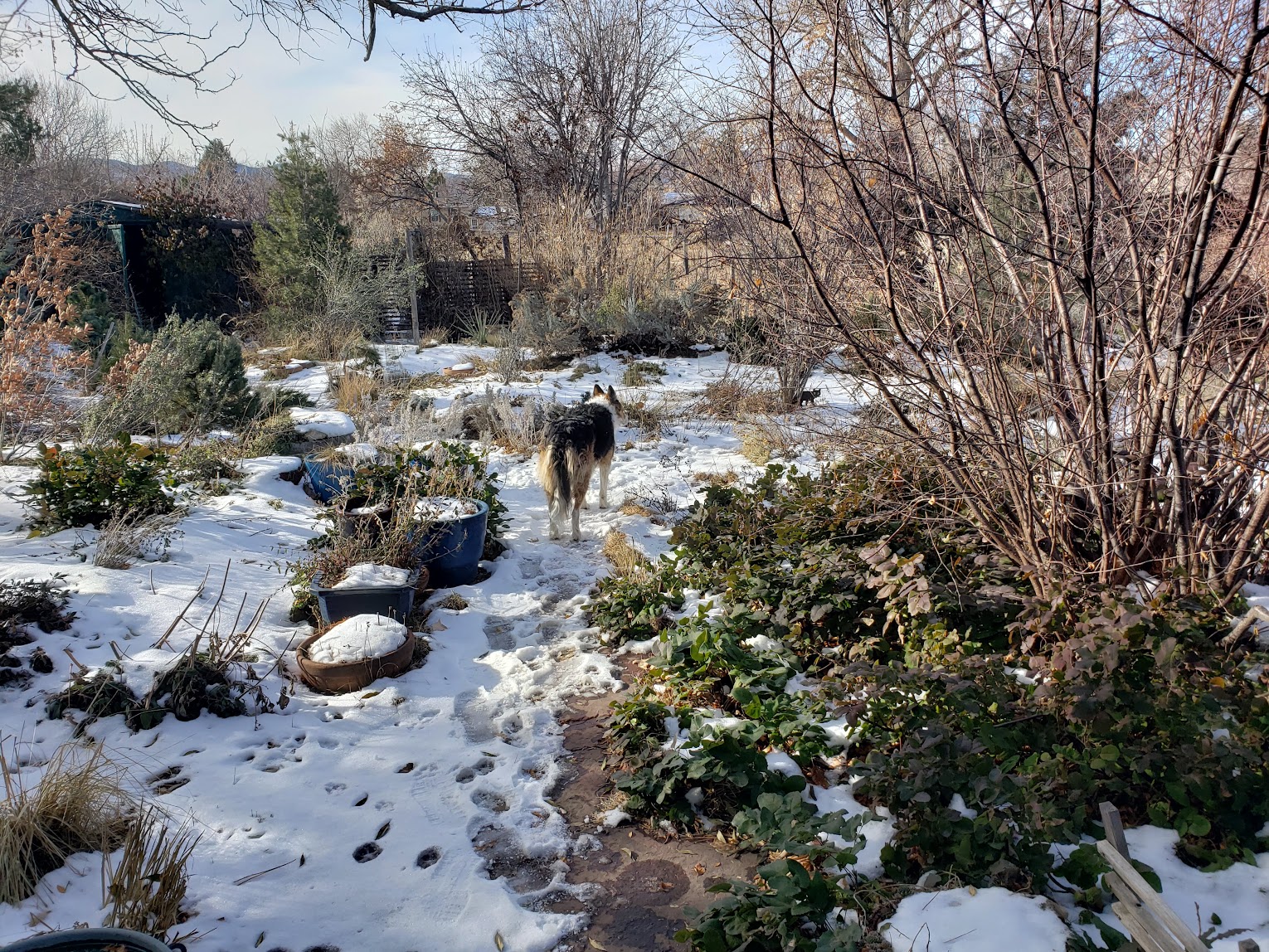
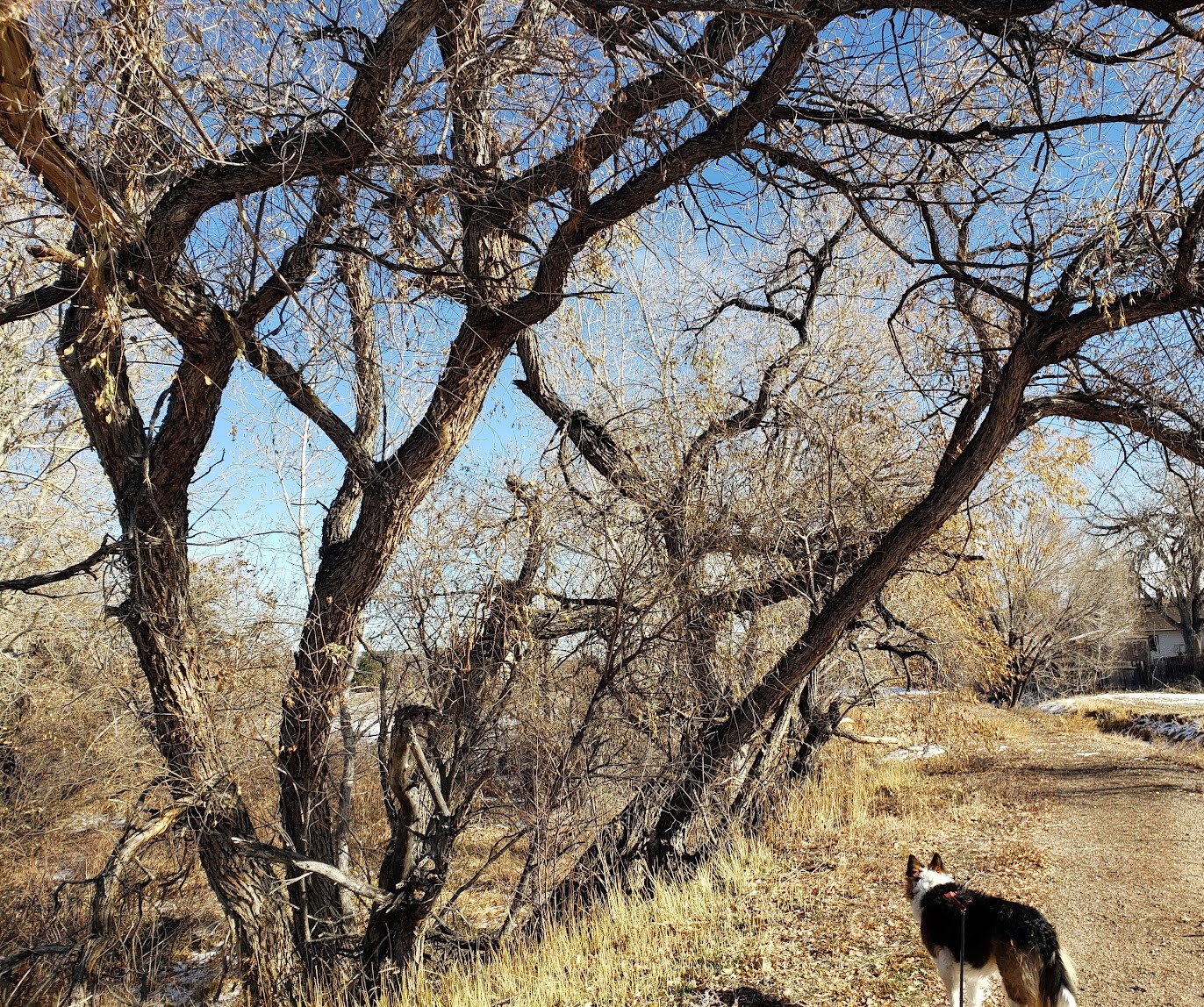
Here I am in a characteristic pose.
 I’m checking for frozen soil here. It’s frozen. Not very deeply, but the top is frozen.
The guy I live with is against frozen soil.
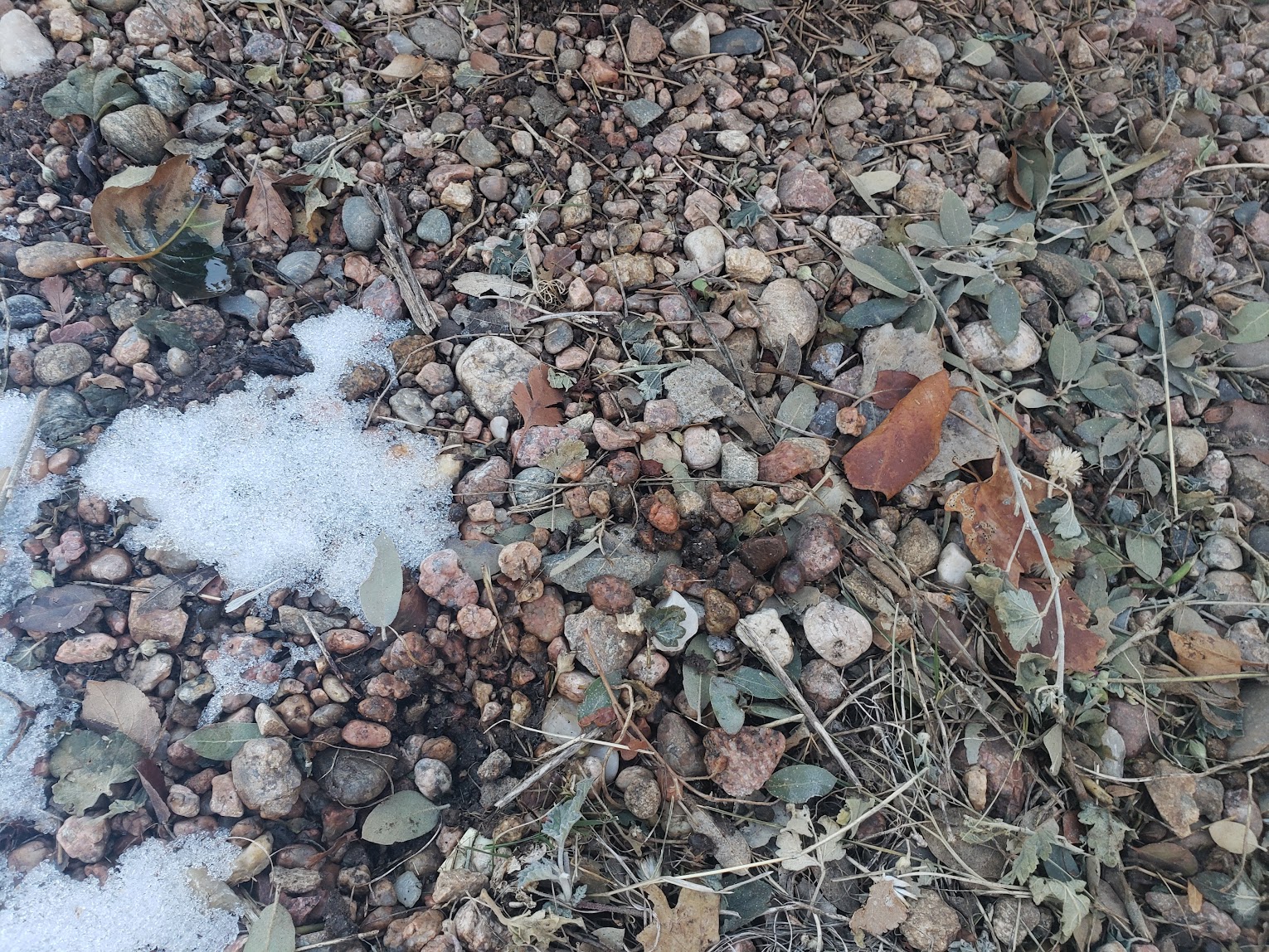
This soil is frozen:
 So is this:
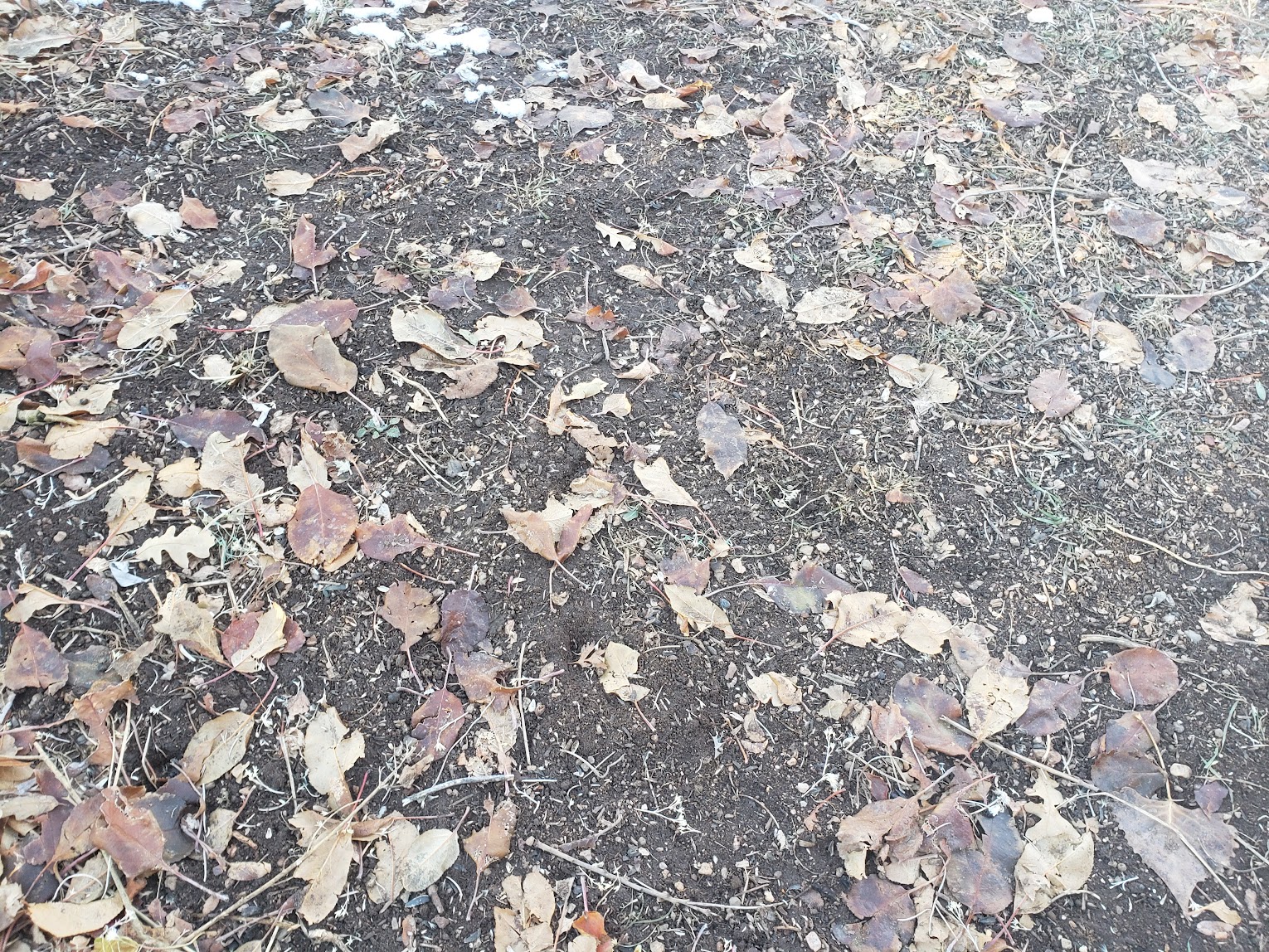 You may notice that the first picture has rock mulch.
The guy I live with says that in semi-arid climates rock mulch is the only type of mulch that allows water to infiltrate into the soil in the summer, unless you water a lot.
But it doesn’t keep the soil from freezing when snow melts into it. Maybe if it were really deep it would.
Some people say that rock mulch generates a lot of heat in the summer, which would probably be true if there were acres of it.
Frozen soil makes it difficult for some plants, like cyclamen, to keep their leaves hydrated during the winter, which is why the guy I live with piled pine needles around the cyclamen before the first time it snowed here. The cyclamen, like autumn-flowering crocuses and of course snowdrops, need their leaves to photosynthesize.
Other plants don’t care. This is a dwarf limber pine (Pinus flexilis) from Jerry Morris:
 It’s not growing, it’s just sitting there. Hardy conifers don’t photosynthesize after a night below freezing, which sounds like a smart move if you ask me.
He’s certainly not going to water this in winter, even though people insist he should. Watering conifers during warm periods can cause them to deacclimate and then get damaged or killed by any cold weather that follows.
(This information comes from a book called Conifer Cold Hardiness.)
The limber pine could also be grown in a pot all winter here, because the roots are hardy to -79 degrees F (-61.6C). Thank goodness it will never get that cold here, but you can see how hardy limber pines really are, because the roots of a woody plant are generally the least hardy part of the plant, besides maybe some of the buds.
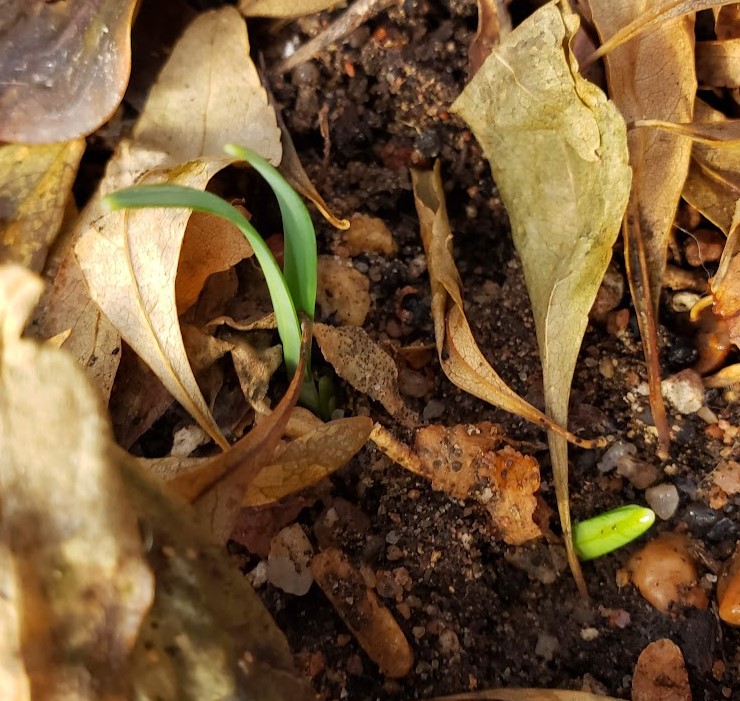
This soil is not frozen:
 In spring the guy I live with will take his quiet Ego leaf blower and gently blow all these leaves across the path into this garden, where the soil also isn’t frozen:
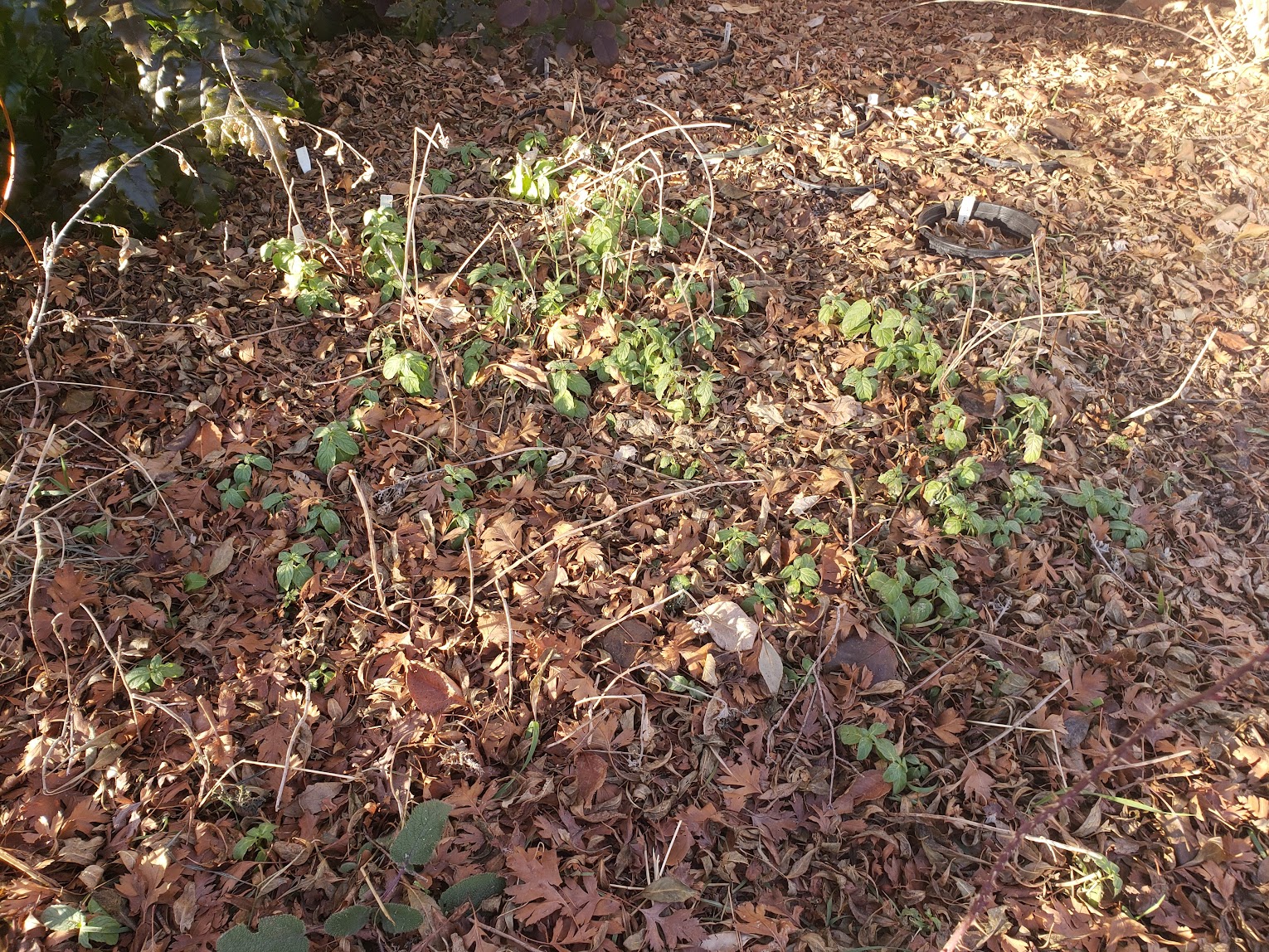 If we get a huge amount of snow later in the winter, which is possible, then maybe the melting snow will infiltrate through the leaves and, if it gets cold after that, the soil will freeze, but probably not the soil in the bottom picture.
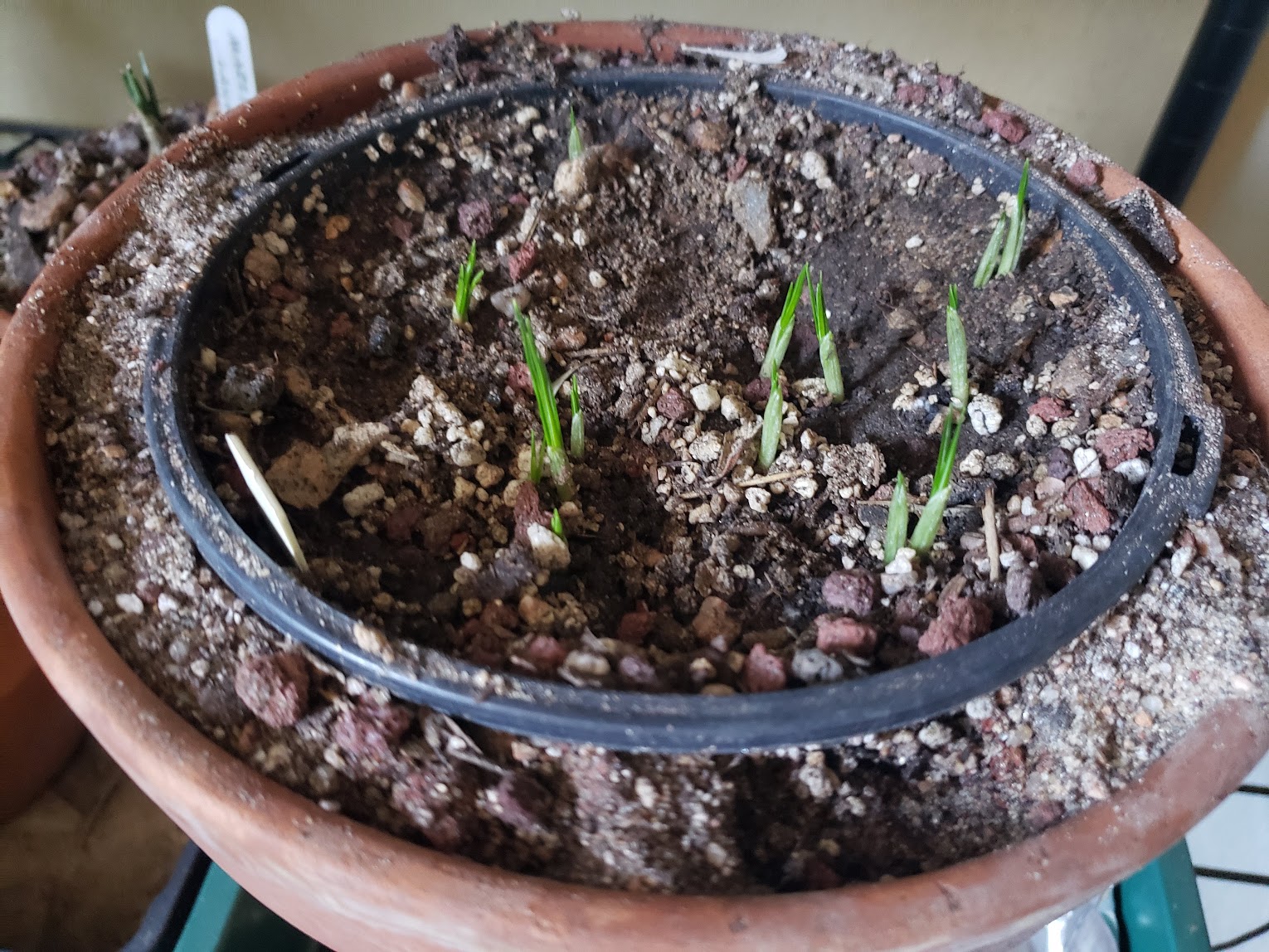
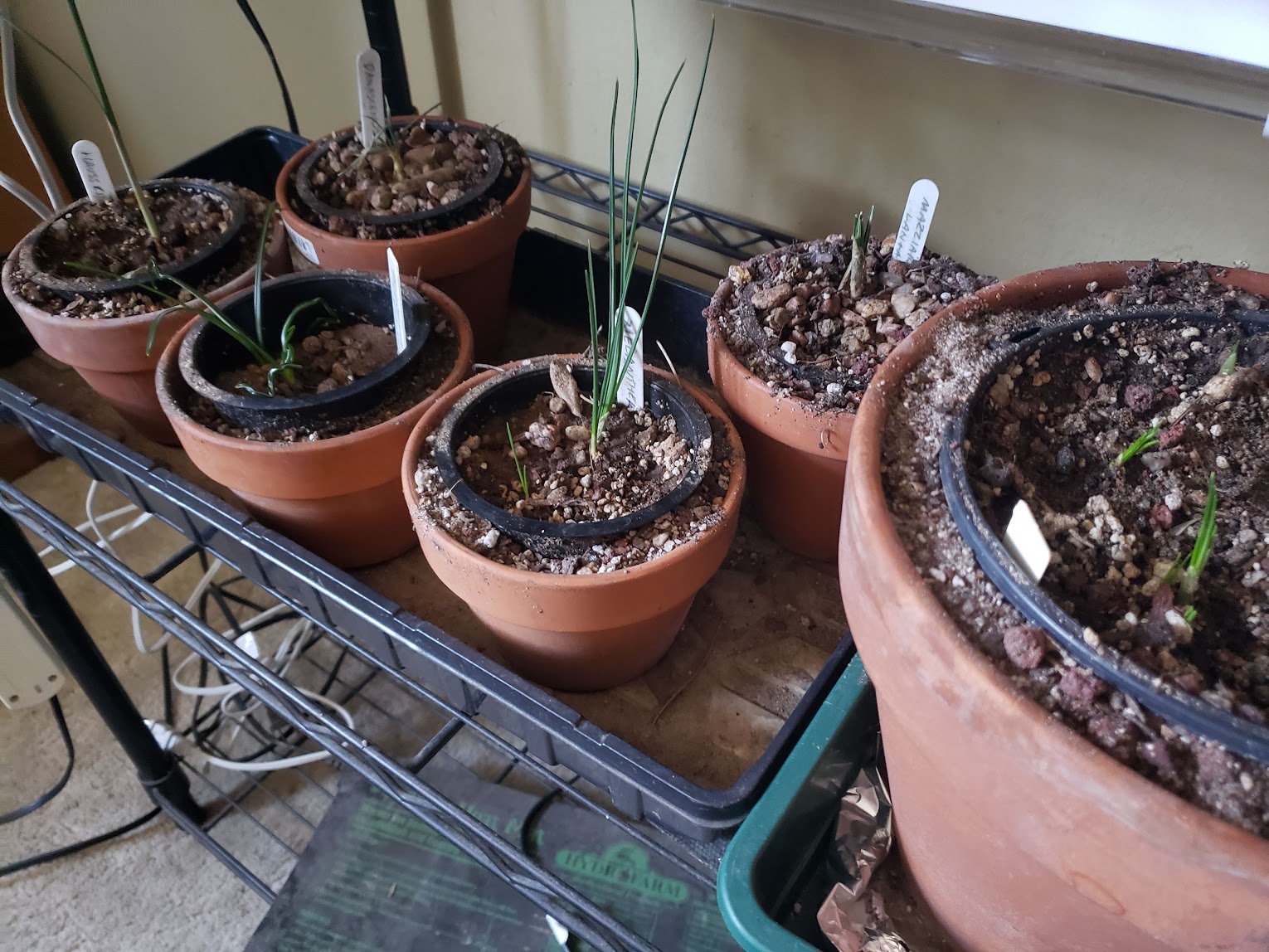
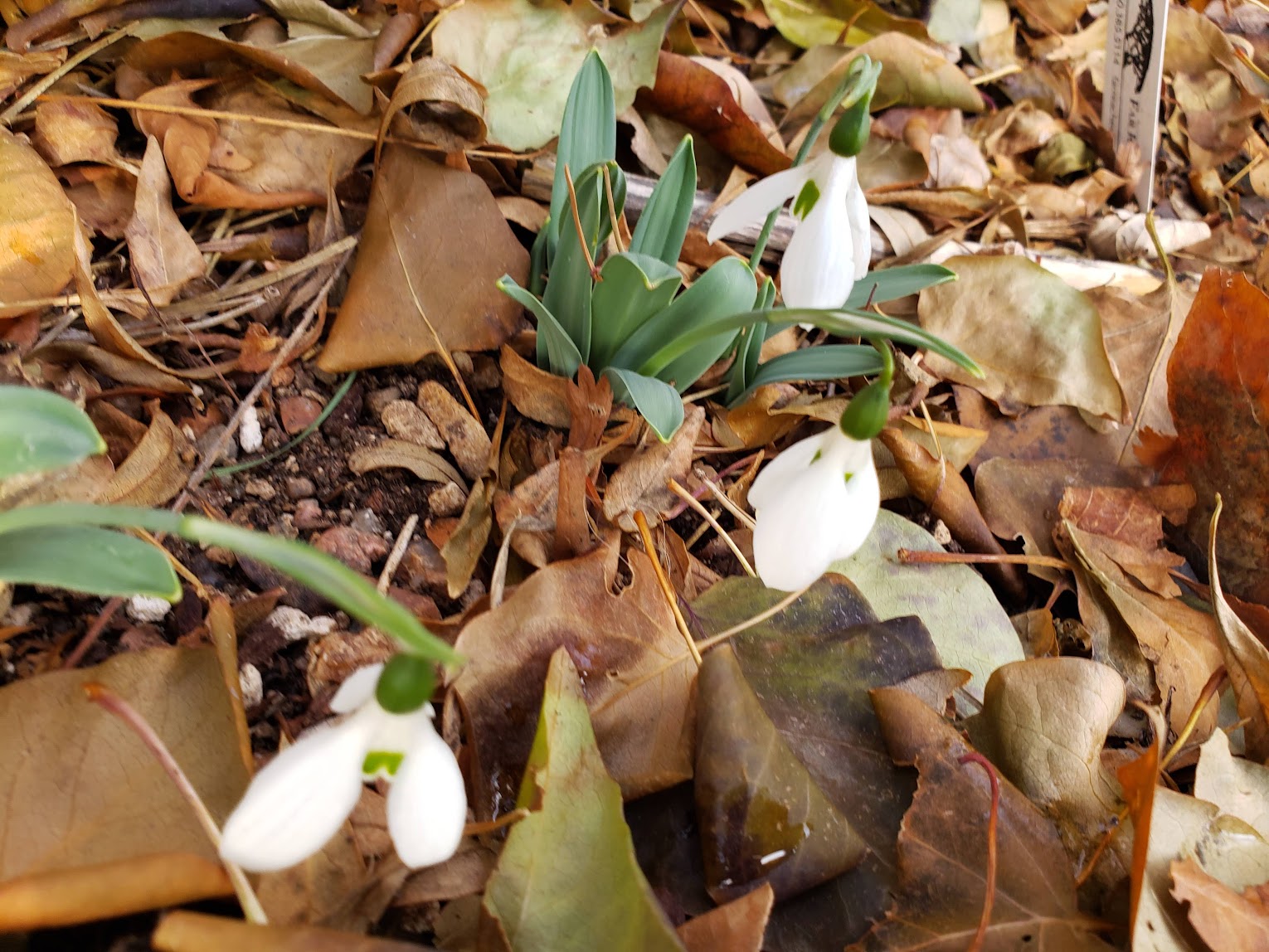
There are snowdrops in those pots, and some of them are up, as I showed in my last post.
All those little leaves are from the ‘Himalayan Silver’ mint.
The guy I live with used to take all the old Christmas trees from the neighbors and cut them up and lay the branches over parts of the garden, but then later he was left with all these branches.
And that’s all I have for today. I didn’t feel like walking down the creek this evening, so we didn’t see that willow.
I hope you found this more fascinating than I did.

Until next time, then.
 the miserable gardener