
It’s been dark all afternoon, one of the drawbacks of summer on the west side of Denver. (It’s especially dark now, since it’s night.) Half an inch of rain has fallen in the last month. Situation normal and under control.
This is what Agastache rupestris, darling of the xeriscapers, really looks like growing in dry soil. The soil drains in about fifteen seconds. (If your plants don’t look like this ….the leaves are turgid instead of wilting……you don’t have soil as dry as mine; it’s as simple as that. The plants have flowers because they’ve been watered ….for the hummingbirds, but then begin the quick decline into death from drought a few days later, unless they get watered again.) There’s a plant in the garden next door, which I water, in full sun, that’s very happy, but the soil is palpably damp just four inches down.
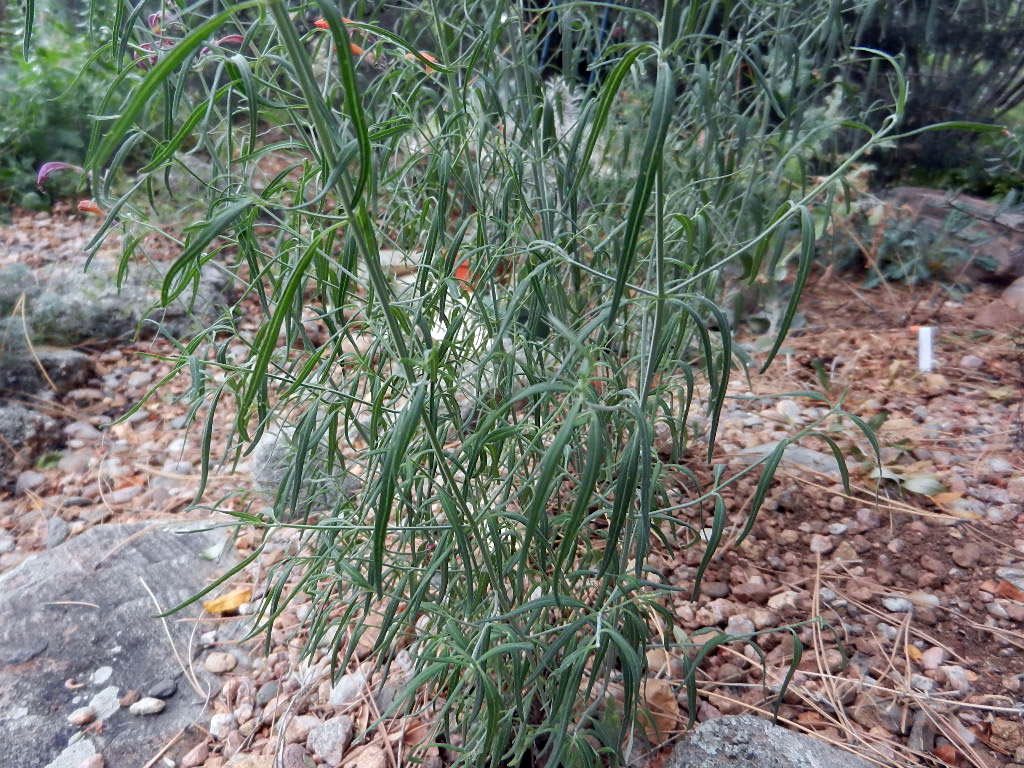
Agastache rupestris in genuine dry soil.
And Agastache ‘Desert Sunrise’, as close to dead as makes no difference, two plants in fact, growing in almost pure sand and gravel.
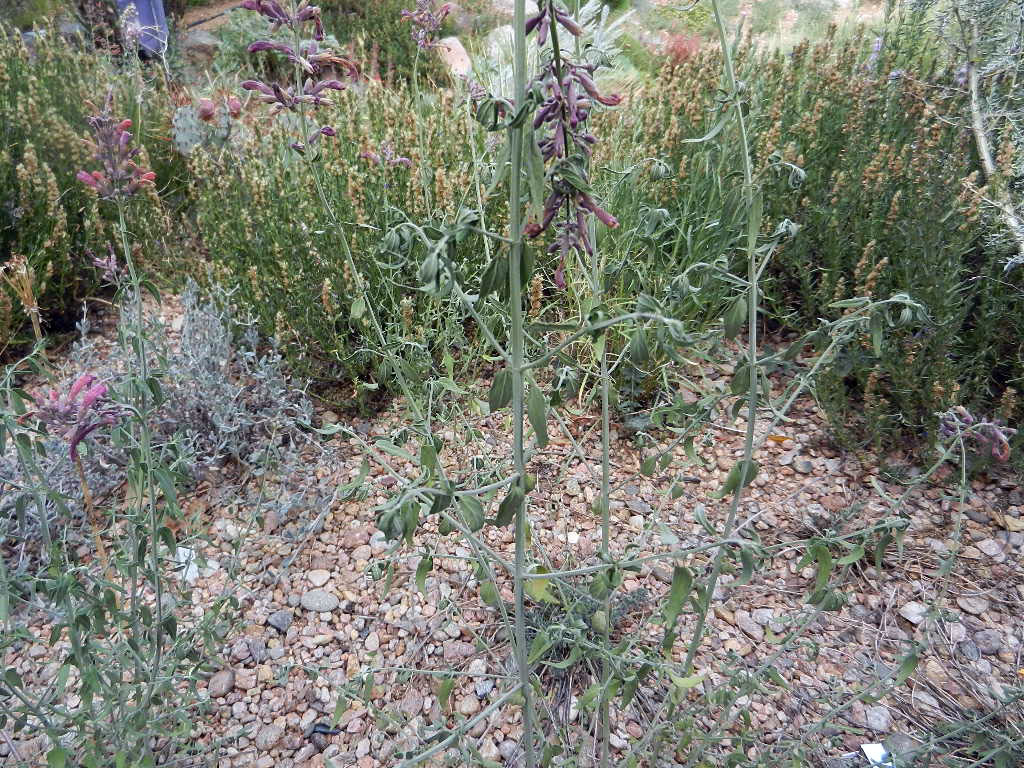
“the depressing spectacle of drooping foliage”
“Does poorly in shade and moist soil” is something you may read about these plants. I don’t think so. That’s how they grow in real life, in shade, in places that get seven to eight inches of rain in the months of July and August.
I used to feel bad, I mean like totally inferior, that I couldn’t get my agastaches to grow to the size of a small house when everyone said what xeric miracle plants they were. Everyone was exaggerating. Which is why I talk about this all the time. No one likes to feel inferior, at least all of the time. The plants like tons of water after mid-July if your soil is as dry as mine. Growing plants that need massive irrigation isn’t my idea of coming to terms with drought.
Incidentally, these plants have huge woody roots that are difficult to dig up; I make nothing of this, since I’ve found some gentians that have a similar root structure. But surely there are better choices for my garden.
Here, though, is Solidago rugosa collected from seed in Boulder County, plants purchased from Harlequin’s. Not the showiest plant in the world, but pollinators like it. It’s growing in the “Employees Only” section of the garden. Only the dog goes back there.

Growing on the abandoned compost heap; the soil is damp about eight inches down, but I just watered this area because I planted some seedlings here that I’d rather not lose.
And since I can’t stick to the subject, I found this wren feather today. The garden is swarming with these adorable creatures. A few weeks ago the dog got out of bed in the middle of the night, which he only does if he has to go out, or if he’s frightened, and at the same time I heard this strange noise like tinfoil falling on the street. It was a wren, fluttering behind the curtains. I tried some wren wrescue but failed; the wren slept there during the night, and I was able to catch it with the butterfly net (no longer used for that, but for rescuing flying creatures) and release it outside.

A real photographer would have centered the penny, of course.
Speaking of creatures invading my home, I’ve been outsmarted by a mouse for a couple of weeks now. The back door is always open when I’m home, which is most of the time, so I figure it probably just strolled in (also probably why seven birds have flown in the house this summer). I set out a Tin Cat baited with peanut butter (even though you don’t have to do that, it helps), but the mouse walked right in, ate the peanut butter, and walked out. Tin Cats are very effective and don’t kill the mice (a practice I find revolting), but one of two things happened. Either the mouse modified the Tin Cat to allow it to leave at will, or the Tin Cat got broken when I loaned it out. I bought another one.
One mouse inside the Tin Cat will release pheromones that attract other mice, so the thing can attract a lot of mice. I don’t really want a lot of scared, sweaty mice in a small metal box, just want to get the one that’s in the house, let it go, and leave it at that.

One mouse will do just fine. There are plenty of air holes for the mouse, and of course, fresh ground organic peanut butter.

 the miserable gardener