planting in a dry garden

This is just one way. Works for planting during a drought, too.
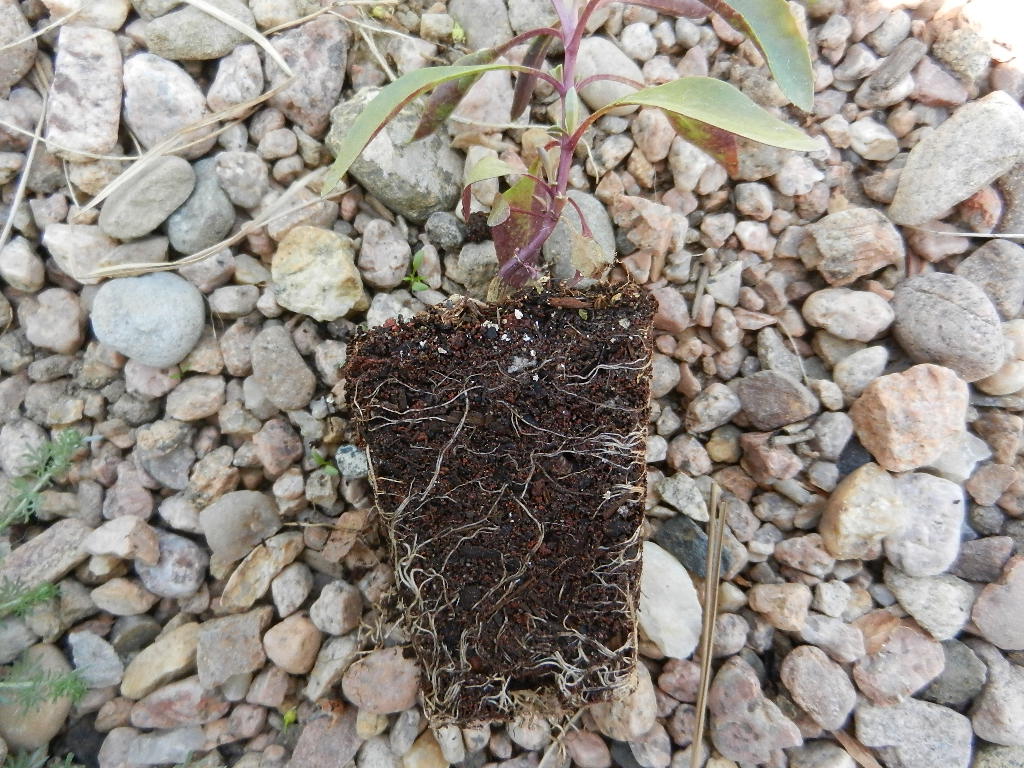
Nice root system on this one. (Penstemon incertus from Agua Fria Nursery.) If the roots were coiled at the base, I would gently tease them apart with a fork (eating-type, remembering to wash it before eating with it, I guess) or a toothpick.
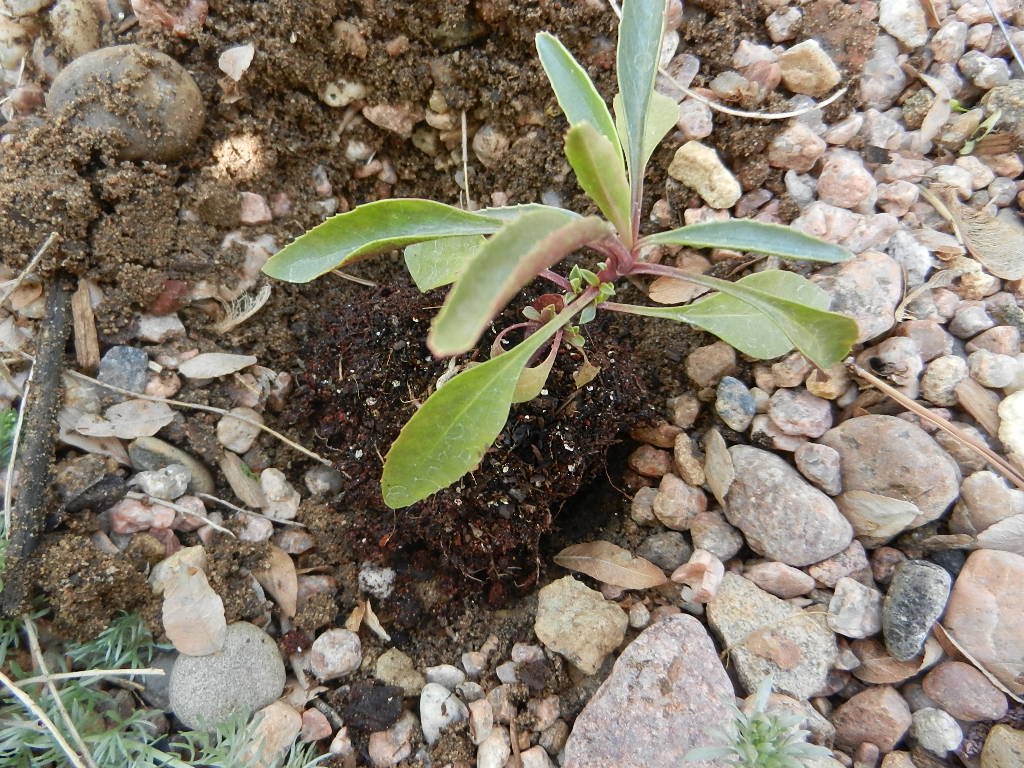
Planted. I dig as small a hole as possible. There isn’t any reason to dig a larger one.
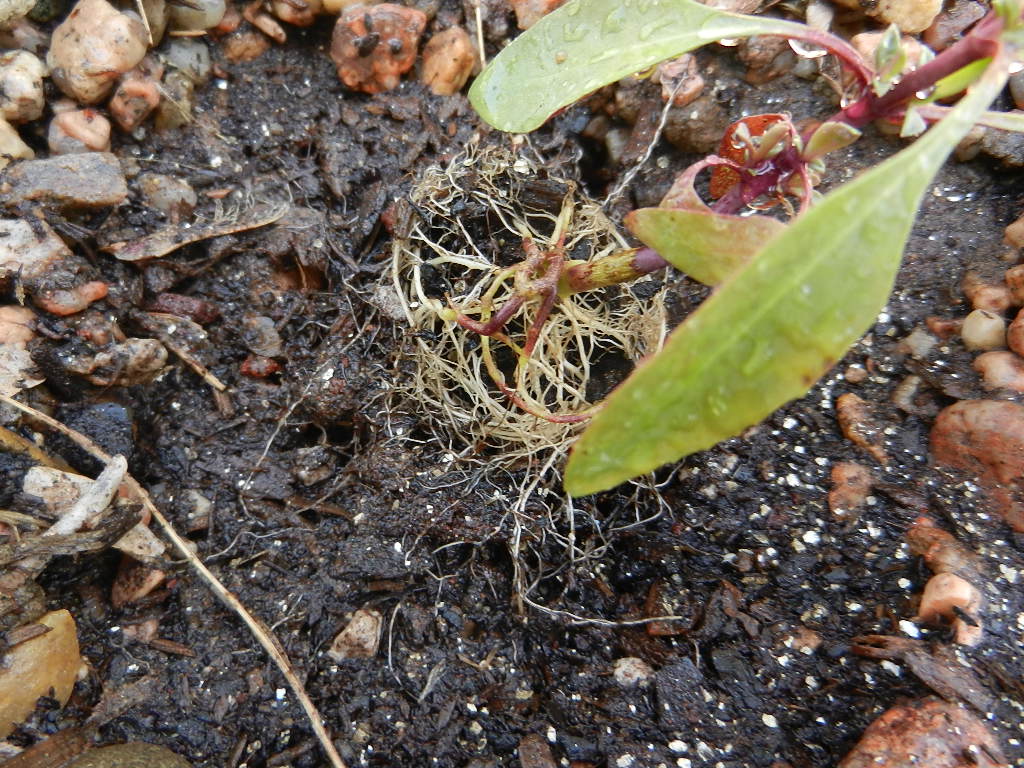
Not a scene from Fringe. The roots have had most of the soil-less mix washed off by directing a stream of water at them from a watering can (not a hose; too easy to lose control).

Then the planting hole will be backfilled with surrounding garden soil. Naturally there will be some soil-less mix left in the hole, but the roots will be in contact with the garden soil, and have a good reason to check it out. Getting the plant established, that is, the roots growing into the surrounding soil, is the most critical factor in survival when planting in a dry garden or during a drought.

If the plant is planted in the ground without removing the soil-less mix, the roots will have no reason to move into the surrounding soil, and will simply continue to grow within the confines of the mix. I’ve planted trees and shrubs in my garden this way, and been able to pull them right out of the ground, root ball and all, even after several years in the garden.
Posted in Uncategorized | 1 Comment

after the plant sale

Yesterday, after it looked like it was going to rain in the morning, the sun came out (funny description of an action that does not really take place), and the wind blew fairly hard most of the day. There was light frost on the ground in some places, and it was clear, from our morning walk, that cold air from Mount Lindo, 7800 feet high and four miles to the west, had drained down the creek, pooling up on the southern bank of the canal (really a ditch, one of those 1880s water rights things, I think); there was no frost on the other side of the canal.

In fact, on a summer night, you can walk along the canal road (I’m making this sound much more romantic than it really is), and suddenly feel the pool of cold air that collects against the bank of the canal. The creek makes a slight turn and then goes under the canal through a culvert, so there is no way for the air to drain down past the canal.

Not a big deal one way or the other, gardening-wise, unless I completely forget where I am and try to grow tomatoes in the back garden. They never ripen.

Anyway. Plant sale. Being a highly evolved gardener, few other combinations of words have such a tendency to excite the acquisitive instinct. There are always totally cool plants at the RMC-NARGS sale, and years of training took me right to them.

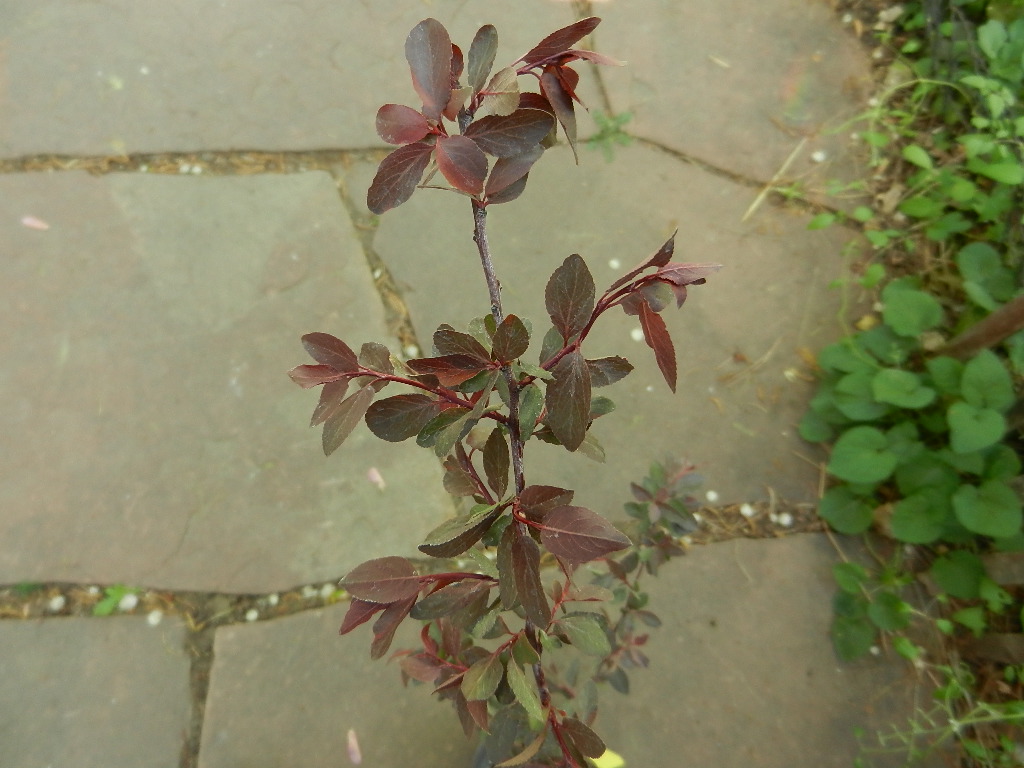
What looks like a cross between Prunus andersonii and the purple-leafed sand cherry, from Agua Fria Nursery:

and, of course, a sequoia, from Laporte Avenue Nursery.

“Where are you going to put all these plants?”

Blank stare from me. What a question to ask a gardener. The plants are going in the garden, of course. Where else would they go?

The trick here is only to buy (in theory) plants that go up instead of out; that way, available space (again, in theory) is not much of an issue. Self-delusion is of course not even under consideration here.

Sequoias, after all, are completely hardy along the Front Range (take that, Zone People), and this one only cost ten dollars. (Okay, ten fifty.) Never mind that I’ll be eligible for Social Security next year. One day you are looking at this little tree in a one-gallon pot, and before you know it, you’re peering into the clouds trying to see the top of it, and wondering how it got that big, that fast.

Posted in Uncategorized | Comments Off on after the plant sale