
Greetings and salutations, everyone; yes, once again it is I, your popular host, Mani the purebred border collie, here today to bring you an utterly fascinating post. You may remember me from such other fascinating posts as “Still Nothing”, among so many, many others.
Here I am in a characteristic pose.
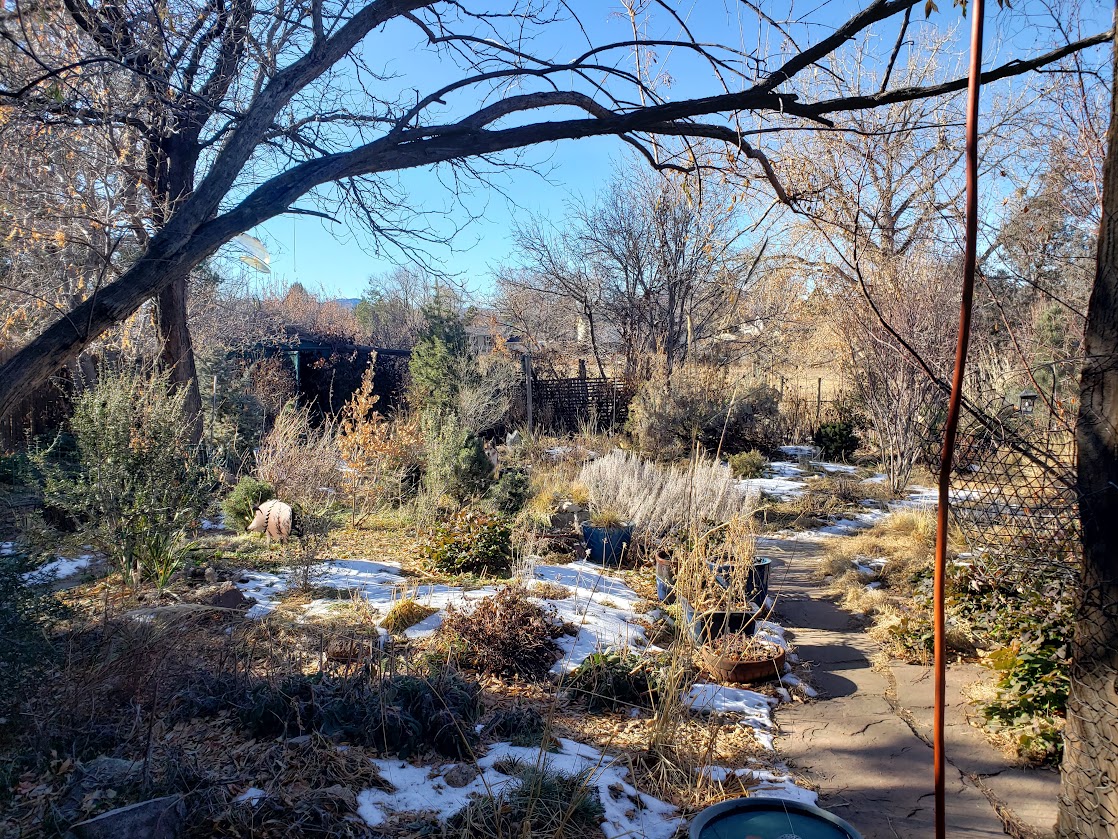 I’m there; really I am. I like to blend in with the scenery.
It was a nice day today, though a bit too chilly to do anything besides fill the bird feeders. They say it may snow tomorrow; it didn’t yesterday, when they said it would. Or might; I forget. They say it will, and then it doesn’t, which to me is just plain weird.
The one thing about our winters is that they’re very sunny, compared to most places.
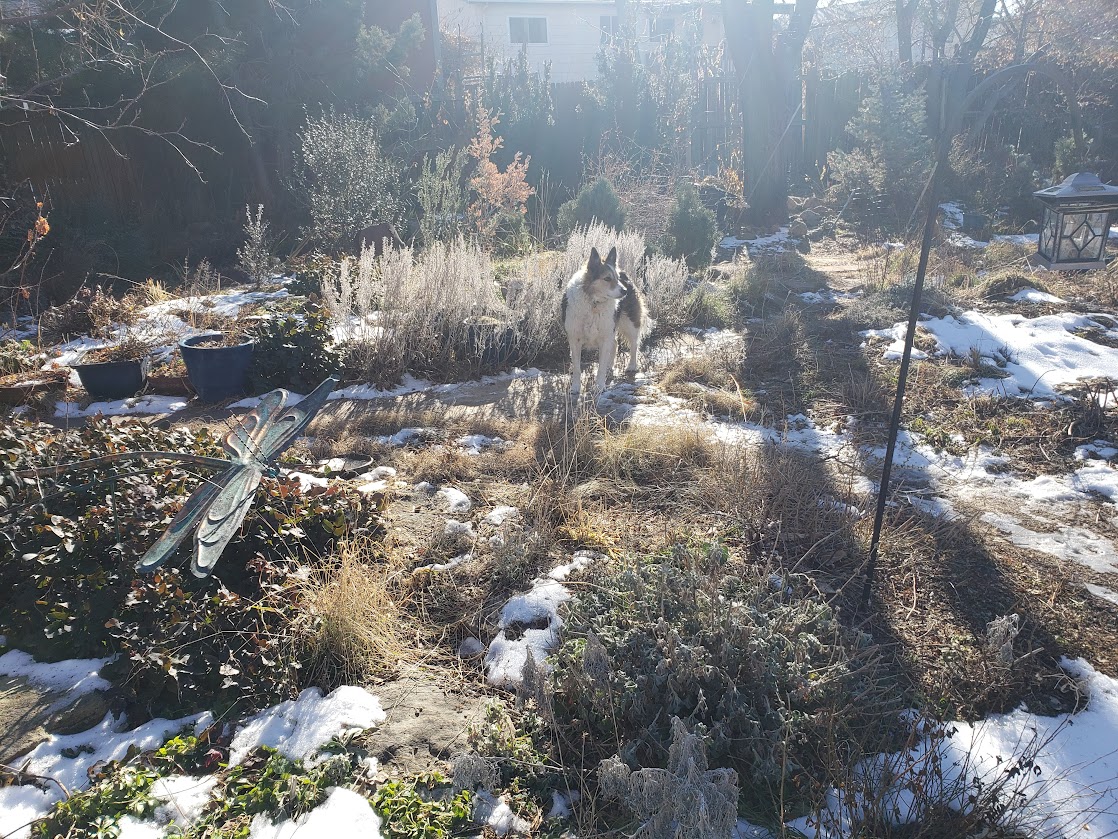 So far, our winter has been kind of monotonous: the same temperature every day, and a little below freezing at night. Neither of us is all that big on “exciting weather” like storms, and we really don’t mind the monotony. And anyway, one of us, not saying who, has had a difficult time adjusting to the time change, even though that was weeks ago.
It’s going to be colder next week.
The guy I live with saw this, and was not hugely thrilled.
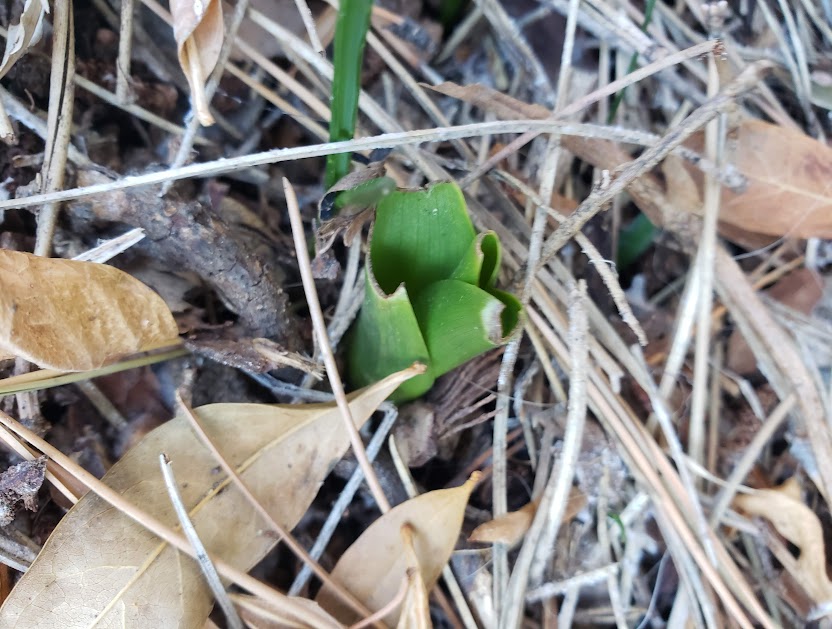 This is new growth on Colchicum kotschyi, from Iran. The guy I live with said this was “completely wrong”, and if it gets as cold as they say it will next week, these leaves will be covered with pine needles, just in case.
We have to go into the front yard for the remainder of this post. I’m going to stay in the house, though, so I’m not totally sure about the narration.
But before I let the guy I live with out into the front yard, I’d like to talk a bit about the title of this post, especially the spelling of “mold”. The Oxford Dictionary of English Etymology says the word comes from Old English “molde“, and Old Norse “mold“, so what’s with the rest of the English-speaking world spelling it “mould”?
The guy I live with said that was because of Norman influence; the English decided to spell words like “mold” to look more French. “Mould” does look sophisticated, for sure.
(More on this later.)
Okay, now we’re in the front yard. Or the guy I live with is.
The guy I live with planted a bunch of seedlings of Penstemon palmeri right by the front stoop. He did this in August or September, maybe later than that. He said that’s the time to do it, and the little seedlings will be okay all winter.
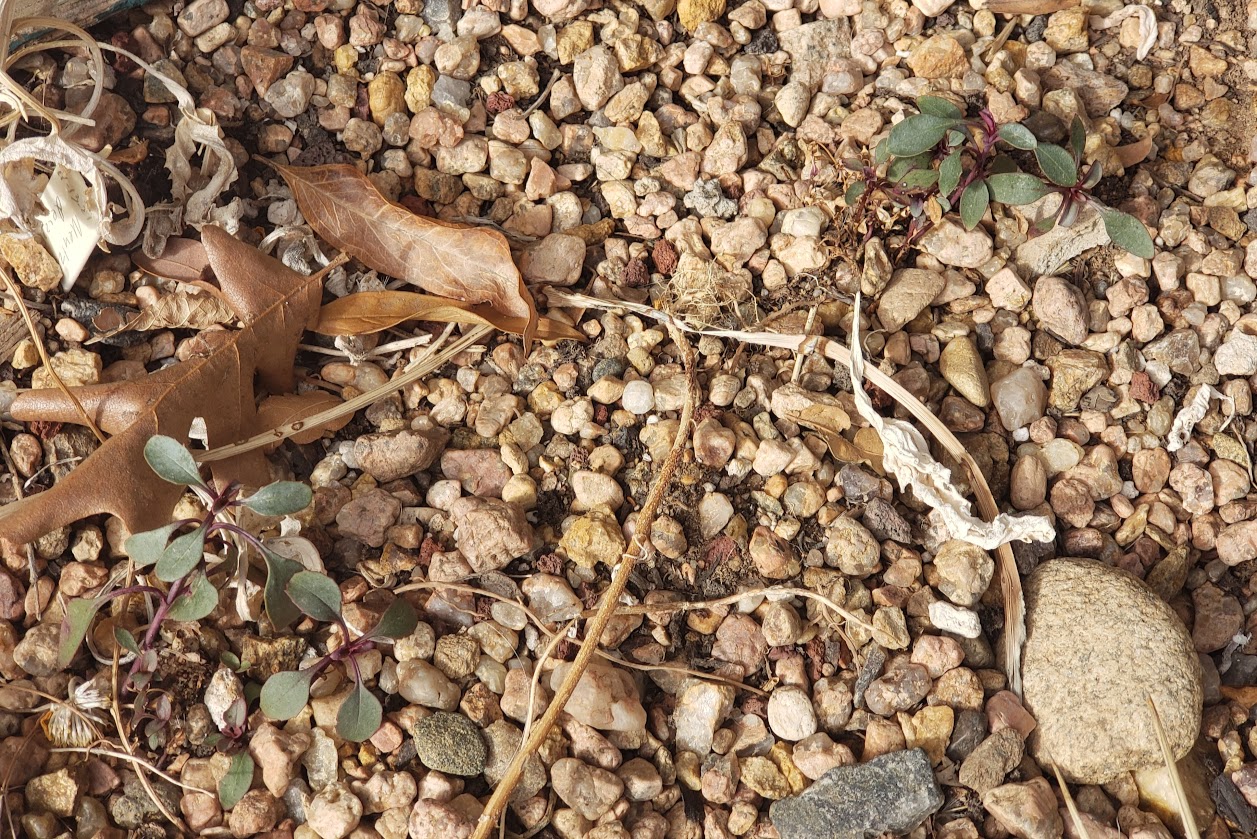 He didn’t separate all the seedlings but instead just pulled the seedlings into clumps of two or three.
Even though there are healthy green seedlings in the garden, most of the garden has taken on a definite winter tint.
This is Opuntia ‘Dark Knight’.
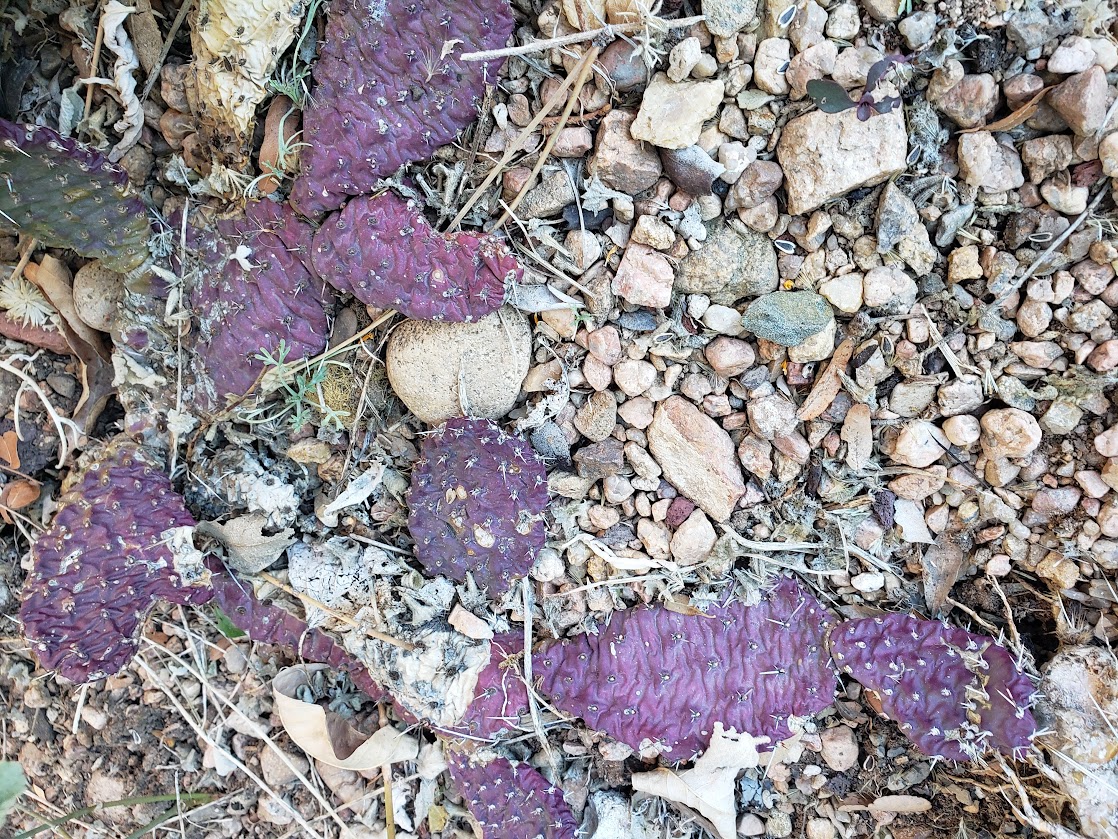 The guy I live with said that the reason it’s spelled “knight”is because, unlike, say, the French and Germans, no one attempted to correct English orthography after the Great Vowel Shift, or some time around then. Before that it was pronounced something like “knicht” (like the German Knecht). They retained the K even though it was no longer pronounced, and now the word sounds like “night”. (German, Nacht.) Oh, sorry. That was another one. Sounds like “light”. (German, Licht.) Wait a minute.
It rhymes with “bite”. There, that’s better.
There are tons of words like that in English, from Anglo-Saxon; the guy I live with said he truly pities people who try to learn English and have to deal with all these peculiar spellings.
We’re getting close to the point of this post, so don’t worry.
The guy I live with is in the front yard. He was in the front yard, I mean.
He said he was walking by the single-leaf pinyon, Pinus monophylla,
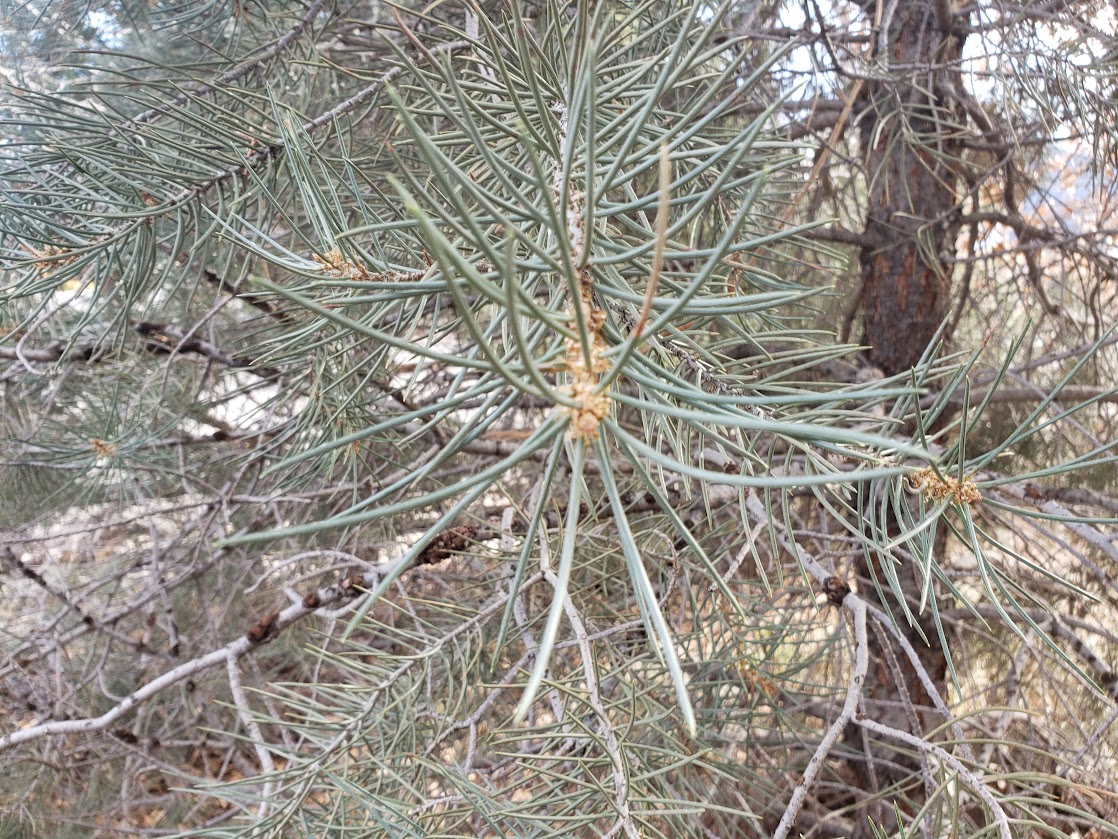 which is a pretty big tree now,
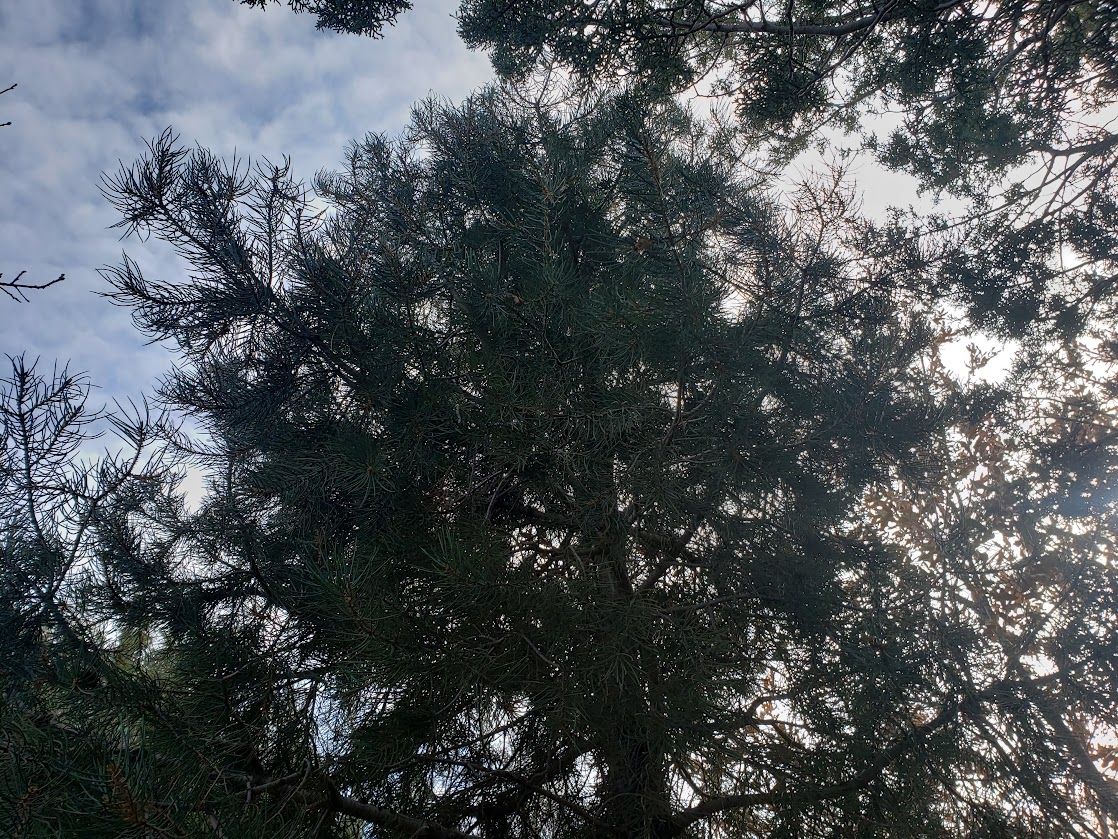 and he noticed how soft and springy the soil was.
He bent down and grabbed a handful of the soil, and under the pine needles and oak leaves there was actual leaf mold.
After the got up, which was a feat in itself, he said that he’d always read about leaf mold in English gardening books, and wondered what on earth they were talking about.
There is thick leaf mold in the shade garden, but that’s a watered garden, and the garden in the front yard isn’t, so this came as a real surprise.
This is what it looks like:
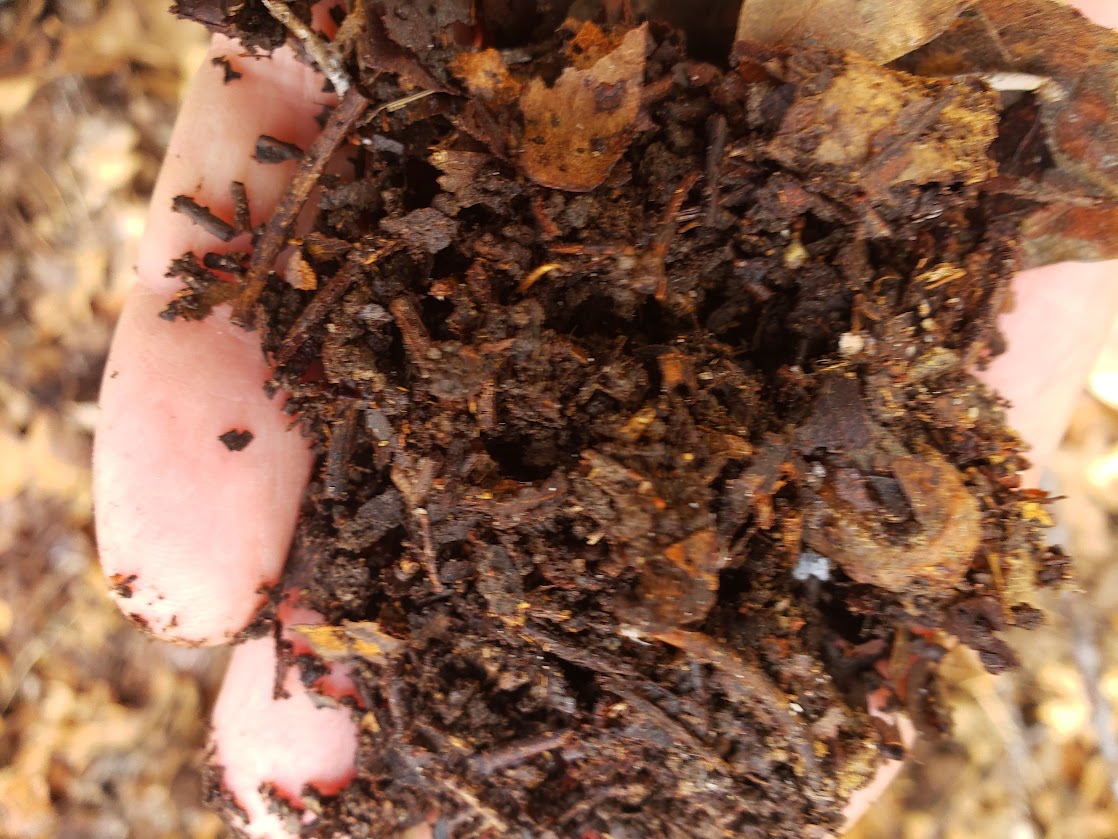
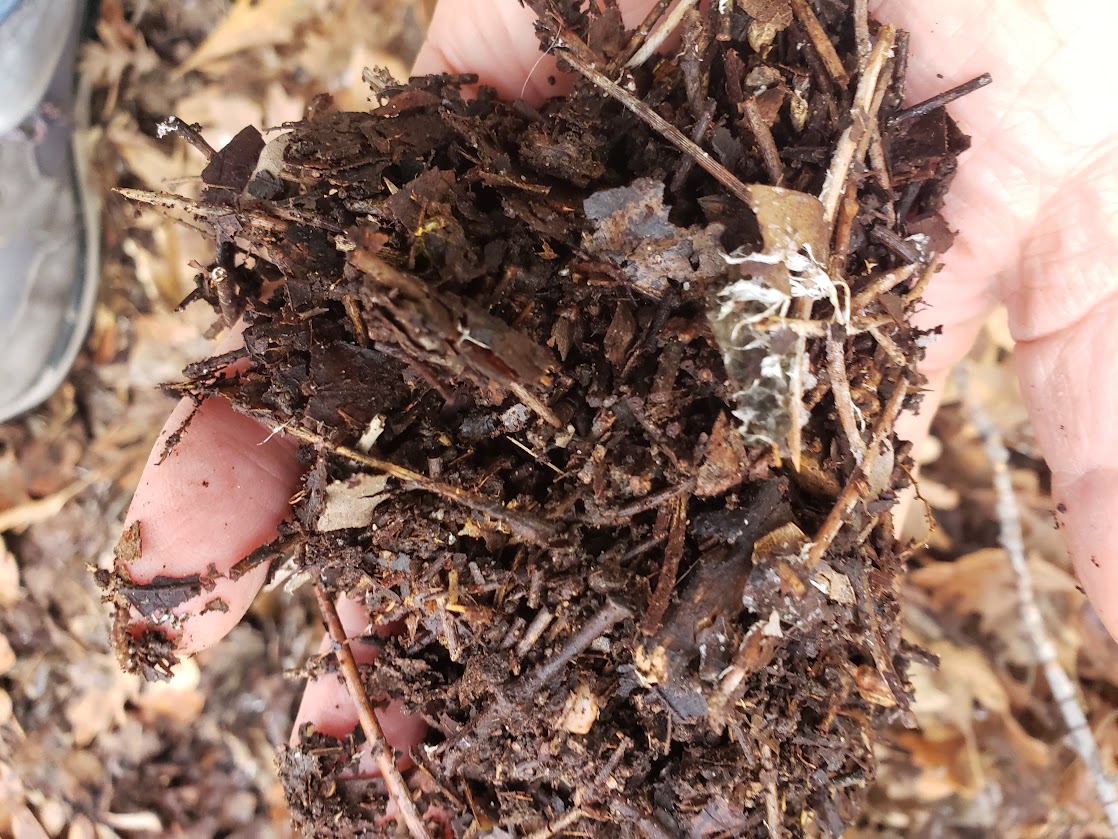 “Kind of amazing stuff”, he said, and then talked about how he was going to rake it up and take it into the back garden, but that (to use more of those igh words) might not be the brightest idea, since he’s read that having all this leaf litter aids in drought resistance for dryland plants like the pine.
Maybe he’ll just rake up some of it.
The guy I live with is now obsessed with leaf mold.
Before anyone says anything about composting, we do have four compost bins (sort of), but the thing is, in a semi-arid climate, unless you water the compost in the bins, it only takes about 10,000 years to get any kind of compost, and he says he’s not going to wait that long, which is why he’s been raking all the leaves into that mound of soil I showed a while ago. Raking the leaves, and digging them in.
Okay. I know this was sort of a rambling post, filled with the guy I live with’s obsessions rather than tons of pictures of me, but I work with what I have, and this was all of it, today.
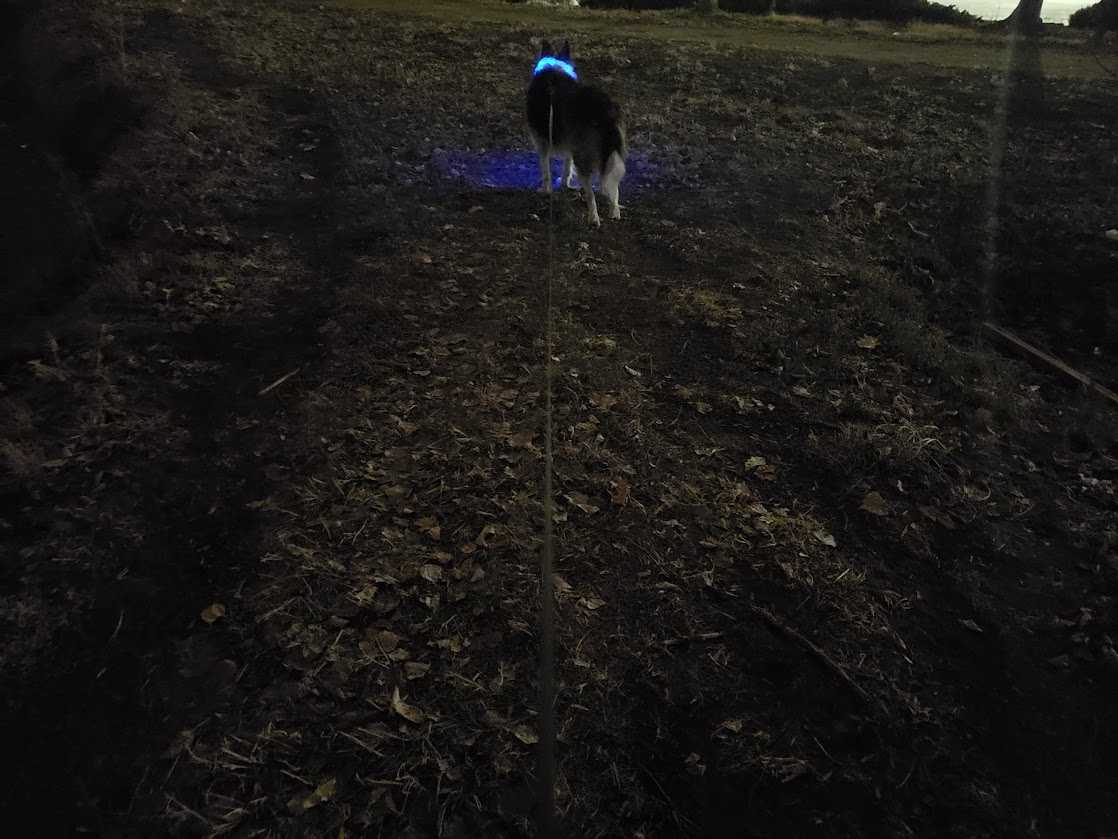
Until next time, then.

 the miserable gardener
Please keep talking about the history of English words and all that Anglo-Saxon stuff, Mani. I have developed an interest in it myself.
The guy I live with had a friend, Allan Taylor (who’s been mentioned on the blog in connection with oaks and stuff), retired professor of linguistic anthropology, who passed away last year; he and the guy I live with had lots of conversations about language, which is how he learned this stuff.
I never tire of the subject, Mani. You understand how great it is to dig around in old stuff.
The guy I live with said that one of the things Allan told him was that writing is not language. It’s just a representation of the language, which is what’s spoken.
So then the guy I live with could go on Facebook and say that such and such a word “is so a word”, because it’s in the spoken language, even if people don’t like it.
(And that a word like “gift” has been used as a verb for hundreds of years.)
Leafmould is a magical ingredient in the garden in my opinion. It is invaluable when growing snowdrops, for example, and seems to help prevent damaging fungus from multiplying. Certainly, the snowdrops thrive when planted with generous amounds of the leafmould. I collect leaves each autumn and keep them to rot down and then use them the following year.
The guy I live with noticed that in the shade garden, where there are a zillion snowdrops (maybe not quite that many), that thirty-five years of leaves falling on the soil, and then more or less regular watering, created this amazing soil like we don’t often see here.
Pretty cool stuff.
Mani, you are in fine form today. Thank you especially for mentioning the Great Vowel Shift, an underrated topic.
Thanks. The guy I live with said that though, enough, plough, and ny number of other words fell victim to the lack of standard orthography. Handwriting was even worse than typeset spelling; Shaksper spelled him name many ways, like the one here.
Imagine trying to pronounce those words without ever having heard them spoken.
Goodness, you are not easy to see in your first picture!
I’m there, though; just to the left of center, smack in the middle.
Of course. I saw, but it took a while.
I blend in very well.
Yes, I see, . . . but not very well.
Nothing like a few leaf mold photos to warm a gardener’s heart! I often think much of my garden would do far better if I just let them go and build up their own ecosystems, but… most of it would turn to weeds and maple seedlings I suppose.
A one leaf pine. I’ll be looking at all the pines I come across from now on, it seems an interesting thing.
The guy I live with was surprised to see thick leaf mold in a garden that hasn’t been watered since 1987, but it does rain here some, and of course snow.
The single-leaf pinyon was very uncommon in regional horticulture until just recently. There are at least five of them in the garden here, mostly dwarf varieties like ‘Blue Jazz’. The one pictured is a large one, same size as the regular pinyon, Pinus edulis.
I’m glad the guy you live with was able to stand up after grabbing a handful of leaf mold! Did you find any slugs hiding in there?
No; no slugs. We never see them here. The guy I live with says he’s seen slugs here, but only back in the last century, when it would rain a lot.
Your post has me wondering how much physical weathering (e.g., wind), insects, and temperature fluctuation helped to break down your pine needles and leaves into smaller bits. Maybe those play a greater role in your environment compared to mine where it rains much more. Fungi are remarkably well adapted at breaking down organic matter into smaller bits, even when there isn’t much moisture. As you so astutely pointed out, it just takes a longer amount of time when there isn’t as much water.
That could be. The front garden gets a bit of water with melting snow in spring, but I suppose fungi could still be at work in dry situations.
The guy I live with says there’s a lot of talk about mycorrhizae on the Las Pilitas Nursery website.
Yes, naturally occurring mycorrhizal relationships are integral to plant health and help many species obtain water and nutrients even under challenging conditions. I’m glad they don’t seem to be pushing people to buy those commercial mycorrhizal products with outrageous claims.
The guy I live with said he’s read that, too. Plants like manzanitas rely on mycorrhizae. But for regular mycorrhizae, there are probably lots in the soil already, unless tons of phosphorous was applied in the past.
The guy I live also purchased a container of mycorrhizae once, just because, but noticed no difference at all.
Mee-yow that Dark Knight plant iss furry kewl Mani!!!!
Wee missed yore 2 past bloggiess an wee have red them but cuud not leeve commintss. So0o wee wanted to meow that yore backyard lookss grate all cute back. An you DUE look NOBELL on yore purrsonal hill 😉
Soundss like yore winter iss alot like ourss; sorta a non-Winter. Today tho’ wee have 2 inchess of snow…..which iss nothin liek wee usually get!
Wishin you an Guy a Happy Mew Yeer
~~head bonkss~~ BellaDharma~~ an 🙂 BellaSita Mum
Thanks; same to you.
Still some snow on the ground here. It’s supposed to get a lot colder for the rest of this week, especially on Sunday.
The blog is set up so you can’t comment on posts older than about ten days, because we used to get tons of spam related to individual photos, which was too weird for the guy I live with.
Wee have 2inchess of snow an furry chilley heer two Mani an Guy….
Wee toetallee understand about commintss! 😉
It’s going to get very cold here this weekend, and we have hardly any snow. Maybe it will snow this weekend; we hope so.