
Greetings and salutations, everyone; yes, once again it is I, Mani the purebred border collie, filling in for the guy I live with, and here today for another somewhat didactic post. You may remember me from such posts as “Baked Again”.
Here I am in a characteristic pose.
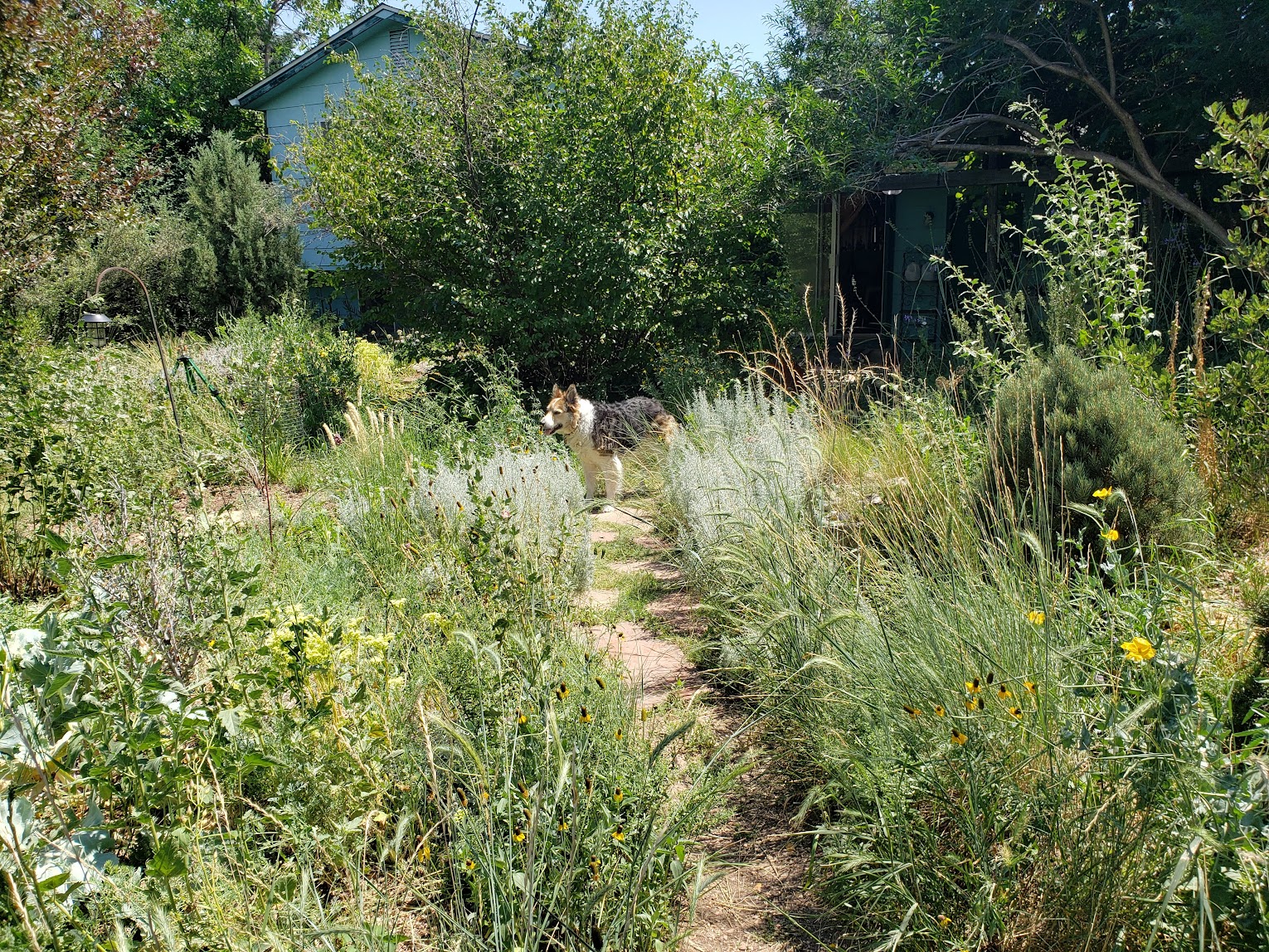 This was when the sun was out, in the morning. It’s mostly cloudy here after about noon, these days.
The other day the guy I live left me in my fairly cool house to go out and roast at a cactus sale. There were other plants for sale but he only bought these two.
They’re not quite the same thing, even though they look like it.
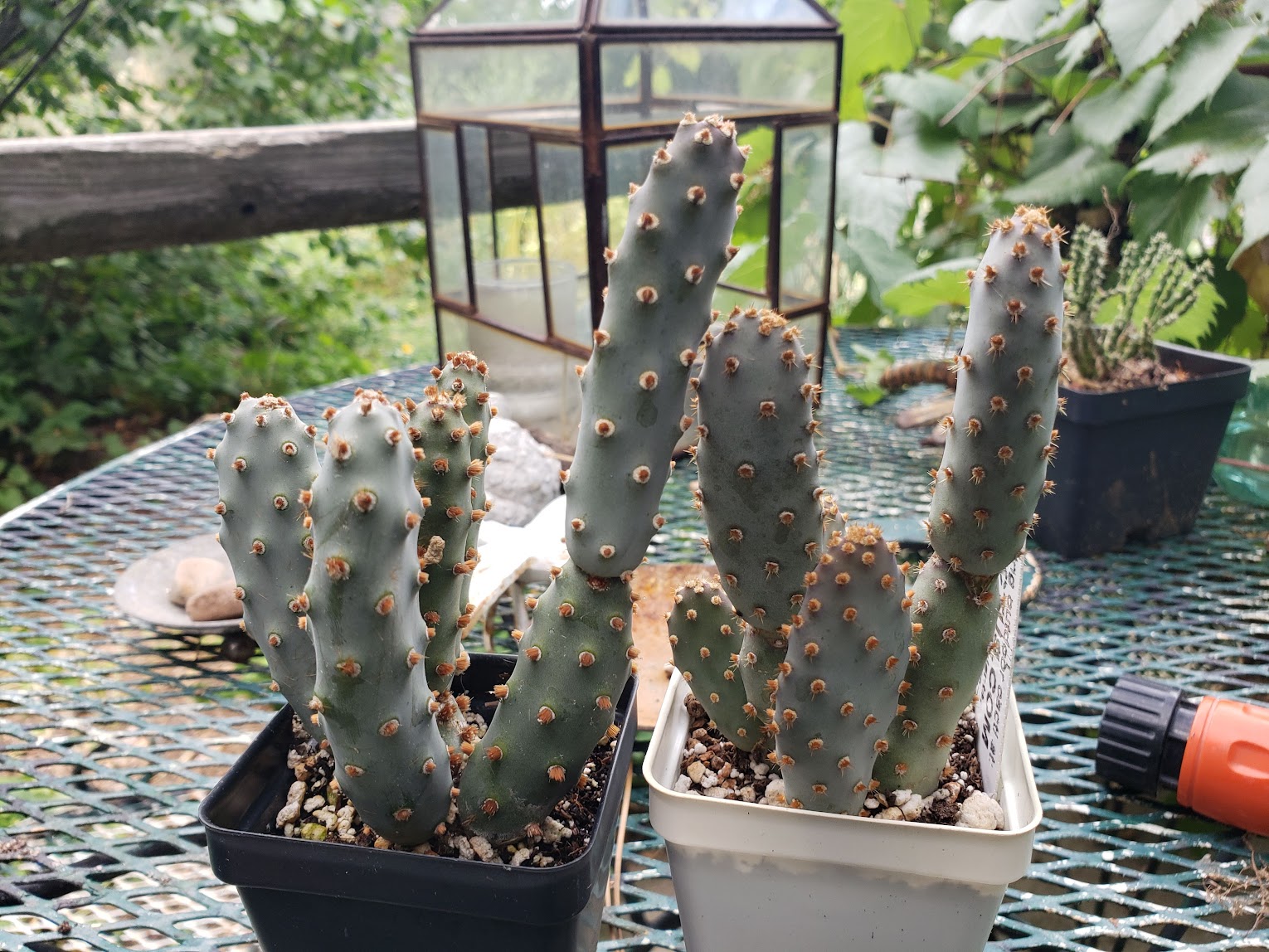 They’re kind of weird-looking, if you ask me, like they have all these eyes looking right at me. I don’t like things that look at me.
The guy I live with said those brown things are glochids, and even though both of these are spineless, they’re not something you’d want to touch a lot.
He’s going to plant these in a pot, or maybe in a trough.
Hardy cactus do very well in pots and troughs and can be left outside all winter with no problems.
I should emphasize that this is for climates like ours; the guy I live with has no idea if this would work in wet-winter climates.
There are absolutely no issues here with the cactus growing in a soil-less medium that gets frozen solid in winter.
Hardy cactus begin to shrivel at the onset of cold weather, which means they’re losing water so they don’t explode when they freeze. Once the cactus have shriveled they have no way of taking up water until it gets warm again in spring, so shrivelling is a good sign, and not shrivelling is a bad sign. Sometimes you have to look very closely to see the shrivelling, like in echinocereus and others.
Here are a bunch of little cactus in a wooden trough on our driveway. These are mostly Opuntia fragilis.
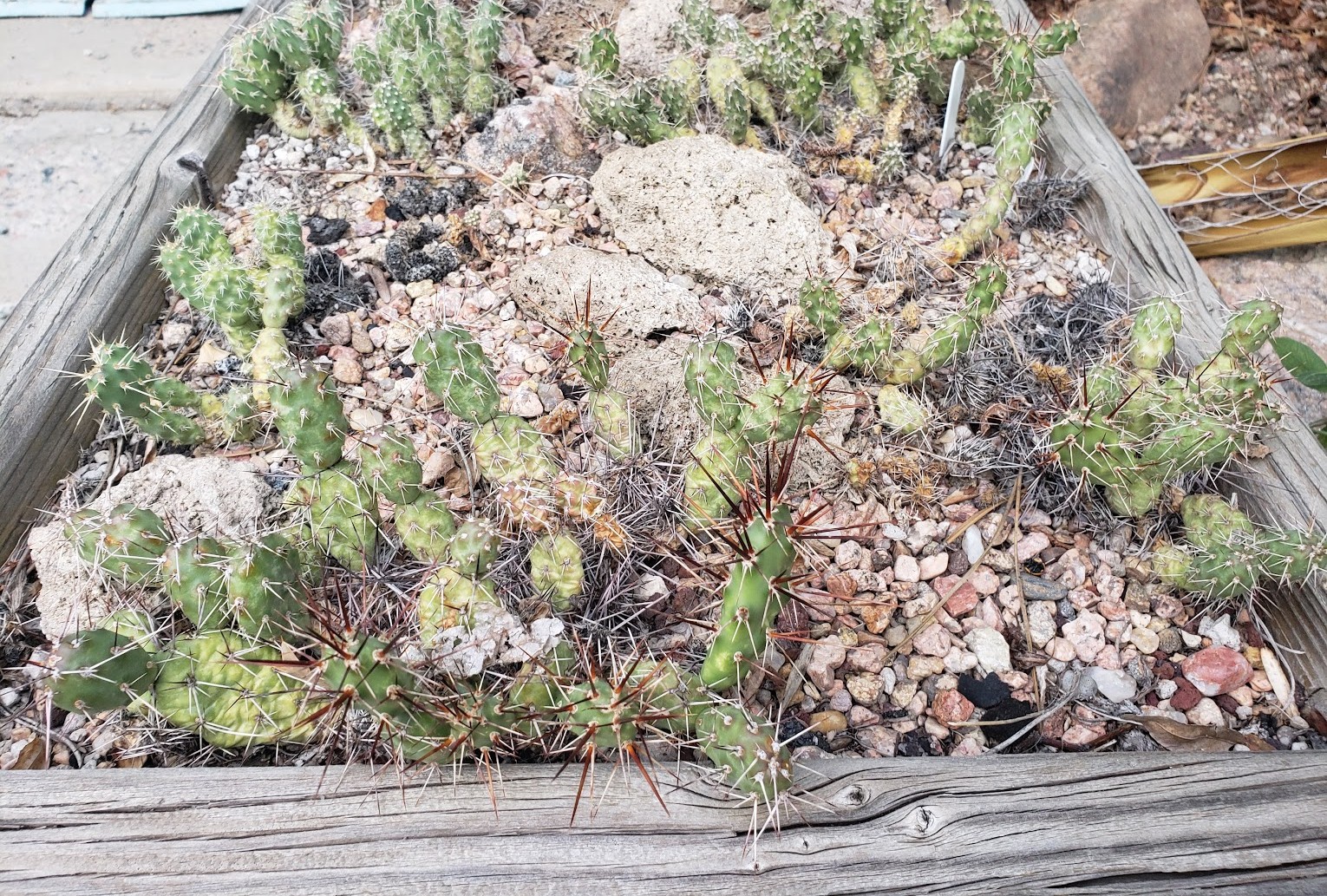 These have been here for a very long time, and are sort of tucked away so a car won’t run into them.
No one has ever noticed them.
And here are some in a limestone trough.
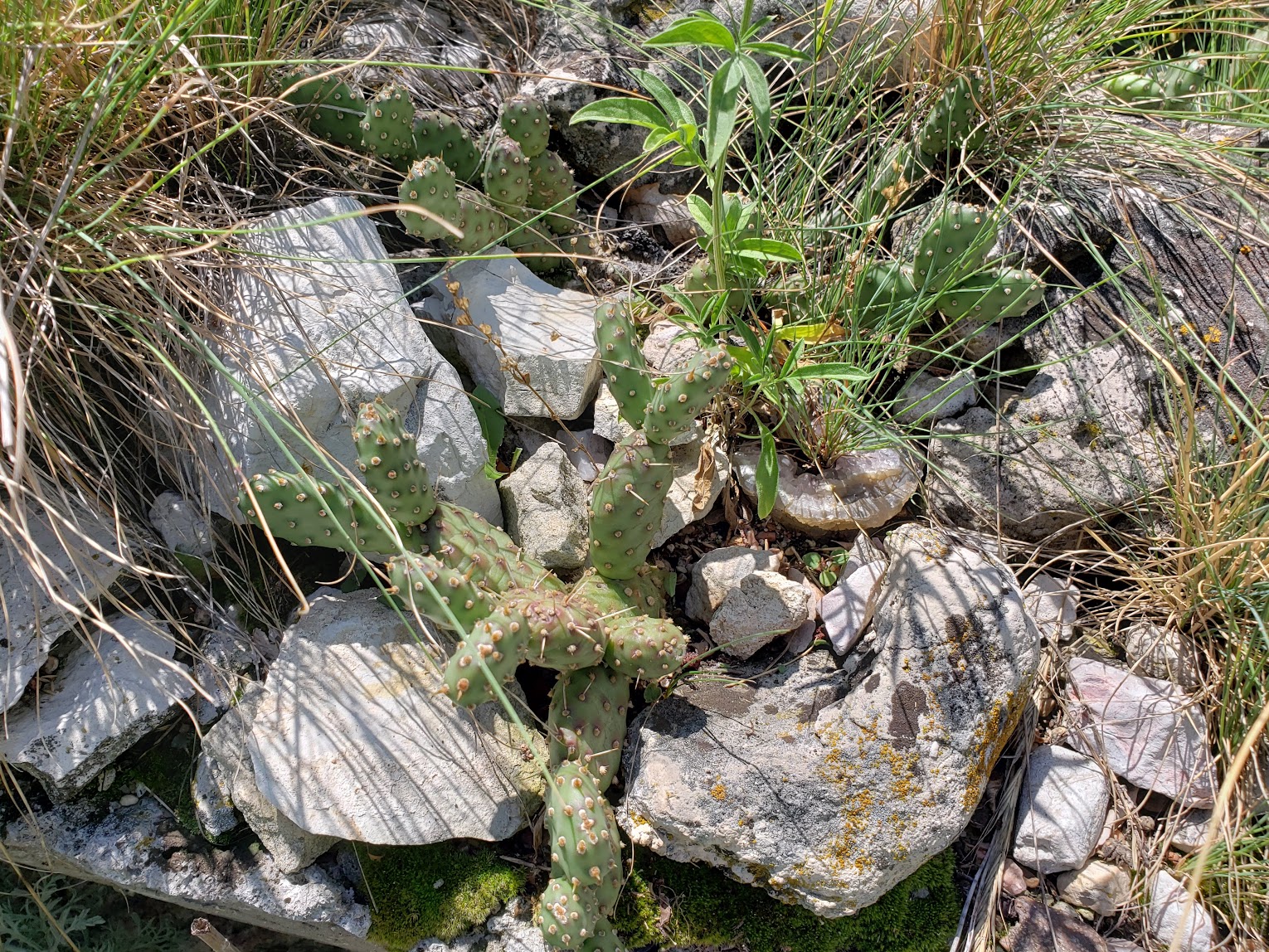 That’s a Ratibida columnifera seedling. It doesn’t really belong there.
The grass is Festuca arizonica, or at least the guy I live with thinks it is, and you can see a small tuft of it growing on a round geode that his wife put in the trough years ago.
Here’s the “potato cactus”. The guy I live with said he could have removed the dead pads before taking this picture, but obviously he didn’t do that.
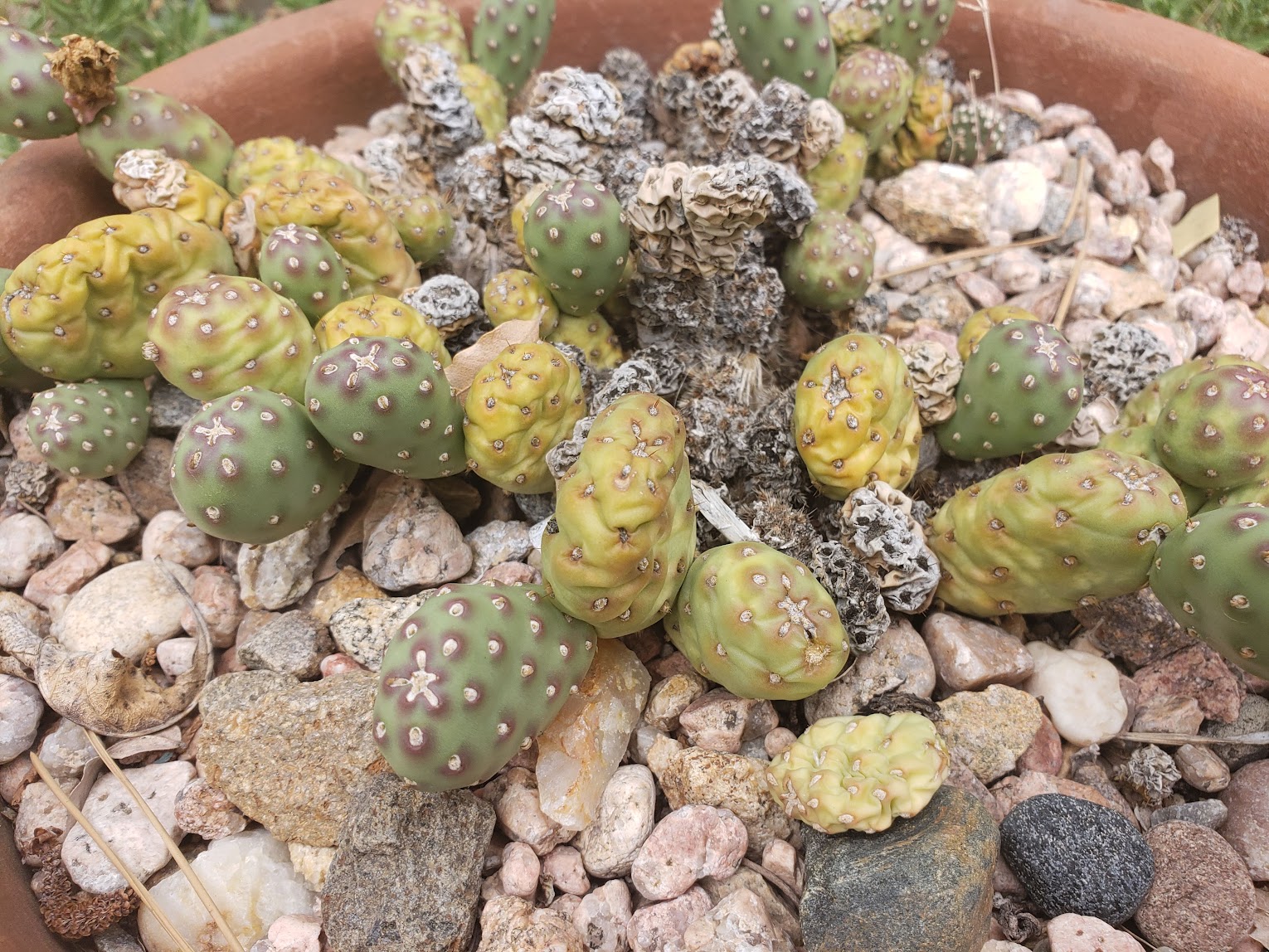 This is in a Mexican clay pot, and sometimes these will last quite a few winters outside.
Here are some in a glazed pot:
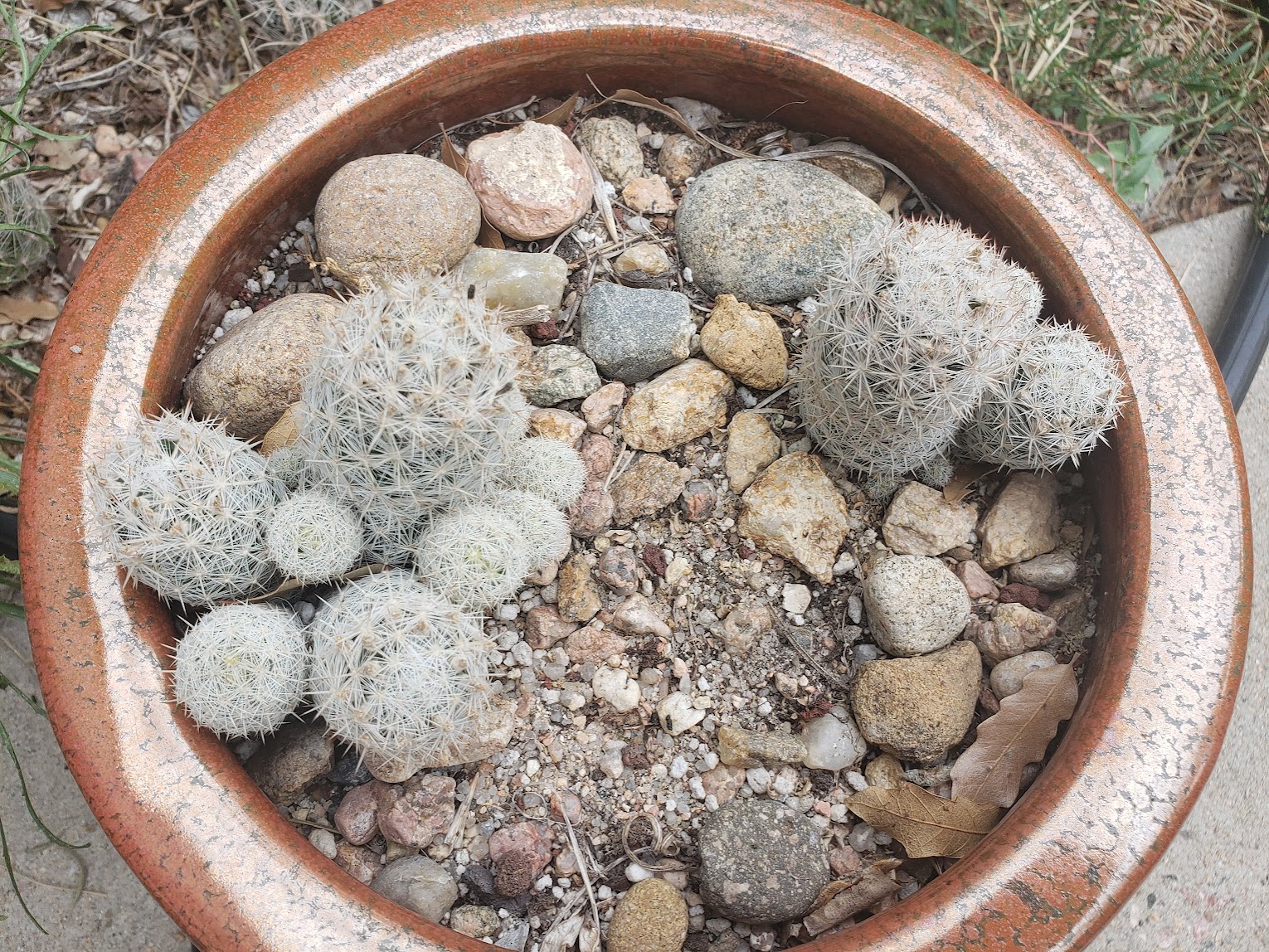 You can see the soil-less mix in this pot. This is stuff from an old trough which is now gone. There’s some coarse sand, scoria, and so on.
The highly-porous soil allows rain to infiltrate right to the roots, just like in real life.
So if you like cactus but don’t want to be stabbed by them in the garden, growing them in containers may be a good way to go. As long as the cactus are hardy in the ground, growing them in containers should be no problem at all.
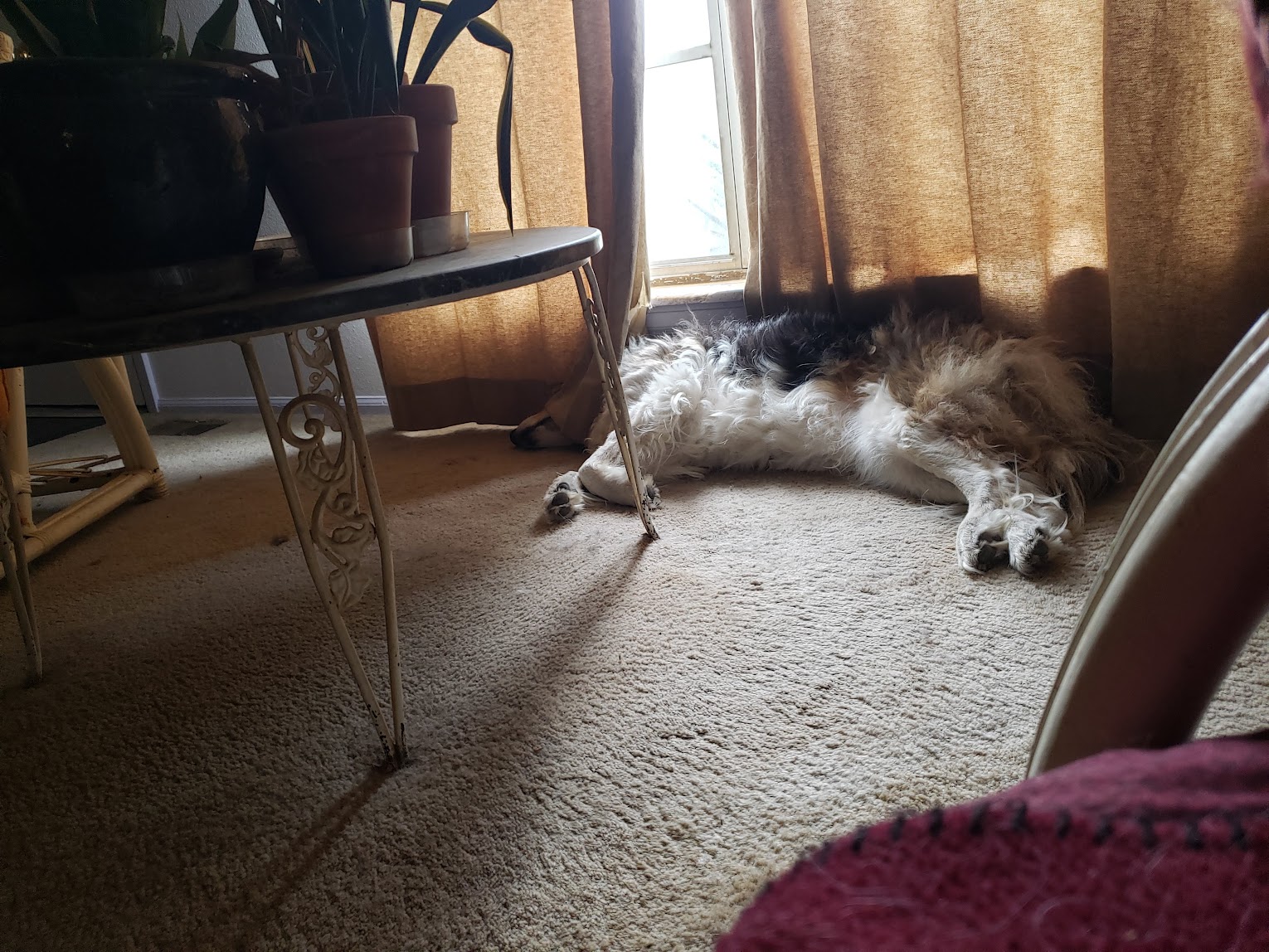
That’s all I have for today. I’ll leave you with a picture of me enjoying the benefits of a portable swamp cooler.
Until next time, then.

 the miserable gardener
Those are lovely cacti. When growing them outdoors in pots in a soil-less mix, do the plants need to be fertilized? I am fairly new to cacti and right now all of mine are in the ground.
The guy I live with doesn’t know the answer to that, really. He hardly ever fertilizes anything.
There was some discussion in a cactus journal about rainfall lowering the pH at the roots of cactus growing in limestone which triggers flowering, so you can see that fertilizer may help in that respect.
That’s helpful and interesting. Thank you.
You’re welcome. You can see the texture of the soil-less mix in posts like “The Dishes”.
The guy I live with used to make a mix, for the troughs, of equal parts peat moss, scoria, coarse sand (like “paving sand”, definitely not like “play sand” which will clog), and perlite.
Most of the perlite floated away after a while, and the peat moss broke down into almost nothing, leaving just a gritty mix.
By the way, in semi-arid climates water is more available to roots growing in porous soil than in heavy soils like clay.
Thank you for the cacti photos! I grow cacti here in Franktown in the ground primarily and have excellent results since my soil is a mix of mostly sand and sparkley granitic particles. I do not fertilize (not sure it is necessary, really) and haven’t lost one yet to winter temps. While I don’t find cacti “user friendly” I am adding to my collection slowly since they seem so suited to my garden. Prickly pear and barrel cactus grow as natives throughout the property and as an old gardener, I find them effortless, which also recommends them! Love my echinocereus particularly……
You’re welcome.
The guy I live with says little cacti are especially suited to be grown in containers so they don’t get stepped on in the garden, or where Opuntia fragilis is concerned, so you don’t have a joint clinging to your shoes after you brush past it.
Like the name suggests, the joints, or pads, break off at the slightest touch.
In the picture of the blue cactus you can see a dwarf Cylindropuntia whipplei in the background.This has almost no spines at all; it would be good in a container too.
Lookin fine an reelaxed there Mani!! WOW s much guud innfo about Cacti! Wee like THE Potato Cacti THE best. An wee leerned THE shrivellin iss a guud thing, THE troughss sound liek a grate way to grow an purrtect THE plantss. Thanx fore an innterstin post. Mee-yowss to Mistur Guy! **nose bopss** BellaDharma an **wavess** BellaSita Mum
Pee S: Wee sorry wee missed yore last post….
That’s okay, and you’re welcome.
Growing cactus in pots is a pretty good way to do it.
Wee allwayss leern sumthin heer Mani an Guy!!! Youss’ makin leernin fun!! 😉
Thanks!
Yore furry wellcome Mani an Guy!