
Greetings and salutations, everyone; yes, once again it is I, Mani the purebred border collie, filling in for the guy I live with, and here today to talk about our autumn afternoon. You may remember me from such posts “One Hundred Snowdrops”, among so many, many others.
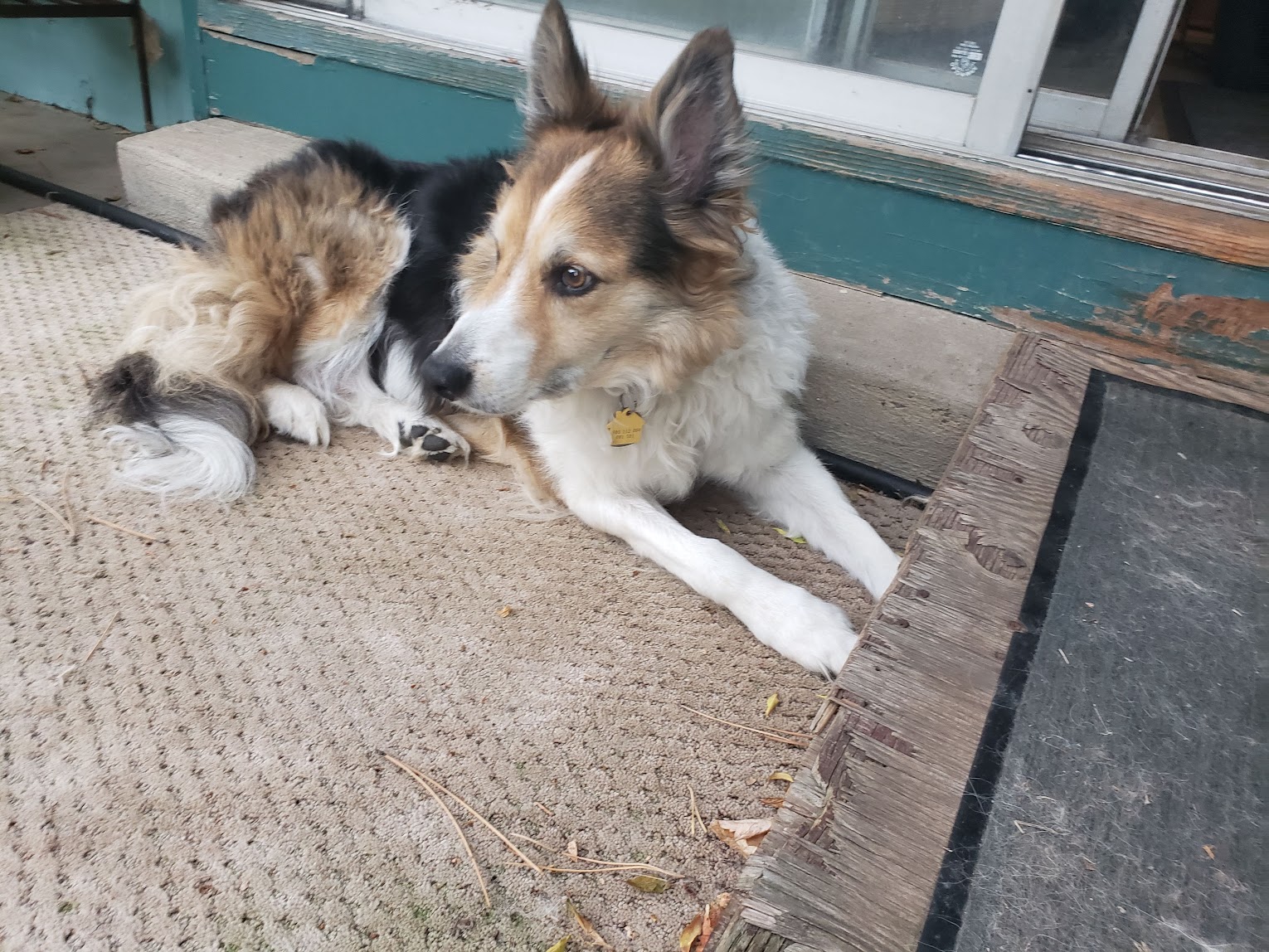
Here I am in a characteristic pose.
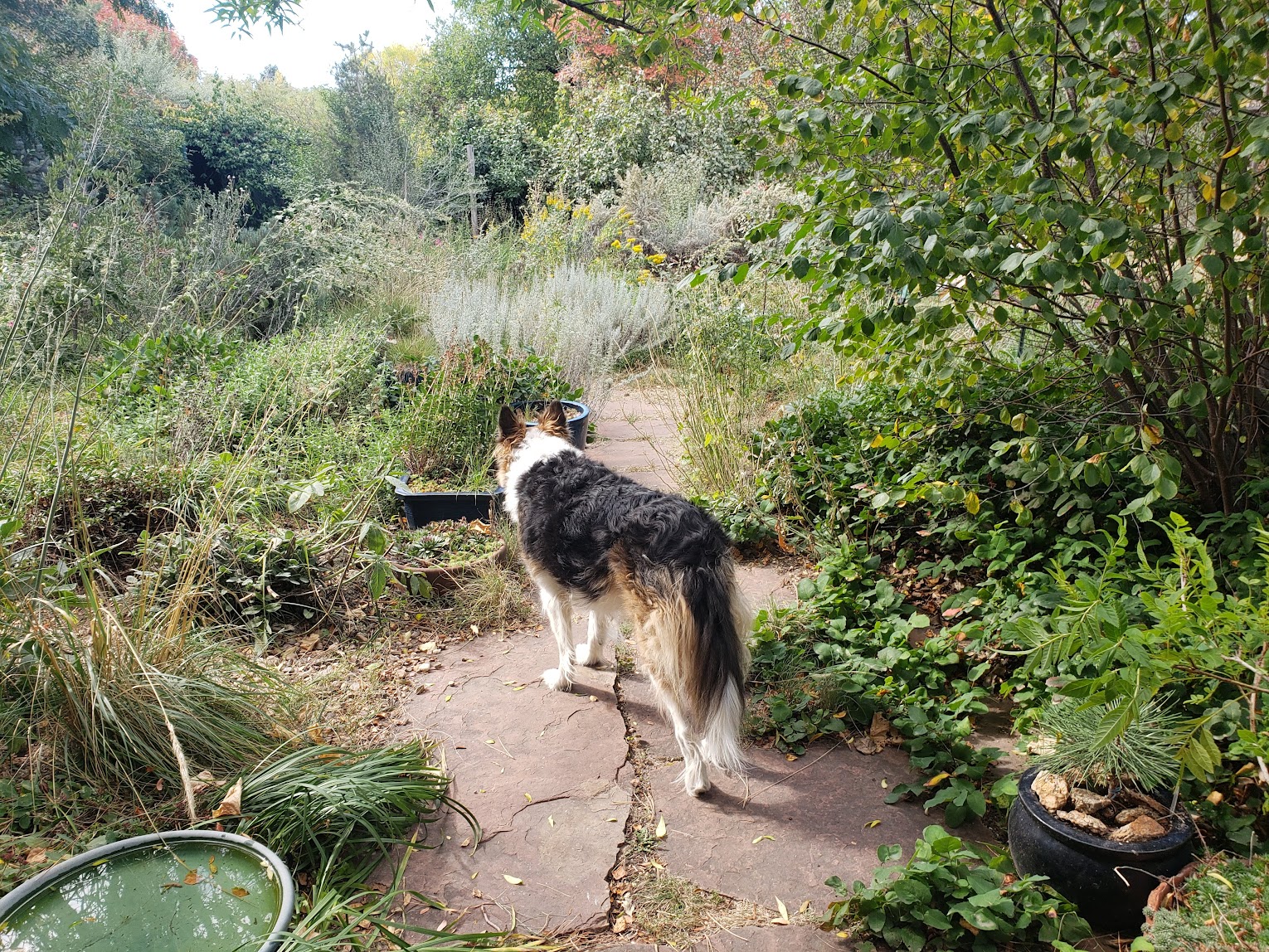 It was a very nice autumn day today.
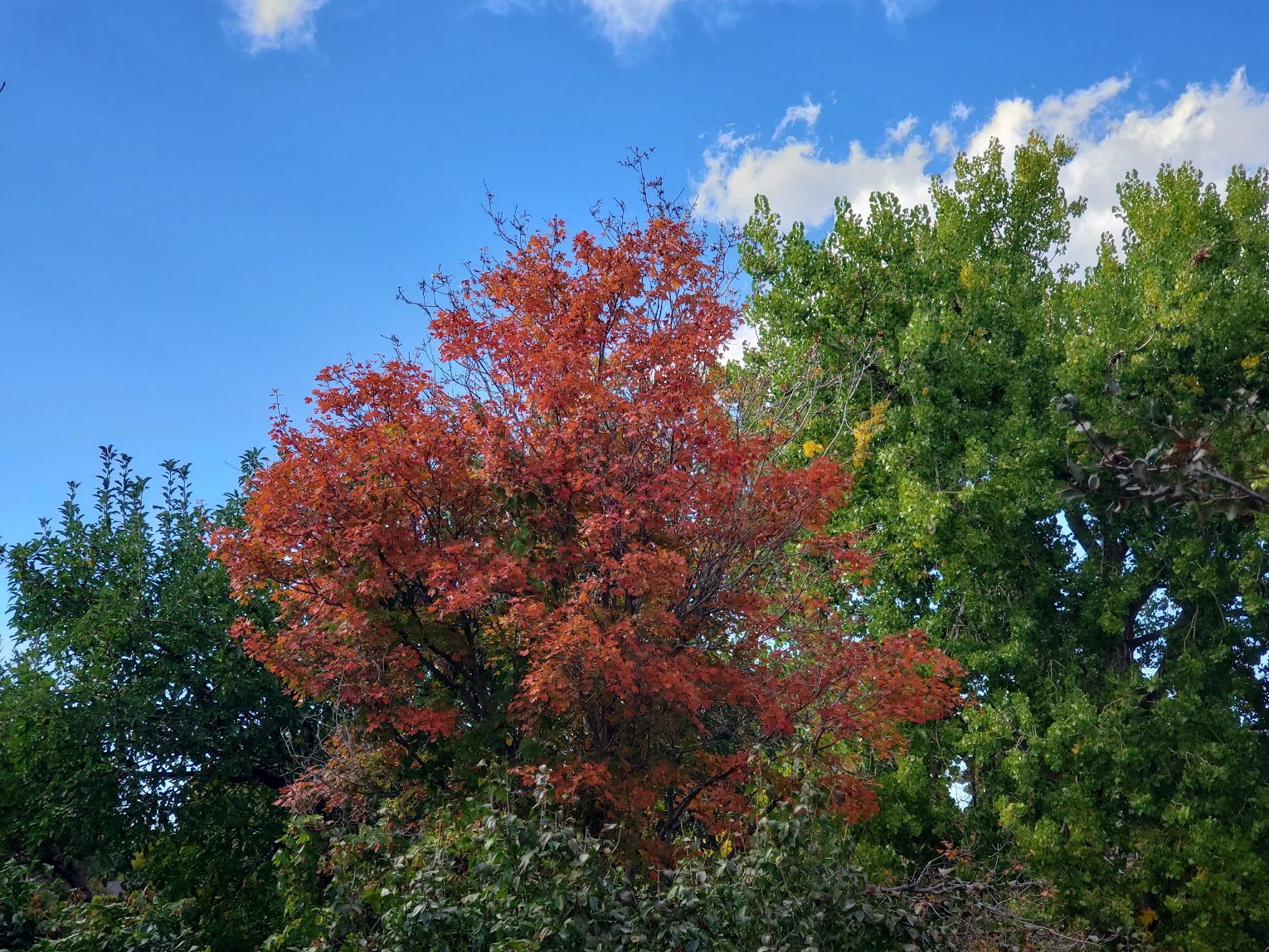
You can see that the maple, Acer grandidentatum, is turning color.
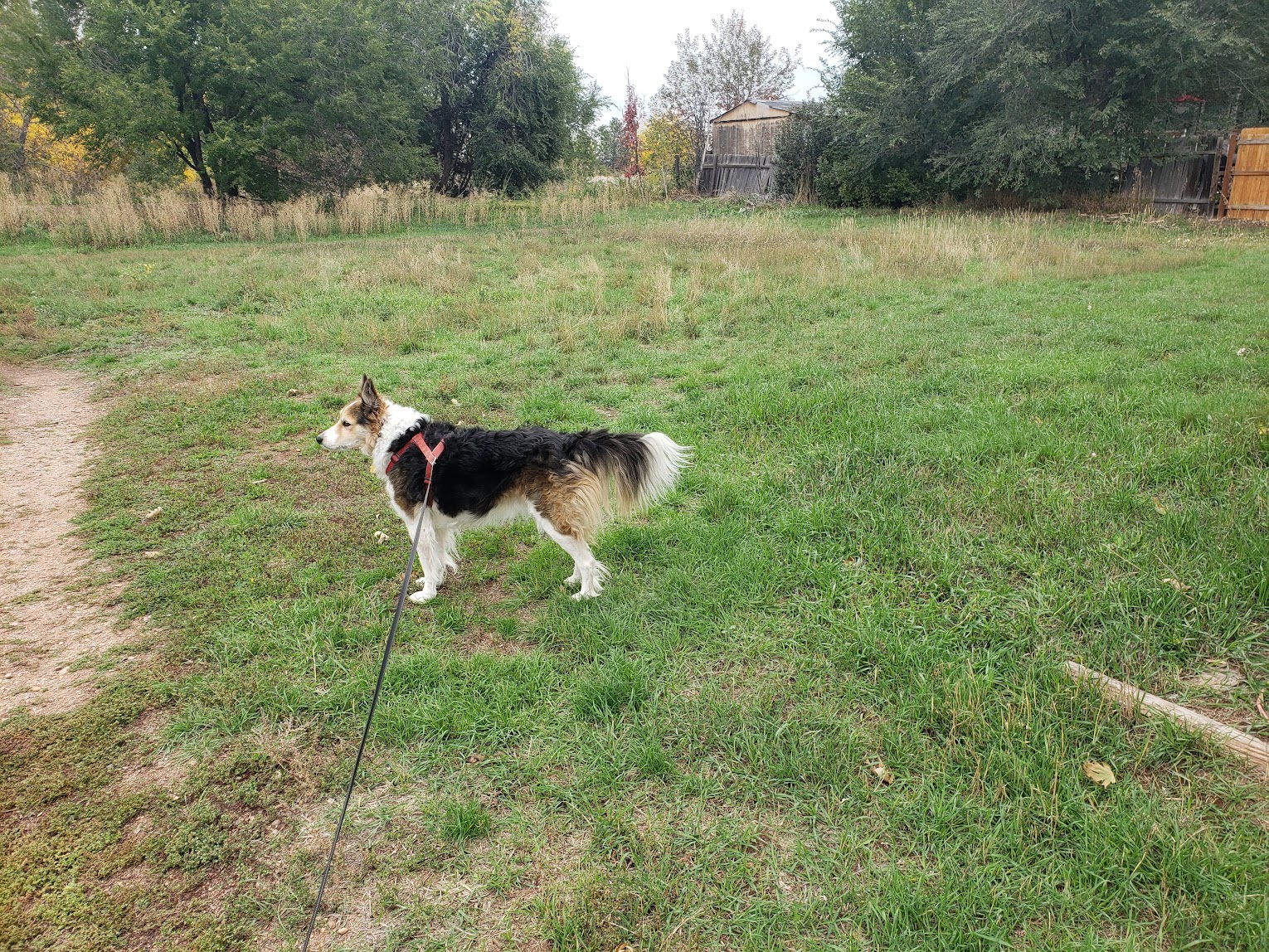
 We can see all sorts of benefits from the rain. The grass in this area was totally dry and brown a month ago.
 Speaking of the passage of time, remember the snowdrops the guy I live with potted up so they would grow roots before being planted?
They grew roots almost immediately. The “trigger” is water at the basal plates of the bulbs.
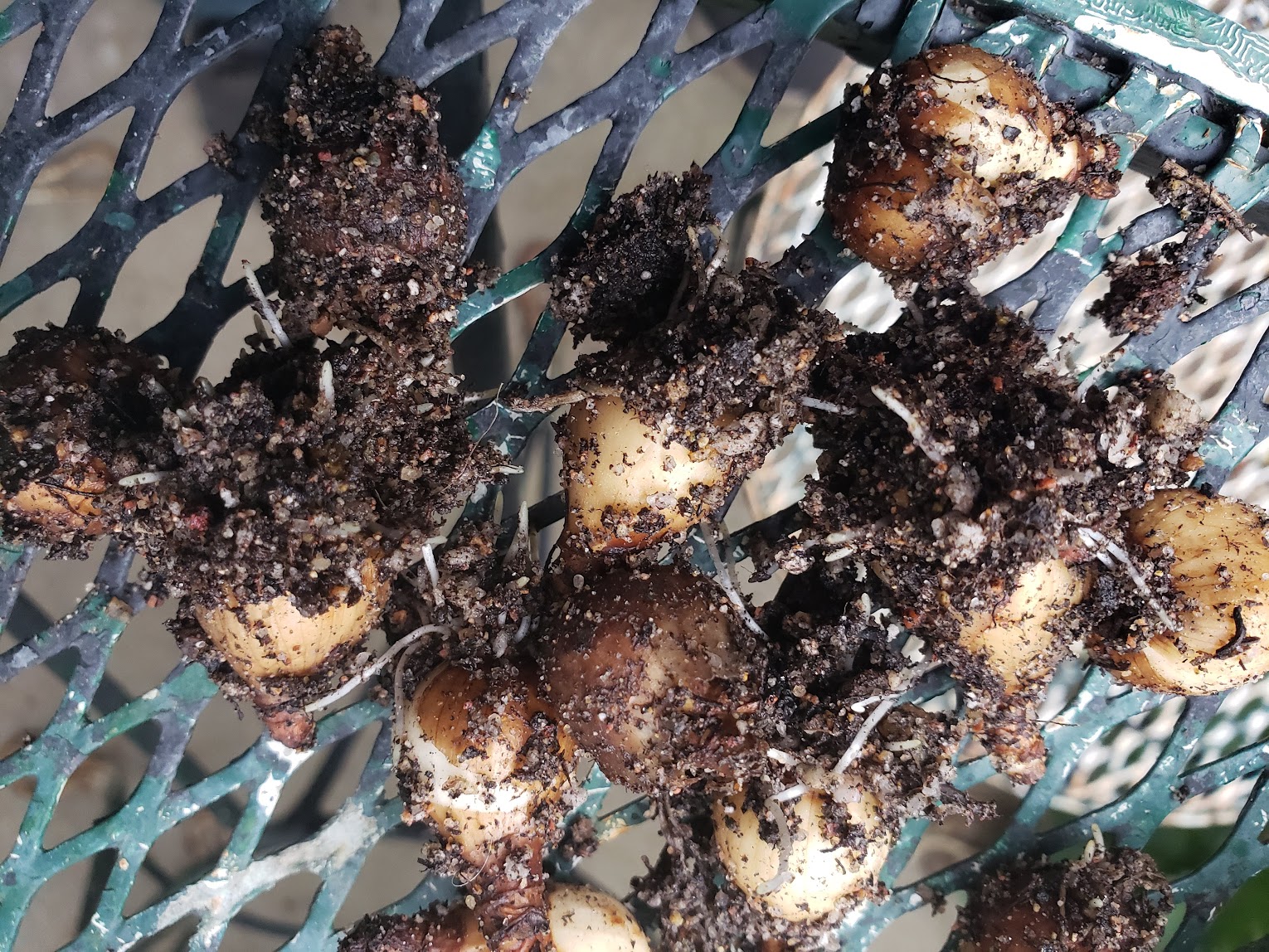 There was another pond basket filled with snowdrops, which were planted last autumn, and the guy I live with wondered if these had developed roots.
Looks like they did.
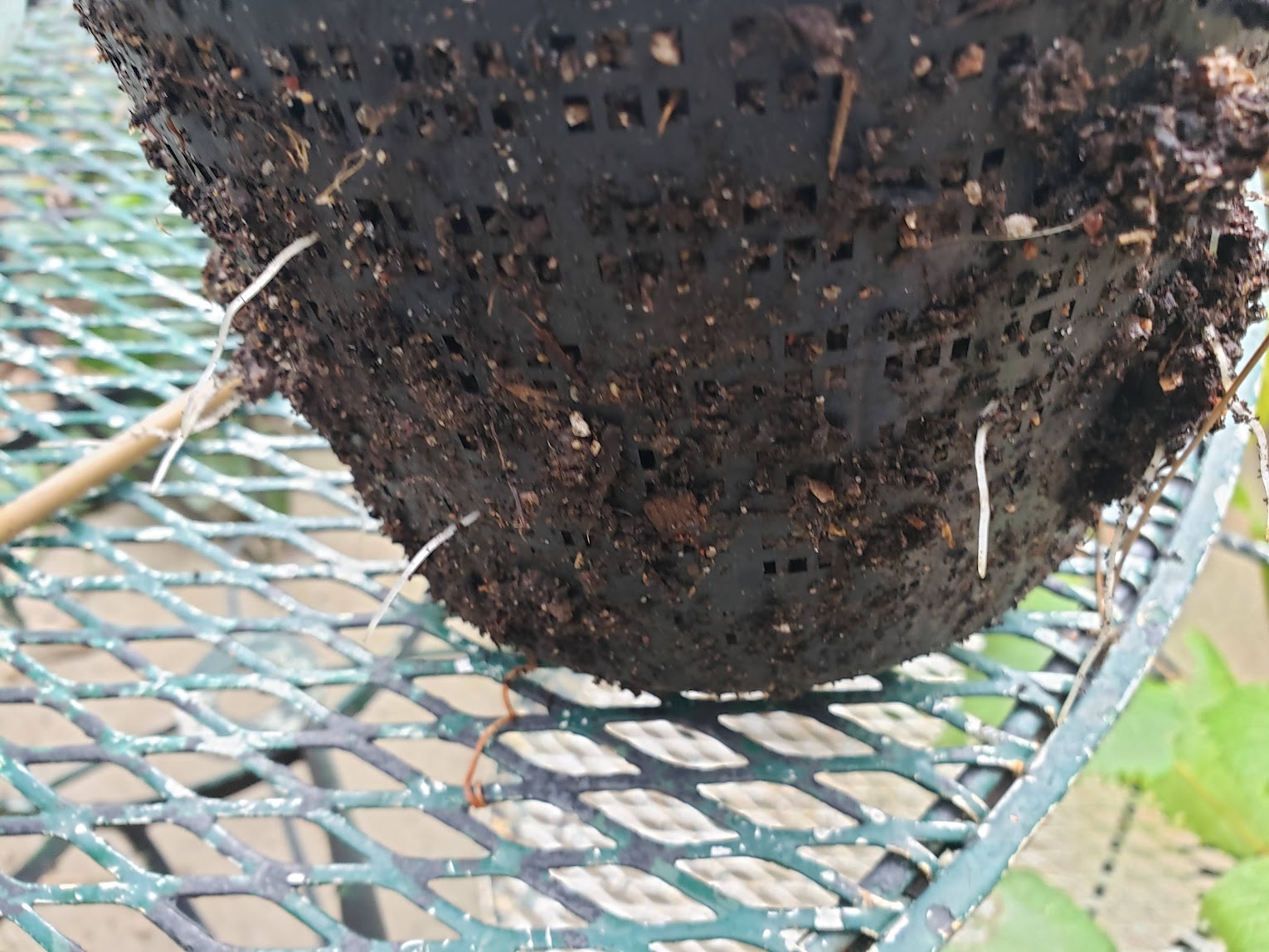 The guy I live with decided not to try to separate the bulbs and risk damaging the roots, so he planted the whole pond basket back in the ground, but in a better location and in better soil.
He dug the hole with his fingers.
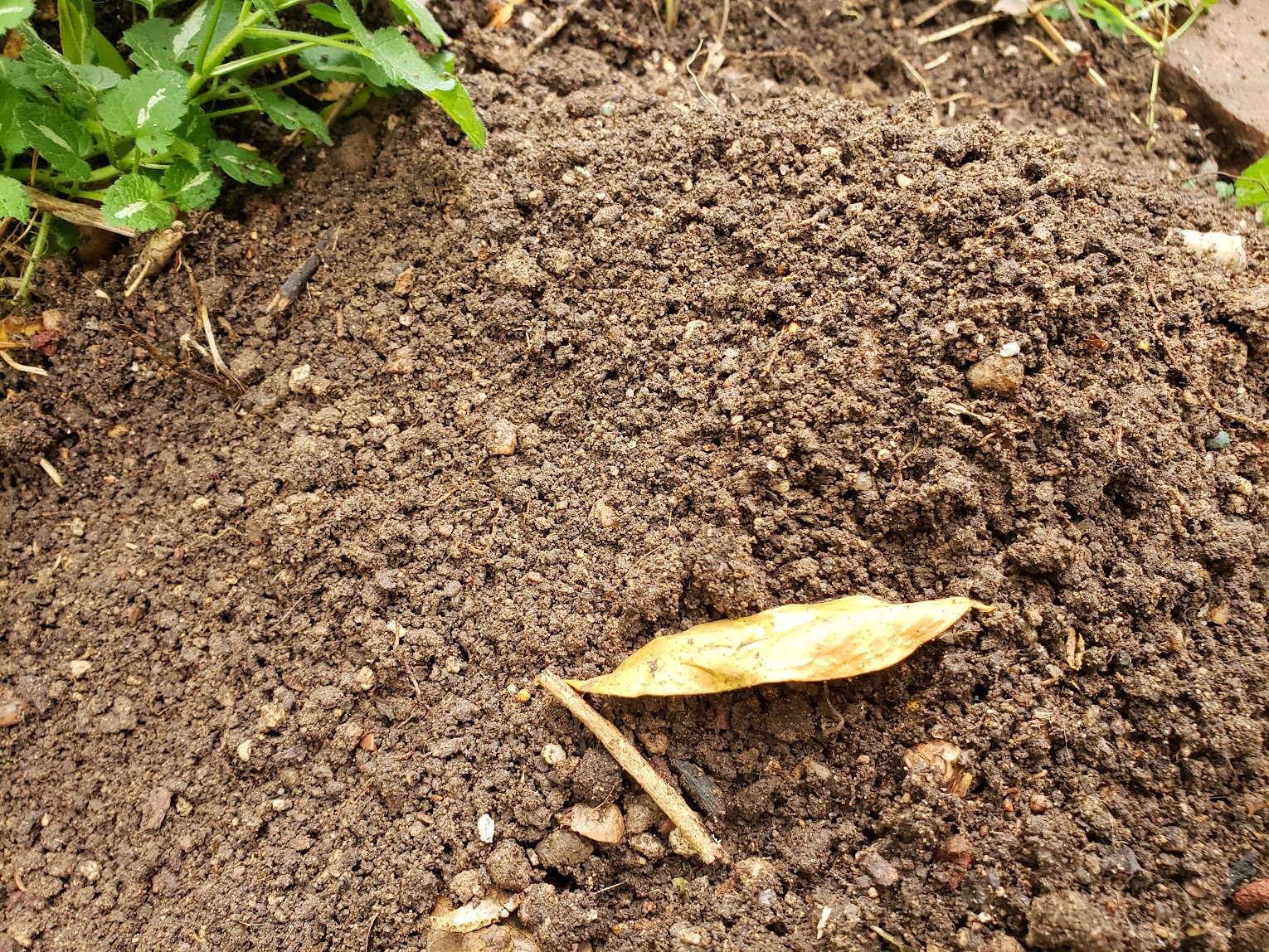 Some parts of the garden just have regular soil, but other parts, like this, have almost forty years of decayed organic matter in them.
I watched the guy I live with dig the hole. Watching people dig isn’t as interesting as it may sound.
 The guy I live with then went around the garden taking pictures.
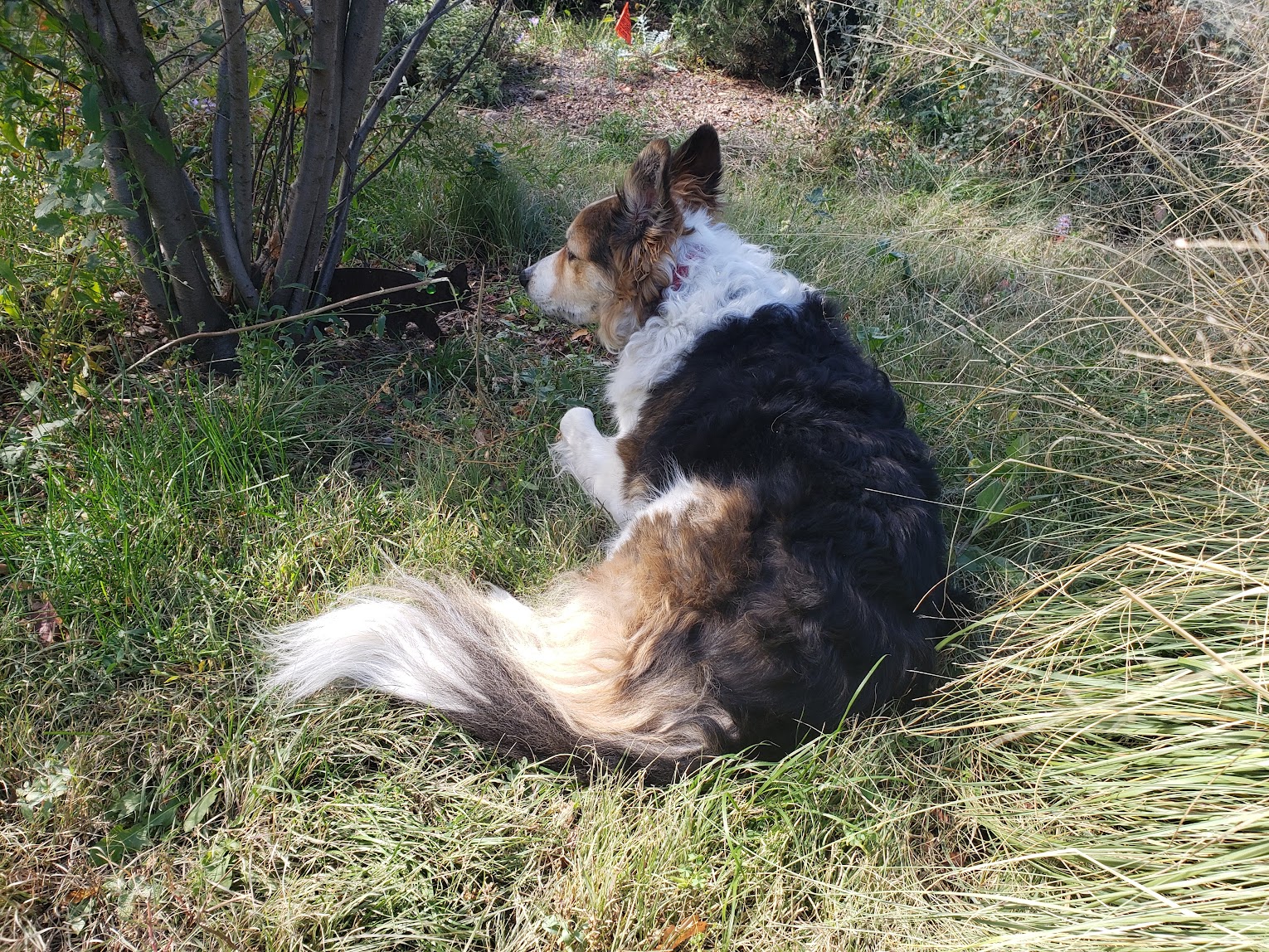
I stood guard, the way I do. You never know what needs guarding.
 There are still some colchicums in flower, but they’re little ones, like Colchicum baytopiorum.
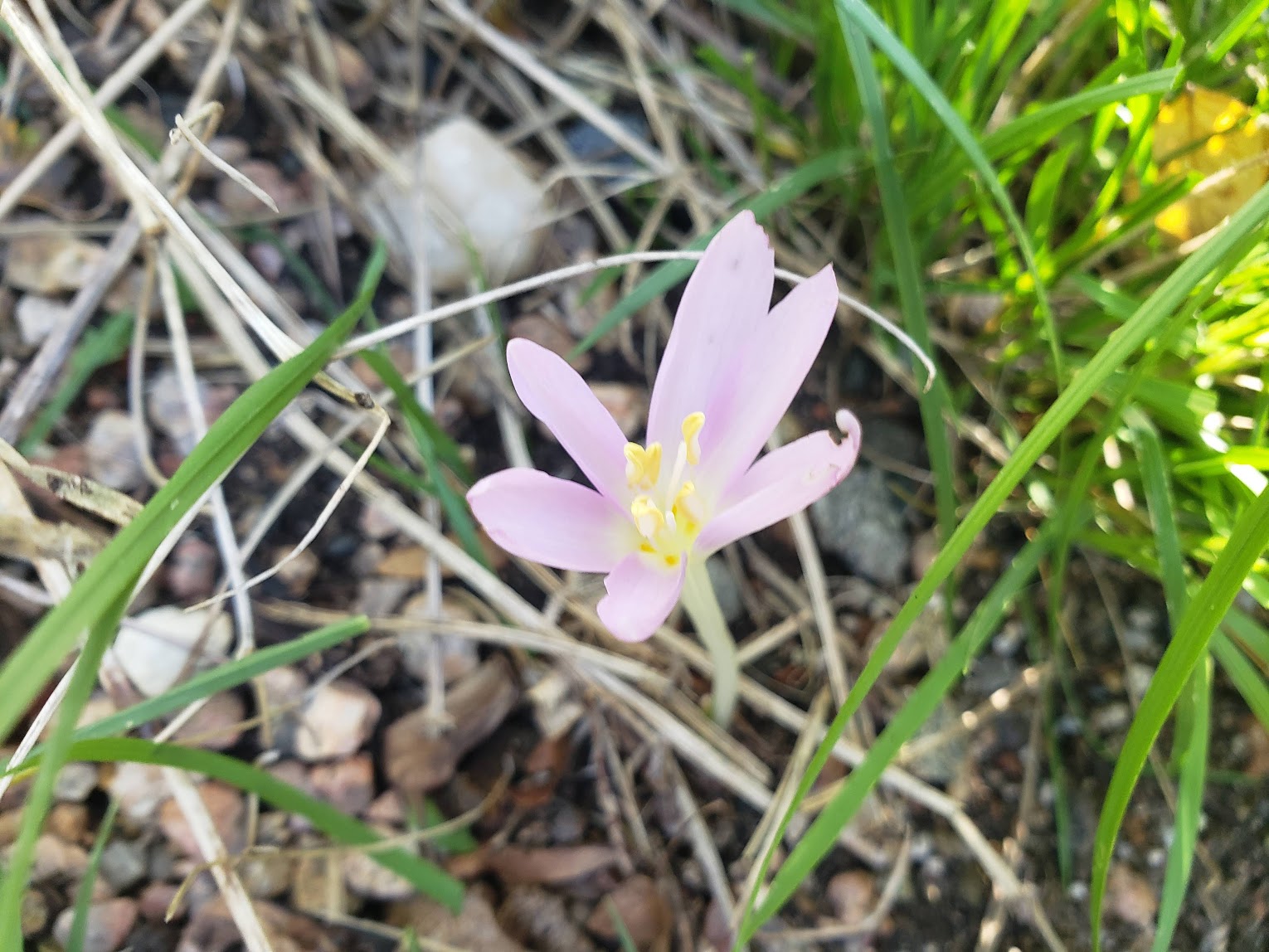 There are crocuses, too.
This is Crocus pulchellus ‘Inspiration’. Like the colchicum, this is hysteranthous; the leaves appear after flowering, next spring.
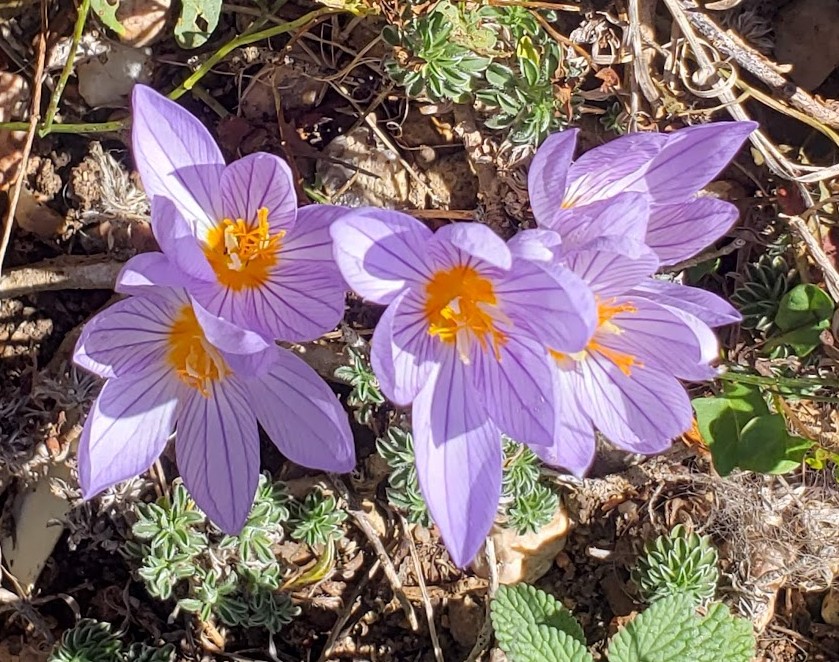 There are a lot, and I mean a lot, of Crocus speciosus here. Ants carry the seeds around the garden.
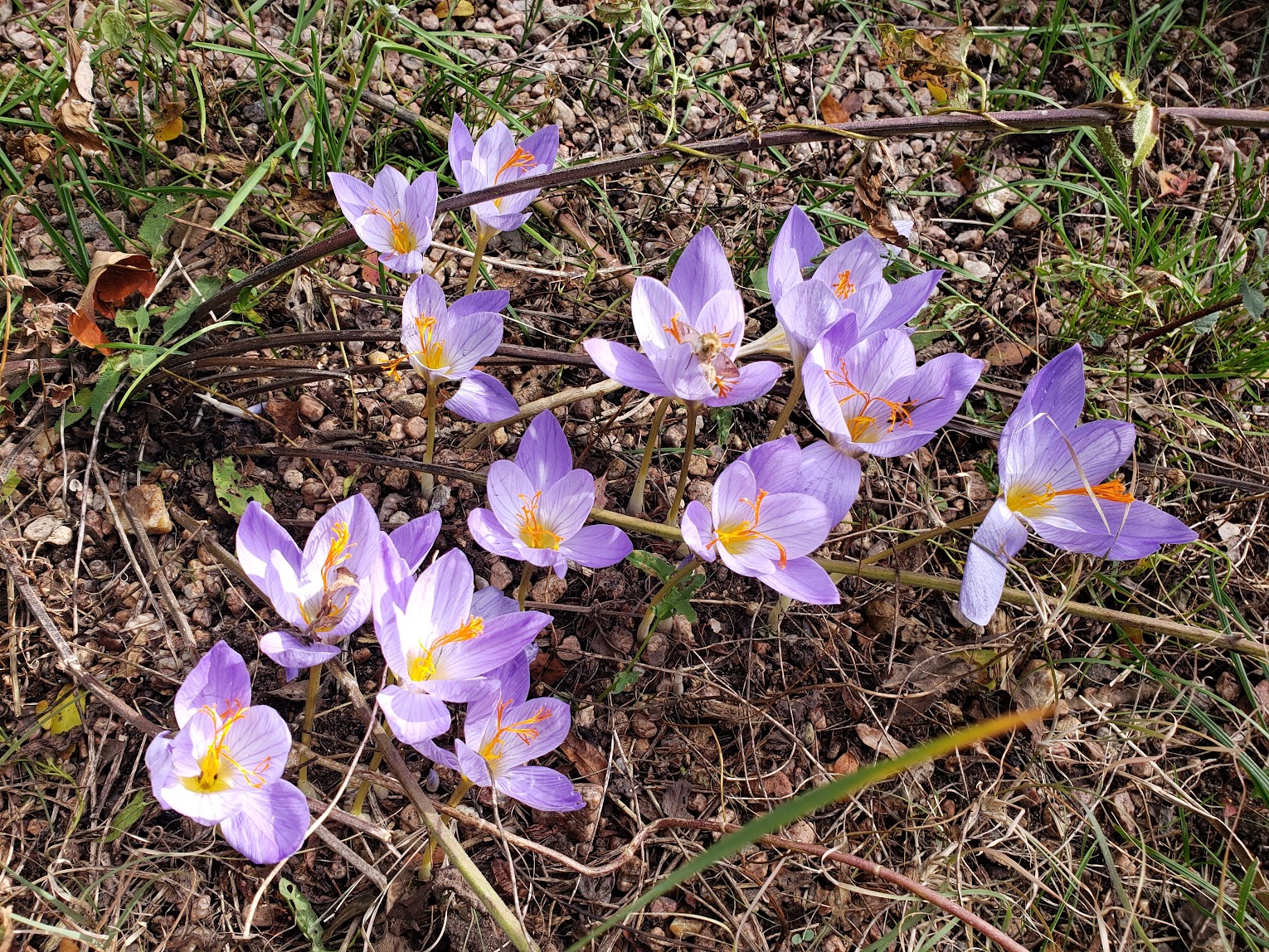 This is Crocus speciosus ‘Oxonian’. You can see it has a purple perianth tube. That’s what makes it ‘Oxonian’.
 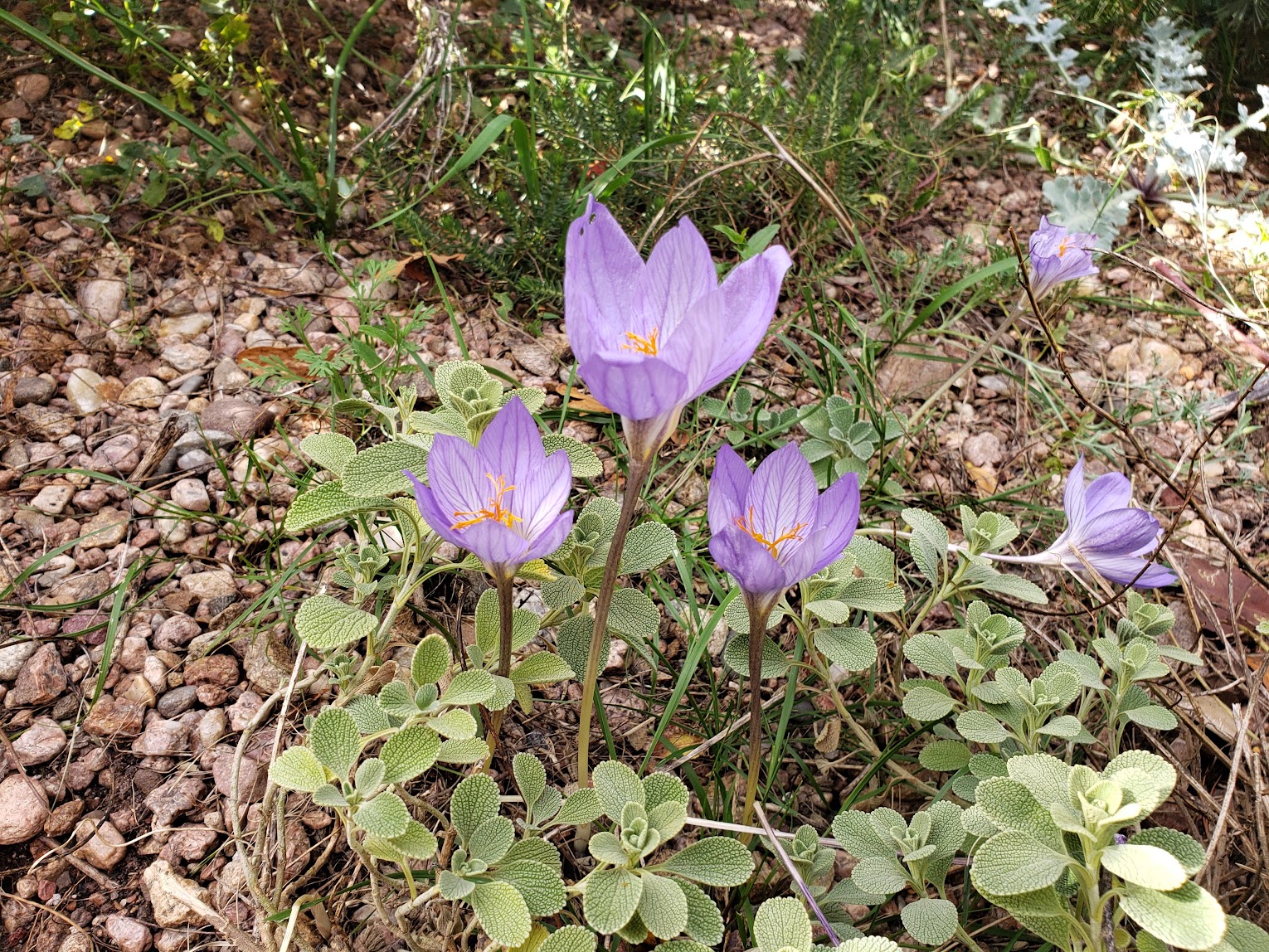 This is another one where the leaves appear in the spring. One problem with this crocus, which is super-easy to grow here, is that the “mother corm” can make dozens of “daughter corms” that are so tiny they take years to reach flowering size.
Parts of the garden are just filled with these little cormlets smaller than a pea. It does mean more crocuses in a few years.
Then there are the synanthous crocuses. The problem with these is that rabbits like to mow down the overwintering leaves, so the crocuses have to have cages around them all winter.
This is Crocus cartwrightianus. The orange styles are saffron, though not the kind you’d use in cooking.
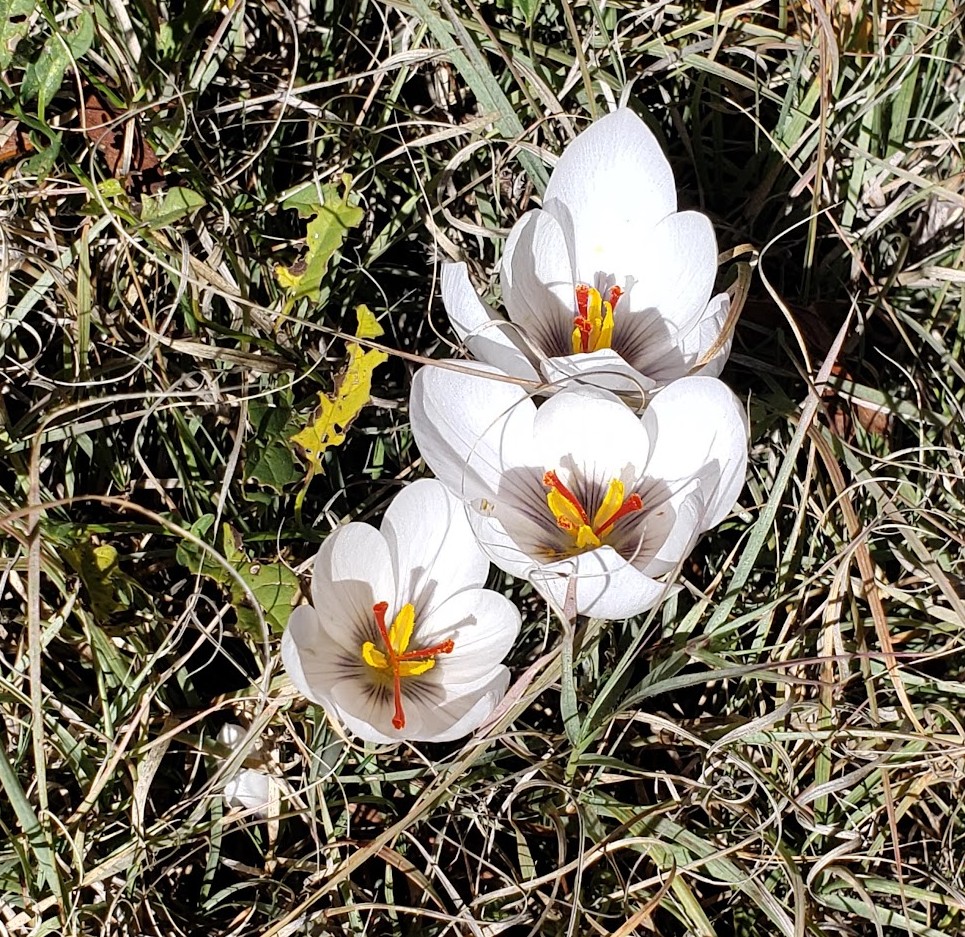 And this is Crocus niveus.
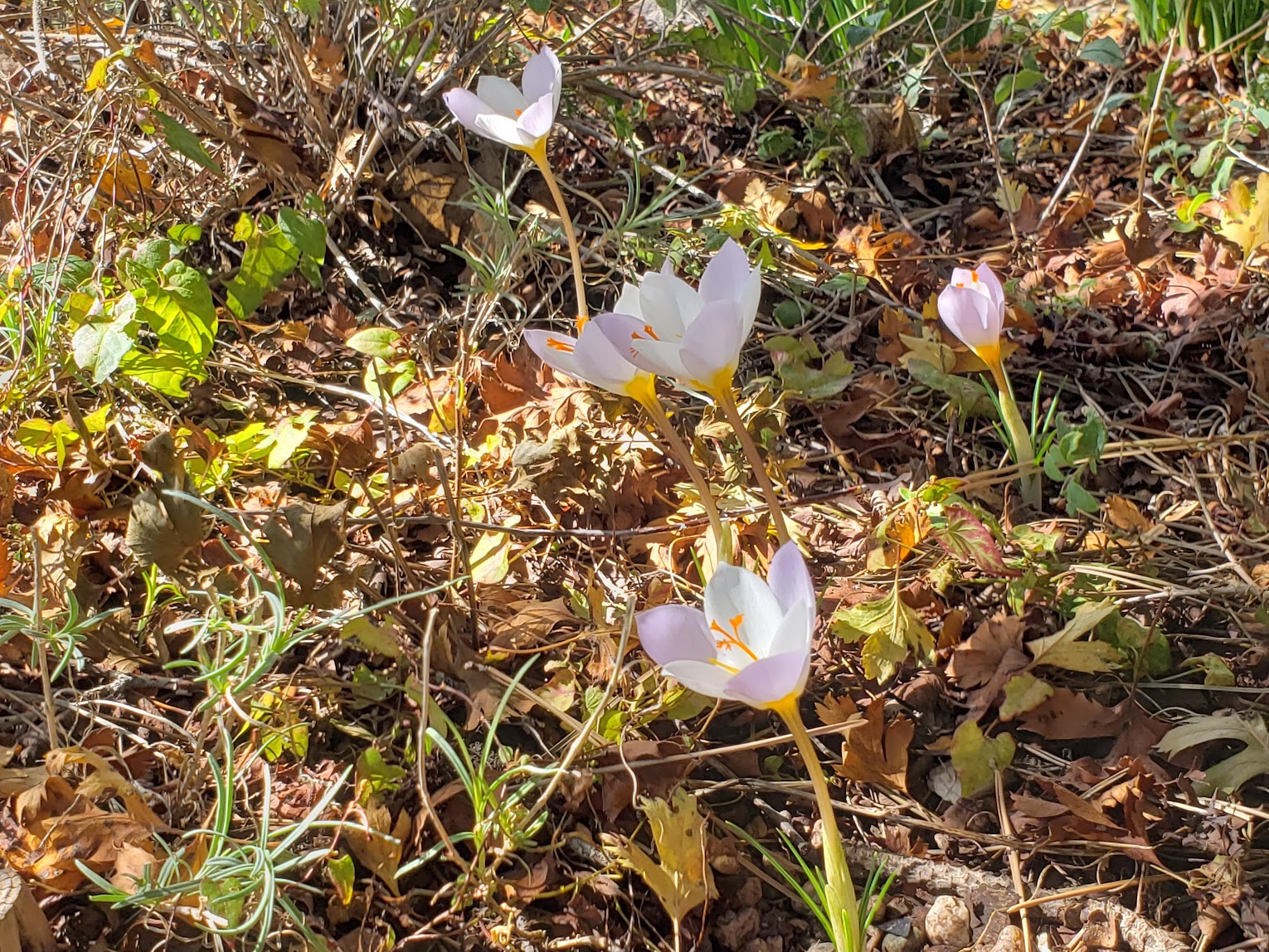 Those are the flowers for today, except for another tiny colchicum (Colchicum boissieri) which didn’t get its picture taken, and a new flush of California poppies in flower.
I was planning to finish up this blog with the crocus pictures but then I heard something I thought was fairly alarming.
The guy I live with said he was going to do some thinking.
This rarely bodes well.
He said that even though he tells people there’s no more room in the garden for plants, it turns out that there really is, and he said he might think (there’s that word again) about redoing this little part of the garden where nothing really grows except grass he doesn’t want.
Notice the sun’s rays are illuminating me in a very impressive way.
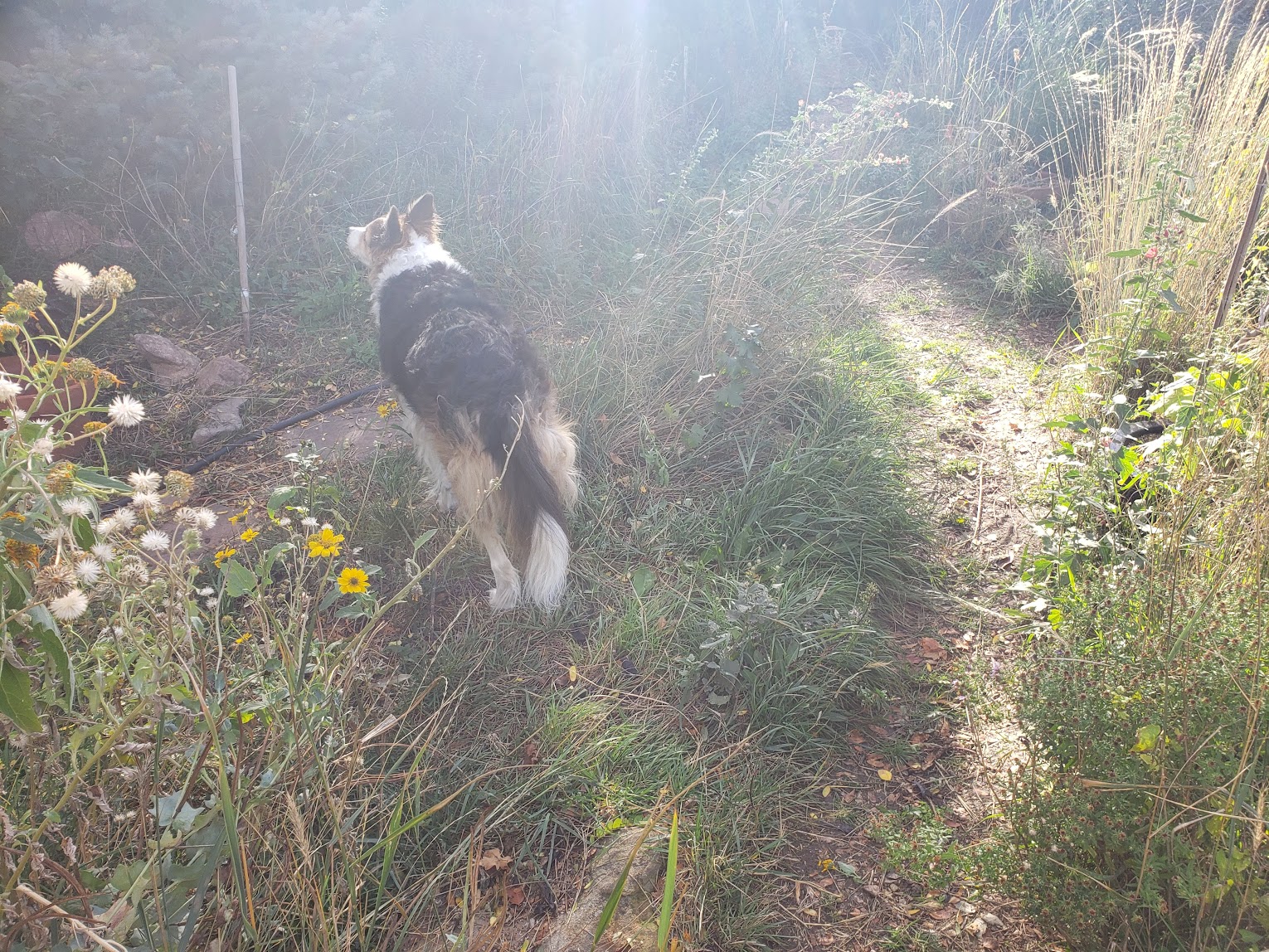 He started talking about having a raised bed with heaths, of all things. He said Erica carnea does very well in Denver and if the plants get sun in January they’ll be in flower.
I guess I understand that, because winters here can be a lot nicer at times than most people think.
I guess we’ll see. It might turn out to be one of those things like replacing the patio ramp, having the honey locust cut down, and removing the rest of the pickets on part of the enclosure fence.
Well, I’m sure this has been more than enough for today.
Until next time, then.

 the miserable gardener
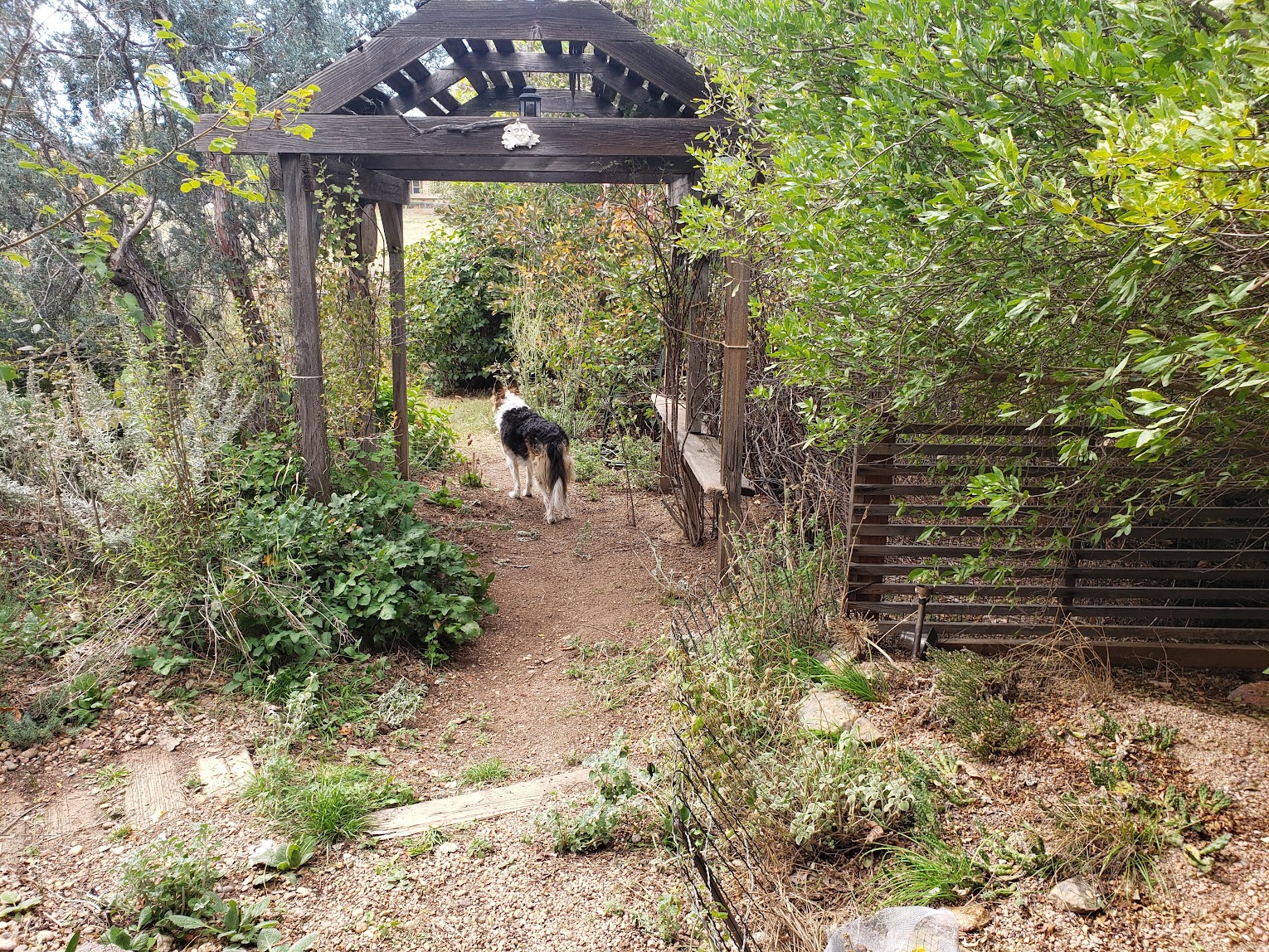
What an elegant arbor you are standing under, Mani.
The Crocus cartwrightianus, my goodness, is quite lovely. And it will be nice to see the heath bed, if they are planted by the guy you live with.
The guy I live with’s wife built that arbor. He dug the post holes. You can see the squirrels have gnawed a lot of the flats on top, and eventually (as usual) they’re be replaced. There’s a bench for visitors, but no one has sat on the bench for a very, very long time.
Crocus cartwrightianus is the ancestor of the cultivated saffron crocus, Crocus sativus, but that flowers later here.
Acer grandidentatum is considered by some botanists to be a variety of Acer saccharum. Do you think that it ‘appears’ to be that similar? I mean, does it ‘look’ like a sugar maple?
It does look like a sugar maple and some botanists have considered it just a “western expression” of the eastern sugar maple.
The sap runs in March.
Trees from more southern areas like New Mexico don’t have autumn color here because they’re adapted to turn color later than our first freezing nights.
How sad; they get frosted before they get to color.
Yeah, because they’re programmed to start leaf abscission later in the year than the maples native to western Colorado and Utah. So the New Mexican ones exhibit consequential dormancy and the leaves just turn brown. No advantage to growing those here.
Same thing is true with Chilopsis linearis; the one from San Miguel County in New Mexico has its leaves turning, but the one from the Chisos Mountains still has green leaves, but you don’t grow desert willows for their autumn foliage.
The guy I live with had some ‘Manzano’ maples but gave them away because the leaves just turned brown when it got cold.
All of the crocuses are quite beautiful but especially Crocus cartwrightianus. So beautiful. Nice update on the state of the garden, Mani.
Thanks. The guy I live with likes autumn-flowering crocuses. Maybe you can tell.
More rain would be nice, huh?
It sure would be…and not just the 15 drops that fell earlier this afternoon.
We got more than that. 16 drops.
🤣 🤣 🤣 I think we have a better chance at receiving some moisture tomorrow
The guy I live with said (not to be a downer or anything) none of the forecasts predicts rain in Denver tomorrow, even though there’s a huge amount of rain in southwestern Colorado that’s moving to the northeast. It will probably dissipate before it gets over the Continental Divide. But they have been wrong before, as you know.
He’s become so used to disappointment on our supposed “rain days”.
Yeah, disappointment is the norm around my neighborhood when it comes to moisture. Sigh.
The guy I live with says things were different back in the last century, but now we obsess about rain here.
But now, to reply again, the weather map shows the rain moving into the Denver metro area later tonight or tomorrow morning.
Paws crossed.
🤞🏼
Despite the radar on MSN Weather showing rain headed our way, nothing happened here.
Typical.
And we’re experiencing clear blue skies in NW Denver 😵💫
Yes; nice weather. The guy I live with has been here since 1961 and he says when it rains people complain about the lack of sun, and when it’s sunny people complain about the lack of rain.
The guy I live with went “back east” a number of times in autumn and he said what they call “the sun” was this wan yellow disc that you could sometimes see through the humid haze. He liked that part of the country a lot, though.
But “normal” precipitation here, at this time of year would be excellent.
I think my saffron crocus are gone. Rodents, I suspect. If only I had such a fearsome guard dog, surely my crocus would be safe from all predations.
The guy I live with says we have the National Collection of Rodents, except for, fortunately, gophers and moles, and he says to check out pond baskets. Some of the baskets aren’t total mesh at the bottom, so it pays to look at that.
They’re less expensive than the crocuses.
But also the leaves need to be caged over the winter if you have rabbits.Rabbits look at crocus leaves the same way the guy I live with looks at tiramisu.
There are so many hardware cloth cages on the patio and in the garage non-gardeners must wonder what’s going on.
Why didn’t you offer to help dig Mani? The job would have been much quicker. Lots of gorgeous crocus. I like the idea of planting in a water basket to keep the rodents (and there are lots this year) away. Only one of my colchicums is blooming. I went to plant a pot of The Giant and found the original had separated into many so now there are 9 smaller ones all potted up. It’s quite chilly here so wondering if I should plant them or leave them in their pots for a year. Love the arbour and your golden glow.
Thanks. I’m not much of a digger.
The guy I live with says if the smaller corms have roots they can be planted in the garden.
The mother corm is what flowers, but it also produces daughter corms at the same time which begin to form roots and pull starch from the mother corm, so the daughter corms should have roots now. The mother corm’s last gasp comes in spring when it puts up leaves.
After the leaves disappear in the spring the daughter corms are all mother corms, for the process to continue again.
Spring-flowering colchicums, which have smaller flowers, send up leaves when they flower or very shortly afterward. (There’s a picture of one of those in the post Things Seen And Unseen.)
Thanks for the advice. I will pop them in the ground.
You’re welcome. The guy I live with says if they’re small and have roots then they’re daughter corms, and not to expect big green leaves next spring. Daughter corms on their way to becoming mother corms.
Same process with autumn-flowering crocuses and any other cormous plants.
Mee-yow Mani an Guy THE Crocus cartwrightianus iss so gorgeeuss! HE otehrss are purrty butt that Crocuss THE best! Well dun Guy on growin rootss on THE bulbss…you are a furabuluss gardener…BellaSita needss to take notess 😉 Mani THE Sunshine iss like a Halo around you…cause yore such a heavenly Poochie! CATFISH! Mee gettin all ‘mushy’….mee will go now…. ***purrss*** BellaDharma an (((hugss))) BellaSita Mum
Thanks. The guy I live with says all this rooting business comes from bitter experience.
That’ss how wee all learn rite Mani?? From xperience….Guy nose so much tho’. Hee’ss purrty amazin reelly!
He says it was pretty expensive experience.
Wee bet it has been xpensive 😉 At leest Guy keeped tryin an does grate gardenin now!
He says thanks