
Greetings and salutations, everyone; yes, once again it is I, Mani the purebred border collie, filling in for the guy I live with, and here today to talk about antifreeze–not the car kind, but the plant kind. You may remember me from such posts as “The Ghost In The Grapevine”, among so many, many others.
Here I am in a characteristic pose.
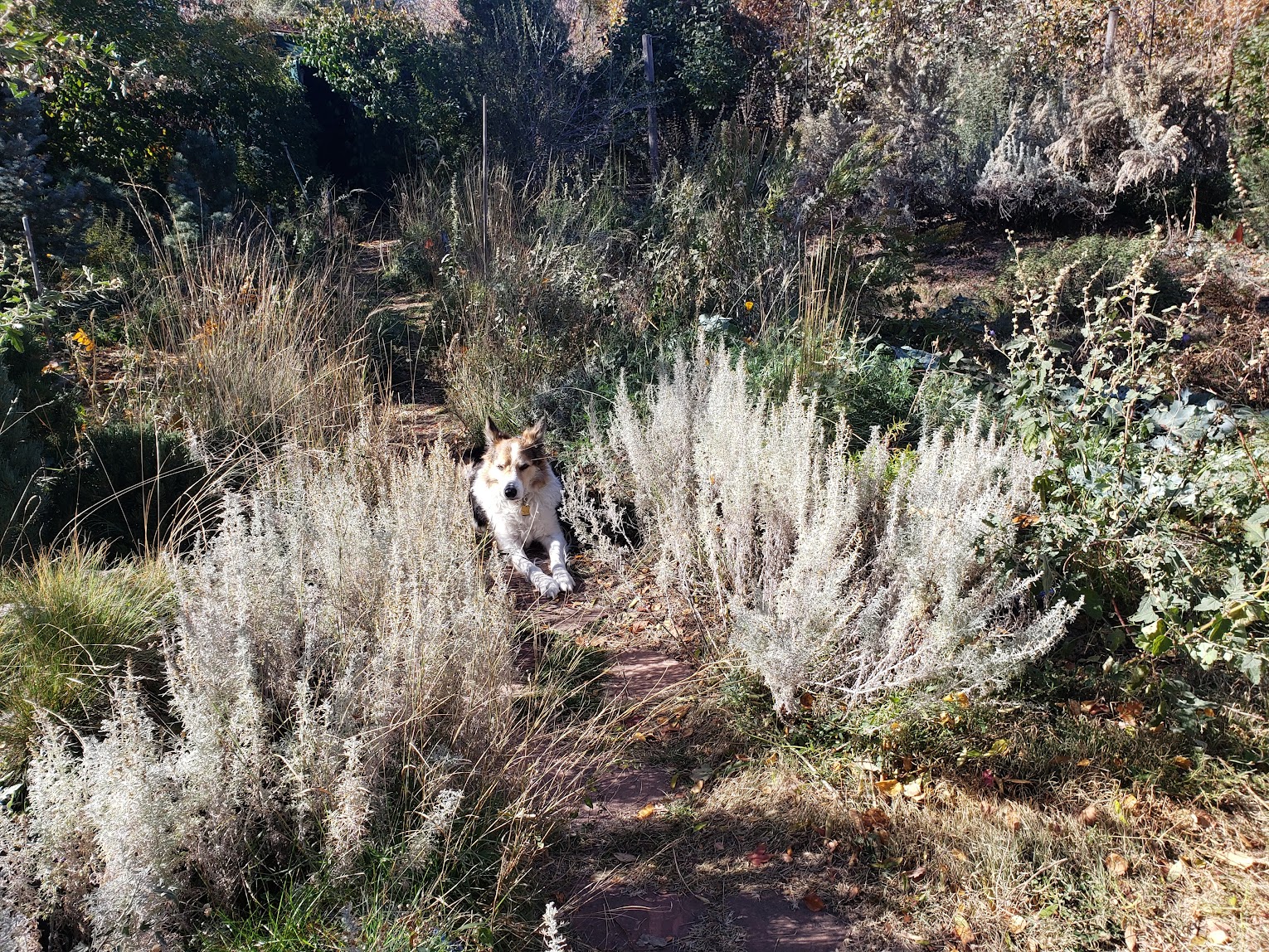 It was nice and sunny today, but last night it kind of froze. There was ice in the bird bath, anyway.
The other day, the guy I live with noticed that the pinyon in the front yard (Pinus edulis) had nuts.
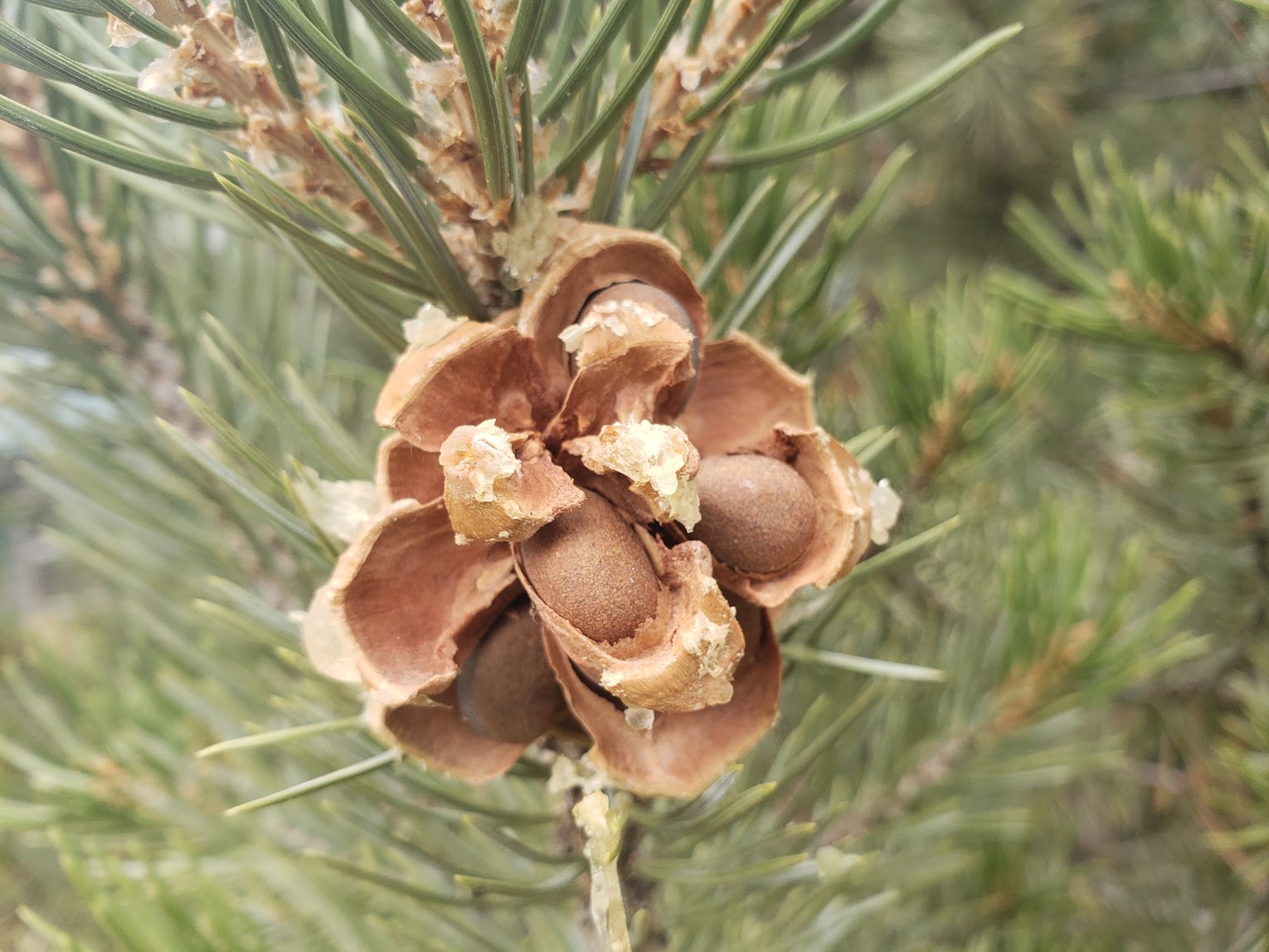 He said he could sometimes find bags of these in Mexican groceries not very far from here, and that the roasted and salted nuts are very, very good.
You can also use these for making pesto.
I think he’s just going to leave these, since there aren’t very many. This may have been the first time these pines produced nuts.
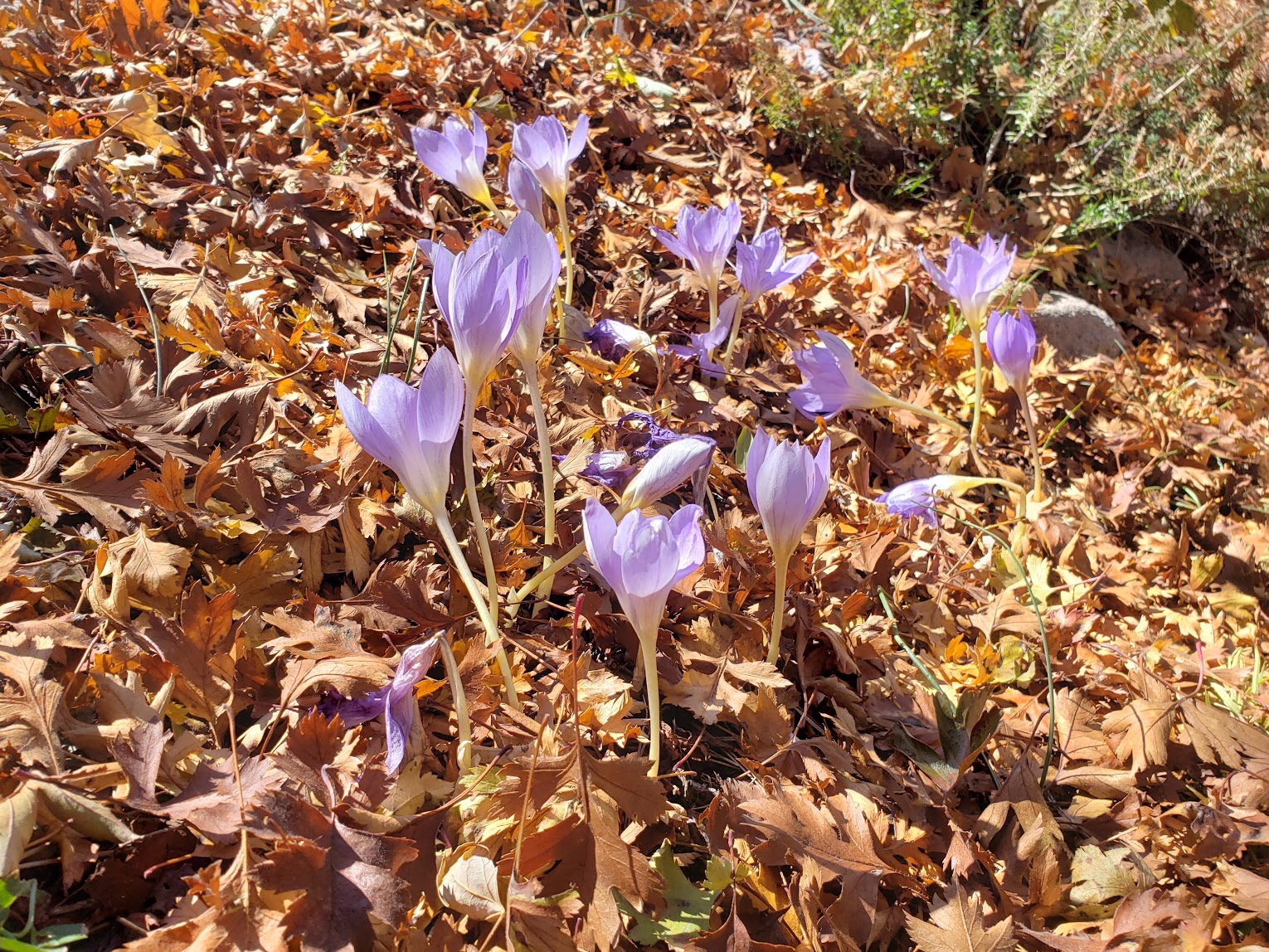
Of course there were crocuses in flower the other day.
This is Crocus oreocreticus. (The word oreocreticus is from the Greek oros, mountain, and creticus is Latin for Crete.)
It’s a member of the saffron crocus family.
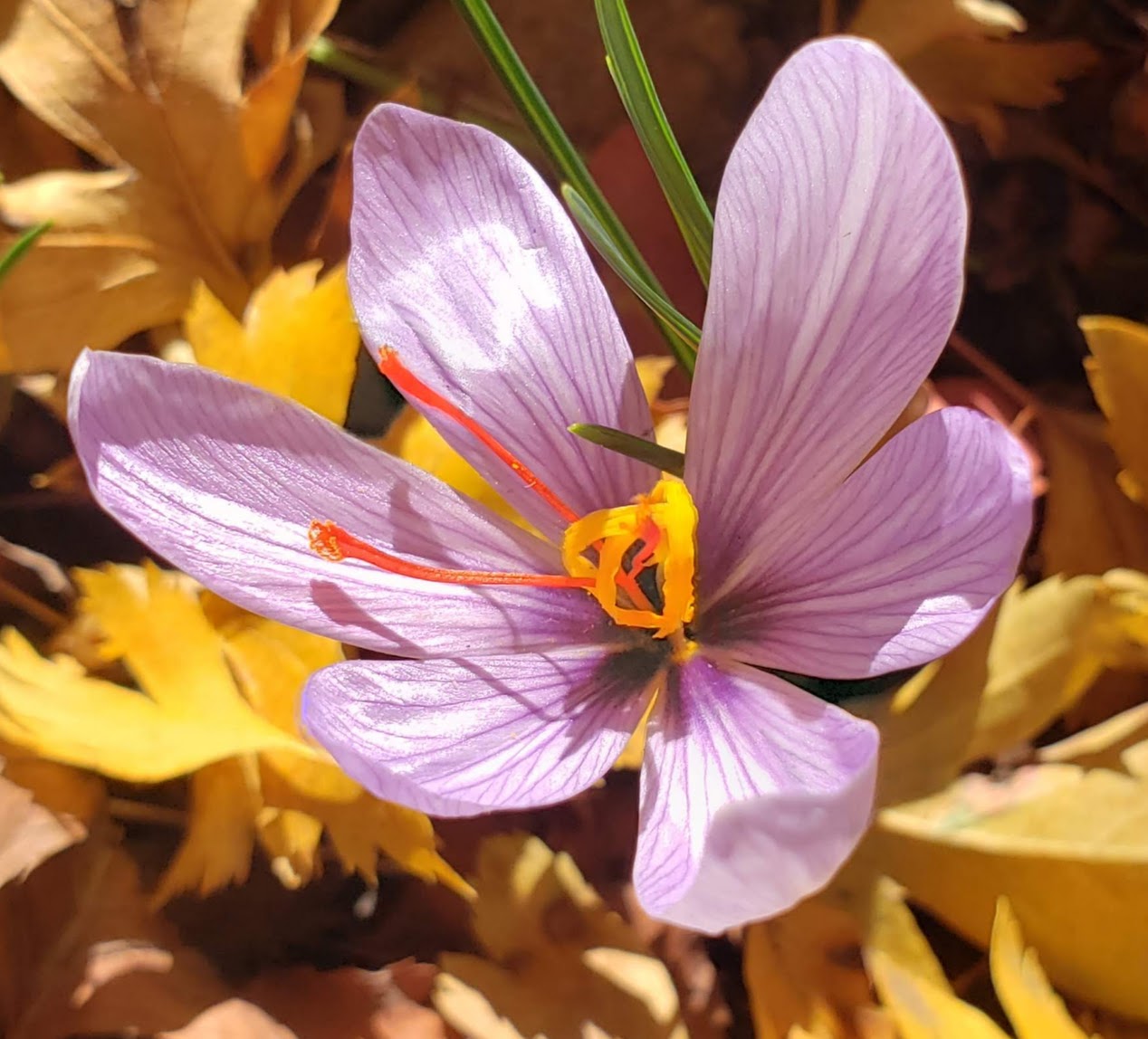 This is the real saffron crocus, Crocus sativus (the commercial one, you might say; sativus means “cultivated”).
Those are crocus leaves behind the flower; you can tell by the white stripes.
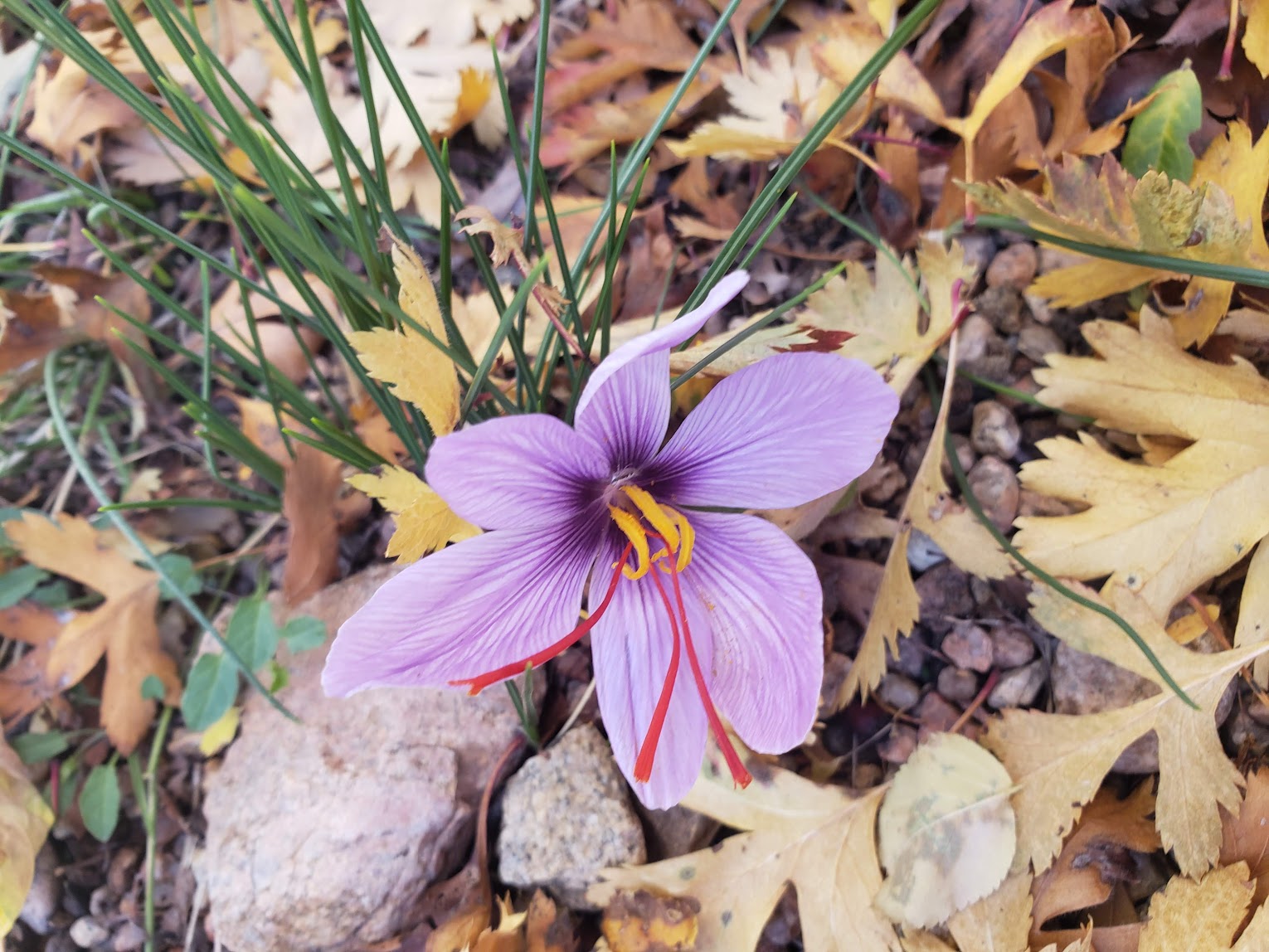 The guy I live with forgot to collect the styles to get more saffron.
There were some Crocus speciosus still in flower, too.
Anyway, it kind of froze. I went around the garden to make sure things were okay.
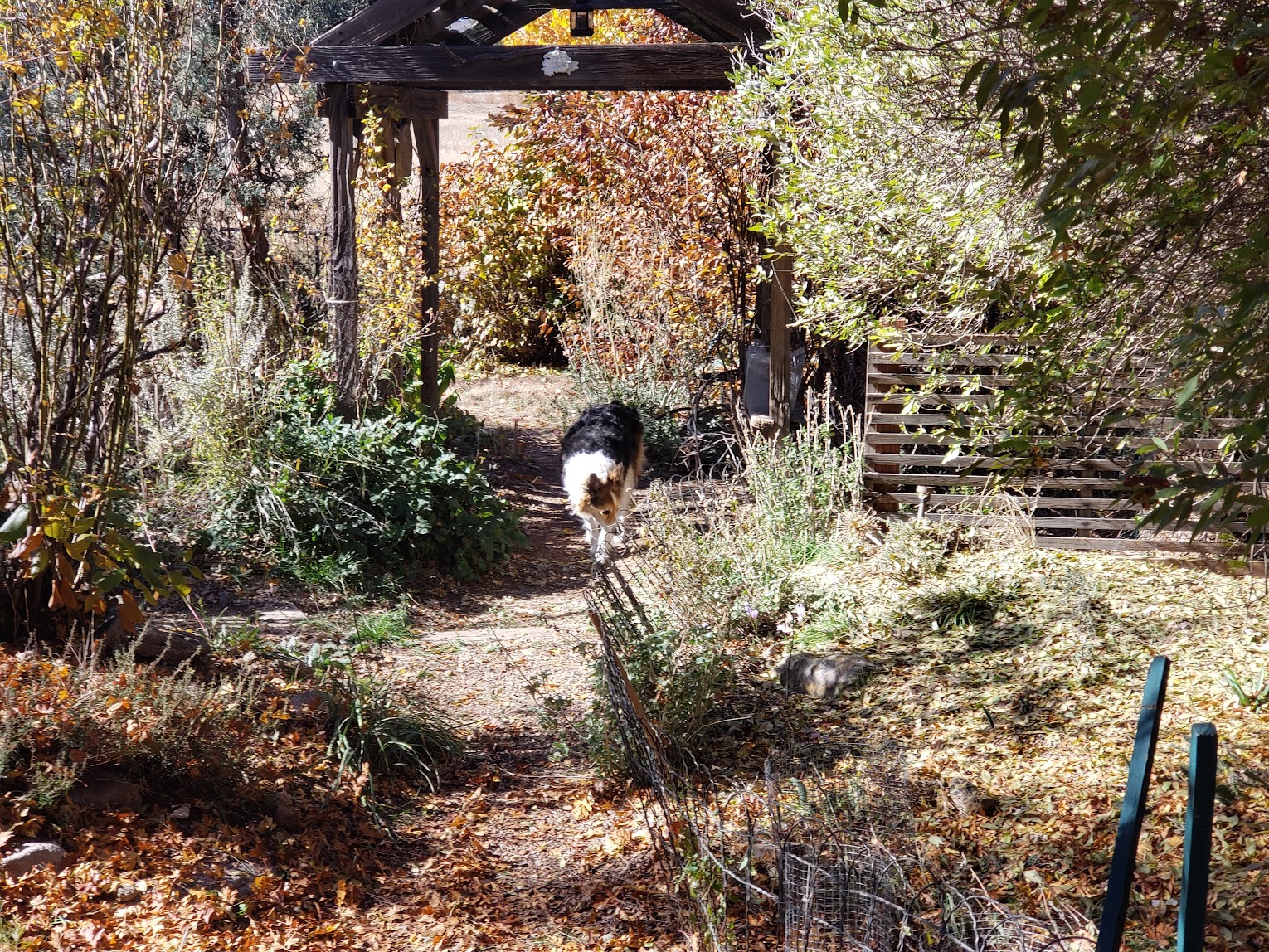 So here we go.
The guy I live with saw a Facebook post showing Nerine bowdenii in flower, which it does now, and he asked the person when the leaves emerged. The answer was the following spring.
The guy I live with tried to grow this bulb many years ago, and it produced leaves just about this time of year, and of course the leaves froze and the bulbs died. He consulted a number of what he would call authoritative texts, and some said leaves over the winter, and others said leaves only in spring.
The plant is native to South Africa and a website from there said the plants are dormant in winter, so no leaves.
He said this was a complete mystery.
Plants with overwintering leaves in cold-winter climates manufacture “antifreeze” (sucrose, glucose, fructose) to prevent the water between the cells from expanding which would basically causing the plant to explode from freezing.
Lots of plants do this. Conifers do it, and in fact they can completely stop photosynthesis during cold winters. They just sit there; the pinyon pictured above can go eight months without photosynthesizing. They certainly don’t need to be watered; that should have been done before cold weather set in, since the manufacture of “antifreeze” is due to photosynthesis.
Basically any evergreen plant hardy in our cold winters makes “antifreeze”. Otherwise they would die.
Hardy cactus do something different; they lose water and shrivel, and can’t take up water until the following spring.
(The guy I live with said I could include scientific references for all this, but I thought it would seem too pretentious. He also prefers the term “cryoprotective sugars” instead of “antifreeze”.)
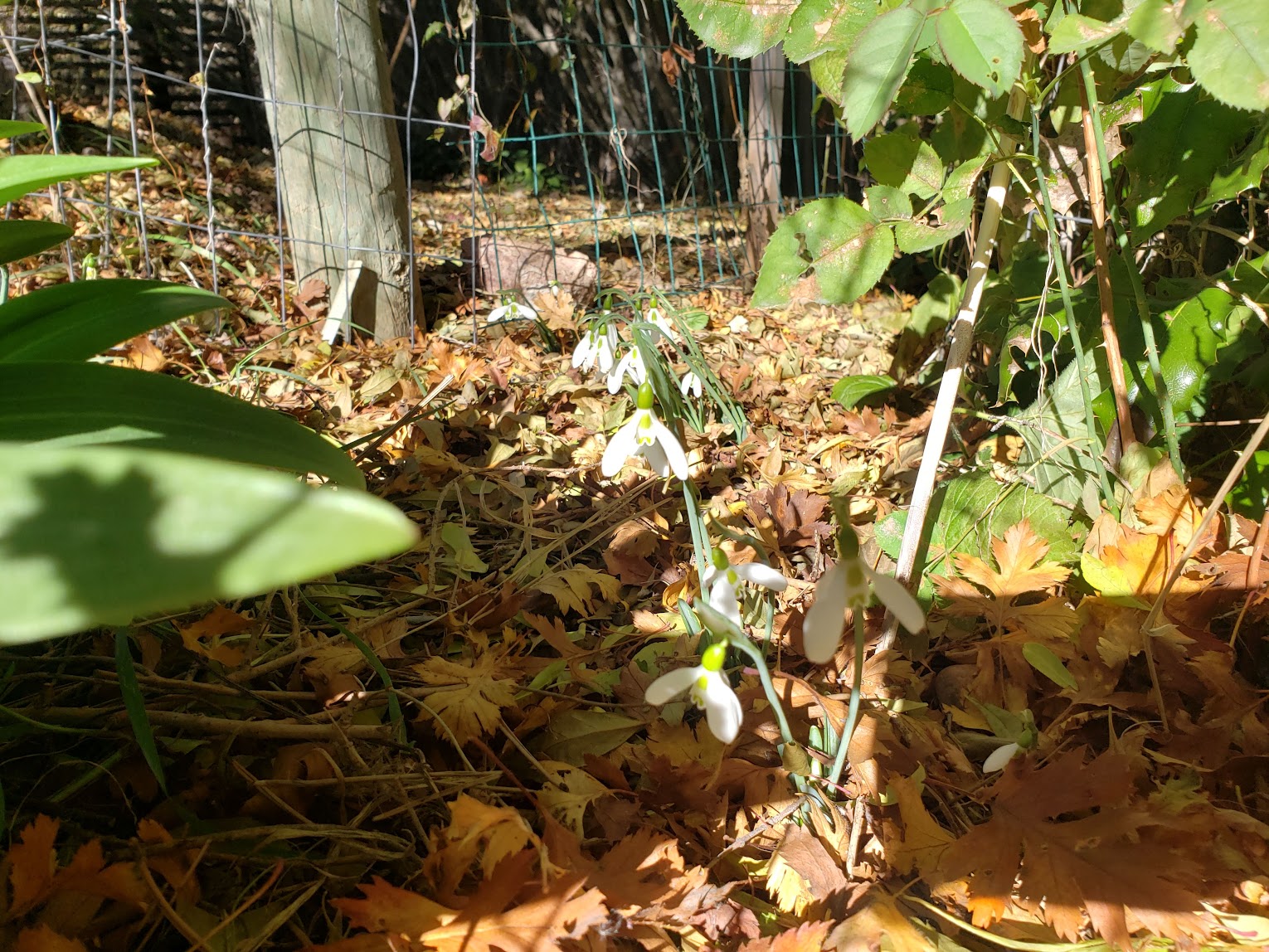
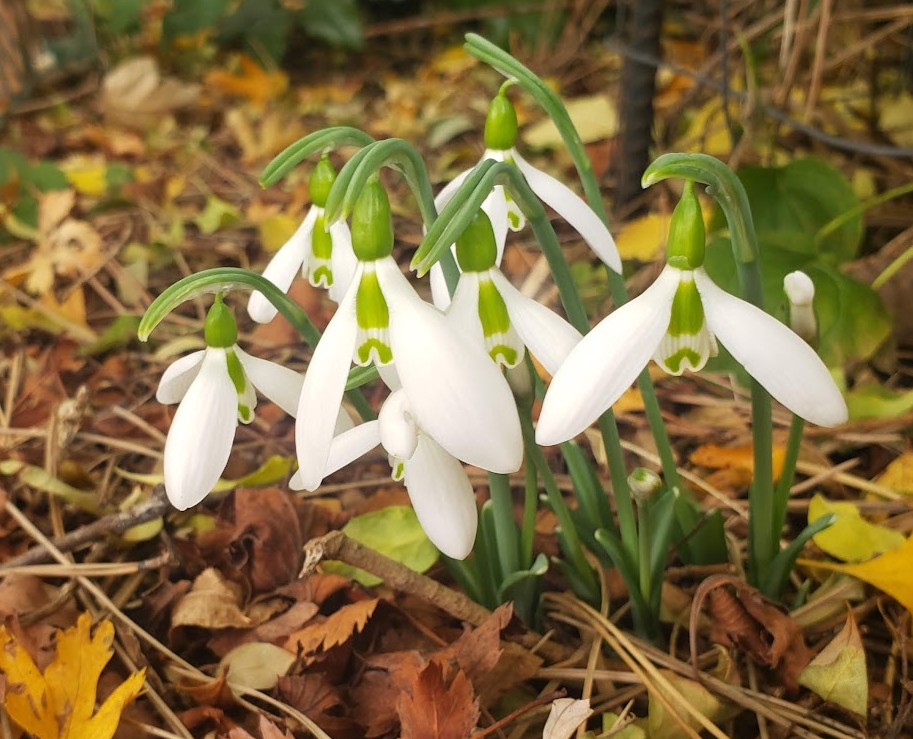
Autumn-flowering crocuses with overwintering leaves manufacture “antifreeze”, and so do snowdrops.
Snowdrops are super-tough plants and are completely unfazed by being frozen.
This is Galanthus bursanus again, after being sort of frozen. (The leaves on the left are Lilium candidum, another plant that can deal with very cold temperatures; the leaves stay green all winter, though they may look a bit battered.)
I’m pretty sure that’s all I have for today.
The guy I live with said that the Big Scary Night was tomorrow (he has plenty of Kit Kats), but I’m so exhausted from all this antifreeze talk I may sleep through everything.

Until next time, then.

 the miserable gardener
Nerine bowdenii is in full flower here at the moment, the beginning of our winter. Foliage will grow in early spring and continue through the summer, going into decline in mid to late summer when we remove it as it becomes tatty.
Like colchicums. That’s how the guy I live with’s Facebook friend’s nerines grow, but Brian Mathew, in The Larger Bulbs, says “athough the leaves are produced in late autumn and last through the winter they are very frost-hardy and remain undamaged” and a bulb catalog in this country says they have to protect the overwintering leaves.
It could be that plants without overwintering leaves are subsp. wellsii, which is endemic to Mont-aux-Sources at elevations up to 3300 meters and gets as cold as -15C.
https://pza.sanbi.org/nerine-bowdenii
The guy I live with says it’s a mystery.
The description in the link makes no mention of the growth habit of subsp wellsii which leaves the situation unclear, not described. N. bowdenii is perfectly hardy here and has been tested to about -10C though that was quite a few years ago. We grow N. sarniensis and N. undulata in the glasshouse. These have foliage at time of flowering and hold it over the winter.
The guy I live with says “the bulbs are completely dormant” suggests “no leaves” to him.
But who knows?
Wishing you and the man you live with a relaxing and peaceful Halloween. Whether it’s cryoprotective sugars” or “antifreeze,” we always learn something new from your posts. Thank you. Stay warm and enjoy that ‘extra’ hour of sleep Sunday morning as we ‘fall back.’
Thanks. The guy I live with said he’d forgotten all about “setting clocks back”, though, here, all the clocks but two set themselves back.
Halloween was one of his wife’s favorite times of year; they would go shopping for Halloween stuff at places like City Floral or Five Green Boxes, and the fact that those days are gone makes him pretty sad, but he does have Kit Kats for tonight.
The antifreeze, combined with extreme root hardiness, is why all the little conifers and sempervivums here can sit in their pots all winter. They don’t need to be watered, either.
I learned a lot about antifreeze today; thanks, Mani. City Floral is magical this time of year, with all the holiday things, and bulbs, and white twinkly lights. So I can see why this time of year is a special memory.
You’re welcome.
The guy I live with says that whoever selects the Halloween and Christmas gifts at City Floral has exquisite taste.
Pinon pine seeds are impressive. Well, so are the crocus. I would have liked to grow pinon pine, but would have needed to start it decades ago to have a small tree with cones on it now. Besides, It probably would not have been happy here.
The pinyons have been in the garden for twelve or thirteen years. The guy I live with bought them at a nursery as fairly large trees. They were a huge pain to drag into the places they’re in now, but he had already dug holes for them.
He used a hay hook to drag two of them into the back yard; something he couldn’t do now.
Kind of amazing that they survived.
Well, they are more at home there than they would be in most other places.
Yes, probably true.
Mani, those are some astute observations of cool season plant responses. Antifreeze is even a necessary protection down south in the deserts of southern and central New Mexico – we usually see 60-100 nights below freezing each cool season. Even though our cholla and prickly pear cacti rarely flop over in winter, they are prepared when it gets colder!
Thanks; the guy I live with used to collect studies of the process woody plants go through to winterize.
There’s a super expensive book, expensive like all science books, Cold Hardiness in Conifers, which you can peek at using Google Books, and one of the very interesting things it says is that watering conifers during warm, dry spells in winter can cause deacclimation; that is, undoing the effects of the dormancy process which occurred the previous autumn.
Meow Mani yore lookin mitey fien there sir-veyin THE backyard! THE flowerss are so purrty. An THE Pinnie…Pinoy… Pine makin nutss iss furabuluss. Wee nevurr new trees can make their own Aunty-freeze!! Wee allways leern sumthin when wee vissit you an Guy. Wishin both of you a grate week there….an lotss of ‘happy nappy’ss Mani 😉 Love yore sleepin Selfie!
***purrss BellaDharma an ((hugss)) BellaSita Mum
Thanks.
The guy I live with says Wikipedia says only 29 species of pine produce nuts. Three in the southwest here produce them; the regular pinyon, the single-leaf (Pinus monophylla), which we also have in the garden here, and the Mexican pinyon (Pinus cembroides).
He said if the other pines here have nuts he might collect them after all.
Mee-yow wee hope Guy can harvest pine nutss….that wuud bee su-purr kewl Mani!
The guy I live with said there were only nuts on the one tree, so he’s not going to collect them.