
Greetings and salutations, everyone; yes, once again it is I, Mani the purebred border collie, filling in for the guy I live with, and here today to talk about fritillarias. You may remember me from such posts as “At A Distance”, among so many, many others.
Here I am in a characteristic pose.
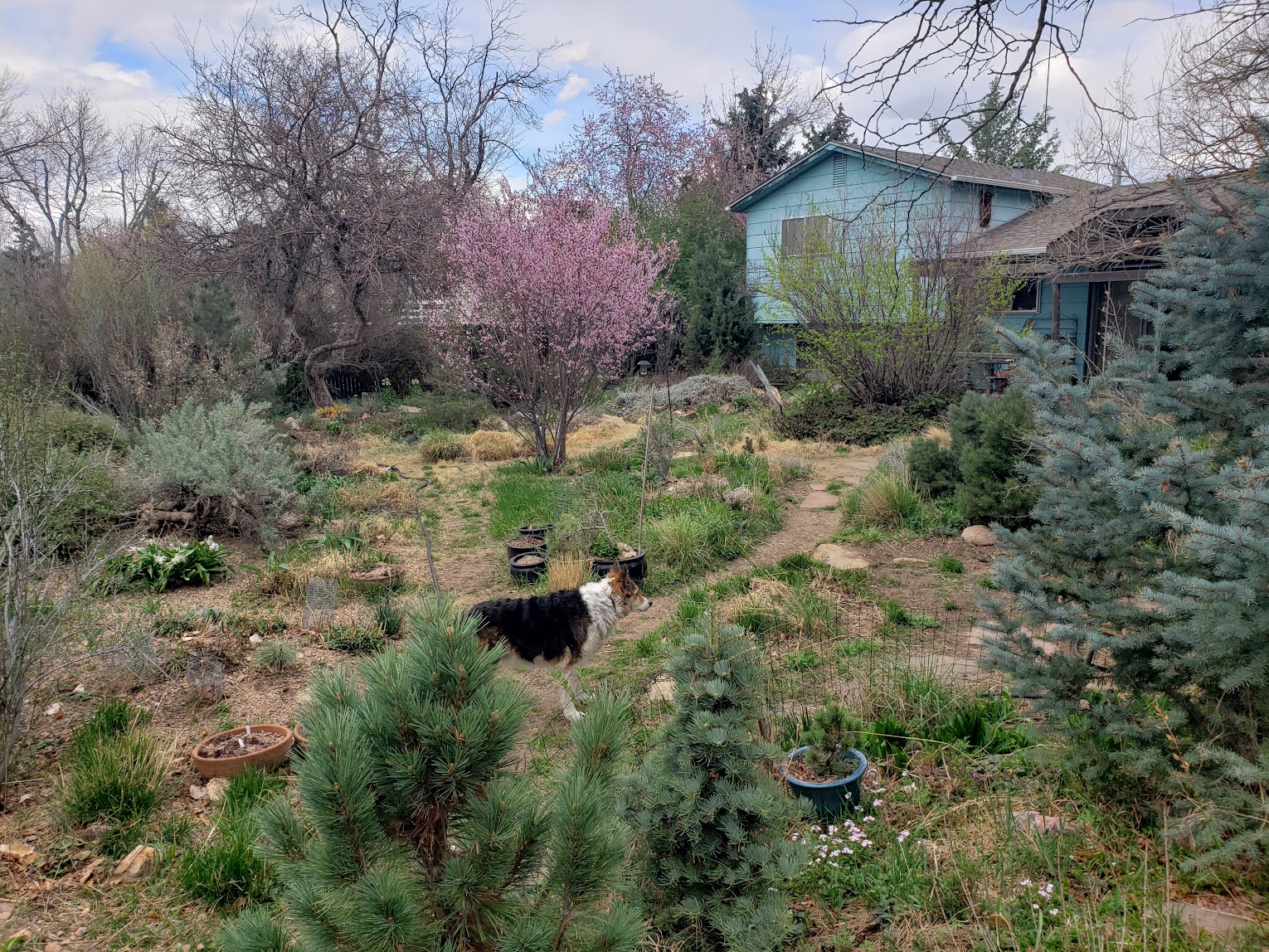 There’s the purple-lived hybrid peach or whatever, and you can see how the native warm-season grasses don’t contribute a very spring-like look, but they will, later.
The guy I live with is reading a lot of discouraging things about water restrictions and the frightfully low snowpack, but those things usually don’t affect this garden much. There are only a couple of places in the garden that need anything like regular watering.
So anyway it’s my job today to talk about fritillarias. Someone has to do it.
You can see that the “header” was changed. It’s Fritillaria pallidiflora, a Chinese species used in Traditional Chinese Medicine. Obviously it’s easy to grow.
The name fritillaria comes from the Latin fritillus, for dice box, and no doubt the box was checkered in some way or the dice made it look like that. The guy I live with said more research is necessary on his part. The fritillary butterfly is named for that checkering, too.
Not all fritillarias are checkered.
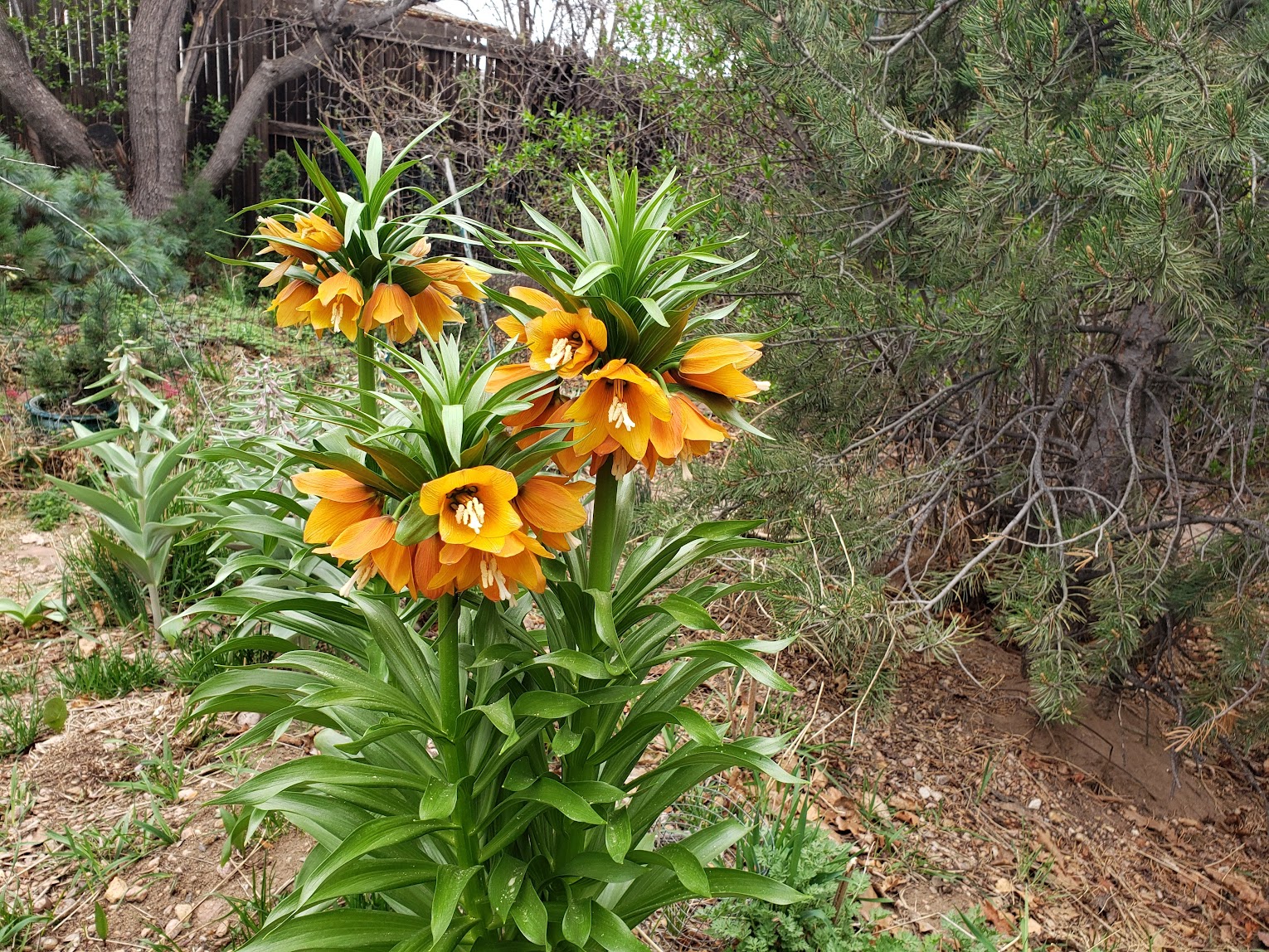
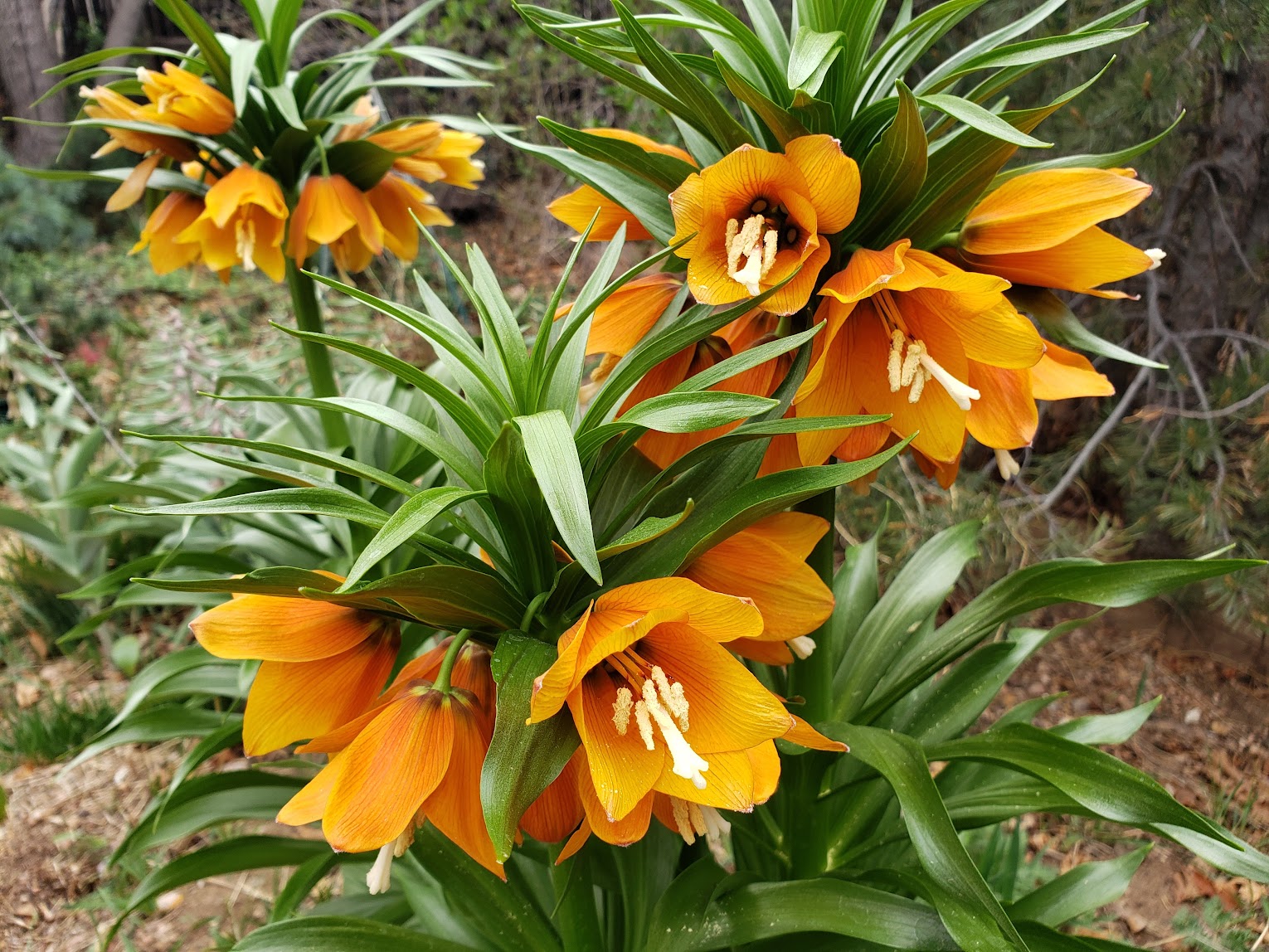
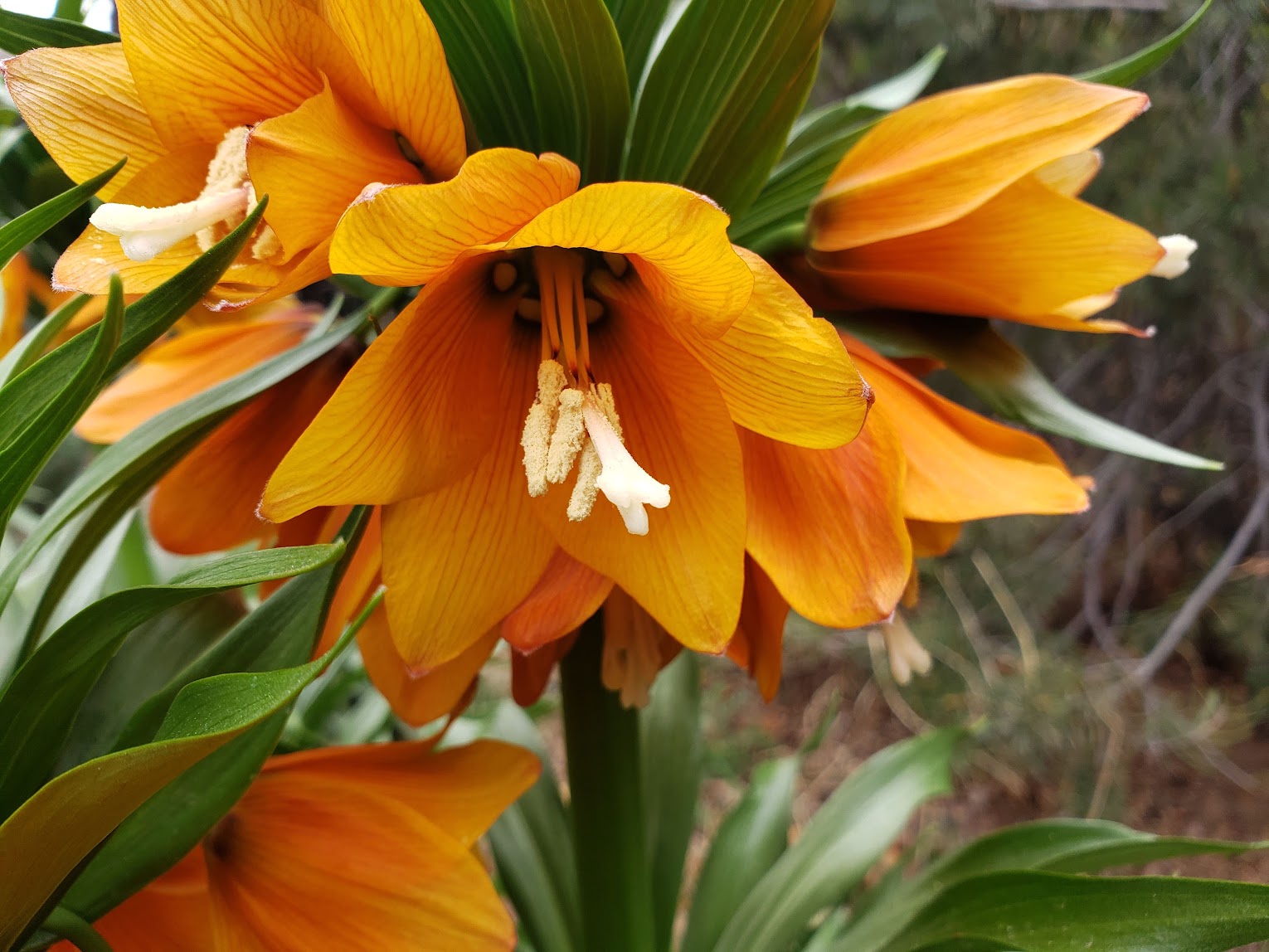
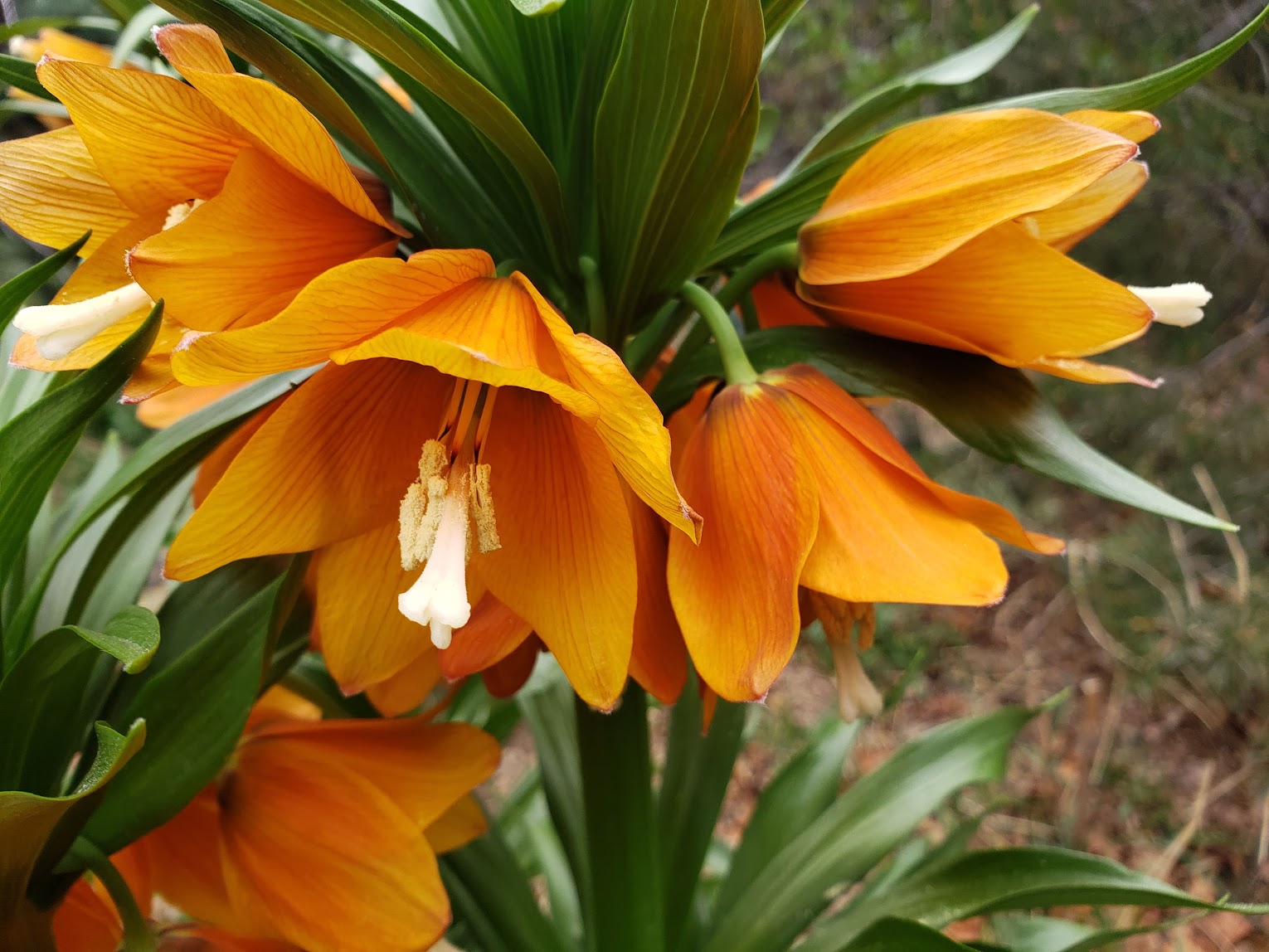
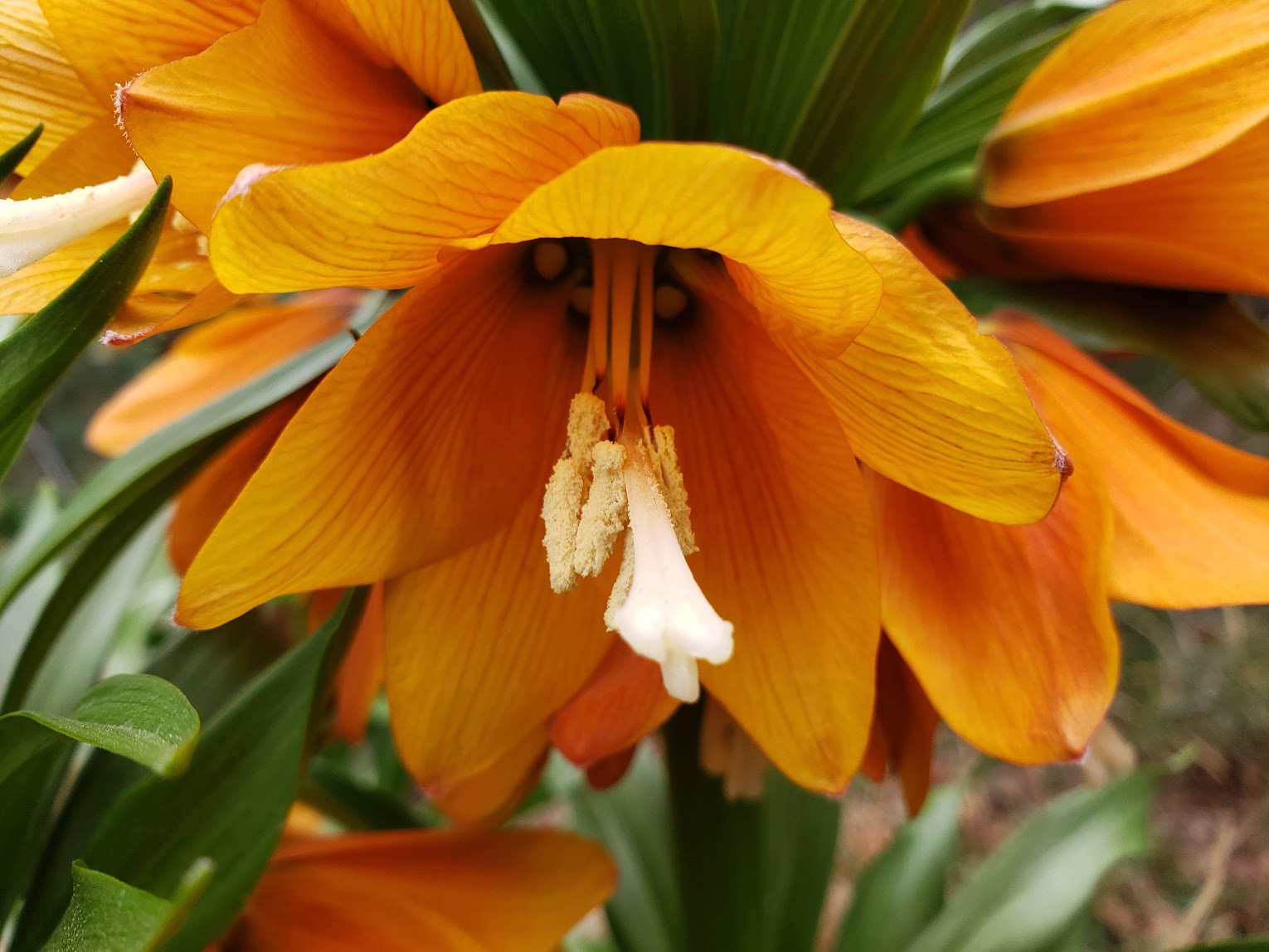
One of the most famous is Fritillaria imperialis. Here are some flowering under the hedge of New Mexican privets, Forestiera pubescens.
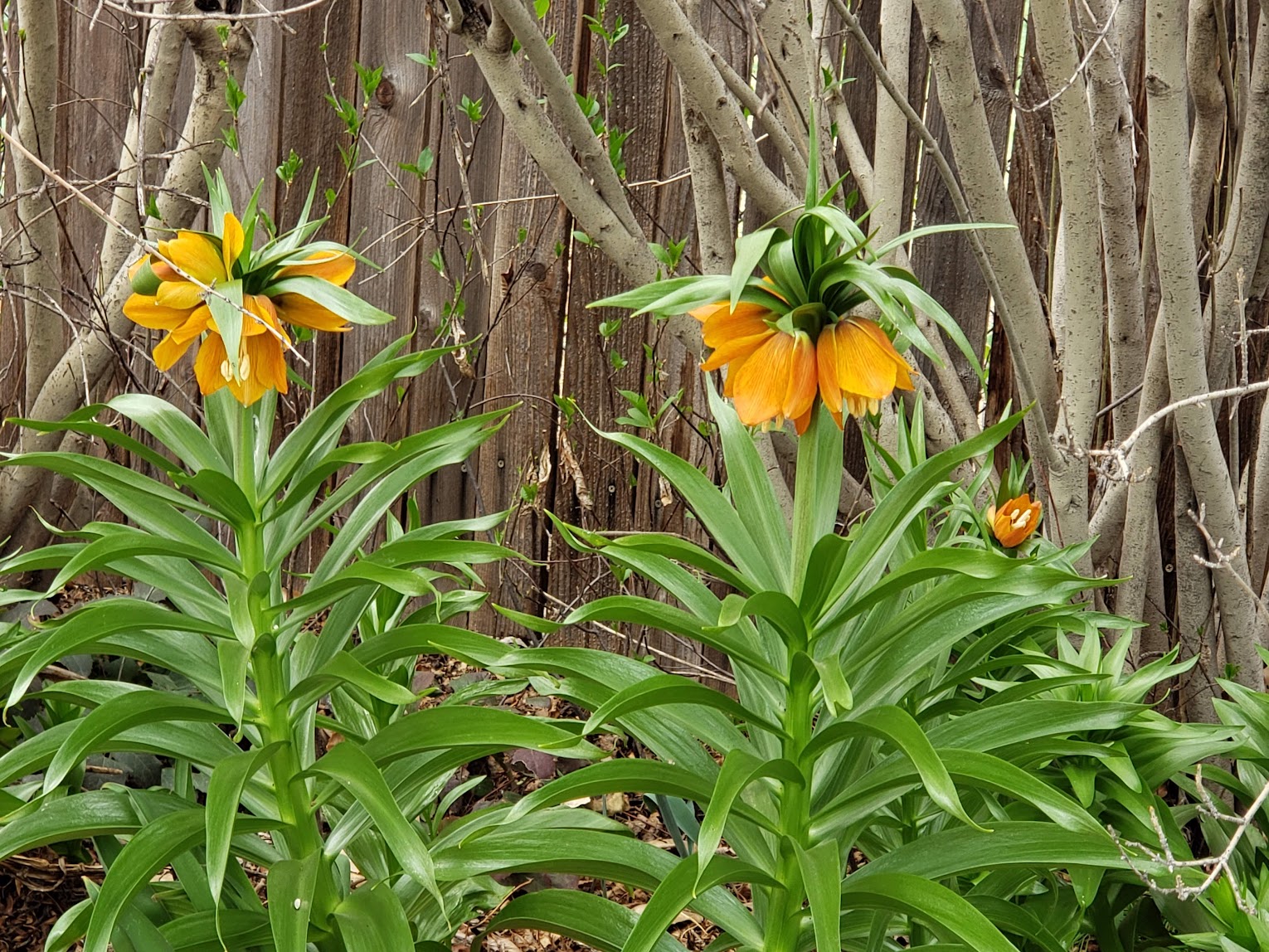 They have a smell. I’ve talked about this before. Some people say skunk, some people say half like a fox, half like garlic.
The guy I live with said that’s not exactly what they smell like, and I immediately understood, because I notice that smell, sometimes, on my evening walks. I have an excellent sense of smell. The guy I live with said he was certain other people weren’t growing Fritillaria imperialis.
The big stinky bulbs don’t need to be planted on their sides, like some people say.
There is a non-stinky species, which is now very hard if not impossible to find, since the bulb company the guy I live with bought them from is no longer in business.
This is Fritillaria eduardii.
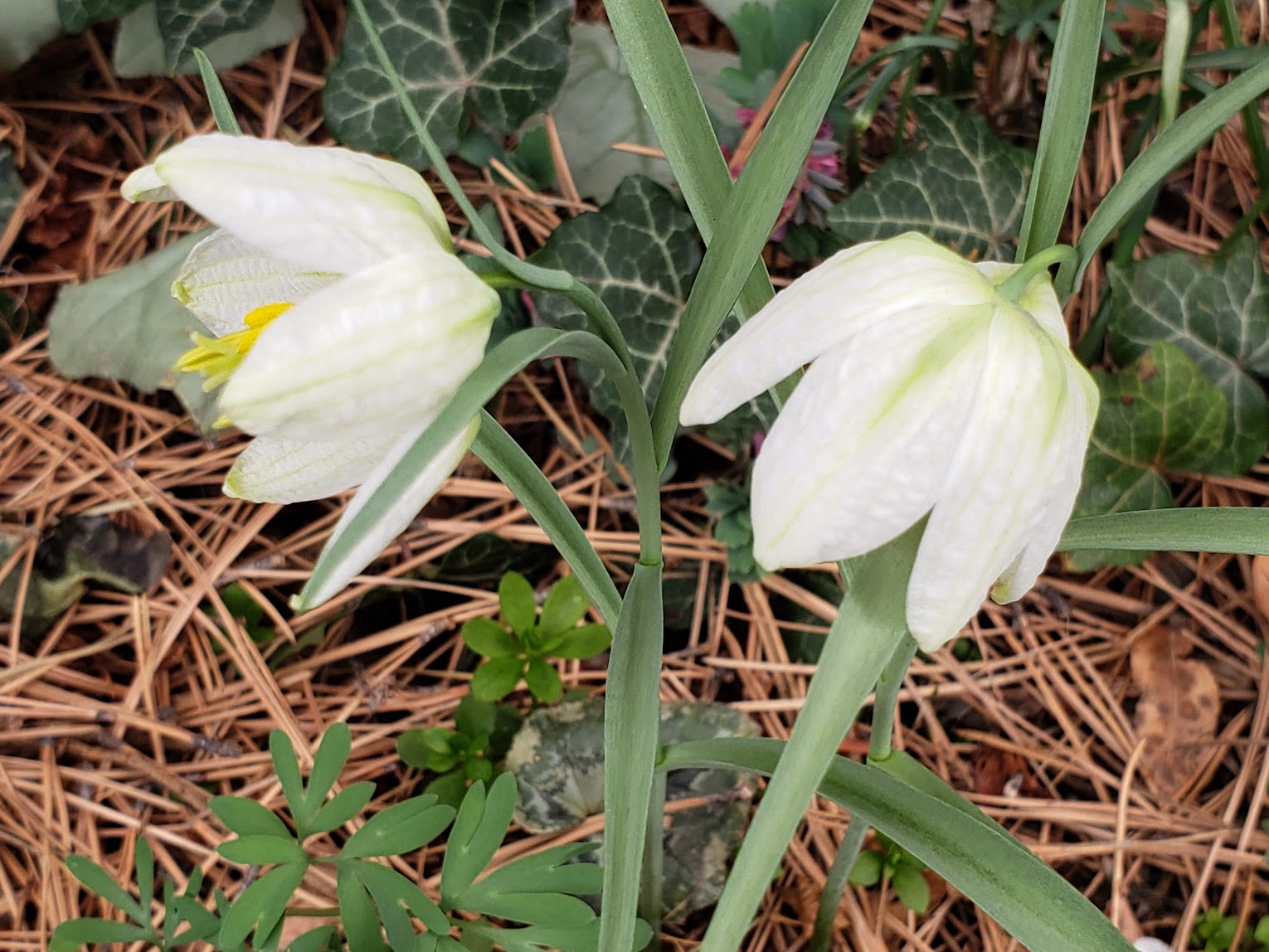
 This is the white form of Fritillaria meleagris. The purple form, more often seen, is checkered, and meleagris means “checkered like a guinea fowl” in ancient Greek. There were some of the purple ones in the shade garden but they probably got wiped out when the new gas line was put in.
 This is Fritillaria latakiensis. It’s very similar to Fritillaria elwesii, but not quite like it.
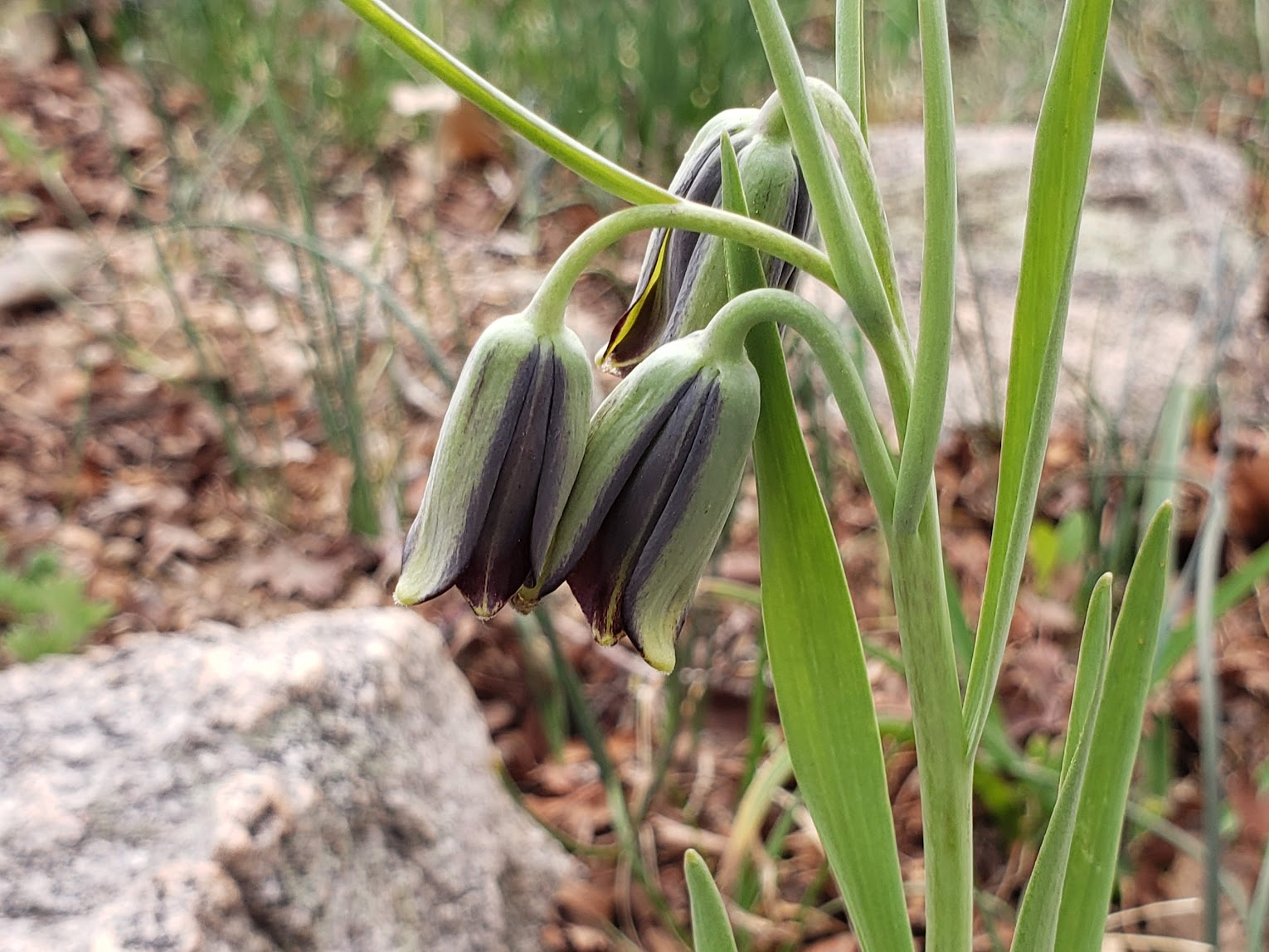 This is elwesii.
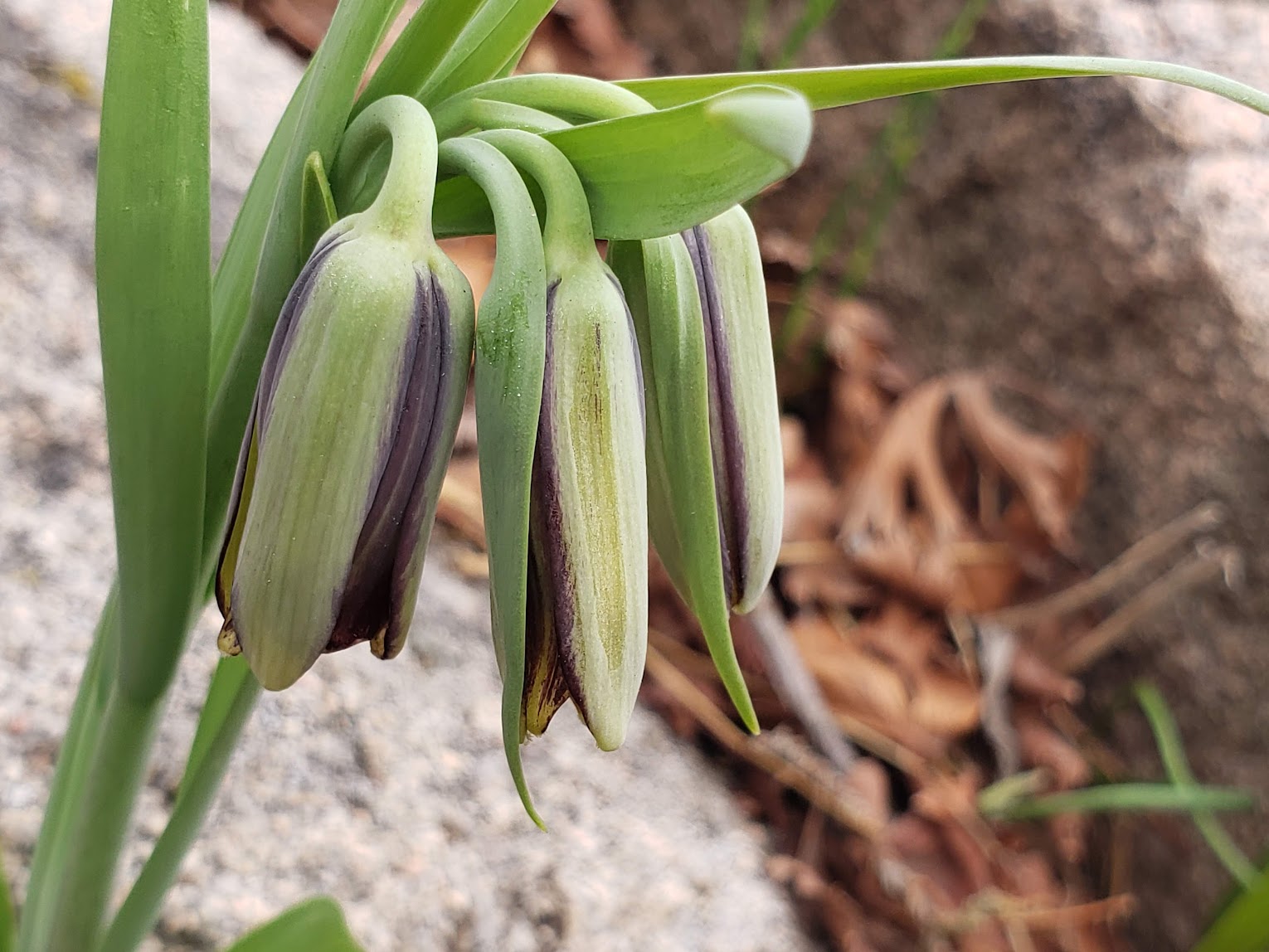 Here’s Fritillaria thunbergii, just starting to flower.
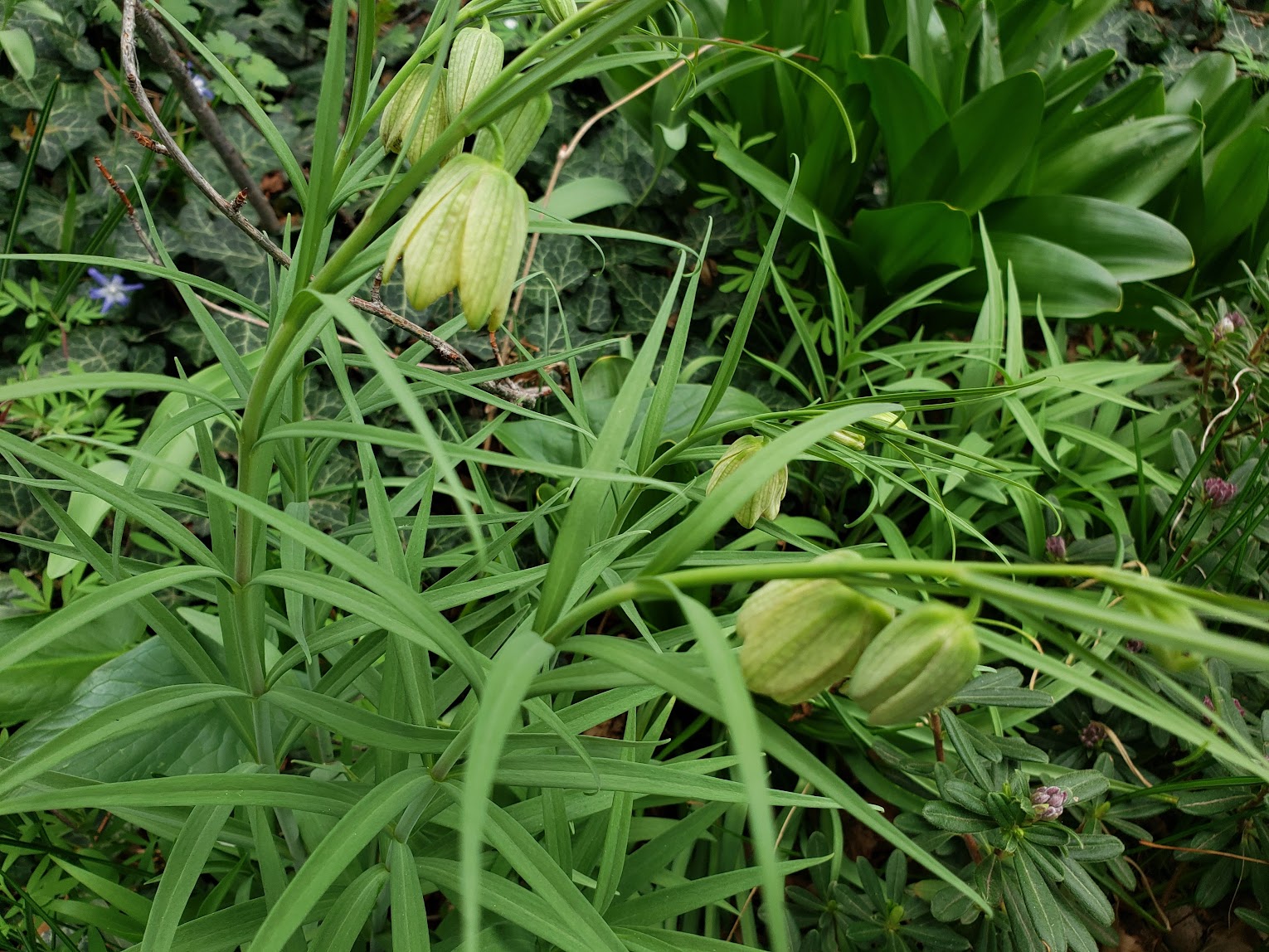 The guy I live with doesn’t know what this is, since the label has disappeared. There’s a place online to look this up, called Fritillaria Icones.
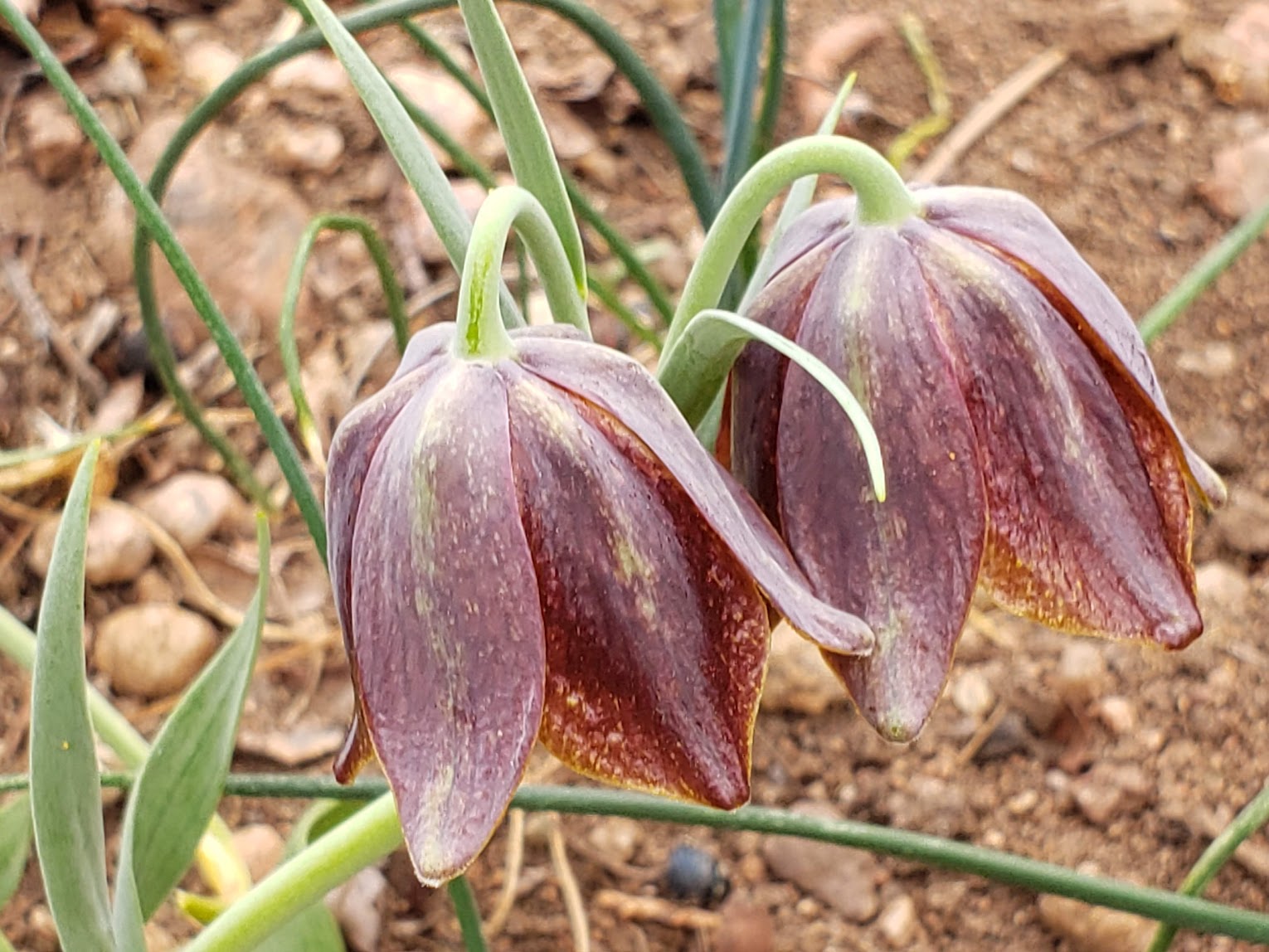 This is one starting to flower, too, and he’s not sure what this is.
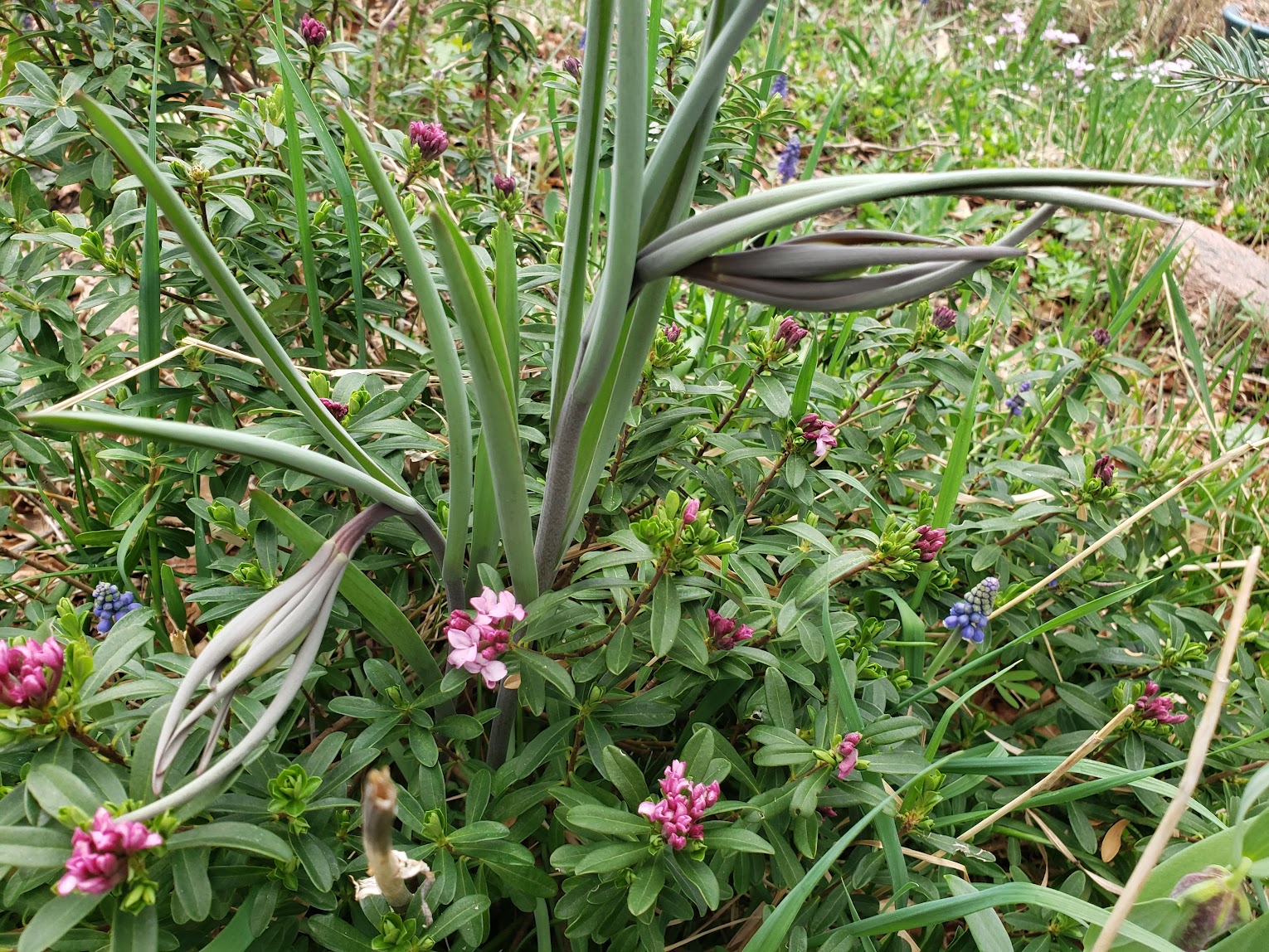 It looks kind of grabby to me.
This is Fritillaria crassifolia, a really little fritillaria. The flower is the size of a grape.
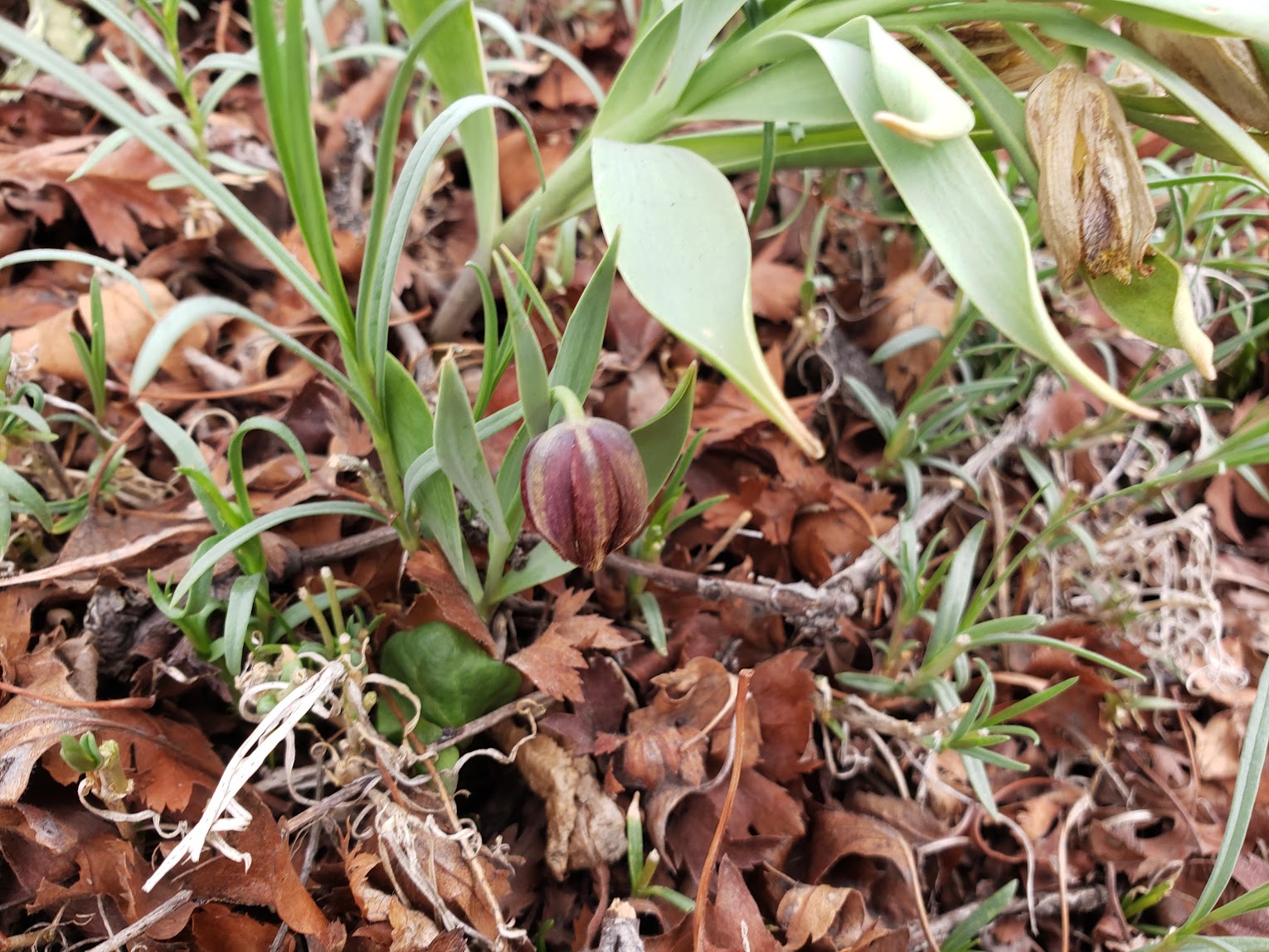 The guy I live with forgets the name of the larger one next to it.
And finally, a very different one, sometimes put in a separate genus, Korolkowia.
This is Fritillaria sewerzowii. (The guy I live with says that if an English-speaking botanist has transliterated the Russian name it might be spelled severtsoffii.)
This was flowering happily when it was about 90 degrees F last week.
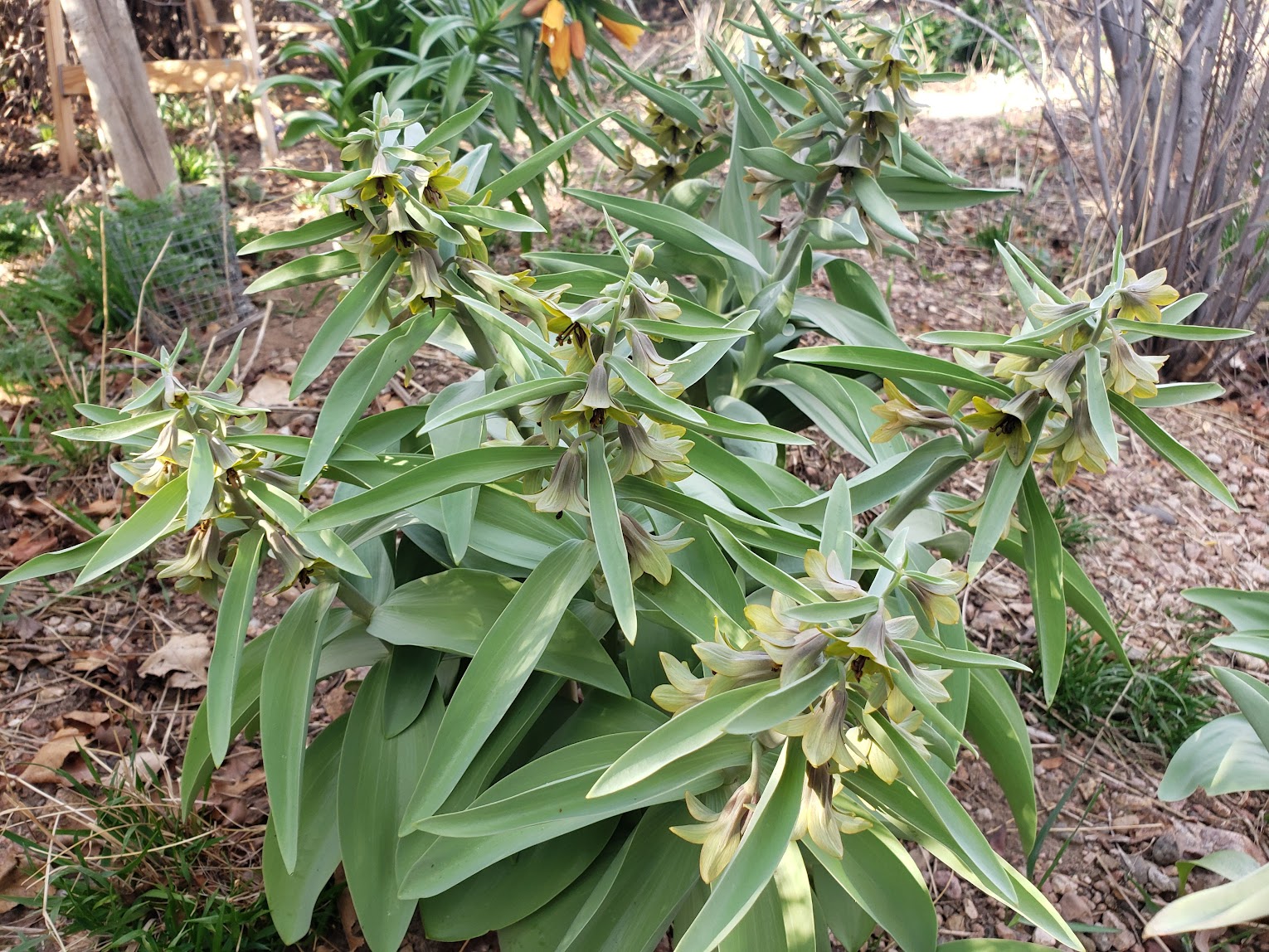
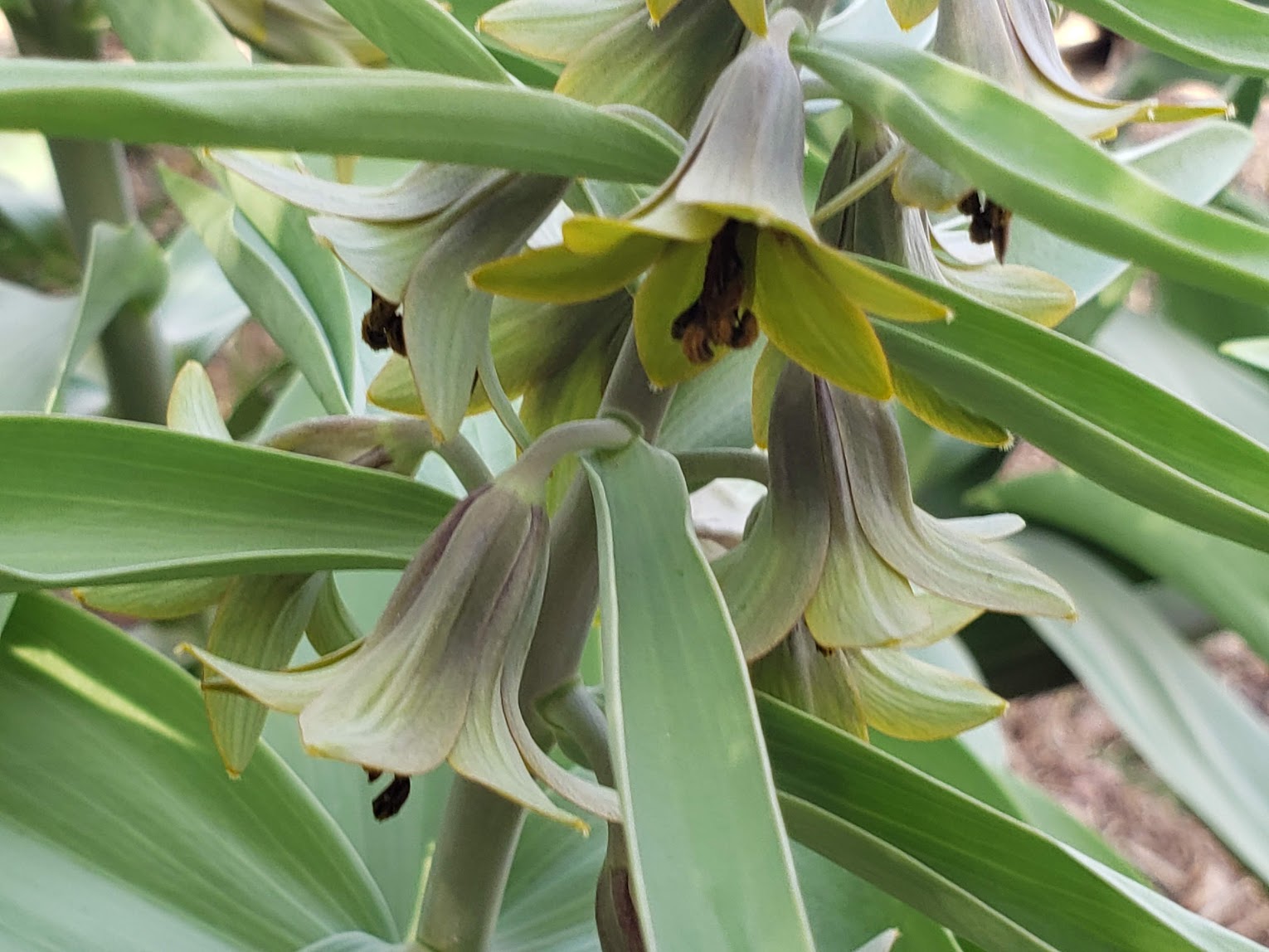
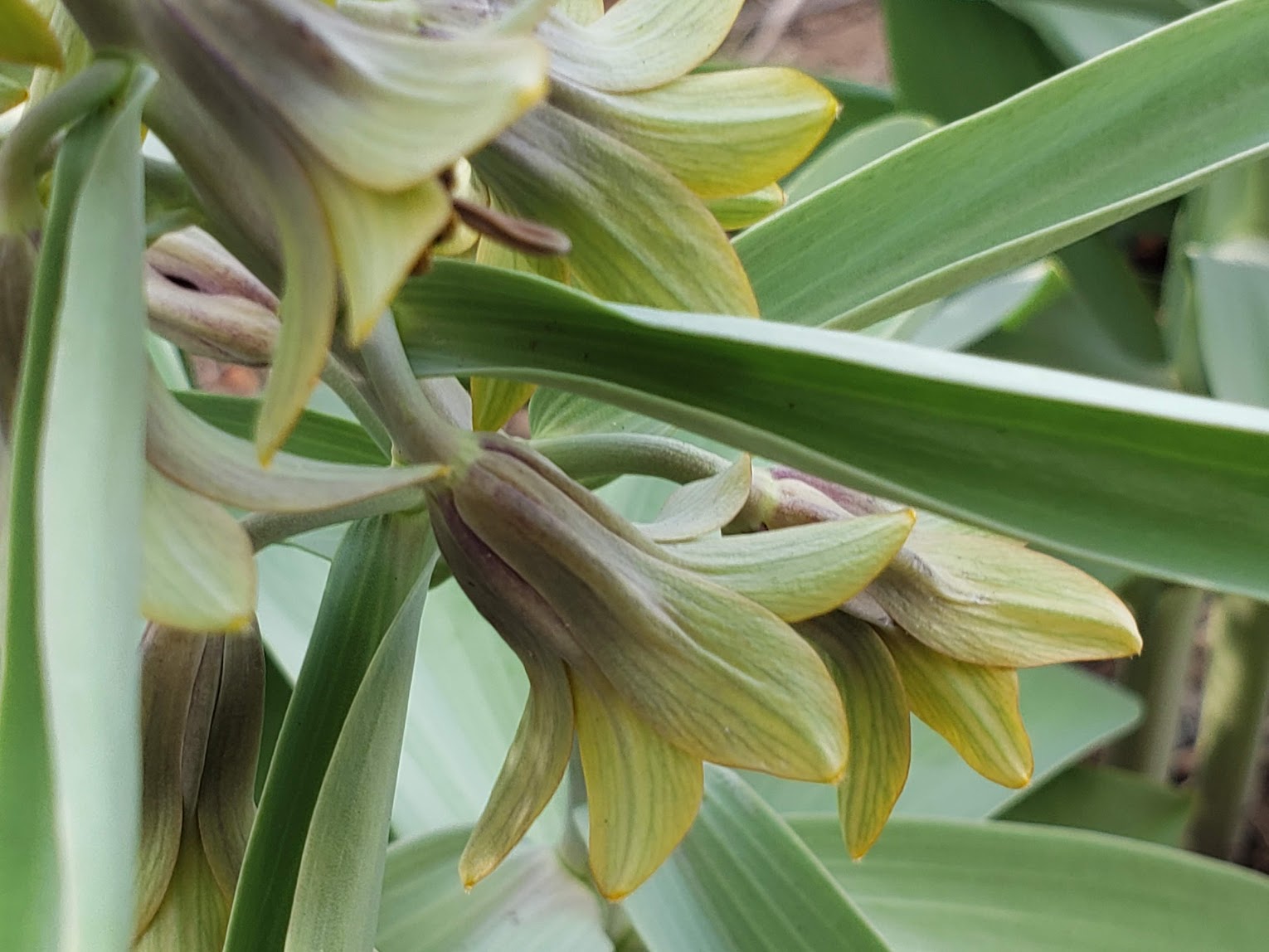 This is one called ‘Ornament’.
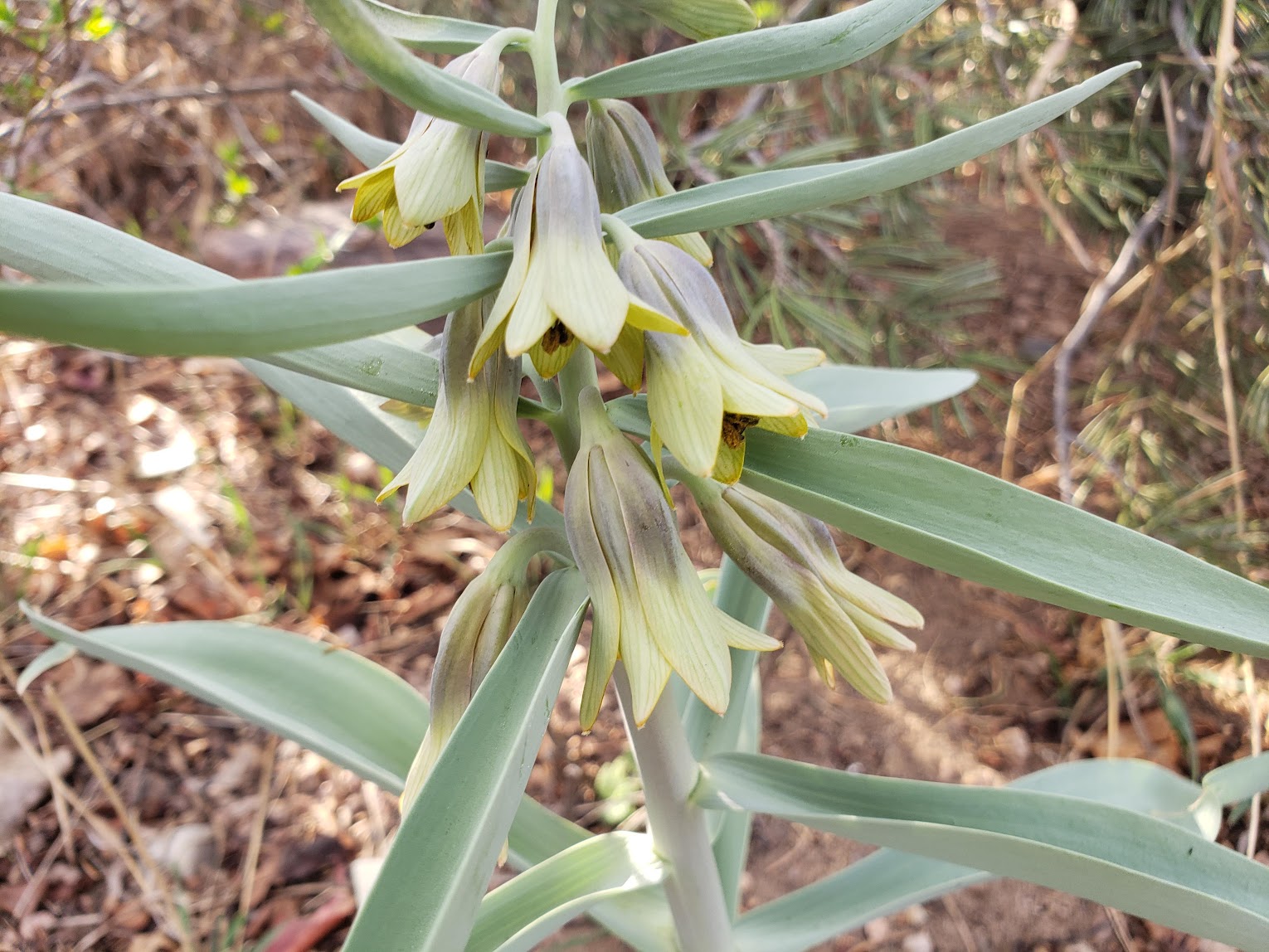 These have finally produced some seeds which the guy I live with just buries in the soil, and some seedlings have appeared. It may have been too hot for seeds to have formed this year.
Well, that’s all I have for today. Kind of a lot, really.
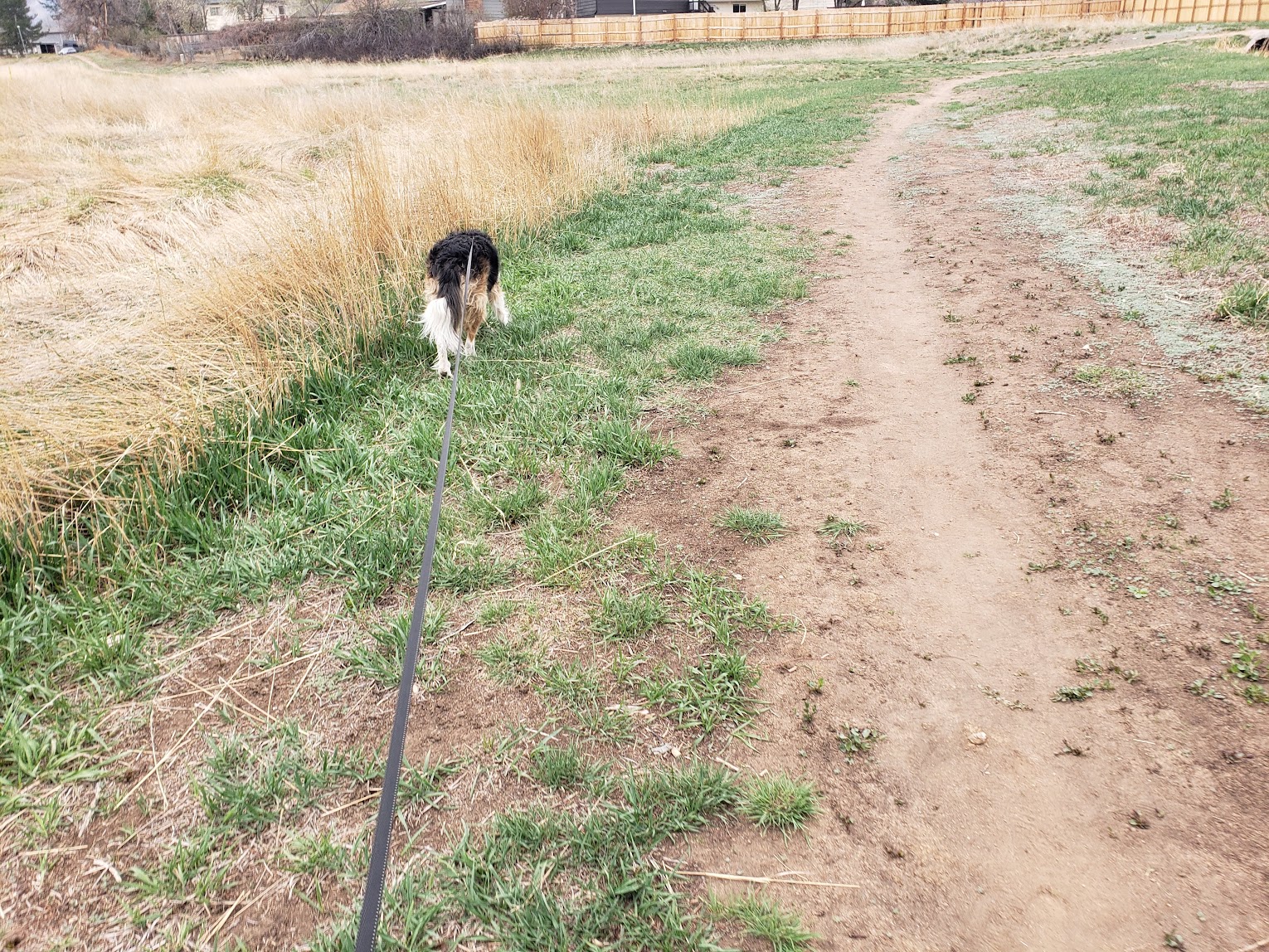
I’ll leave you with a picture of me, showing how green the grass is now. That path will never have grass on it because so many people and dogs walk on it.
The guy I live with does wish the county would come by and mow all that dry grass and pick it up. Compost is very important, though we don’t use it in the way other people do, and maybe I’ll talk about that some time.
Until next time, then.

 the miserable gardener
I would love to hear how your guy uses compost! Where I live just announced with great fanfare that they will now pick up compostable things in a special can so no one has to compost. I personally love my compost pile – had a neighbor say that she was afraid her little dog would somehow get bones from my pile (through the fence and compost chicken wire?). I told her no one here eats things with bones and if we did we wouldn’t put the bones in the compost, but I also relocated my pile farther from the fence in case…. People are interesting.
>