
Greetings and salutations, everyone; yes, once again it is I, Mani the purebred border collie, filling in for the guy I live with, and here today to describe more work done in our garden. You may remember me from such posts as “The Project”, among so many, many others.
Here I am in a characteristic pose.
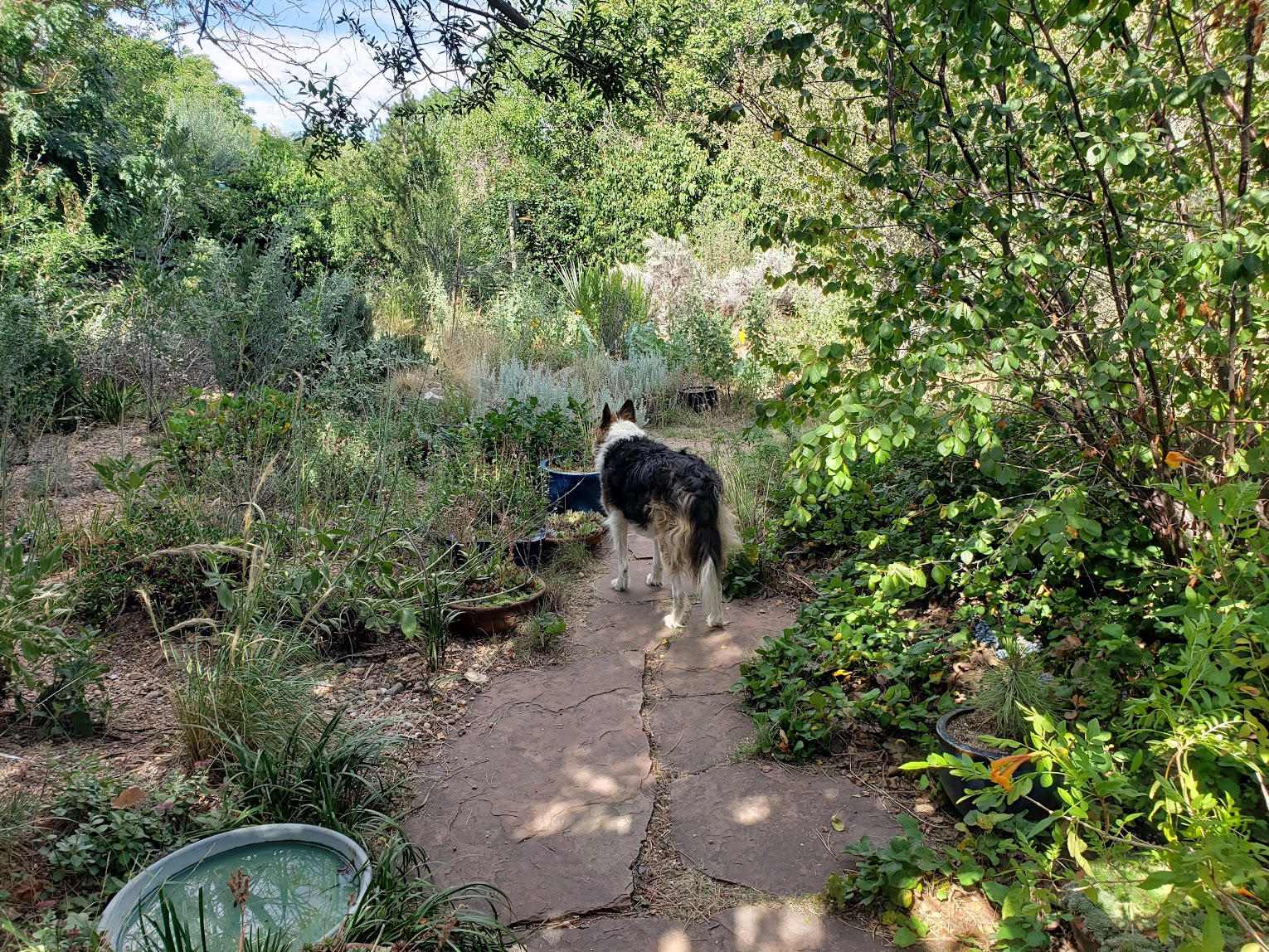 So today I’m going to talk about yet more work done in the garden. The guy I live with has been working like crazy, just like he did when he painted the inside of the house earlier this year.
When he gets this sort of bee in his bonnet it’s almost all he can think of, but I know he enjoys doing this work, some of which he’s planned to do for a few years.
The rock wall in the sandpile is almost finished. As I said earlier, it’s hard to see. But it’s there. (That one grayish rock isn’t part of the wall.)
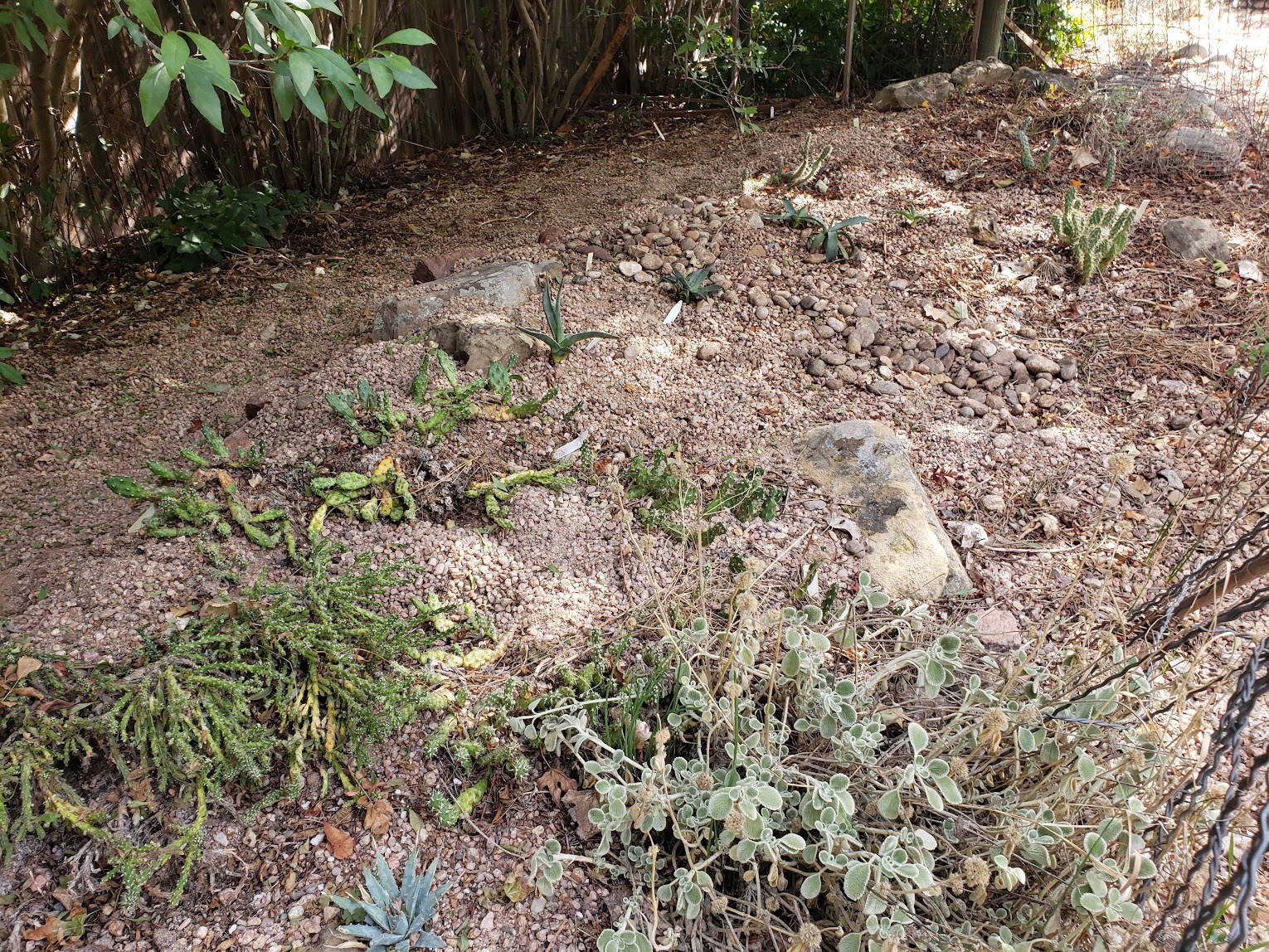 Rabbits got in here and messed around with the sand and gravel near the cactus at lower left, which is why they look disheveled.
This bed was originally for special bulbs, but the top of the bed got too dry, and everything died. He planted some young agaves here.
I’m surprised that the bed hasn’t been ripped apart, because the guy I live with now has very strong opinions about garden design, and especially about the way our garden should look.
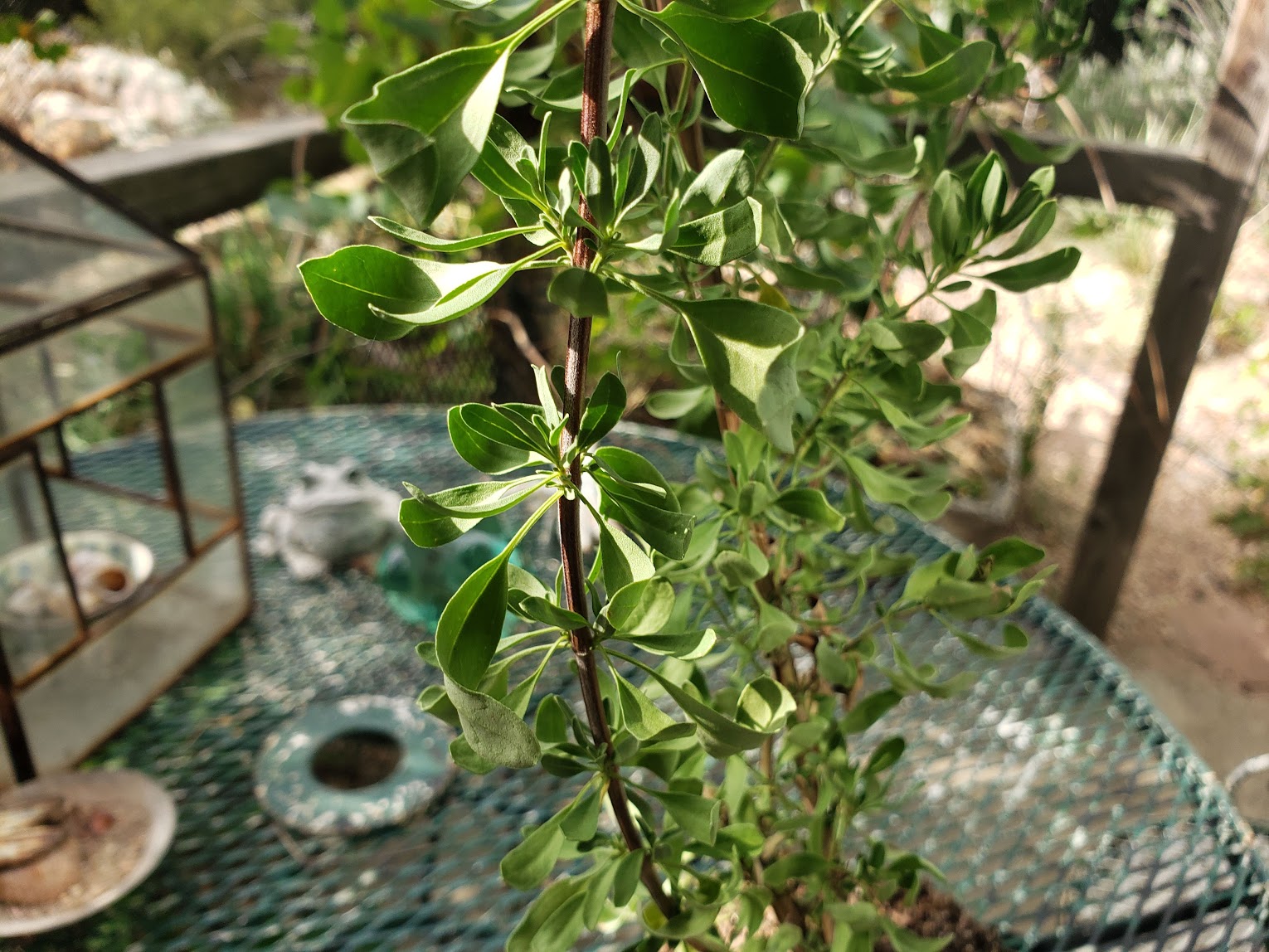
Anyway, a couple of weeks ago the guy I live with purchased a single Salvia greggii and jammed it into the garden just to make the hummingbirds happy.
Then it rained, and as I showed in my last post, all the salvias burst into flower, so this one salvia in the middle of the garden looked kind of dumb.
Yesterday, the guy I live with noticed the plant had wilted, and one more day of that would have been the end of it. The rain didn’t help it at all.
 He dug it up; this is what the root ball looked like.
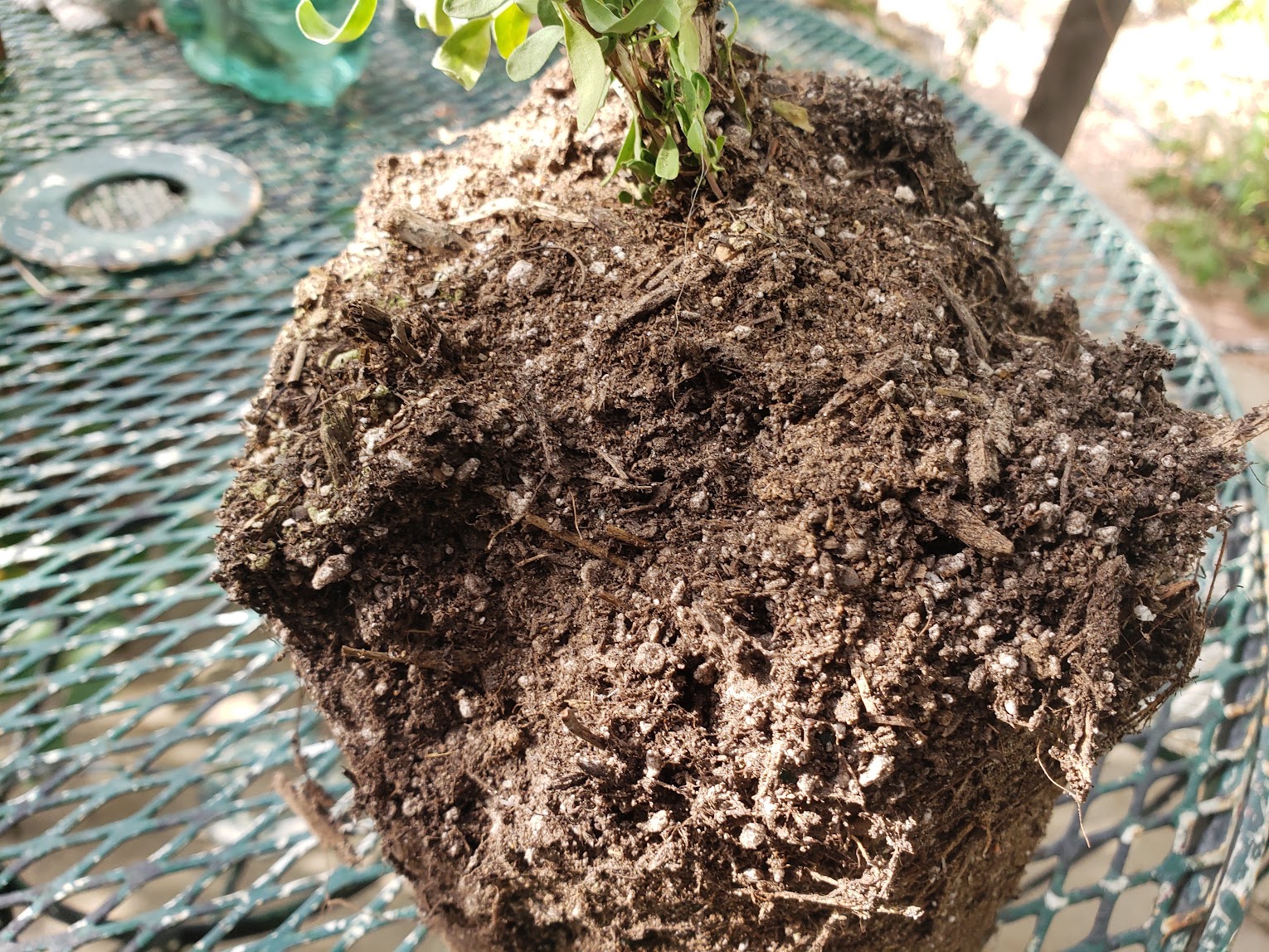 Bone dry. The guy I live with has repeatedly shown what he does what gross peat-mossy root balls like this, how quickly peat moss dries out in our garden, and he said it served him right for just planting this salvia.
He soaked the root ball in water, “feathered” the roots by pulling them apart with a little steel tool, and within an hour it looked like this:
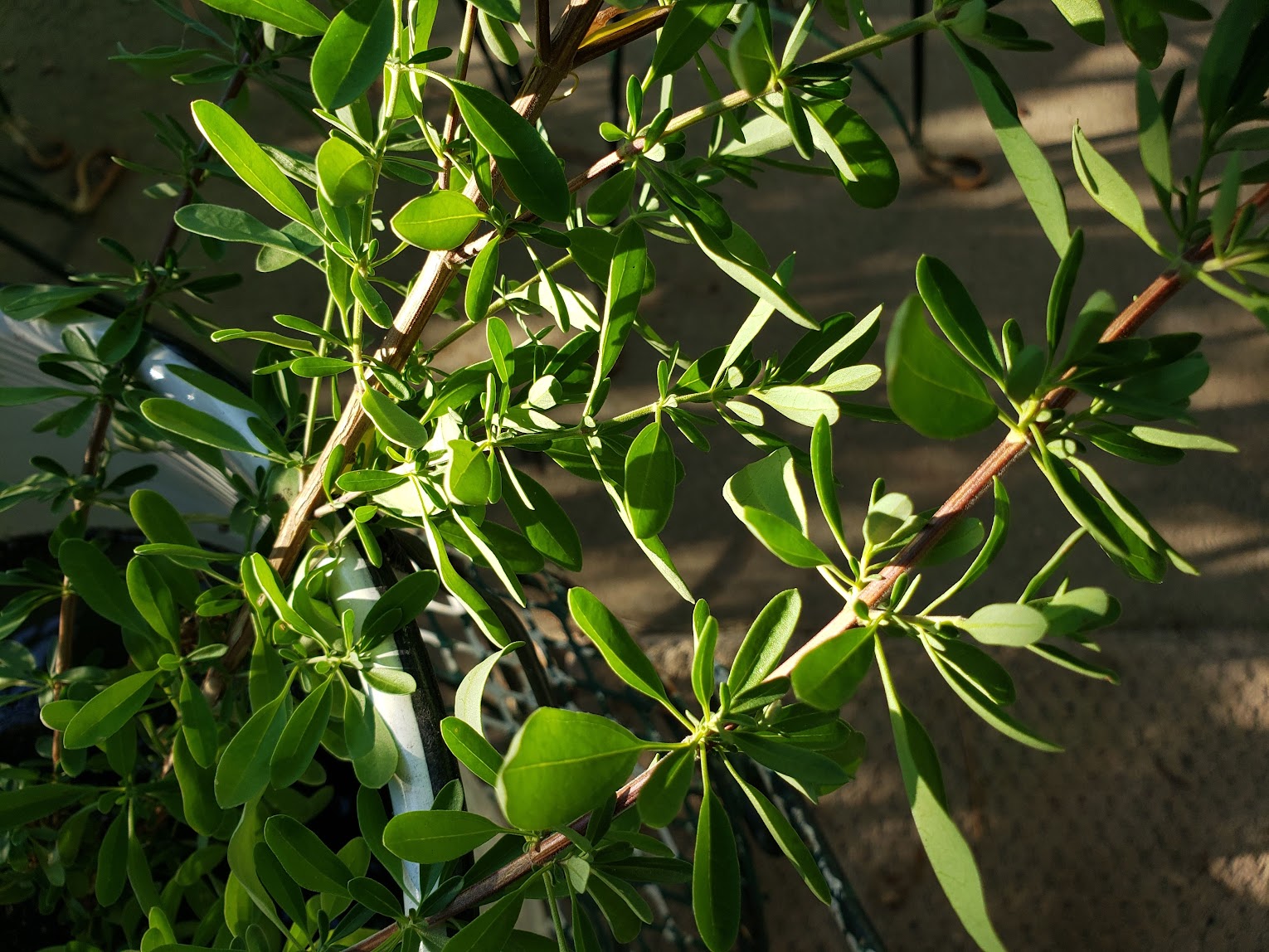 It was planted in the enclosure.
If he had purchased this two months earlier, it would have been given the “super genius” treatment, to allow the roots to leave the root ball, but at this time of year it’s more practical to “feather” the roots and get the plant into the ground, with these salvias.
He also got seven Salvia greggii ‘Wild Thing’ at a local nursery.
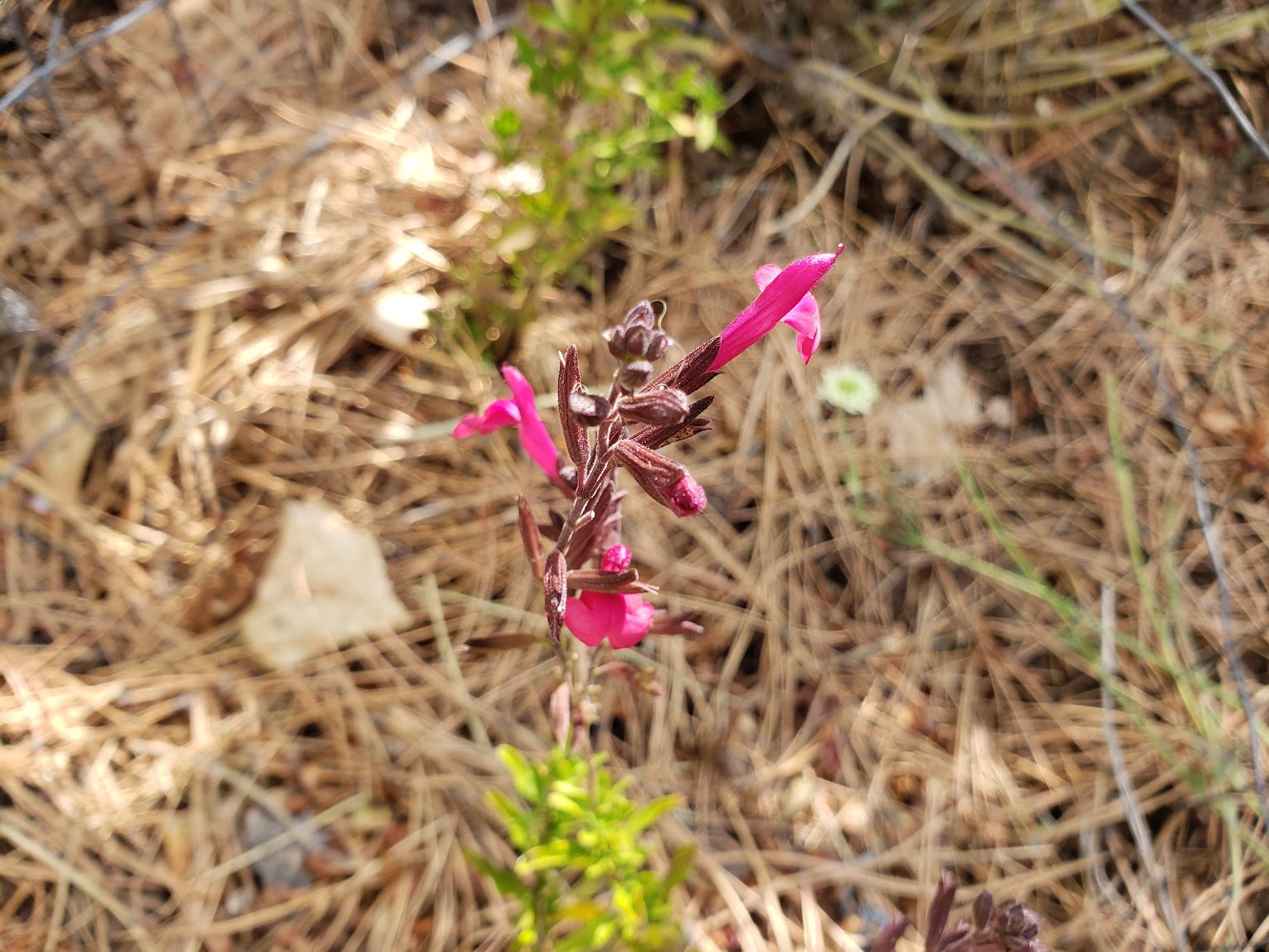 He soaked the roots,”feathered” them as much as possible, walked the thirty-nine steps from the patio to the enclosure, and planted them there.
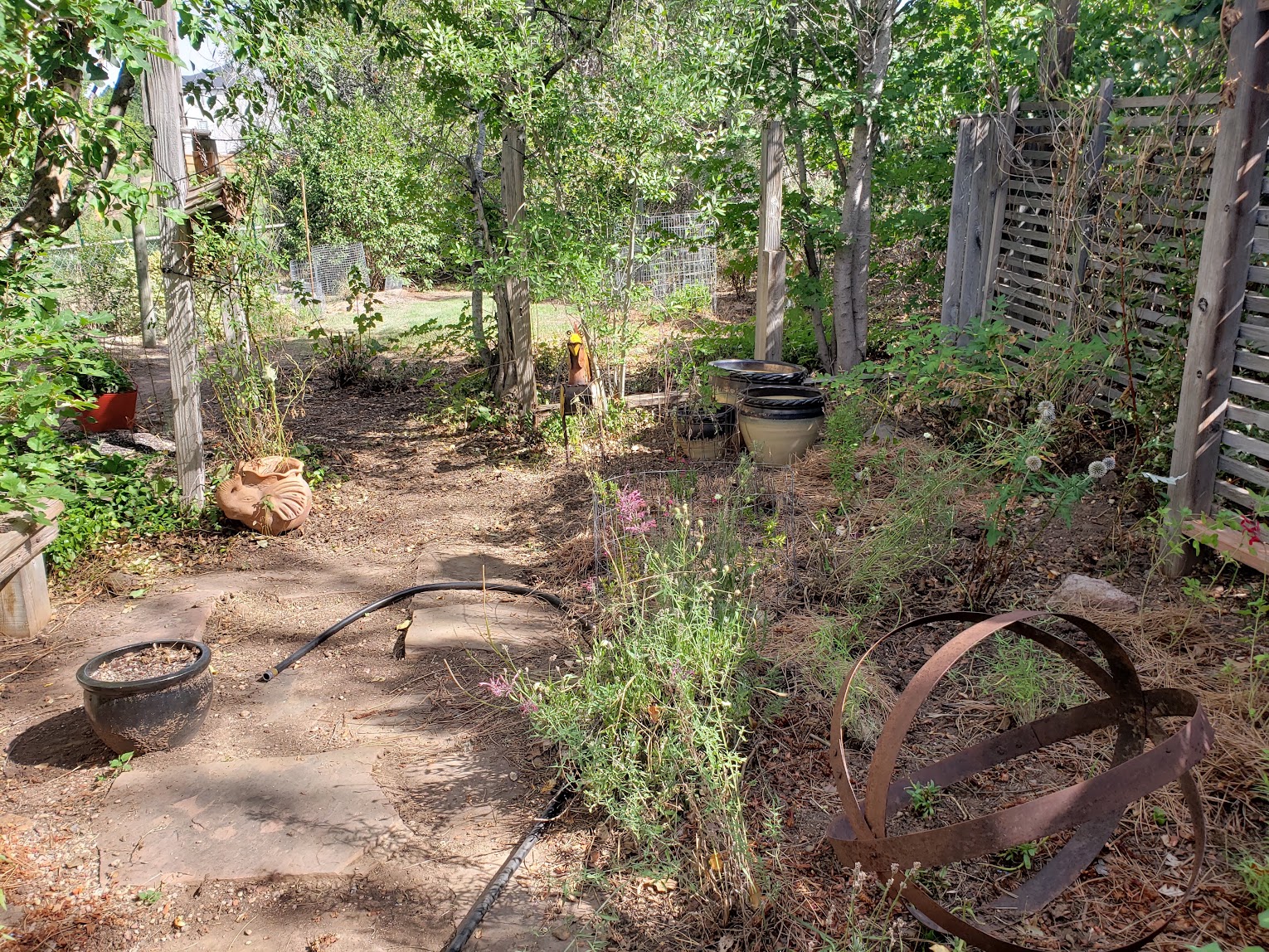 Maybe you can’t see them.
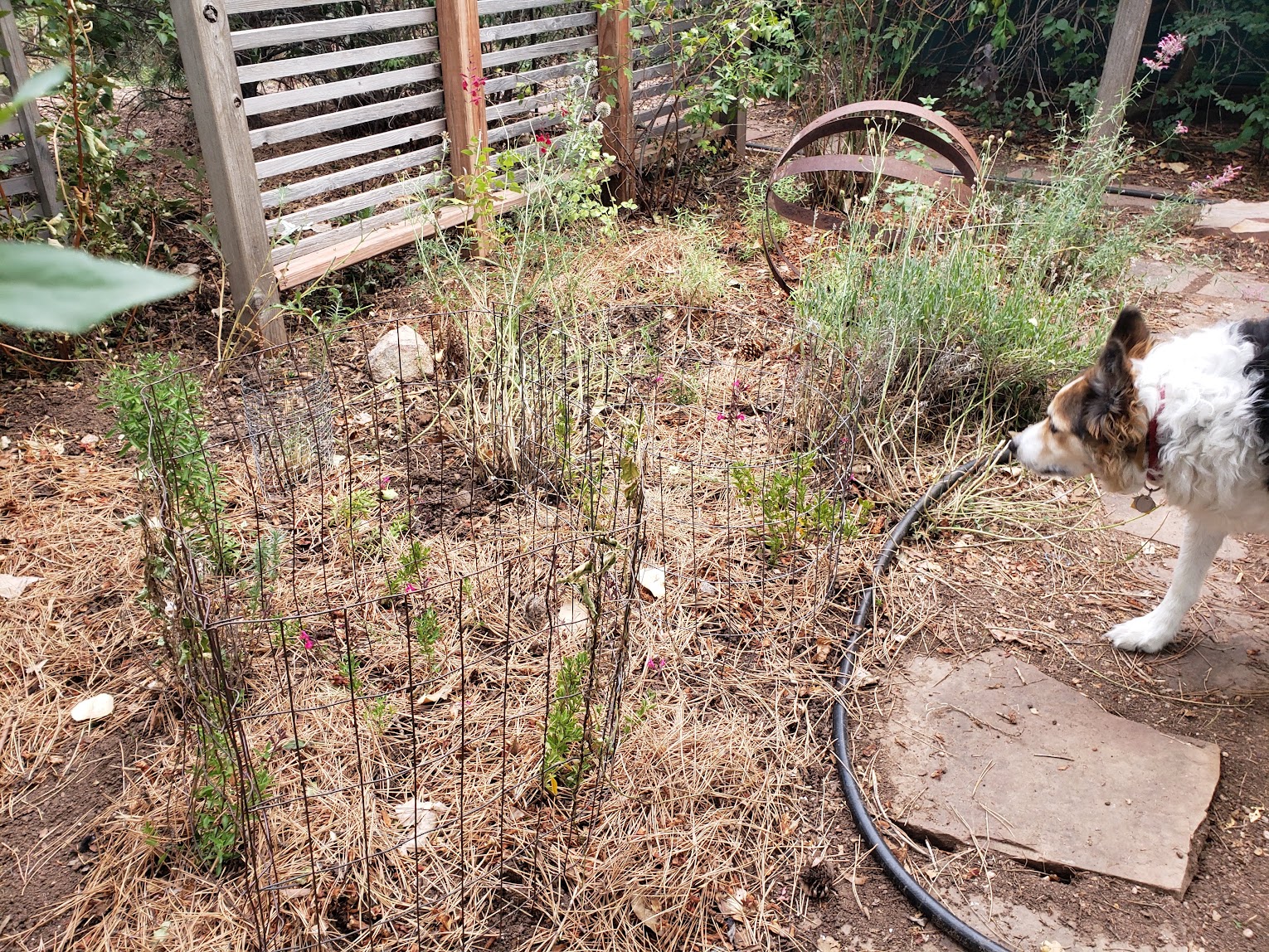 They’re in these cages. The salvias have “irritatingly” brittle branches so these changes are to prevent the guy I live with from tripping over them and breaking the branches.
I know this doesn’t look like much.
Speaking of branches, the person at the nursery said there was one they wouldn’t get if they bought these plants, but the guy I live with pointed to the base of the plant.
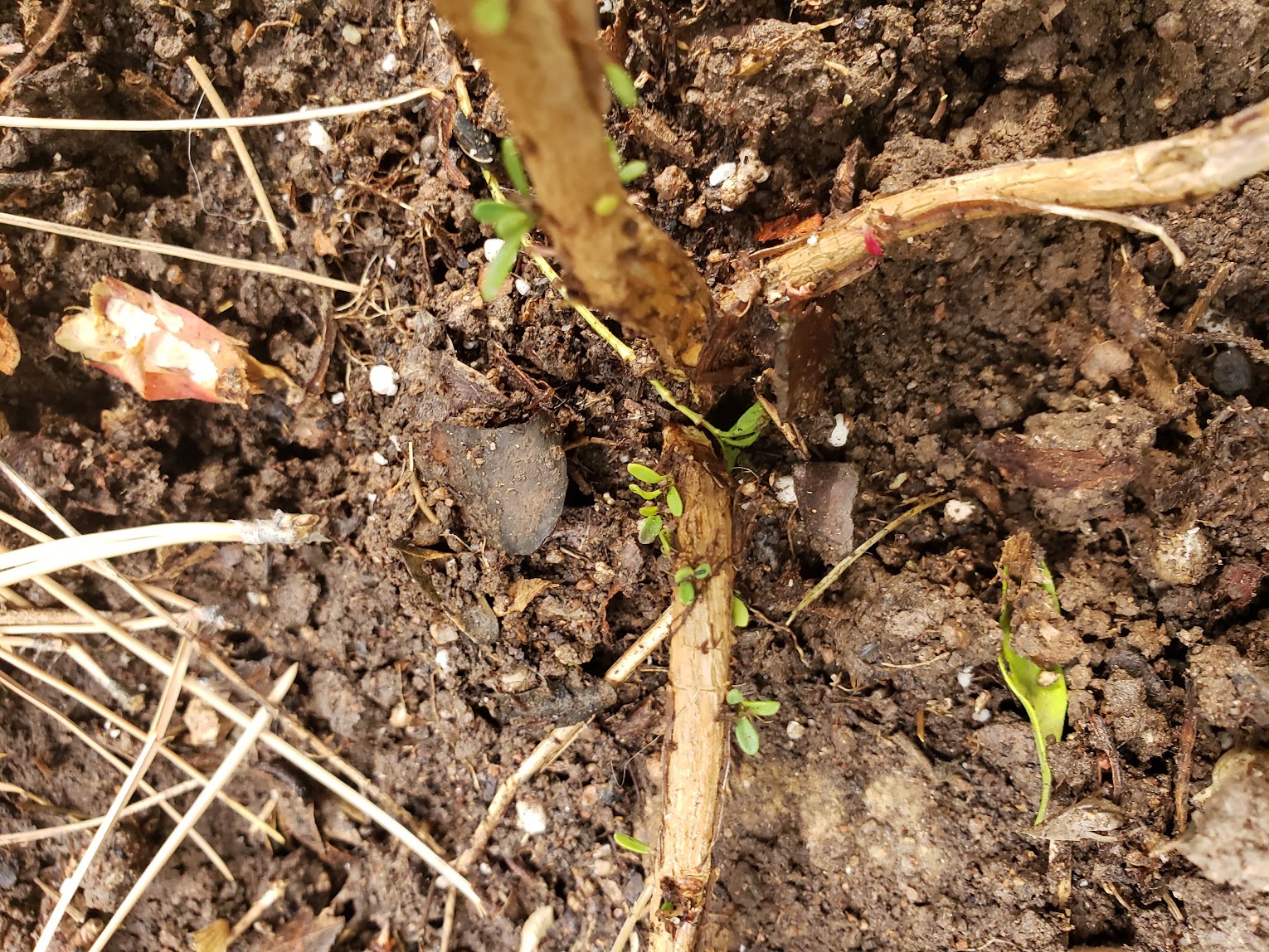 Those leaves at the base of the plant are very important for plants adapted to monsoonal rainfall which might not be hardy here; the basal leaves overwinter and generally ensure that plants like this will make it through the winter.
The salvias will need to be watered a lot, before it gets cold (if it does). Then they can be left on their own. They flower in spring, but then don’t flower again unless it rains, which is okay with the guy I live with, though of course an extravagant display at this time of year is excellent, and the hummingbirds would agree.
It did rain here today, a little. The guy I live with wanted more.
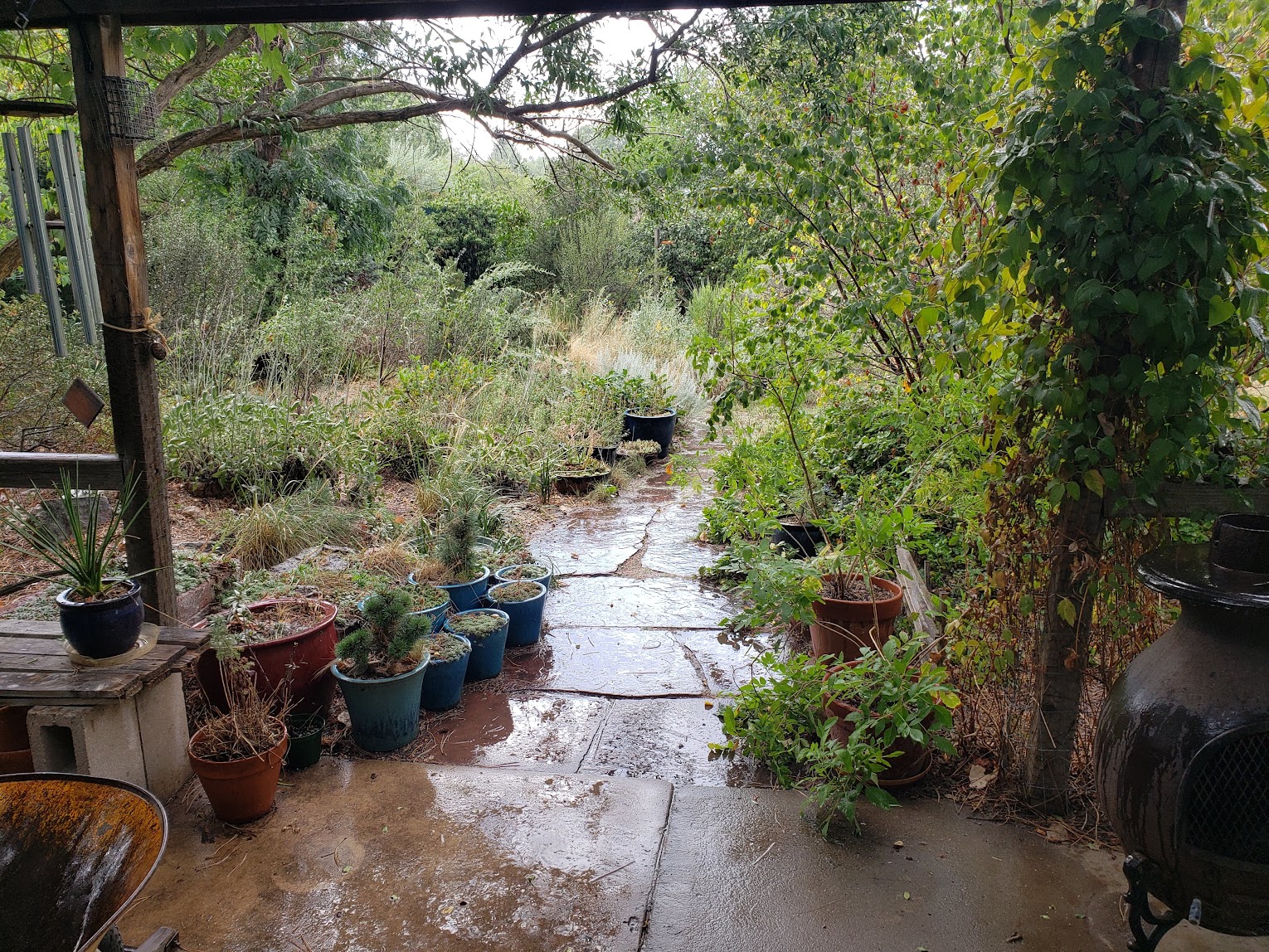 And that’s it for today.
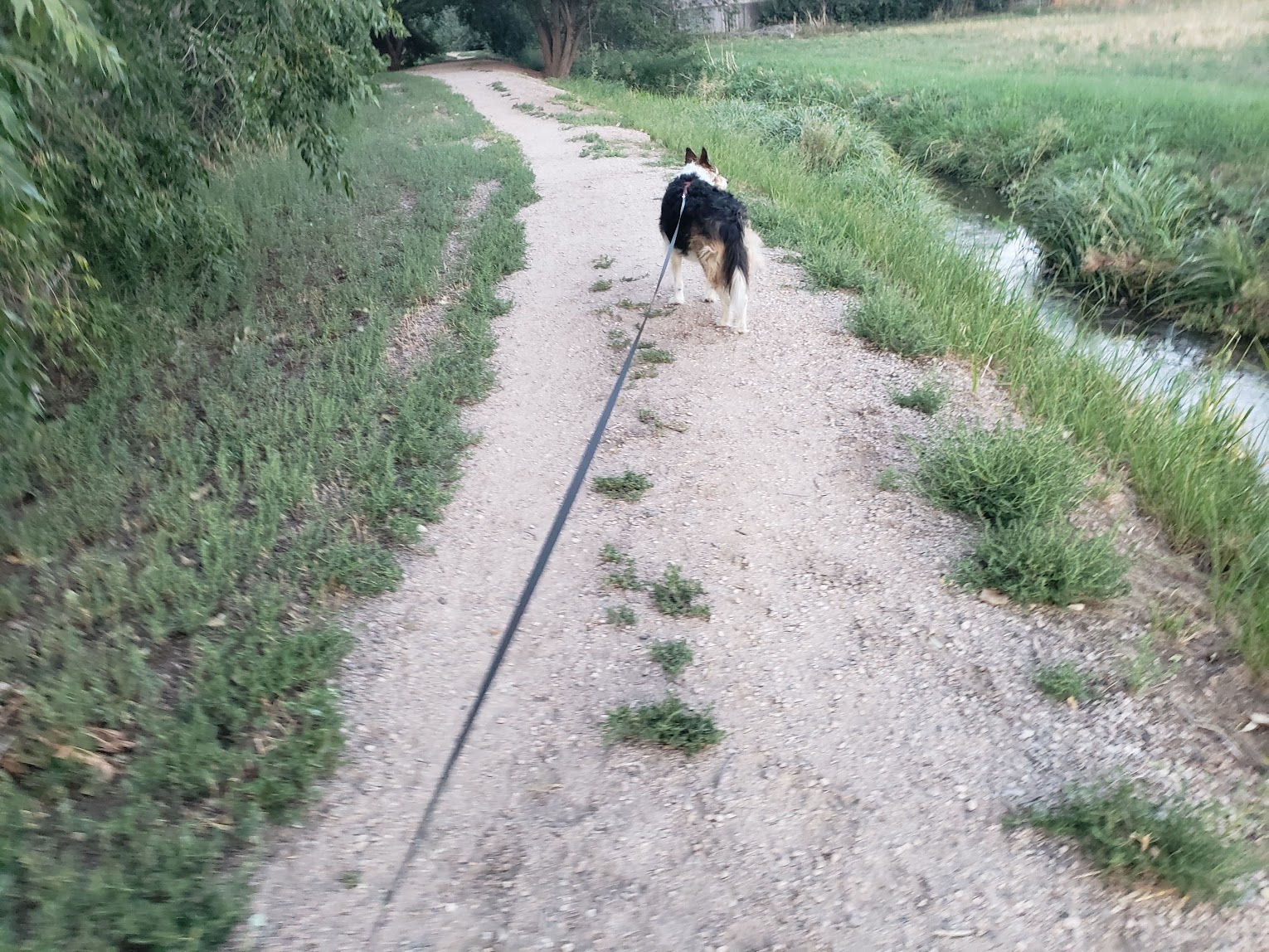
Until next time, then.


That agave and cactus bed, and salvias, will be terrific. (Judging from your title, I thought this post was going to be about a thrilling adventure in your enclosure, Mani, and indeed it is.)
The guy I live with says he hopes the agaves will be okay there. The agaves in the front garden got weevils and they all died.
It’s actually about thirty-nine paces to the enclosure but, you know…
The enclosure is going to be a garden for hummingbirds, still a watered part of the garden because it’s easy to water quickly, and is mostly planted for this year. A couple of grasses will be planted later.
Good luck to those little agaves. I am trying two Victoria reginae agaves in my garden. One graduated from a houseplant after I got my nerve up. Both are planted in south-facing locations next to big boulders for the heat and extra winter protection. We’ll see.
The guy I live with says victoriae-reginae is iffy here, but if you cover it when it gets below about 10F it might make it.
Half the agaves in the sand bed are A. parryi that were dug up from another part of the garden; they’d just been sitting there for thirty years, not growing because the soil they were in was impenetrable to rainfall.
Must be the season, I was moving rocks last week as well as planting salvia… although here I was yanking them out of planters and sticking them into empty spots and they just get a quick drink and should be ok… but they’re the annual coccinea so are as easy as weeds… as long as it rains.
Just 19 paces from my front door is a dry spot near the foundation. I wonder if I should finally try the surviving agave harvardiana seedlings in the open garden. They do well enough in the coldframe but I’m worried about snow and ice sitting on them.
The guy I live with had this “gloriously brilliant plan” to grow a bunch of Salvia coccinea in pots. He wound up with three large pots full of seedlings, all of which died in the heat and dry weather.
The guy I live with says he had a very large Agave havardiana here many years ago but it died during one of the very rare times it rained here in the winter, and that was followed by snow on top. That was it for the agave.
Tell your guy thanks, I shall figure out a cover for the agave so the snow and rain don’t get in there. I had heard that the cold wasn’t as much a problem as wet!
He says you’re welcome. He also says he’s leaving me tomorrow, all by my lonesome self, to a cactus sale not too far away, where there’s an Agave havardiana almost as big as our kitchen table.
Mani always bringing useful information. I didn’t know salvias needed water to flower. Mine are looking sad here in Ohio.
Thanks. The guy I live with says these are Salvia greggii, a.k.a. the “autumn sage”, because the flower during the monsoon, in West Texas, so the plants just sit there all summer and then when it rains they burst into flower.
Kudos to the man you live with, Mani for being able to do a bunch of work on yor garden. My mum said she’s just over the summer and the constant 90+ degrees in probably the one neighborhood in Arvada that isn’t receiving rain unless you count the 12 drops that fall eery other day when it clouds up. Maybe next year after she’s had time to ponder what to do to give her a little comfort outside in her little garden. Maybe more pots…who knows. I think she needs to learn a different rain dance because the one she keeps banging on about isn’t working.
Your fur-iend,
Wilson 🐾
The guy I live with says apparently you have to be east of Denver or east of Colorado Springs to get much precipitation, but we certainly don’t want that kind of precipitation.
The main reason for all the work here is to convert the enclosure and back garden to the same “rainfall only” regime in the rest of the garden. He knows the agastaches in the enclosure won’t survive that, but he bought them thinking he could water them enough this summer that they would flower. The salvias will be fine though.
Mee-yow Mistur Guy you are SO-O deddycated to yore gardenss!! THE palntss an flowerss thrive under yore care/…HURRAH! Fore rain….wee hope you get more….wee had sum today. Wee were told it was gonna pour butt it hasn’t. Tomorrow iss 100% purr cent rain an Bellasita has to go out…figuress rite?? Lookin guud there Mani! Enjoy yore walkiess!
***nose bopss*** BellaDharma an ((hugss)) Bellasita Mum
Thanks. We’ve had about a hundred drops of rain in the last few days.
Mani an Guy that iss NOT alot of dropss at all…wee try to send you 1,000 OKay?
It rained here yesterday evening.
Same heer Mani!! It Funderstormed! BellaSita sleeped thru it. Mee was up! An so was Mistur R at his house…It’ss rained a bit today. Apposta bee more stormss…butt Sun iss shinin???
It rained a little here today, and the sun was shining.
The salvias are going to be gorgeous and think about the entertainment the hummingbirds will provide. My cat loves to sit and watch them buzzing through our potted ones. Your gardening friend has convinced me to try the genius method of planting. Thank him for me.
You’re welcome. (The guy I live with said he thought he replied to this comment, but it must have disappeared.)
The salvias are already flowering (we had some rain last night) and the hummingbirds approve.
And what is that “root feathering” tool? Avid readers need to know. (It isn’t a repurposed fork, is it?)
The guy I live with just uses a short piece of steel cut from an old tomato cage, with one end bent into a loop so it’s easy to hold.
So after the root ball has soaked in water, usually overnight, and as much nursery stuff as possible has been shaken from it, he uses the little metal thing to help pry apart the roots at the bottom of the root ball (it’s really more like a root square or block, of course), so the roots can face downward instead of sideways.
The guy I live with used to have a nice Japanese root hook, but it disappeared.