potted pines

Greetings and salutations, everyone; yes, once again it is I, Mani the purebred border collie, filling in for the guy I live with, and here today to talk about potted pines. You may remember me from such posts as “A Jar Of Ants”, among so many, many others.

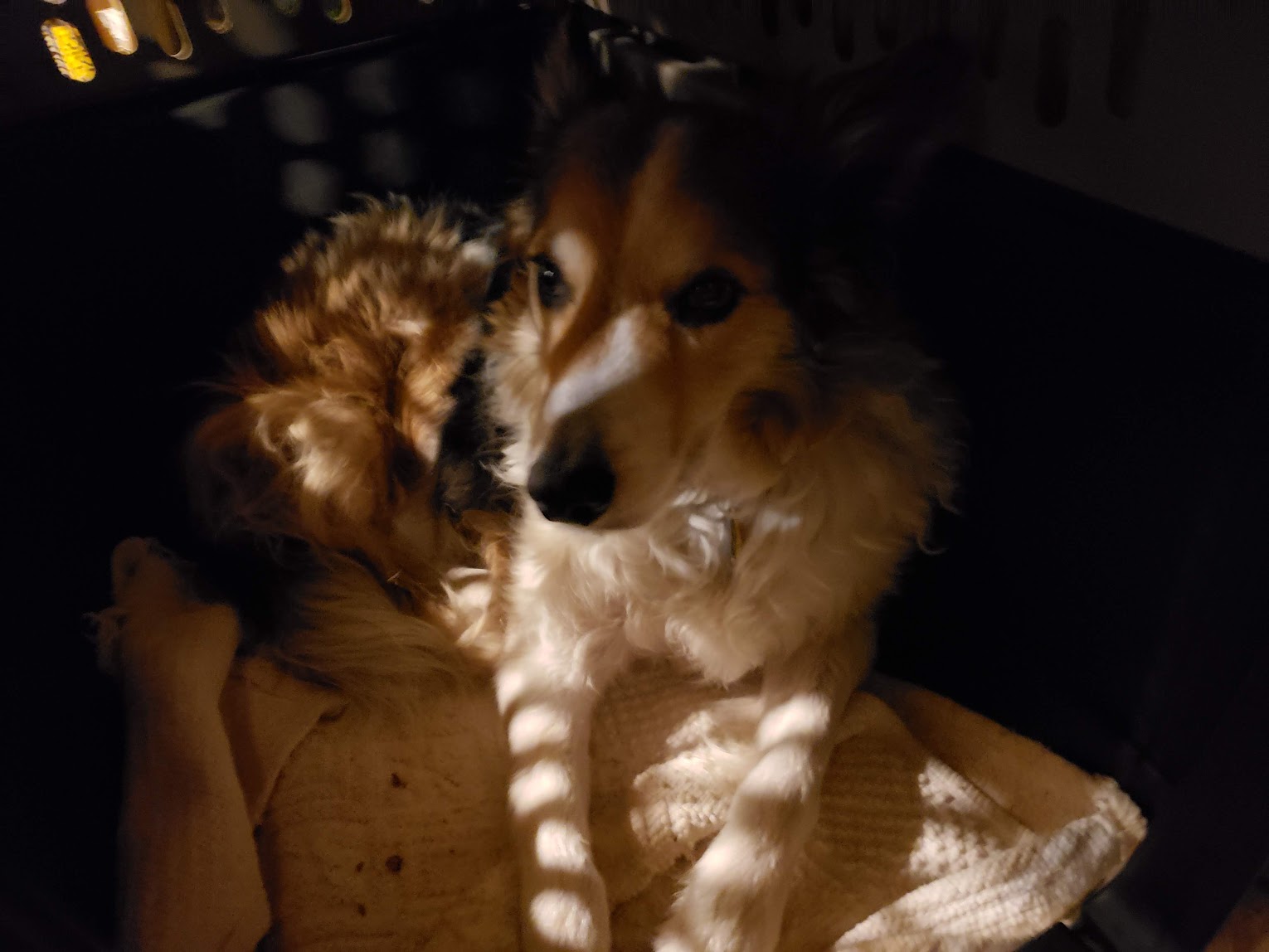
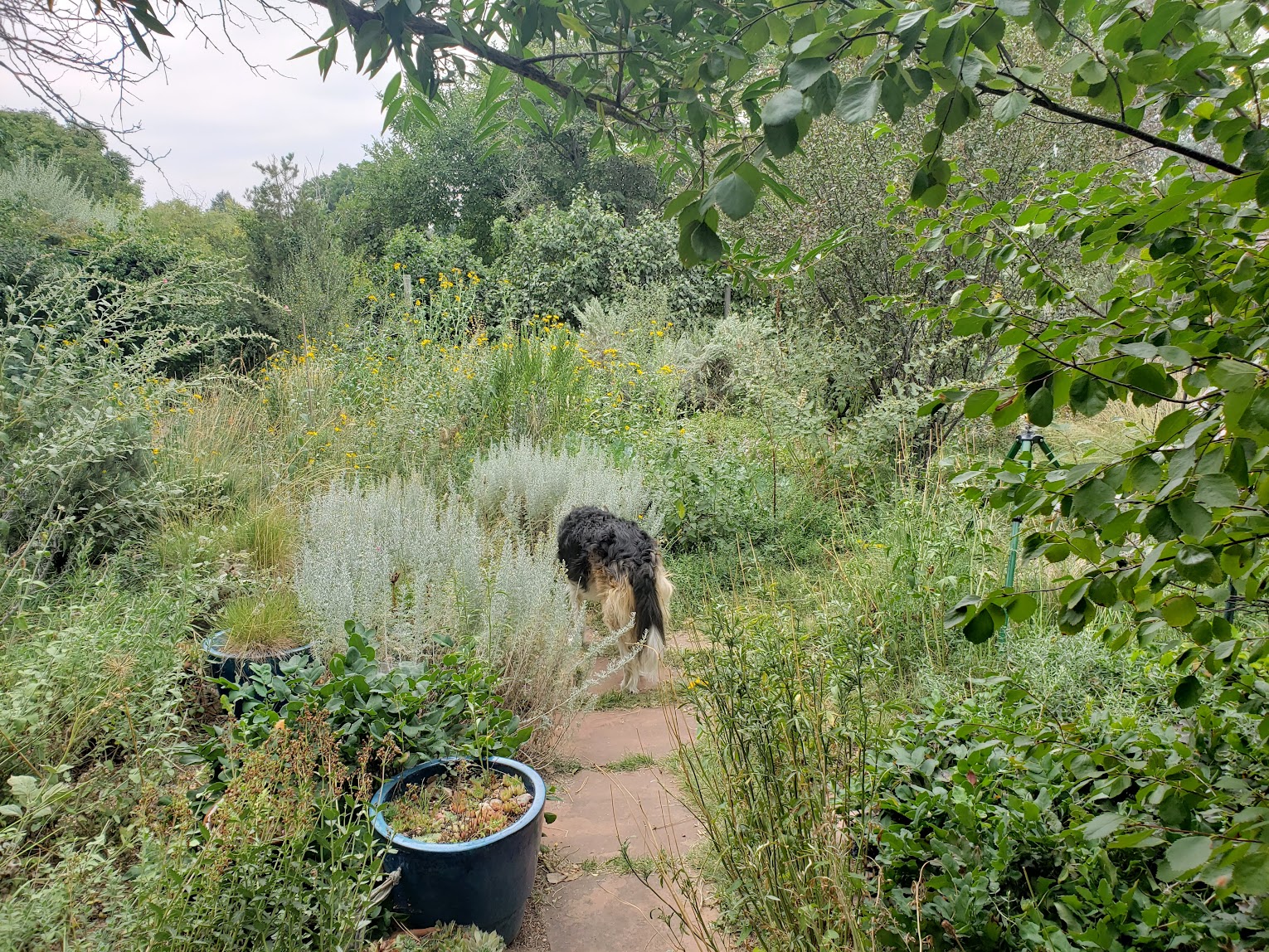
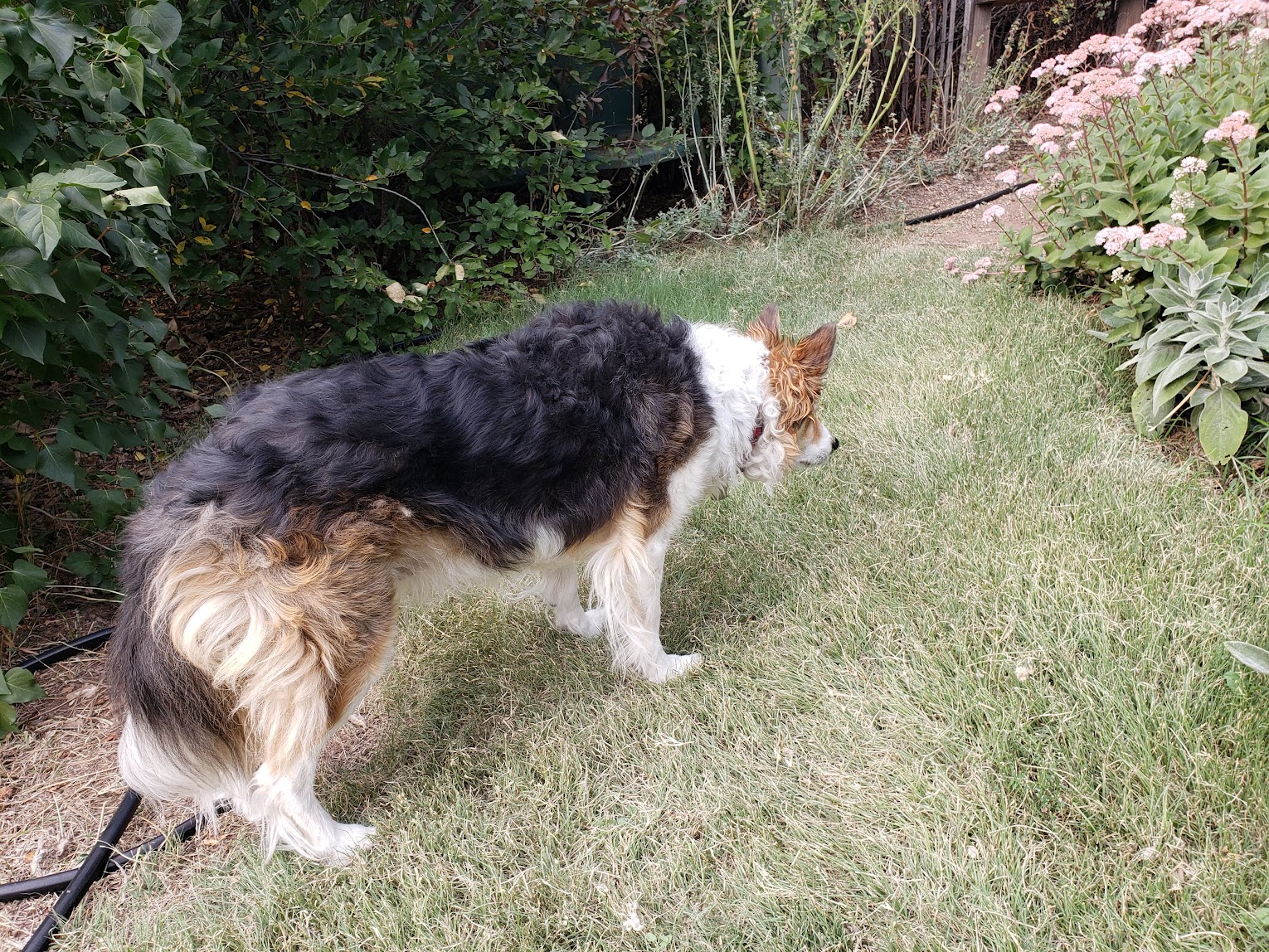
Here I am in a characteristic pose.
It’s been raining all around us; the guy I live with said there’s been flooding in some parts of the state, but all we’ve been getting is a few raindrops every afternoon or evening.
We’d just as soon not have flooding but some of that rain would be nice.

Anyway, time to talk about potted pines. I promise this is the last post on potted plants, because we already showed hens and chicks in pots a while ago.
You can grow dwarf conifers in pots, if they’re native, and if they come from cold-winter climates.
This is Pinus flexilis ‘Saunny’, named after the wife of the late Jerry Morris.
The guy I live with said that some years ago, nursery people wondered why trees and shrubs in containers were often killed during cold winters, and so a study was done, maybe by hooking up electrodes to the roots or something, and it was found that the roots of most trees are not very hardy. There wasn’t enough soil in the nursery pots to protect the trees and shrubs from being killed.
The roots of the saucer magnolia (Magnolia soulangeana) for instance, are only hardy to +25F (-3.8C), so if this were growing in a pot, even a really big pot, it would be done in by a cold winter.
The large volume of soil insulates the roots when the magnolia is growing in the ground.

Well, the roots of the limber pine (Pinus flexilis) are hardy to -79F (-61.6C).
The guy I live with says that is cold.
Blue spruce (Picea pungens) roots are even hardier.
Obviously there are no issues with growing cold-hardy native conifers, in pots, even when the soil-less mix (which is the same that he uses for cactus) freezes solid.

Growing dwarf conifers in pots keeps them smaller than if they were planted in the garden, though eventually the guy I live with may plant these in the garden, and then get more.

This is a limber pine, maybe ‘Damfino’, named after the creek in Colorado and Wyoming I think, and it has a cone.

This ponderosa pine, ‘Pennock Pass Pincushion’, will need to be repotted into a heavier pot before winter.
He got this earlier in spring.
This is a bristlecone, Pinus longaeva.
The guy I live with said he thought this was a dwarf one, but it isn’t, and he said it may outgrow its pot in a thousand years.
It’s very important to make sure these little conifers don’t dry out in the summer, so the guy I live with goes around with a watering can every few days.
The needles can be watered with a weak solution of Miracle Gro.

I hope you found this post at least moderately interesting.
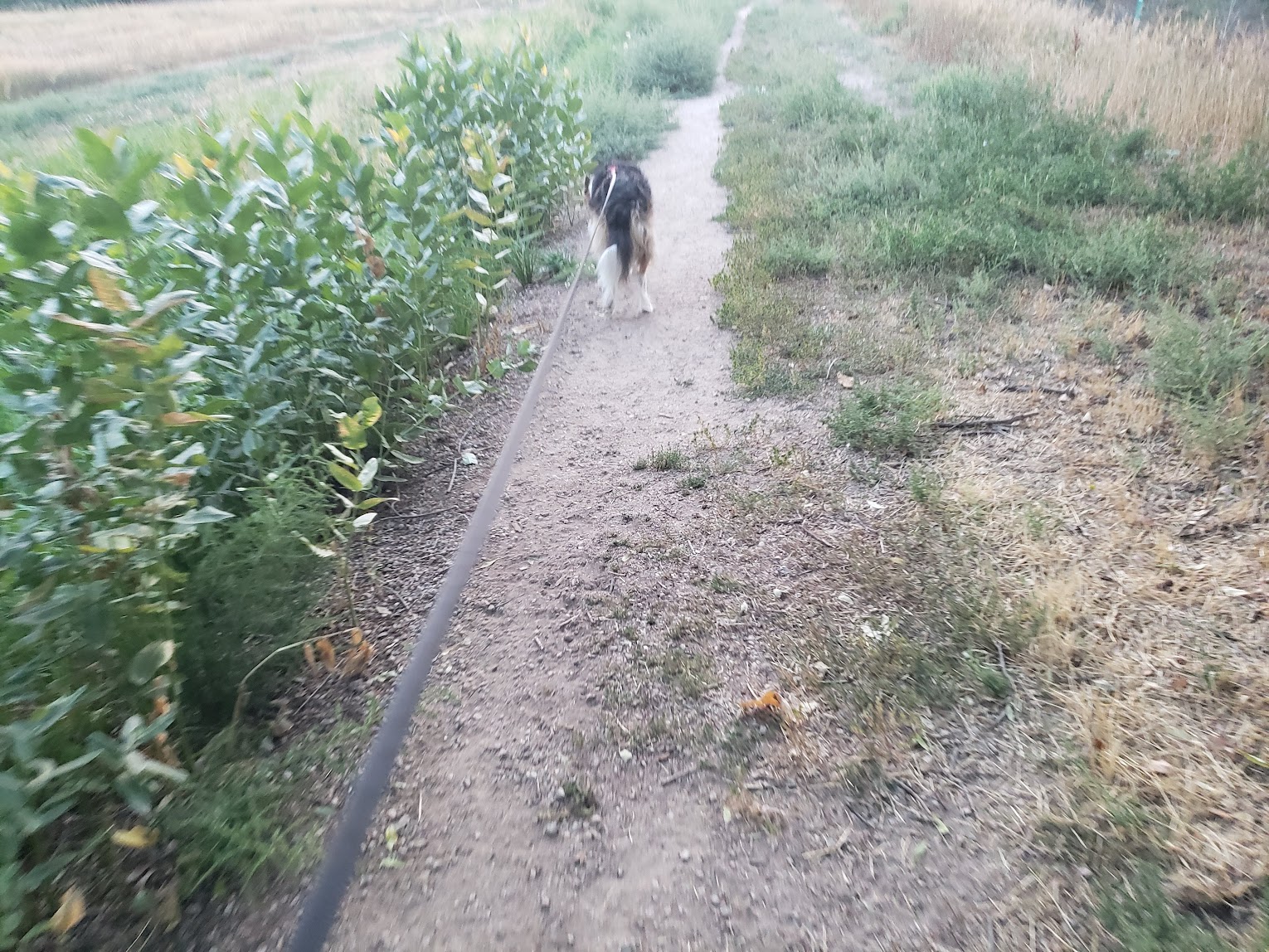
I’ll leave you with a picture of me gazing at the sunlight in the field.

Until next time, then.


Posted in Uncategorized | 26 Comments

tiny blue cactus

Greetings and salutations, everyone; yes, once again it is I, Mani the purebred border collie, filling in for the guy I live with, and here today for another somewhat didactic post. You may remember me from such posts as “Baked Again”.

Here I am in a characteristic pose.
This was when the sun was out, in the morning. It’s mostly cloudy here after about noon, these days.

The other day the guy I live left me in my fairly cool house to go out and roast at a cactus sale. There were other plants for sale but he only bought these two.
They’re not quite the same thing, even though they look like it.
They’re kind of weird-looking, if you ask me, like they have all these eyes looking right at me. I don’t like things that look at me.
The guy I live with said those brown things are glochids, and even though both of these are spineless, they’re not something you’d want to touch a lot.

He’s going to plant these in a pot, or maybe in a trough.
Hardy cactus do very well in pots and troughs and can be left outside all winter with no problems.
I should emphasize that this is for climates like ours; the guy I live with has no idea if this would work in wet-winter climates.
There are absolutely no issues here with the cactus growing in a soil-less medium that gets frozen solid in winter.
Hardy cactus begin to shrivel at the onset of cold weather, which means they’re losing water so they don’t explode when they freeze. Once the cactus have shriveled they have no way of taking up water until it gets warm again in spring, so shrivelling is a good sign, and not shrivelling is a bad sign. Sometimes you have to look very closely to see the shrivelling, like in echinocereus and others.

Here are a bunch of little cactus in a wooden trough on our driveway. These are mostly Opuntia fragilis.
These have been here for a very long time, and are sort of tucked away so a car won’t run into them.
No one has ever noticed them.

And here are some in a limestone trough.
That’s a Ratibida columnifera seedling. It doesn’t really belong there.
The grass is Festuca arizonica, or at least the guy I live with thinks it is, and you can see a small tuft of it growing on a round geode that his wife put in the trough years ago.

Here’s the “potato cactus”. The guy I live with said he could have removed the dead pads before taking this picture, but obviously he didn’t do that.
This is in a Mexican clay pot, and sometimes these will last quite a few winters outside.

Here are some in a glazed pot:
You can see the soil-less mix in this pot. This is stuff from an old trough which is now gone. There’s some coarse sand, scoria, and so on.
The highly-porous soil allows rain to infiltrate right to the roots, just like in real life.

So if you like cactus but don’t want to be stabbed by them in the garden, growing them in containers may be a good way to go. As long as the cactus are hardy in the ground, growing them in containers should be no problem at all.

That’s all I have for today. I’ll leave you with a picture of me enjoying the benefits of a portable swamp cooler.

Until next time, then.

Posted in Uncategorized | 11 Comments