
Greetings and salutations, everyone; it is I, Chess the purebred border collie, here to provide you with the most helpful and informative posts possible. You may remember me from such excellent posts as “Before Dawn” and “A Day At The Opera”, among so many others.
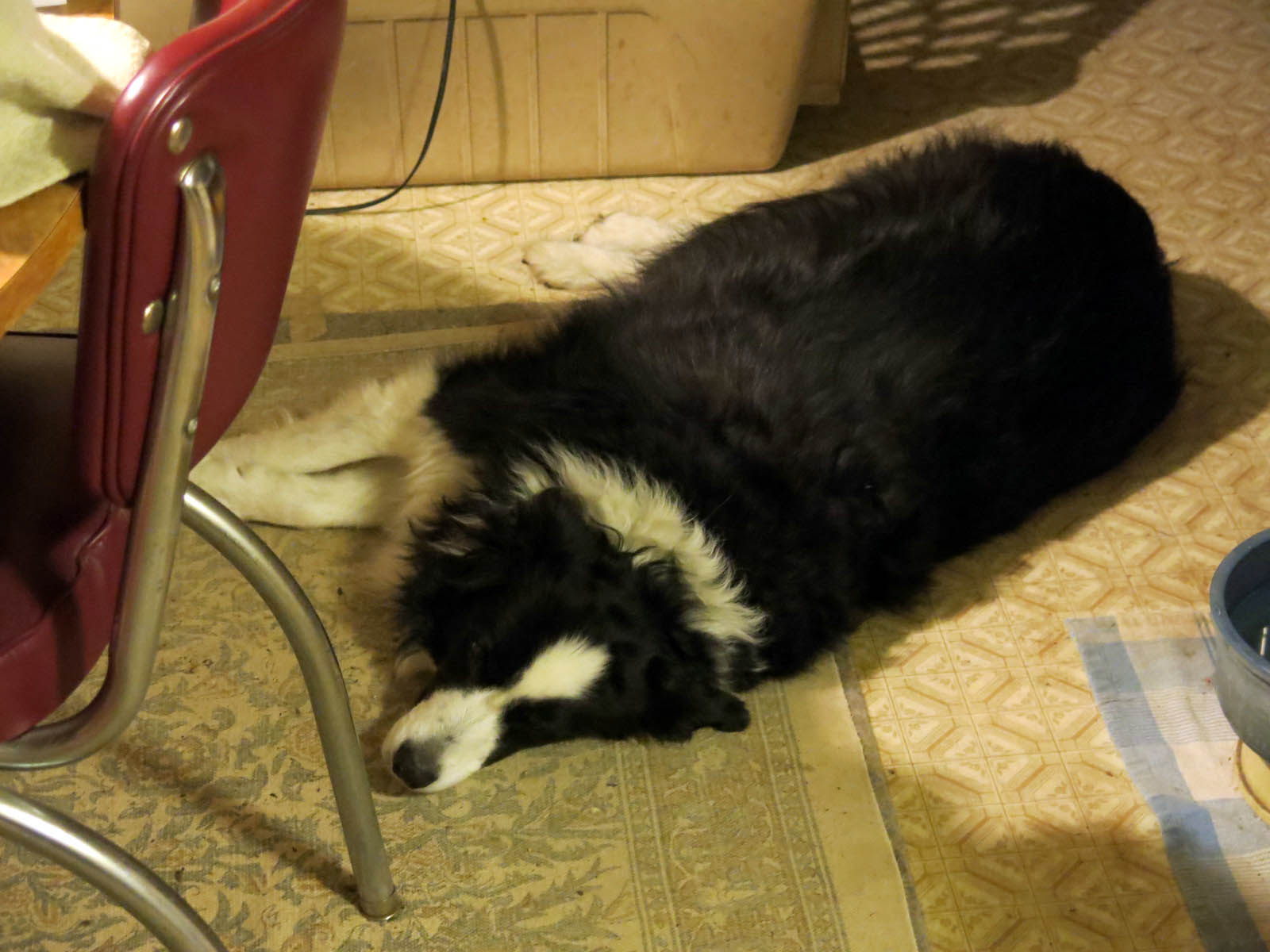
Here I am in a characteristic pose. Not quite in focus, but extremely soft.
 The weather changed late yesterday, and today was cold and dreary. I moped some, in the morning, after our walk, because there wasn’t anything to do, but in the afternoon the guy I live with suggested we take a nap, which we did, and that was excellent, even though we overslept my dinner time by twenty minutes.
Guess what the guy I live with did today? He put on goggles and rubber gloves and poured some bleach into one of the beakers. I didn’t get all bleached white, like I was sure I would, and the guy I live with didn’t splash bleach on his jeans, so things started out pretty well.
Then he poured water into the beaker, and poured half of the bleach water into the other beaker, then added water to both, and poured them into the salt shakers. Then he put seed into the salt shakers, labeled them, and let them sit for an hour. To sterilize the seed coat. Then–and see, this is where he didn’t think things through–he tried to pour the water out of the salt shakers and discovered the water had to be shaken out. Well, hence the name, shaker, right?
Then the salt shakers were rinsed out, and the seed was rinsed, one salt shaker at a time, and distilled water was added, and the seed was put back into the shakers.
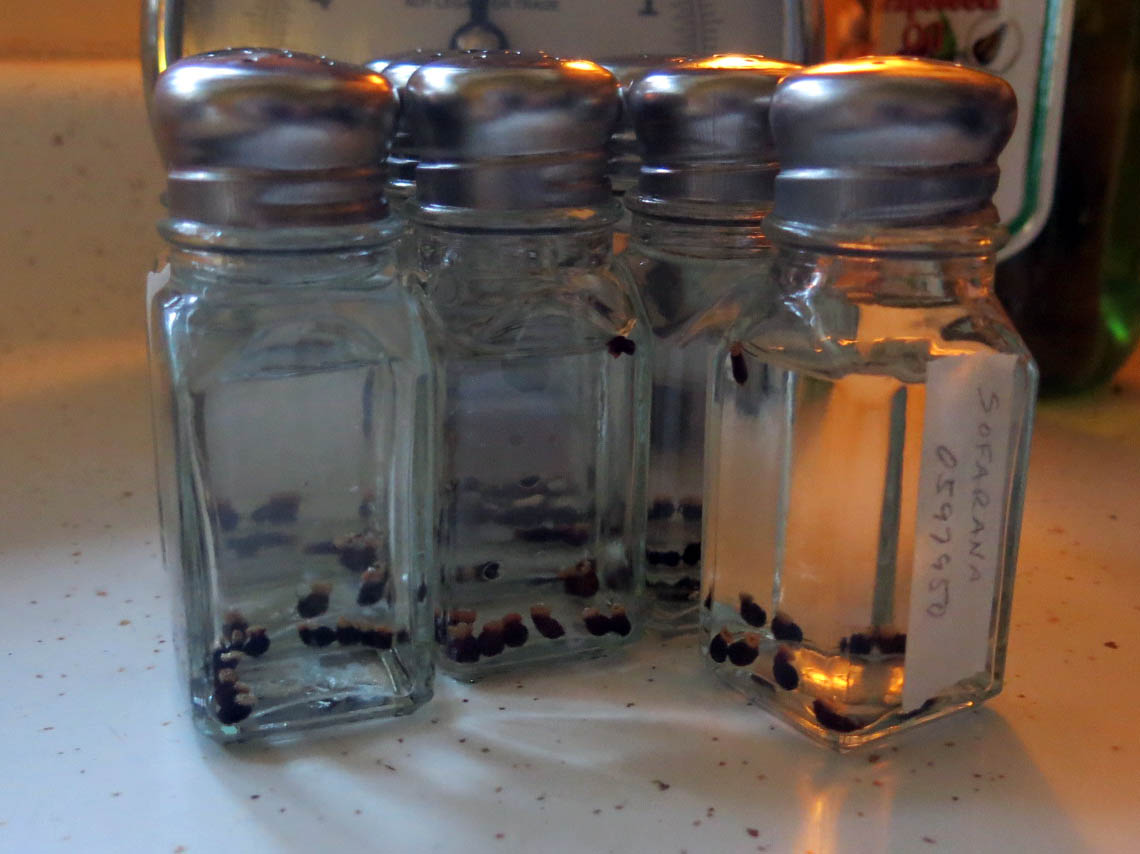 It was seed of oncocyclus iris given to him by a gardening friend, and what the plan is here is that the water will be changed every day for about four days, until the seed plumps up and the seed coat has softened, and then he’ll remove the aril, or collar, on the seed, with a dental pick, exposing the endosperm, and then sow the seed in perlite in a plastic bag, with some fungicide like Bordeaux Mixture added. He thinks that removing the aril is a substitute for twenty years’ stratification, and expects the seed to germinate within a week, in or out of the refrigerator.
 I know, this seems like an anticlimax, all this salt shaker talk and this is what he did, but he says life is like that.
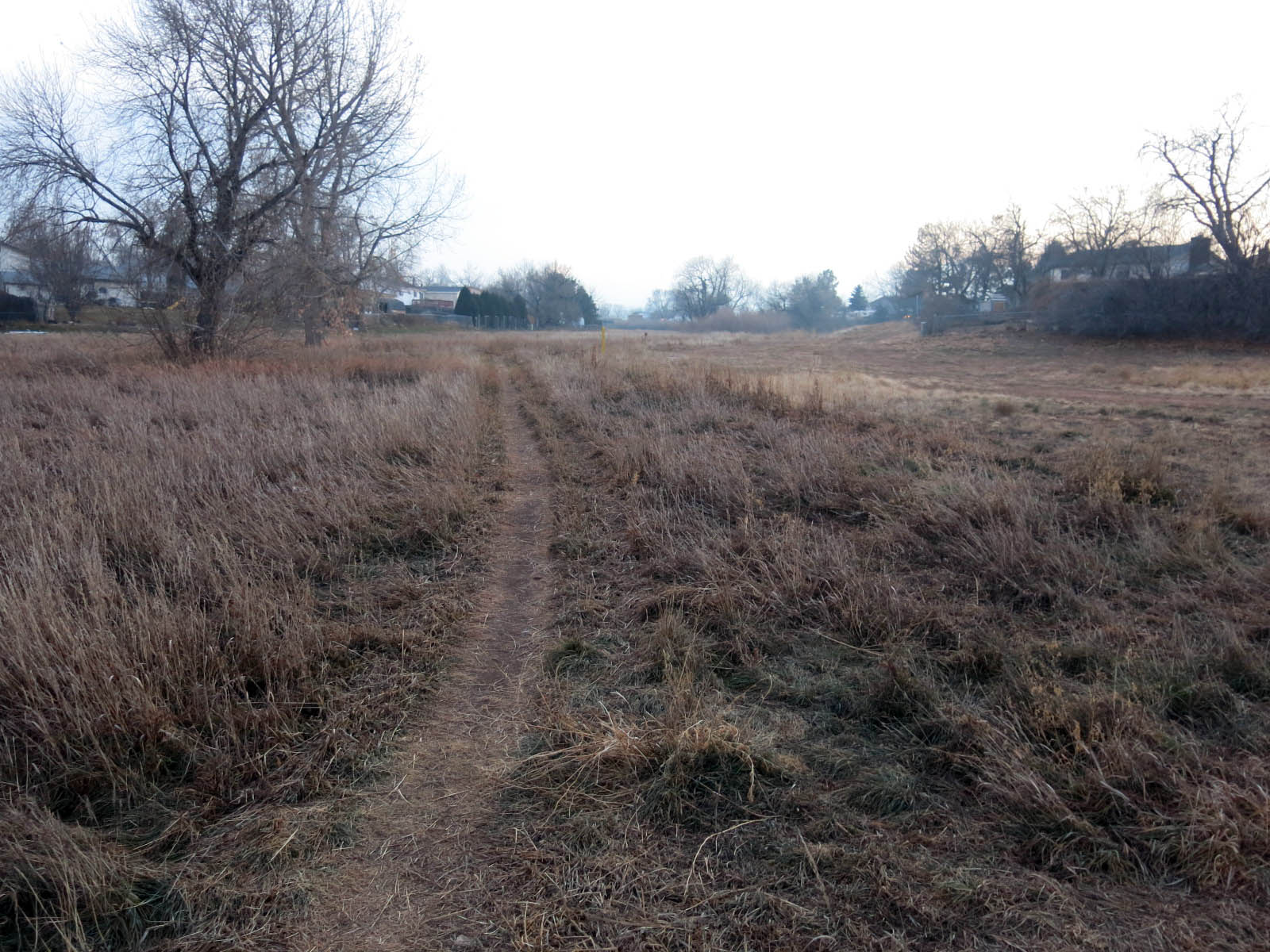
Our afternoon walk was a chilly one. I had a good time anyway. You can see the path we go on, left to right, then over the culvert and up to the canal road, which is what we’re standing on right now to take the picture. You can also see the creek path curving off to the right, and the creek on the left.
 Look how bleak the creek path looks. I’m over on the right, out of the picture, sniffing stuff.
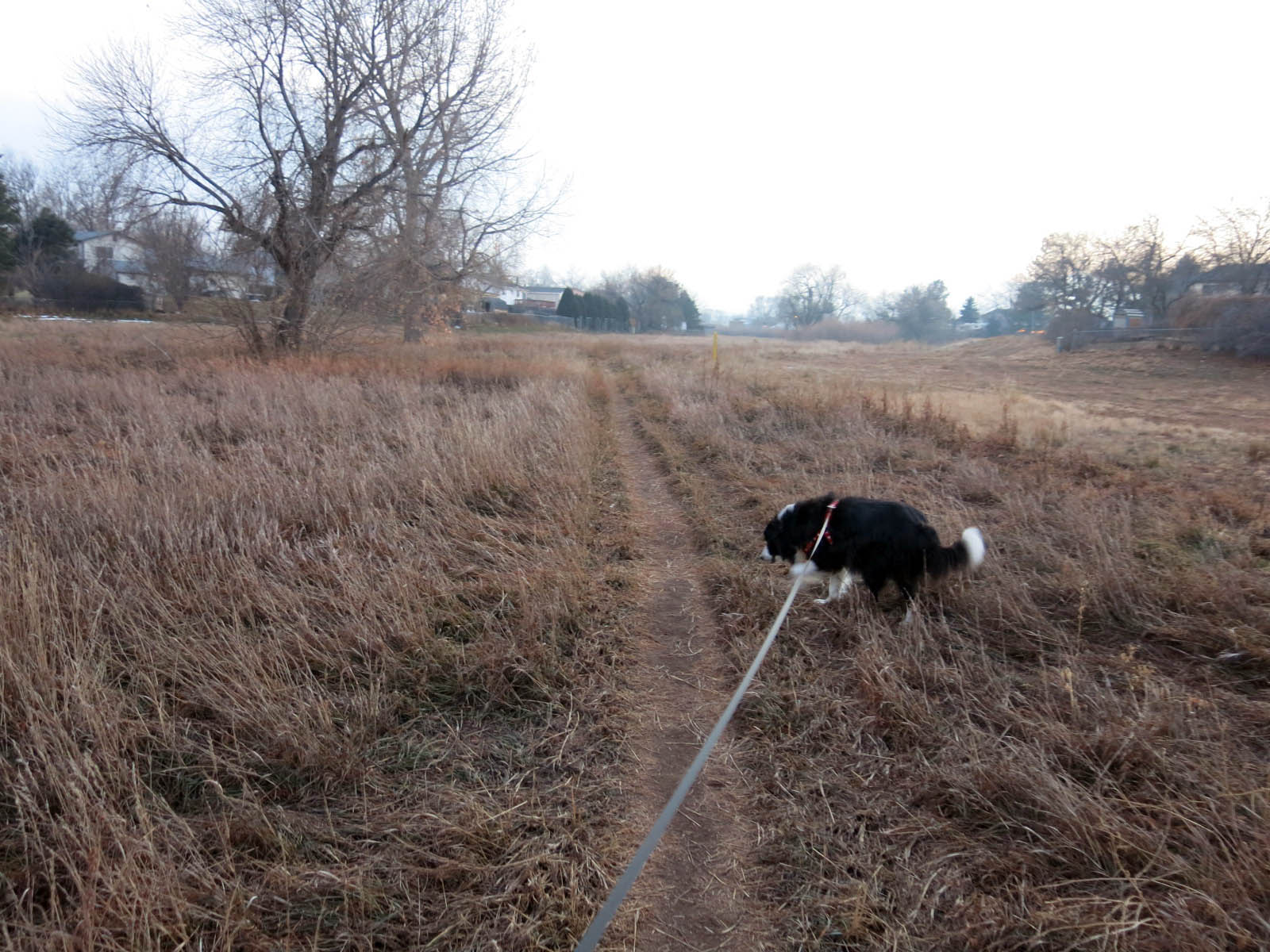
 And now look how it becomes all interesting and lively with me in the picture. The guy I live with says this is a metaphor.
 Well, since I have the opportunity to make the post even more useful, look what the guy I live with got in the mail today.

pumice
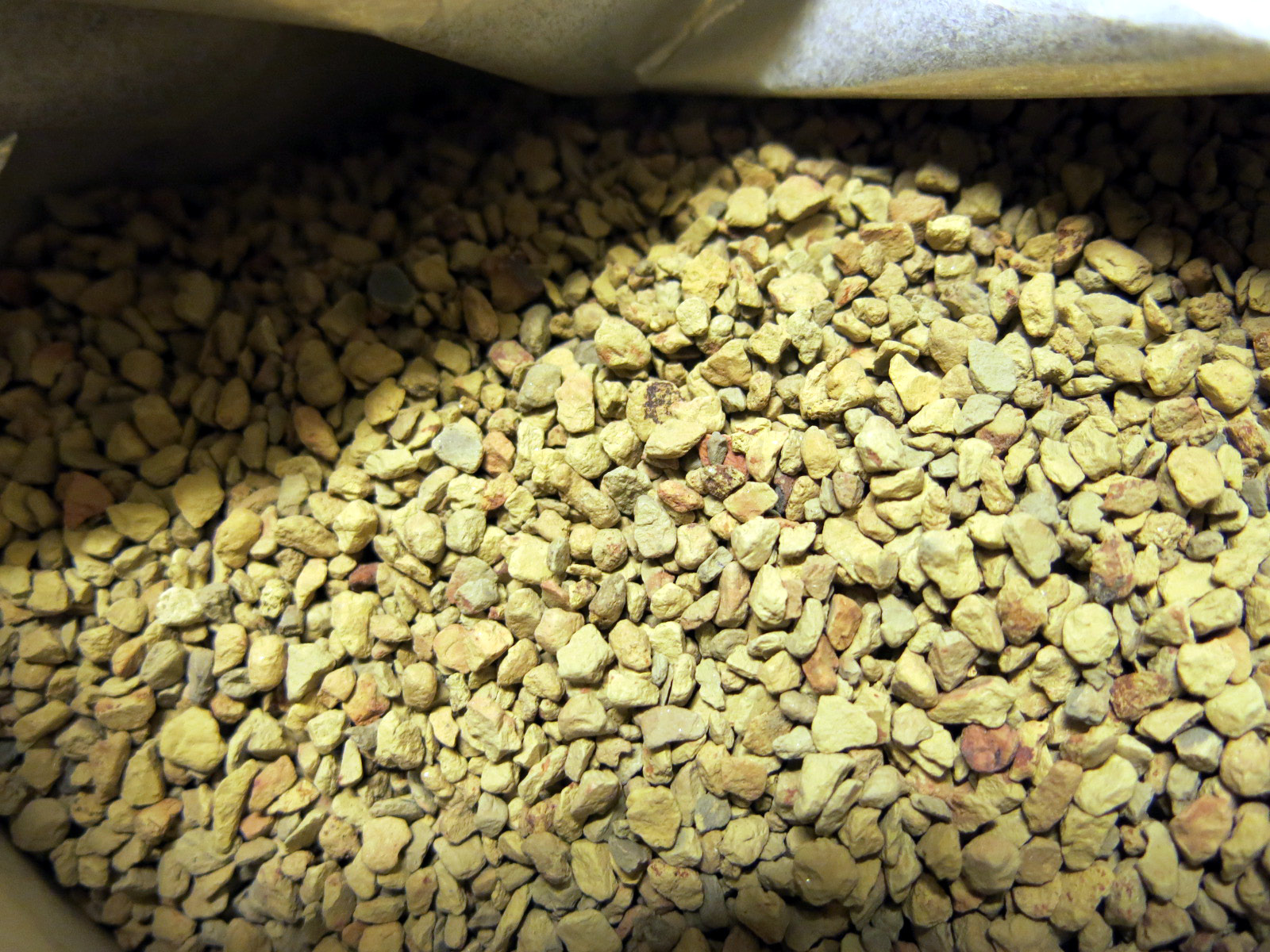
Turface
The pumice is for repotting the indoor cacti here. The Turface is calcined clay and it looked an awful lot like kitty litter to me, but the guy I live with assured me we weren’t getting a cat. He said that the Forest Service protocol for germinating Shepherdia rotundifolia is to sow the seed in calcined clay, which gives a greater percentage of germination than sowing in other media. He already has the plant, but wants more.
So that was our day. Bleak, and with something that really threw me for a minute. But no, we’re not getting a cat. We’re getting more Shepherdia rotundifolia instead. I guess I’ll say goodbye now.

Until next time, then.


 the miserable gardener