
There are sad stories, and then there are very sad stories. The Good Soldier by Ford Madox Ford begins “this is the saddest story I ever heard”, and though, to be sure, it was a sad story, it wasn’t about gardening, so it wasn’t all that sad.
How sad is this story? Really sad. This sad.
I have work to do. That in itself is pretty sad. This little garden, in front of the living room window, has become the victim of Horticultural Entropy, and something has to be done. I admit it doesn’t look like much. Most things around here don’t look like much, but this out-muches everything else.
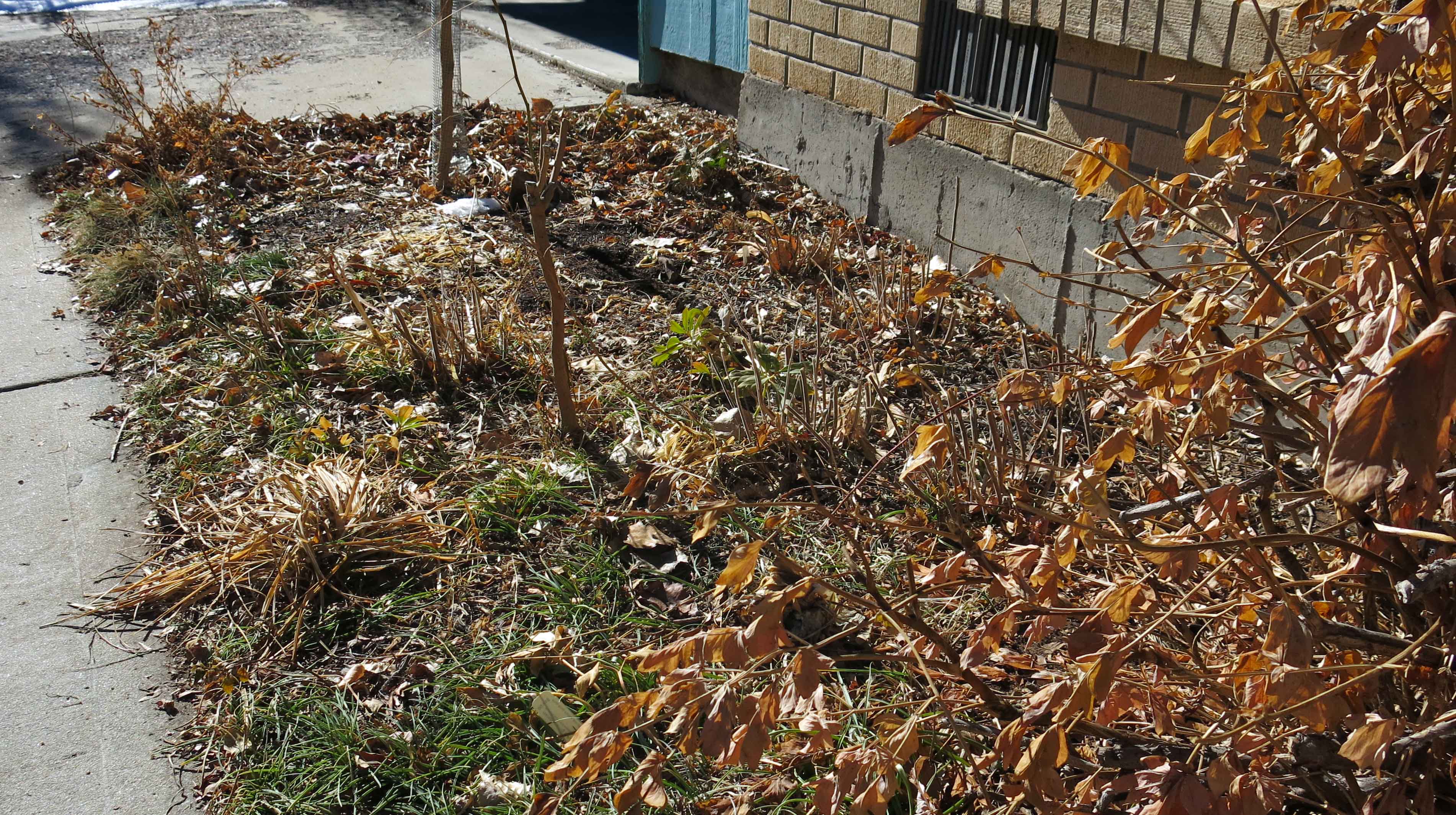
To the right is Rock’s tree peony (insert botanical name of the hour), then a bunch of greenery owing to a “gift” of grape hyacinths (“gift” in the German sense of the word, i.e., poison), a kniphofia, a desert bird-of-paradise (Caesalpinia gilliesii), a bunch of Salvia darcyi, some gladiolus from South Africa, several agapanthus, some crinums, a hop tree (Ptelea trifoliata…the thing in the cage at the far end), and five named varieties of Helleborus niger, the source of all, or almost all, of the sadness here.
I planted the hop tree because of the rabbits, of course. It was supposed to provide shade after an alder, Alnus tenuifolia, died of drought several years ago in the same place. I had no idea that the hop tree would immediately embark on a plan to grow one leaf a year, thus providing shade somewhere around the year 2095.
I always pronounce the P in Ptelea when there are people around who think that botanical names should be pronounced as though they were Latin words, and also like to have a bit of fun with E.L. Greene’s 32 species of Ptelea, when there only needed to be one. Other than that, it’s not much of a conversation piece. Watching it grow certainly isn’t edifying.
The little garden needs too much water for it to be enjoyable, for me, and the constant watering caused an unforeseen problem years ago when yellow jackets thought it would be a fine idea to build a basketball-sized nest in the crawl space attached to the vent visible in the picture. The yellow jackets would come out every time I watered, to get a drink. The leisurely pastime of watering quickly lost its appeal.
I don’t go into the crawl space very often because of spiders and general creepiness, so when the nest was discovered the first suggestion I heard from my late spouse was to take a knife (the machete I “didn’t need for any earthly reason” would come in handy here), cut the nest from the wall, drop it into a trash bag, scuttle back out of the crawl space, and run upstairs to toss the nest outside.
The secret to a long, happy marriage is to ignore each other at appropriate times. The nest was left until winter, when it was abandoned, and could be removed safely.
“Get to the sad part.”
In a minute. The Ptelea now strikes me as being “too eastern”, a kind of green-leafed horror wanting far too much water, and the rabbits don’t care one way or the other, so I guess it will have to go. Where, I don’t know. People like trees, so I could give it away, without mentioning its growth rate. I think a palo verde would be nice in its place. There was, still is, a street named Palo Verde in Long Beach, California, where I grew up, and I always thought that was a cool name, and there was a concrete ditch beside it where lizards lived, and one time I saw the grossest thing in the world, which looked like the plastic cooties in the game of the same name (familiar to kids who grew up in the 1950s), and it turned out to be a Jerusalem cricket. Visitors who came to the house would see the palo verde, and I could tell fascinating stories about it, similar to the one I just told, but interesting.
Now, before I hear a slew of negative comments, like it might die or something, consider the fact that reports of the limited cold hardiness of palo verde only come from places where it goes down to about 25 degrees. How would they know what it would do at -10 degrees?
Damage to plants that haven’t entered full dormancy is easily explained, but suppose that in a cold climate like this one, the onset of cold weather induces a dormancy in the palo verde that the palo verde never dreamed was possible. This is the sort of thing I think about when there are no other thoughts available for my mind to ponder.
“Still haven’t gotten to the sad part.”
Right. Sad enough as it is that I can’t have a palo verde, the really sad part has to do with the hellebores. Fancy named varieties of Helleborus niger that were planted when there was shade, and are now suffering horribly.
Back when there was shade, there used to be hellebores blooming at this time of year, and I have slides to prove it. These were taken in February of 1996, in the days when cameras ran on coal, but otherwise the images came through fairly well. I could be in a crowd of gardeners who were complaining that there was nothing blooming and how much they wanted it to be spring, and I could say I had hellebores blooming in the garden, in February, and so there.
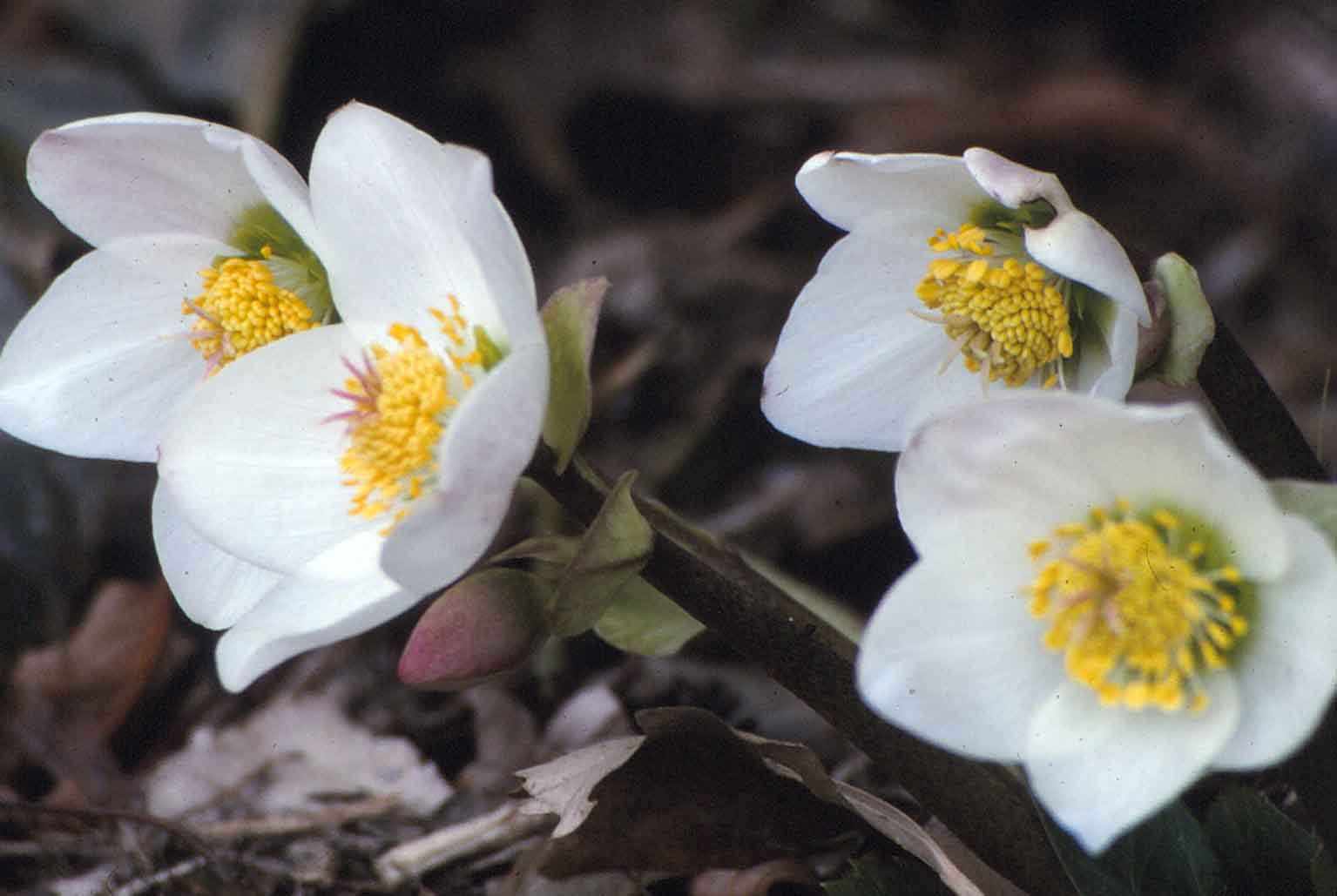
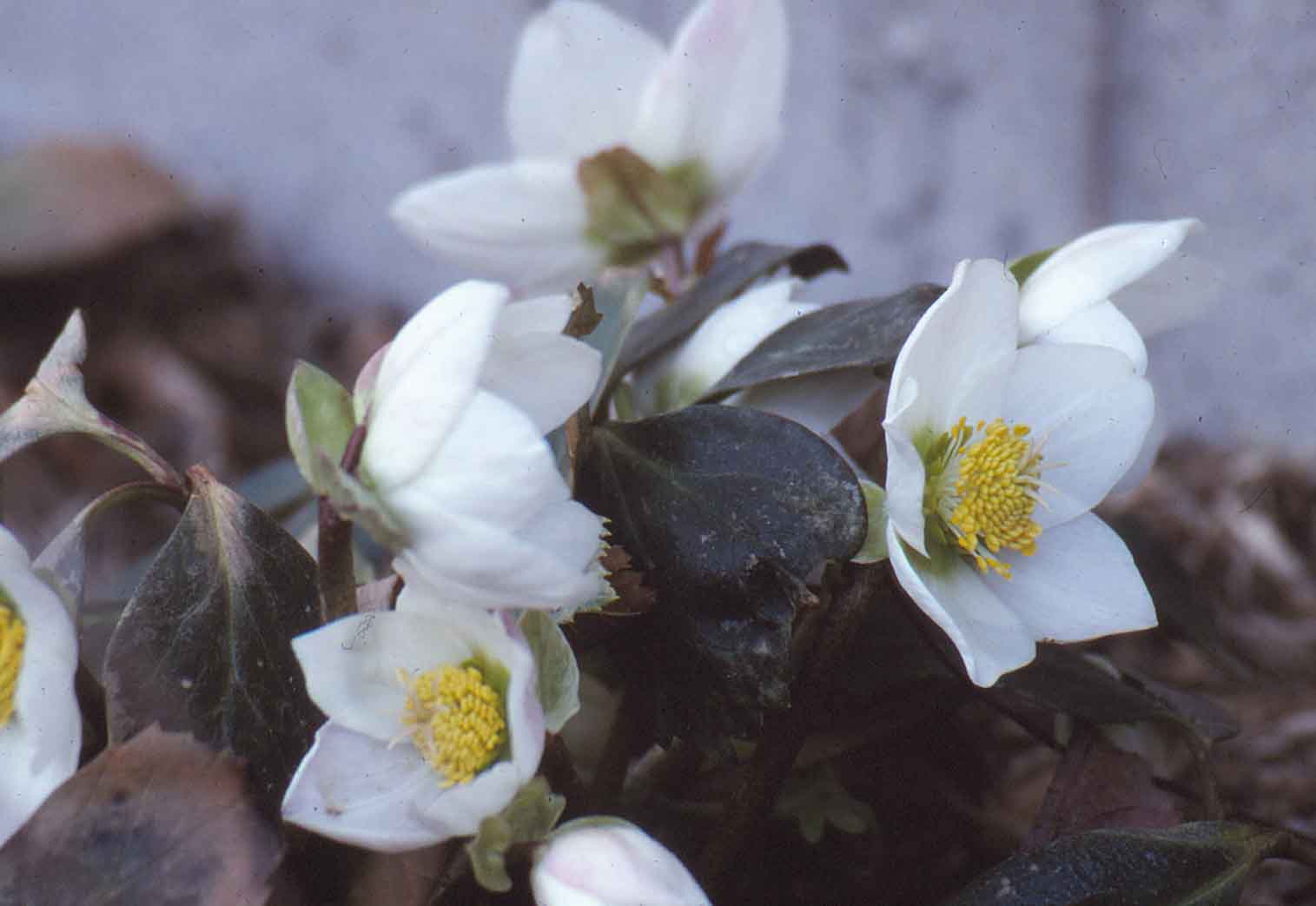
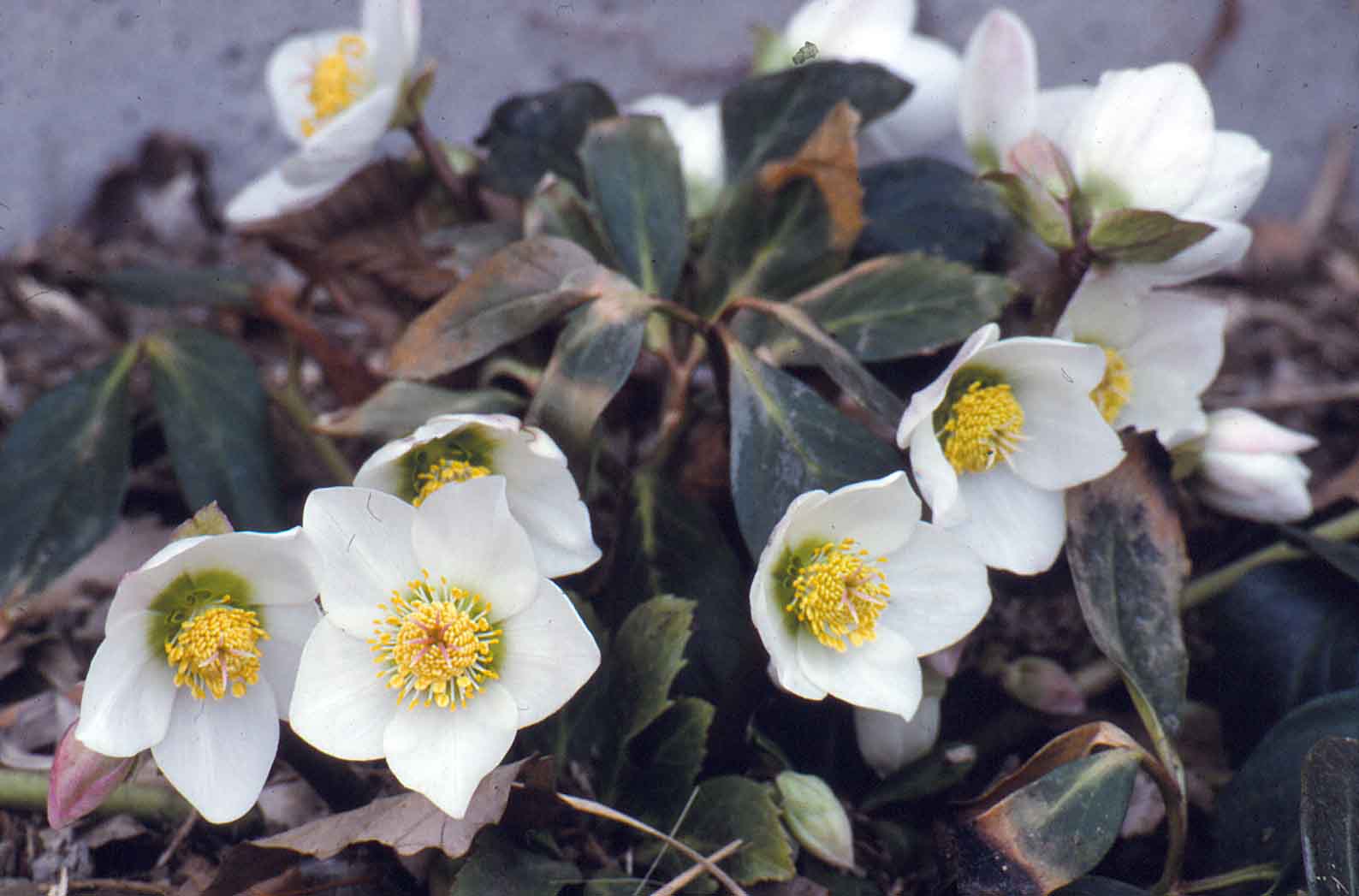
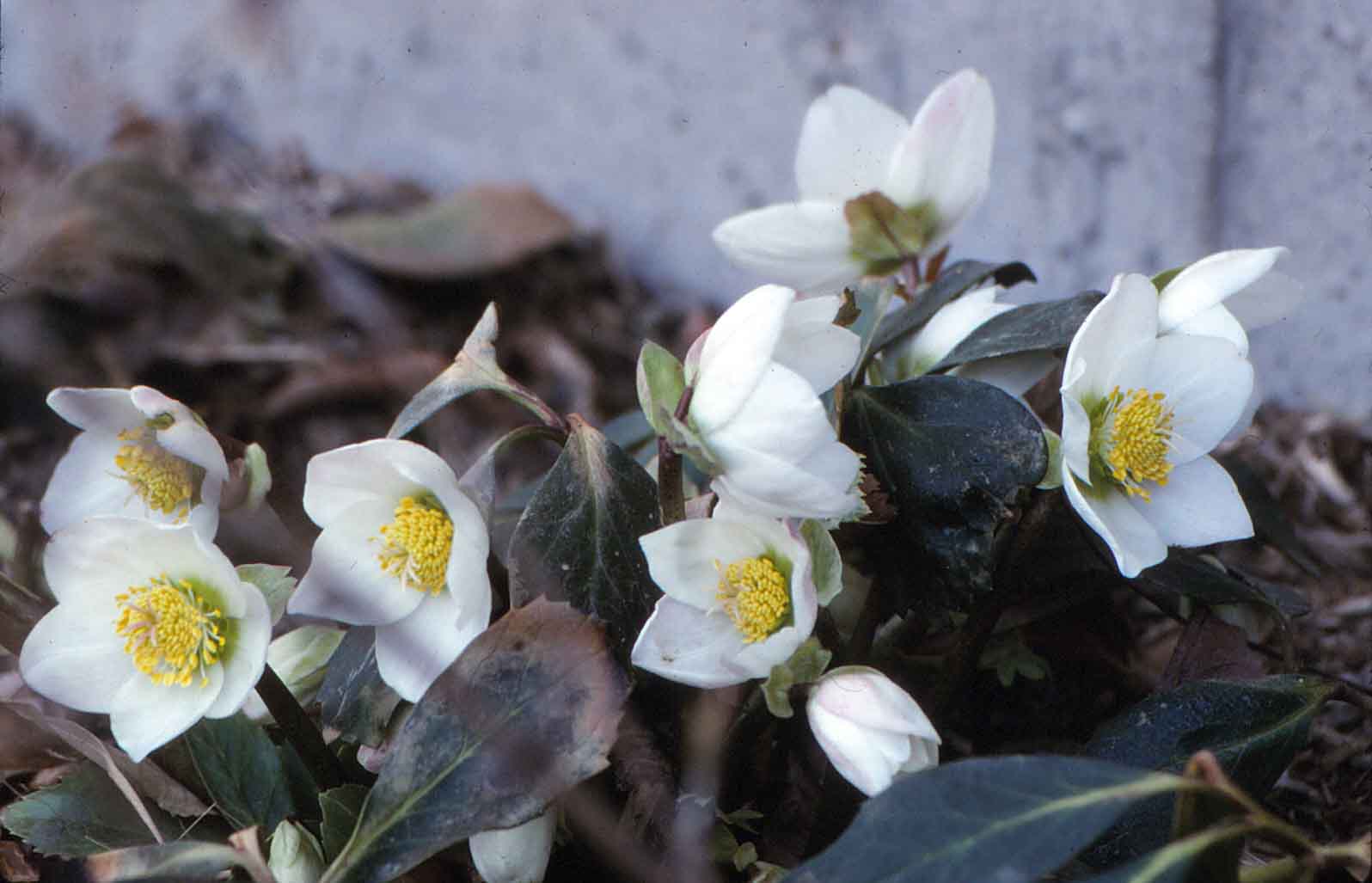
Not any more. I had to move them, and the remaining five plants, which are feebly trying to bloom now, have to be moved as well. This sets them back a few years, unless it kills them, in which case they are set back even more.
This is where they get to go.
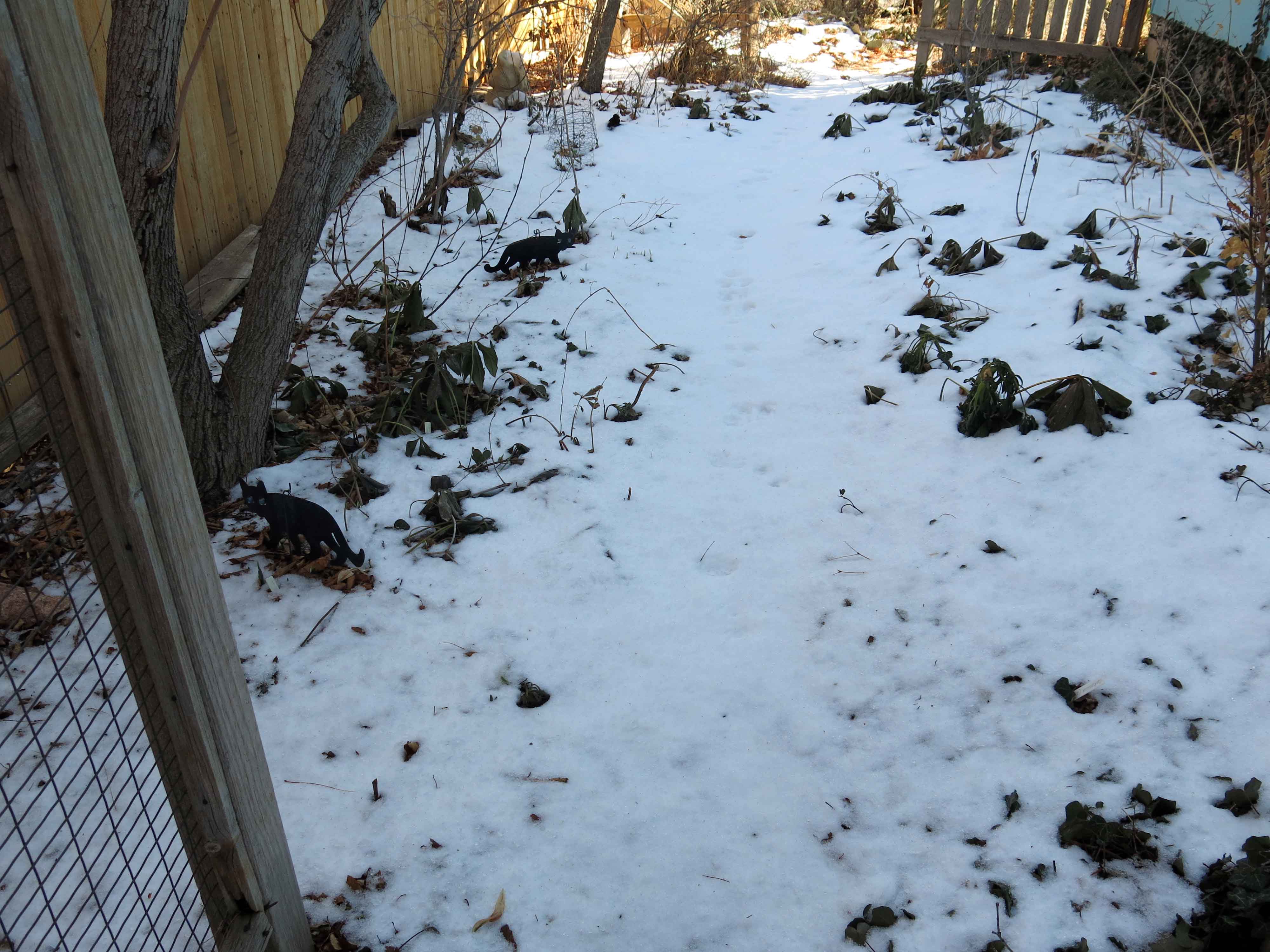
The dreary north side of the house, where the snow lingers for months, and the hellebores won’t even think about blooming until May. Here’s one of the ones I moved, cold, flattened, and alone.
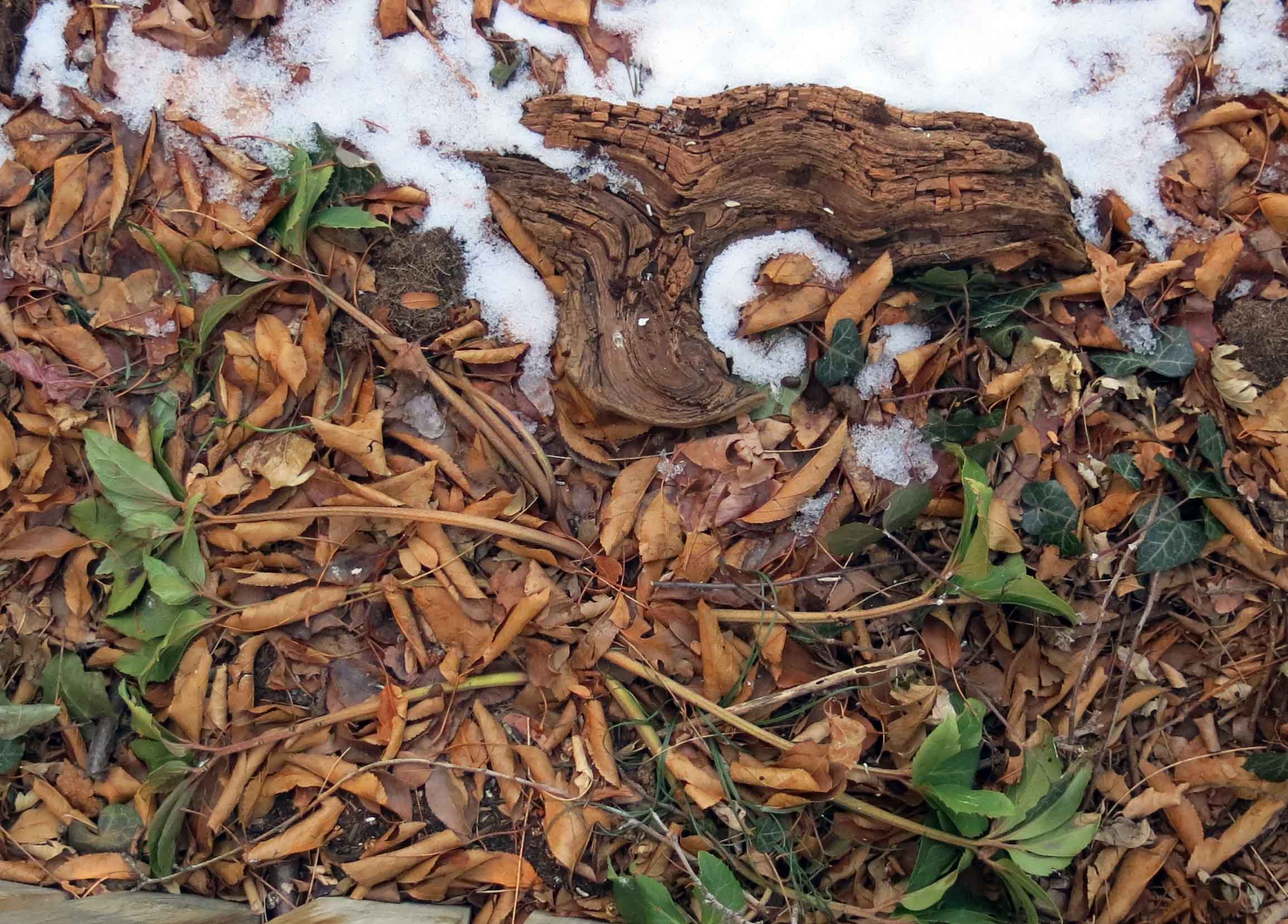
So the next time I’m with a group of gardeners at this time of year, and everyone else is talking about the hellebores blooming in their gardens, because they remember me talking about mine, I’ll just have to gaze off into the distance, heave a sigh, and remember what used to be.
 the miserable gardener