midwinter agave rescue

Possibly not an actual rescue, just a move. I mentioned these agaves in a previous post and hoped that they didn’t have any genetic material from Agave scabra in them; it looks like they do. Two out of three planted seem beyond any attempt at rescue. This species must rank very low in its ability to form sugar solutes which lower the freezing temperature of water in its leaves, since it turns to mush any time the temperature goes below about 5 degrees F, which, unfortunately, it does here. All the time. These plants are from such a high elevation that another millimeter higher and they’d be on the moon, so elevation has nothing to do with it. A. scabra is a wimp, plain and simple, even when it sits on top of a mountain.

Now, technically, the accepted name for Agave scabra is A. asperrima. Most people still say scabra, but the specimen used by Salm-Dyck (to give his full name, Joseph Franz Maria Anton Hubert Ignatz Fürst und Altgraf zu Salm-Reifferscheidt-Dyck) to describe the species was actually a specimen of A. parryi, and the name scabra was already taken for a taxon now known as Manfreda scabra, so……

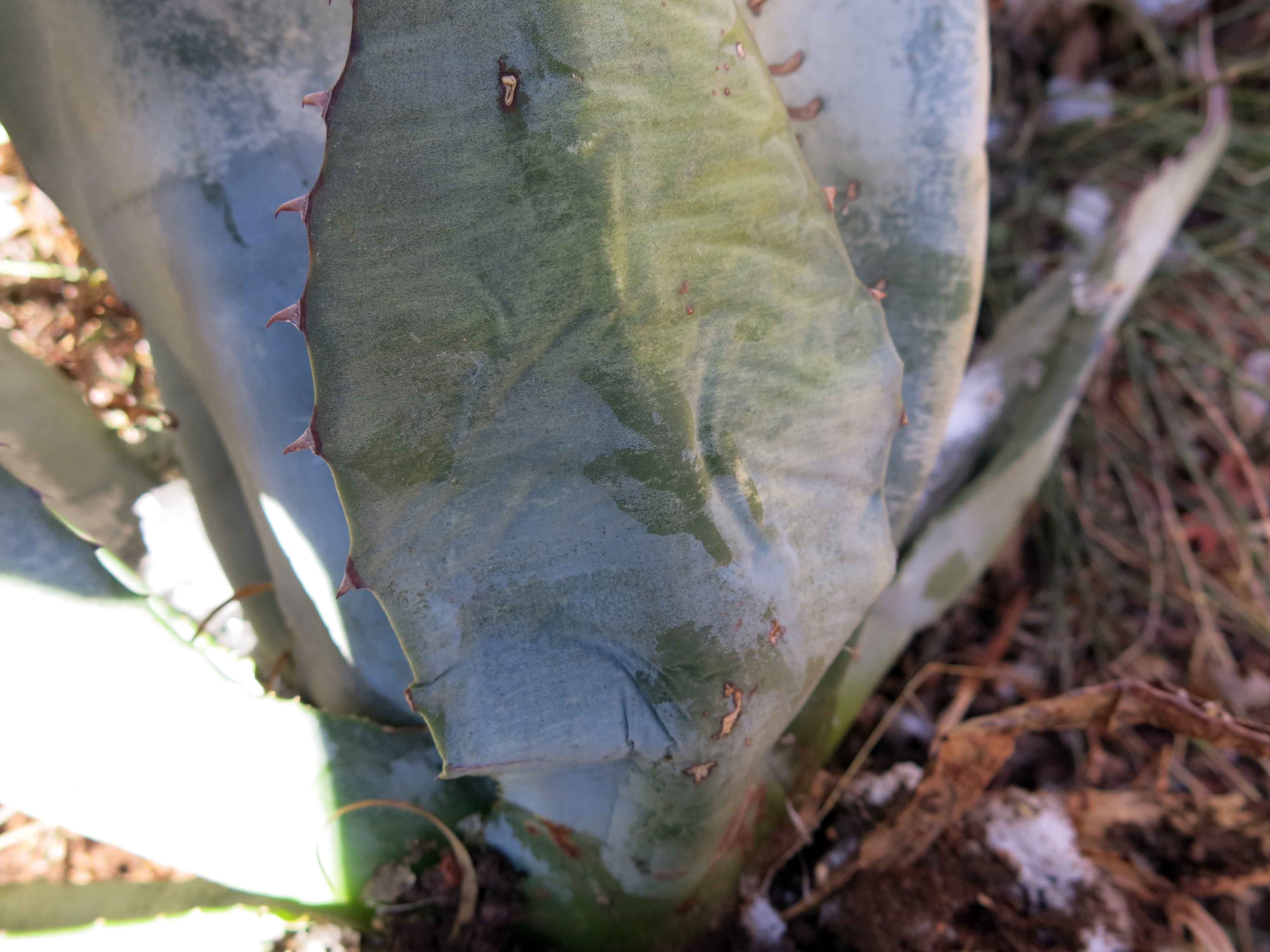
So, without really hugely caring one way or the other about its name (they never come when they’re called anyway), I dug the thing up, as quick as you could say Joseph Franz etc. etc., examined it for signs of impending death, noted them, and replanted it in dry soil. What I should have done to begin with, but, whatever.
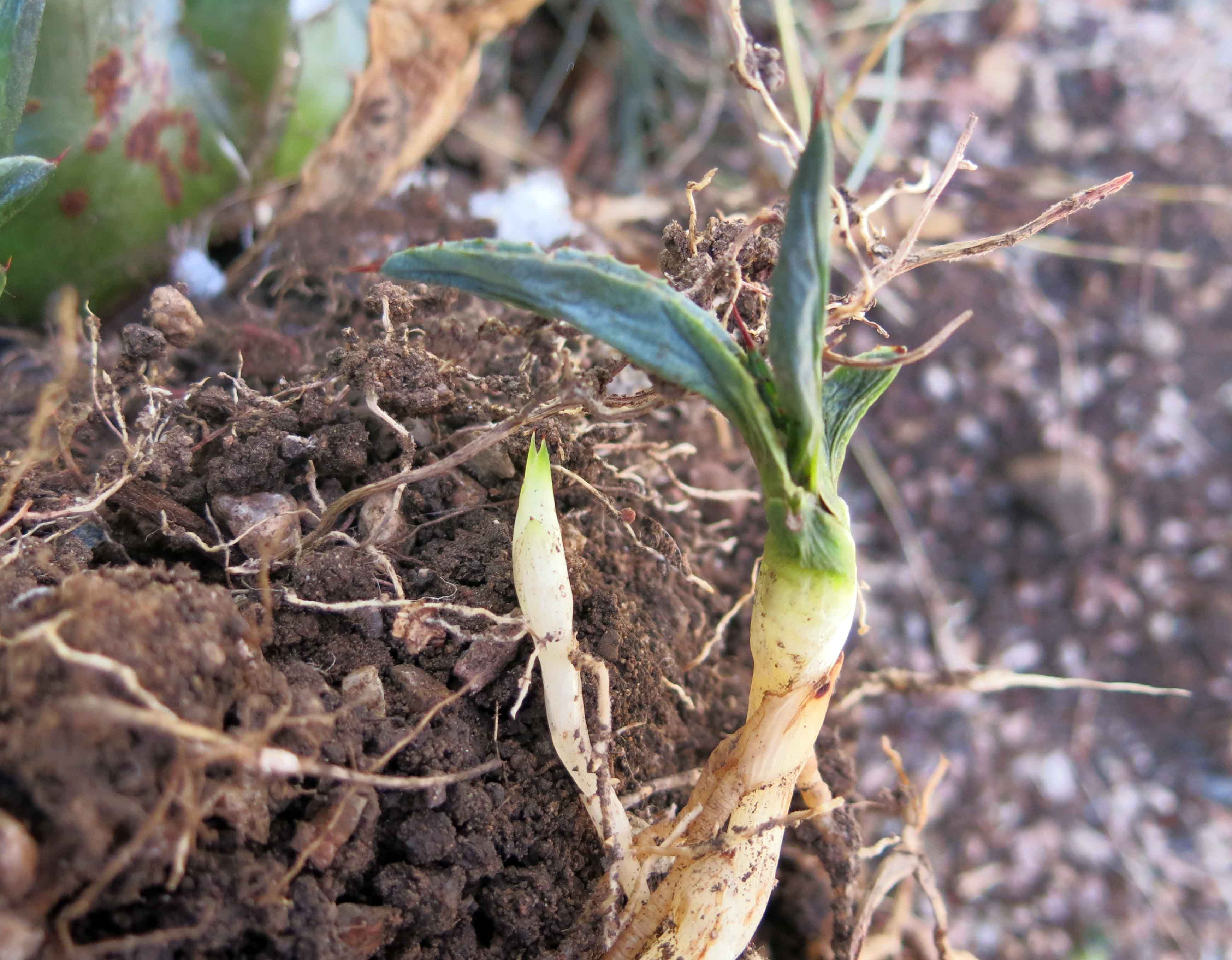
doomed1

pup, all mushy with water damage

doomed2

wrinkled leaves, water damage

doomed3

cuticle damage

Dry soil. Not “well-drained soil”, dry soil. I made a very short video (after I read the instructions…..what humiliation…..) to illustrate what I mean when I say “dry soil”. View with caution. This isn’t the type of soil usually recommended for drought-tolerant plants, and most people totally freak out when they see this sort of thing, but, again, whatever. It’s the kind of soil such plants really grow in, which is something I do care about.

The agave needs a microclimate. That is to say, a place warmer than the rest of the garden. The sort of thing people mean when they say “survives zone 6 in a microclimate”, when what’s really meant is “will not survive in zone 6, needs a warmer microclimate”. There’s a difference, and not a subtle one, especially if you’re a wimpy agave from a mountain in Texas where it never gets all that cold and you have issues with your fructans.

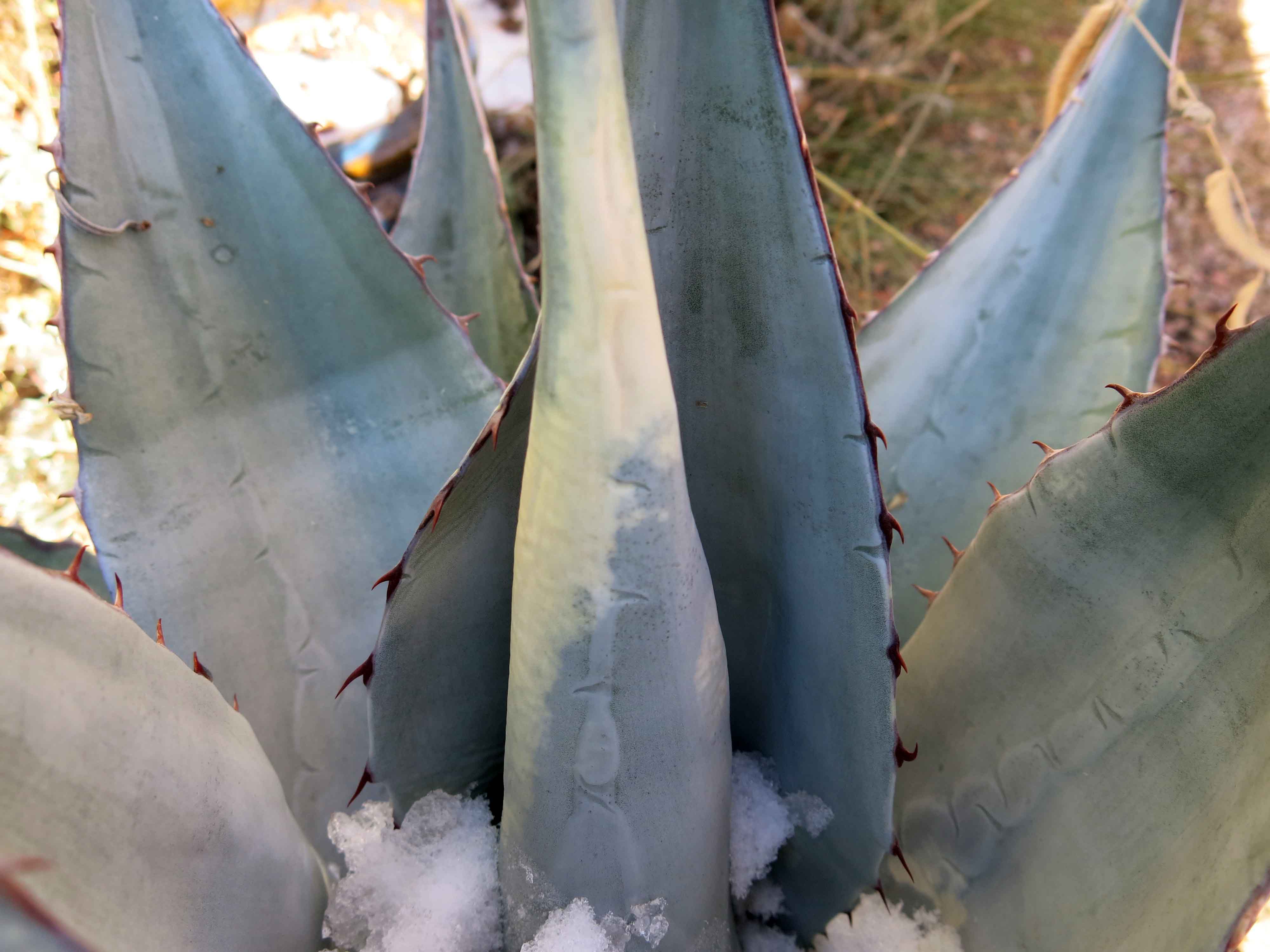
Hopefully, being smack up against the house, in this lovely soil that prevents any water uptake during winter, under a slight overhang, too, and with the massive amounts of hot air leaking from all the windows, the poor agave might be here at this time next year.
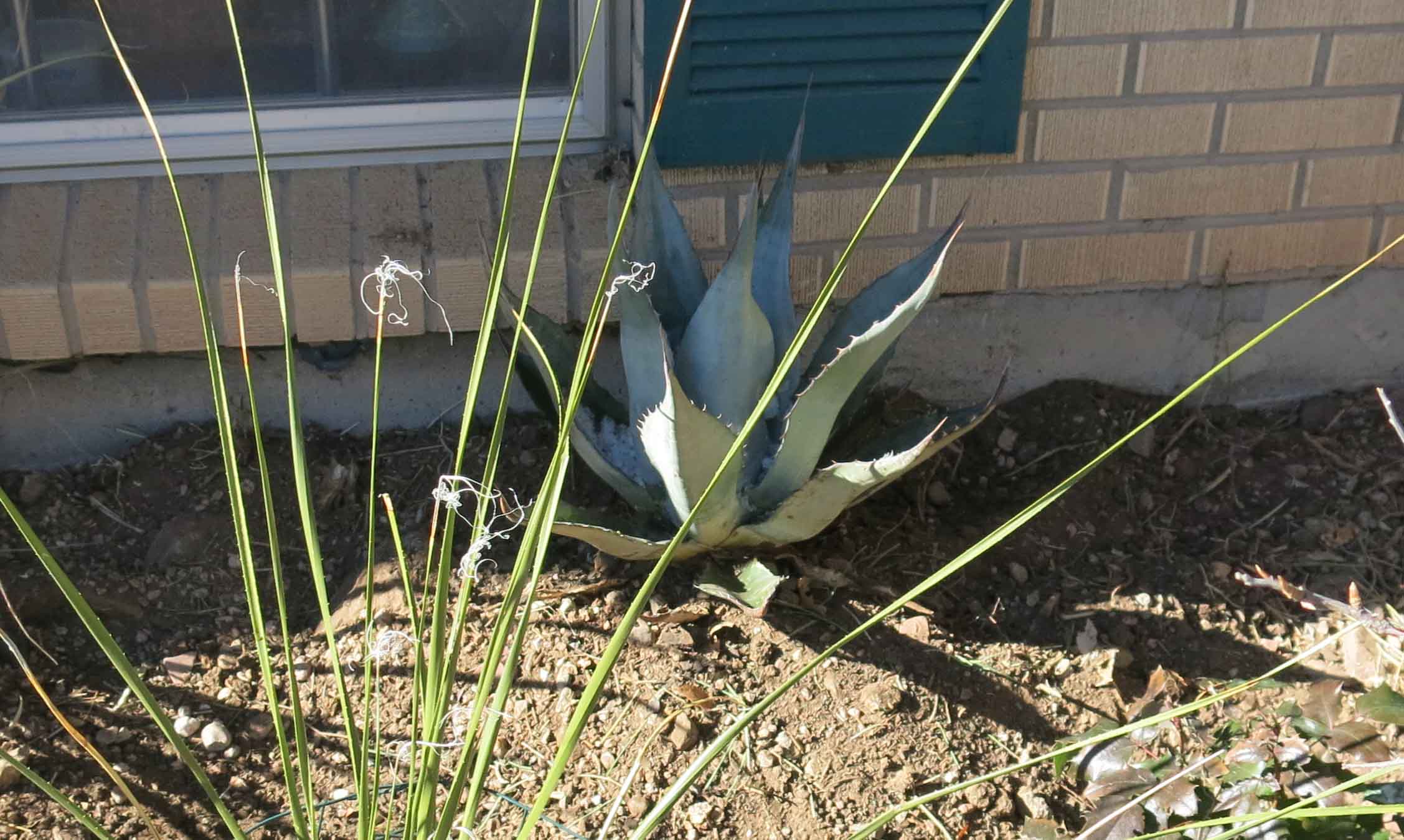
doomed4

the poor agave, behind Dasylirion texanum, a zone 8 plant that knows a thing or two about making solutes.
Posted in Uncategorized | Tagged , , | 5 Comments

toasting seeds for home and garden

Well, no gardening today, obviously.012901

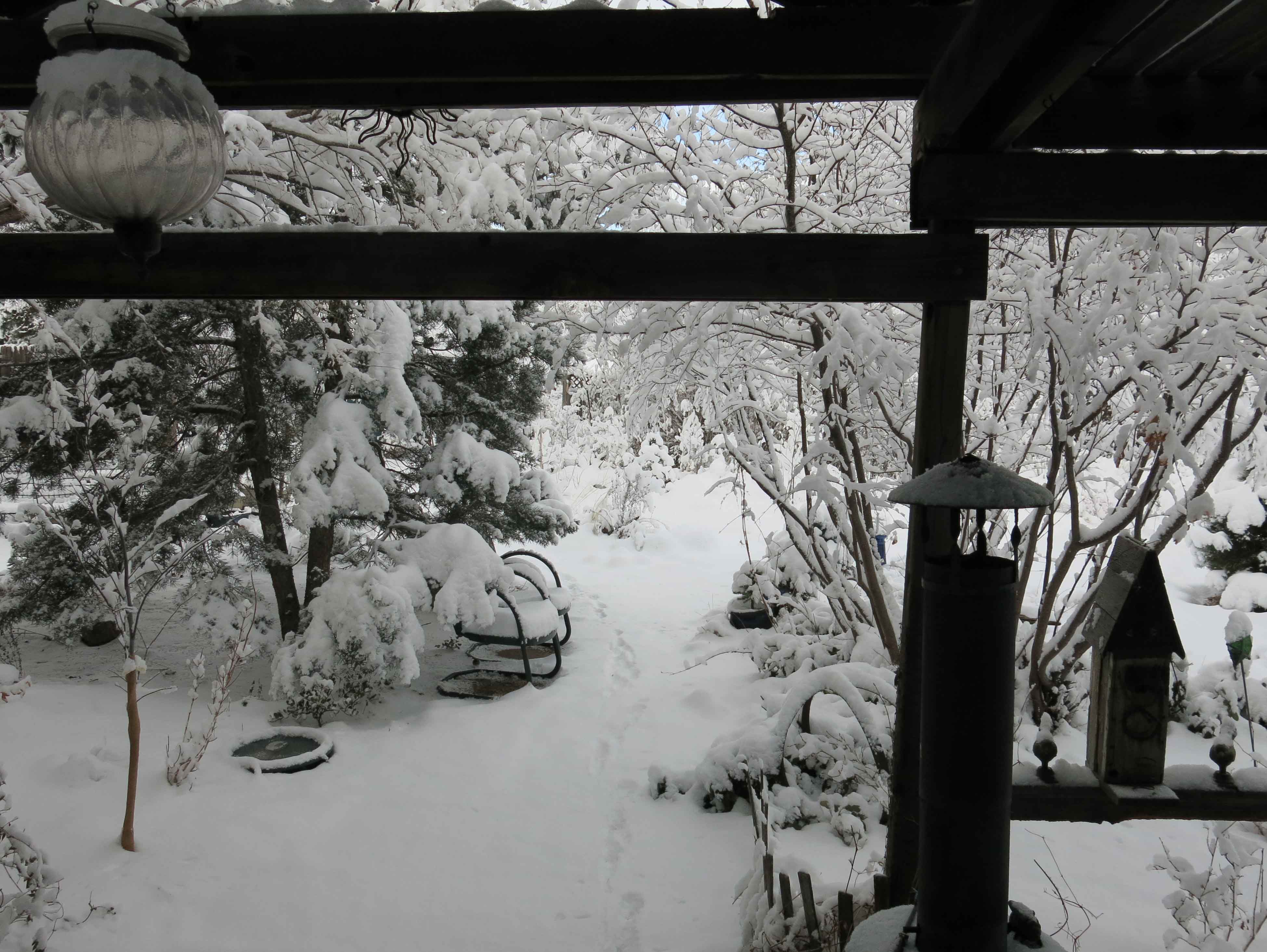
I had to set the alarm for the dog so he wouldn’t sleep in until 10:30 like he did yesterday, and woke up to a winter wonderland….. I’m not one of those people who thinks that snow on the garden in January is “moisture”. I just shoveled a whole bunch of moisture off the driveway; that was fun. The dog stayed inside and watched.

There are moments in my life when actual work is performed and things get done, and today was going to be one of them, but work might be delayed because of the snow. I have seeds to sow. (This has no effect whatsoever on my desire to buy plants.)

Most of the seed is sown in pots which are set outside, so that the seed can germinate on its own. This is called vernalization. I showed a picture of the (portable) seed frames here. I spent some time screening squeegee the other day for the cactus seed. I guess this needs an explanation.

IMG_1372

sieve over paint bucket; it almost fits perfectly

IMG_1374

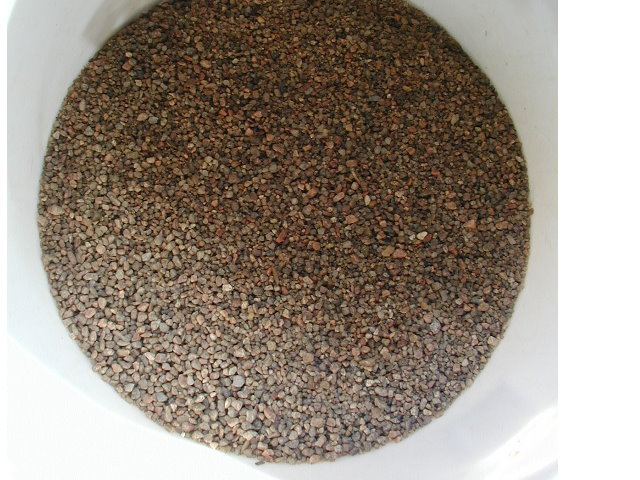
squeegee; I don’t know why it’s called that. same stuff they spread on roads. it needs to be screened because some of the particles are too large.

seedsowing6

ideally, the particles should be the size of those in upper right, but I bet someone got lazy and let bigger ones, like lower left, get through.

seedsowing4

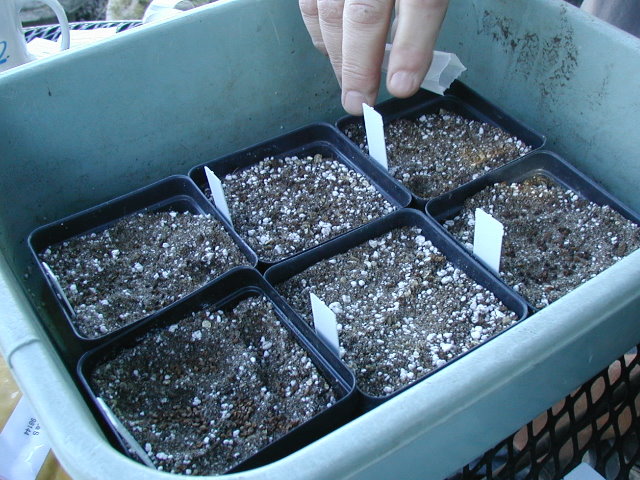
the seed mix, which varies, but usually equal parts screened peat moss, perlite, and sand, is moistened from below, then seeds sprinkled on top. seeds visible in far right pot.

seedsowing3

topping of squeegee–about 1/16 of an inch–sprinkled on, pressed down lightly, and watered using a watering can with a fine rose.

seedsowing5

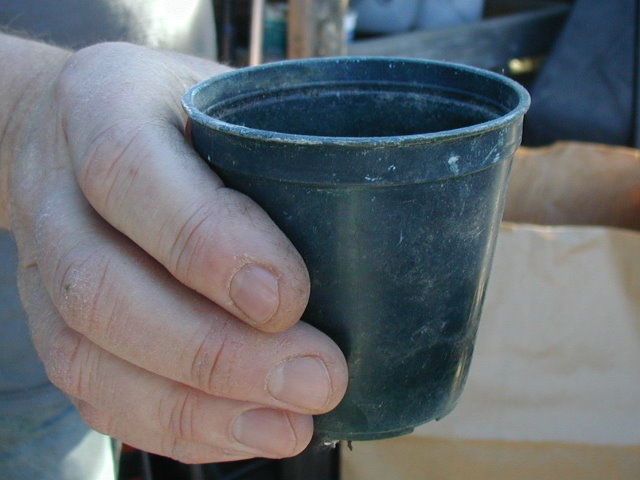
most of the seeds go into these B.E.F. polypropylene Grower’s Pots, which I’ve had for 25 years

The other technique I use, sometimes, is stratification, which I talked about here and is a complete pain in the posterior, but sometimes there is no other choice. Apparently this is true for the seed of Ceanothus velutinus, which first needs its hard coat to be cracked in some way, then a period of stratification is required. In the wild the cracking is accomplished by fire.

One of the ways suggested to crack the seed coat, aside from fire, is scarification, rubbing the seed on sandpaper until the endosperm is exposed. I’m not going to do this. Cindy liked doing this; it was just the sort of microscopic work she enjoyed, but the last time I tried it the seed got crushed and flew all over the kitchen. People like me who are entering their Declining Years have no time for such nonsense.

012902

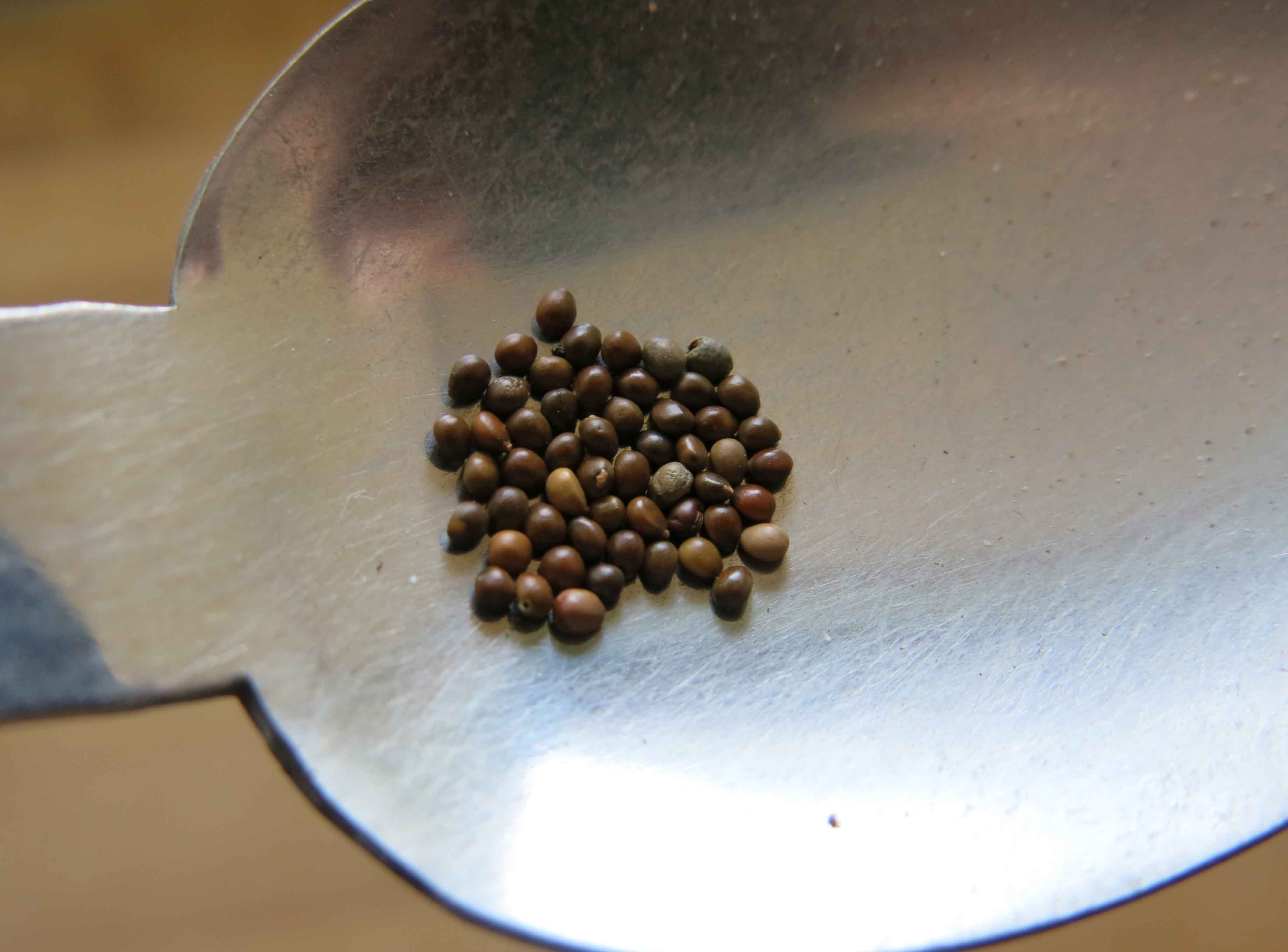
seed of Ceanothus velutinus, about twice actual size

The Forest Service has a data sheet on Ceanothus velutinus which says temperatures of 176 to 203 degrees F. will break the seed coat, before stratifying the seed. It didn’t take me very long at all to realize that I knew exactly how to do this.

The seed can be germinated by sowing it outdoors, too. The percentage of germination is very low. The outdoor method works for a number of species whose germination requirements are said to require heat from fire (like Romneya coulteri). The action of freezing and thawing does the work.

I’ll report back on the toasting method in a couple of months.

Posted in Uncategorized | Tagged , , , | 6 Comments