Greetings and salutations, everyone; yes, once again it is I, Mani the purebred border collie, filling in for the guy I live with, and here today to talk about my struggles to keep up with all the changes here. You may remember me from such posts as “A Chance Of Effelants”, among so many, many others.
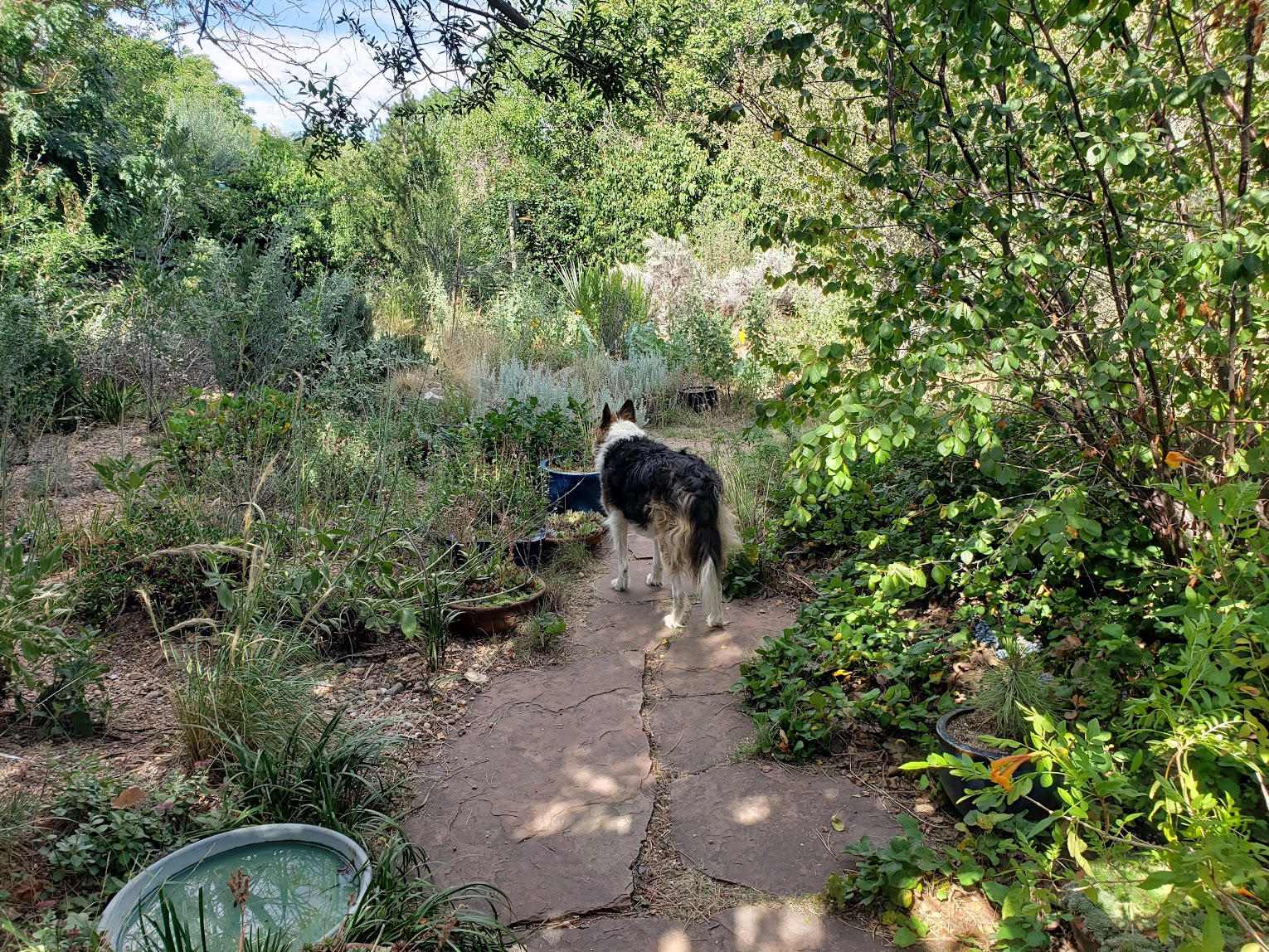
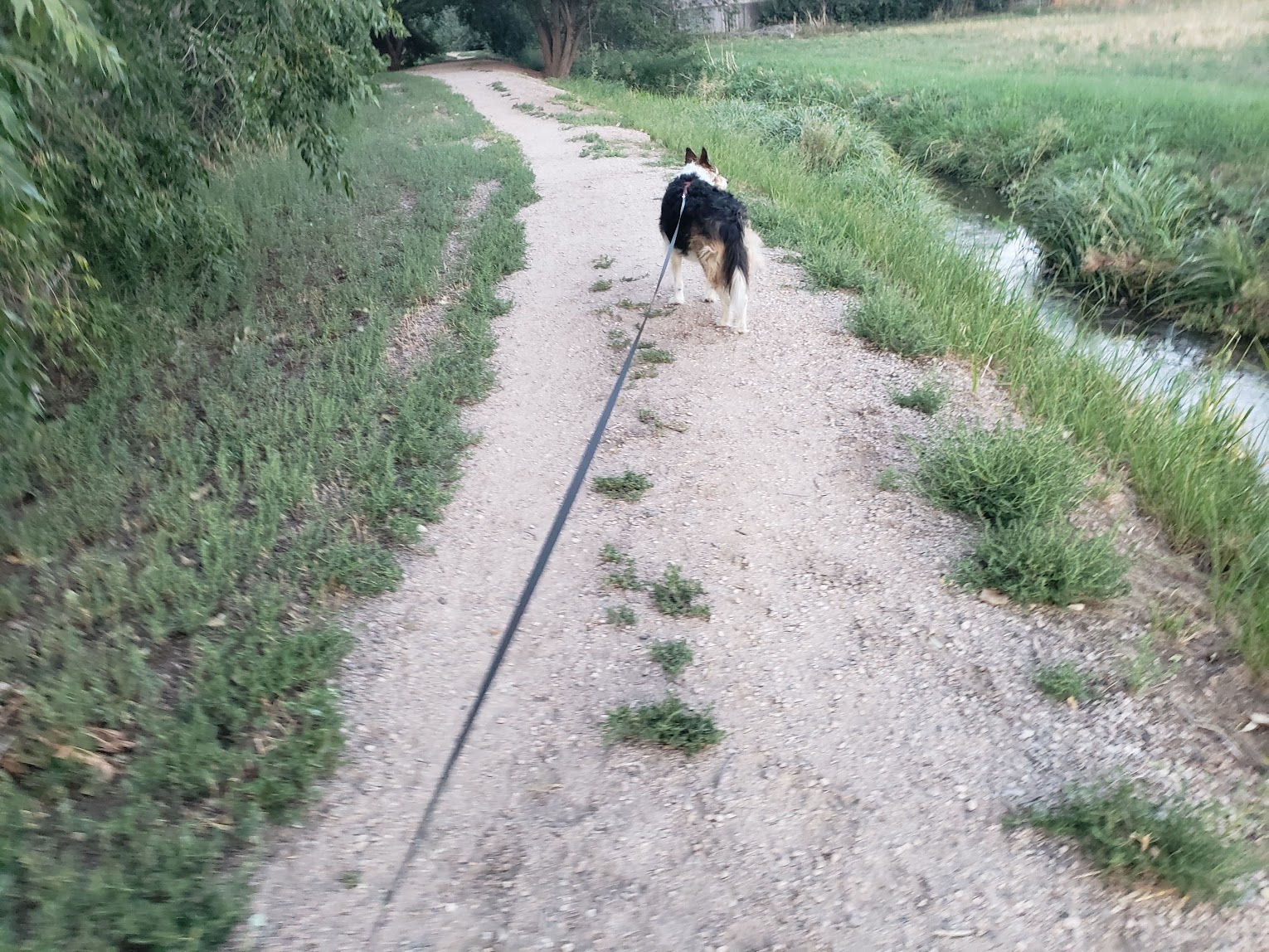
Here I am in a characteristic pose.
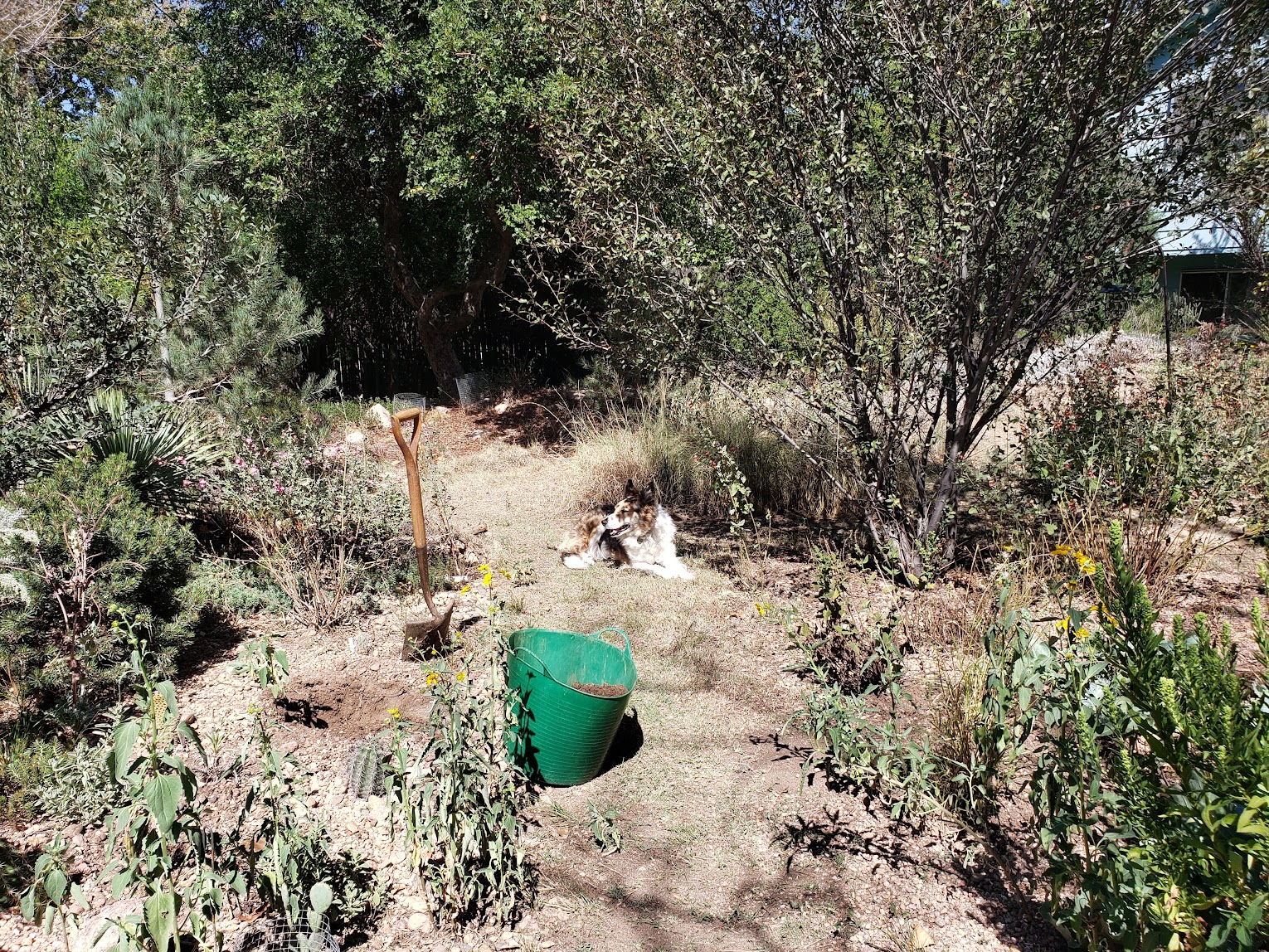 You can see that some work is being done here.
The cowpen daisies were wilted on this very dry day, but they’re okay. The buffalo grass in the path is brown again, though. I’m lying on some, in this picture.
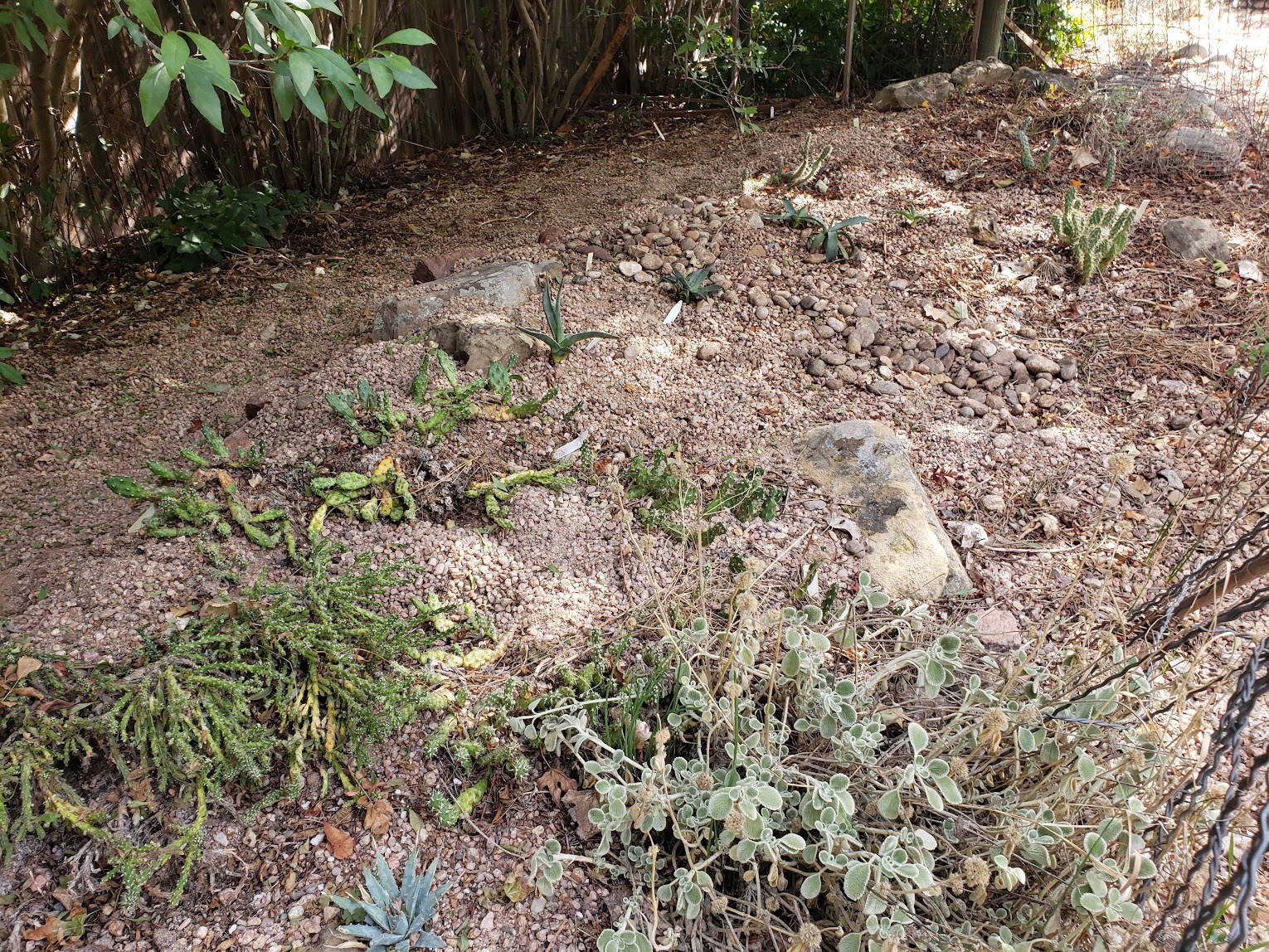
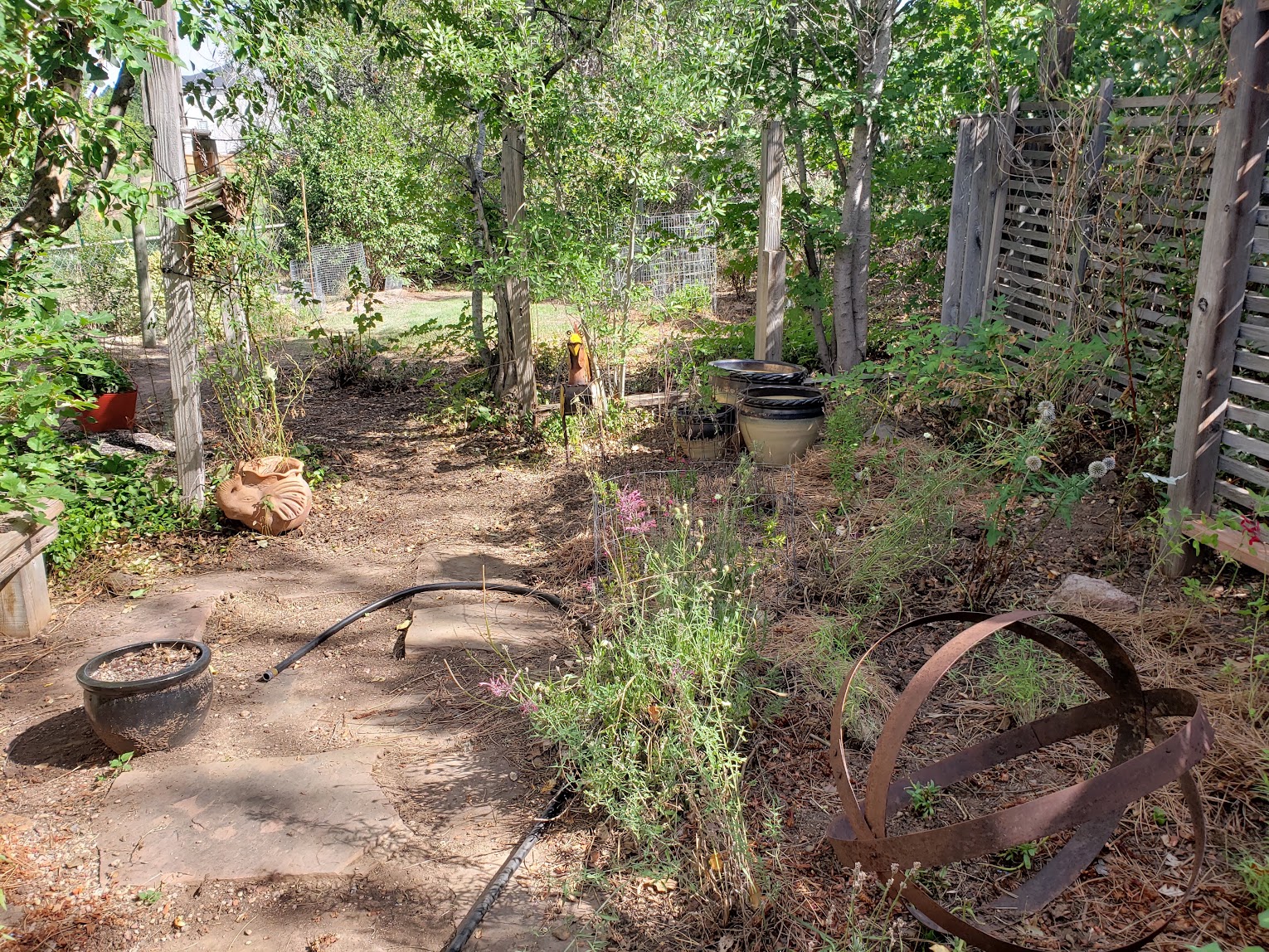
What used to be a border of “traditional” plants, before I came here, was transformed into a border of dryland plants.
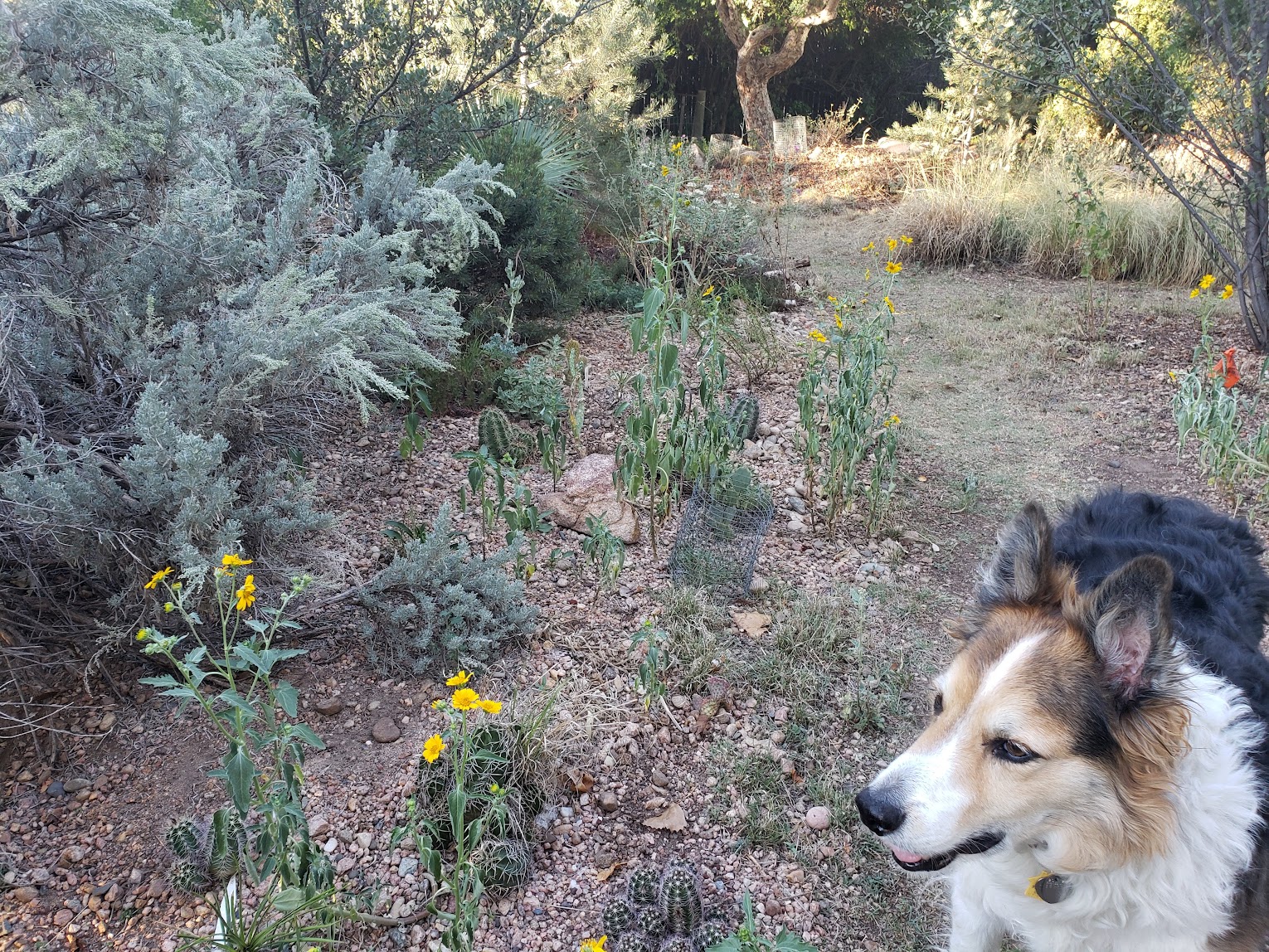 I hear that a lot of penstemons are going to be seeded in here. There are some Penstemon eatonii already in this garden. And a lot of cactus.
There was almost nothing in this part of the garden earlier this year.
You can see how dry the buffalo grass is here, too.
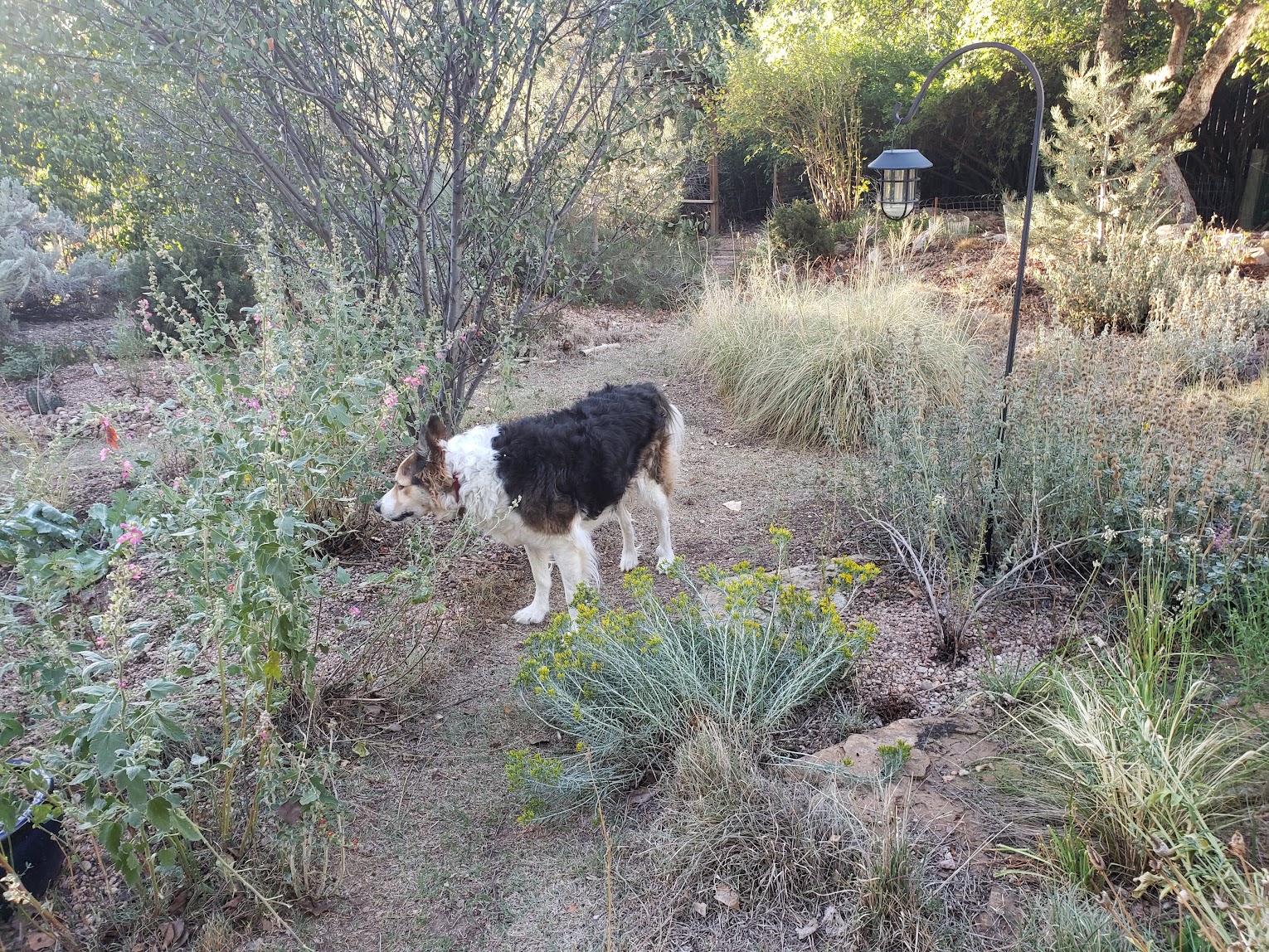 If we got a lot of rain, the grass would turn green in a couple of days. The guy I live with said he certainly isn’t going to water the grass. We kind of aren’t allowed to, anyway.
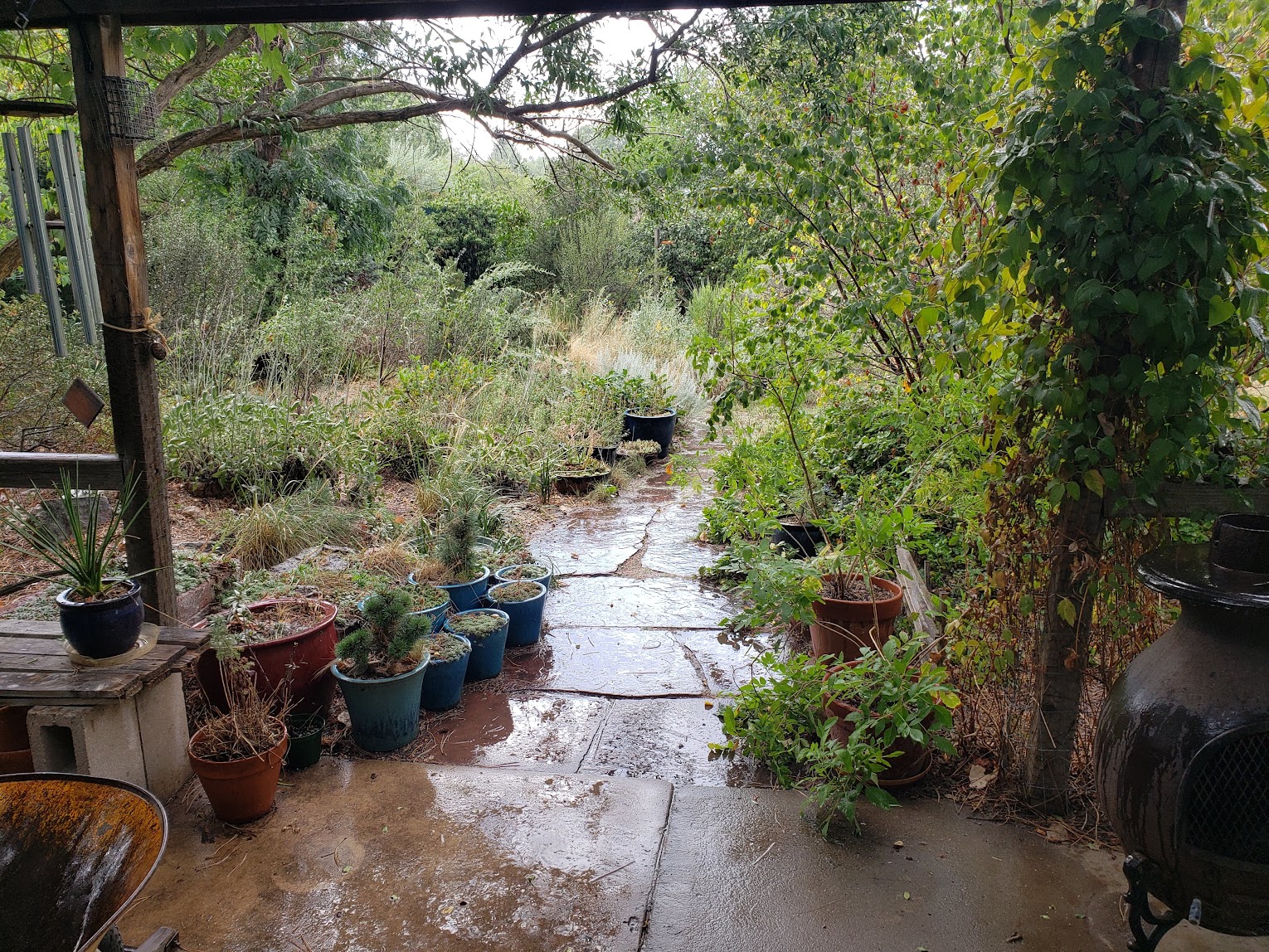
On the last day of August, this happened.
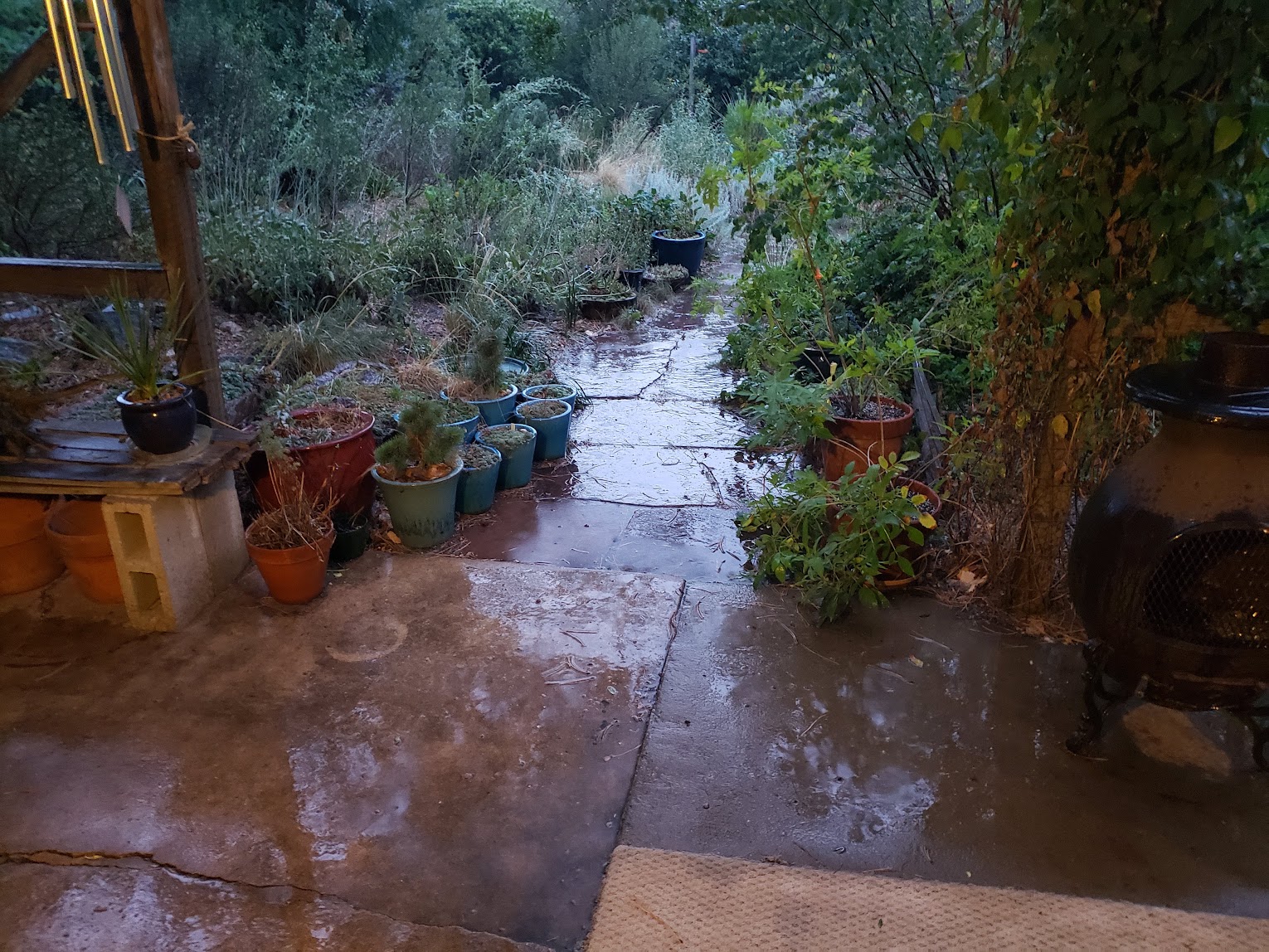 I think it’s rained a little every day since then. Not enough rain to make the buffalo grass green or un-wilt the cowpen daisies, but enough. (The daisies look fine in the morning and in the evening, and the buffalo grass in my Private Lawn looks fine.)
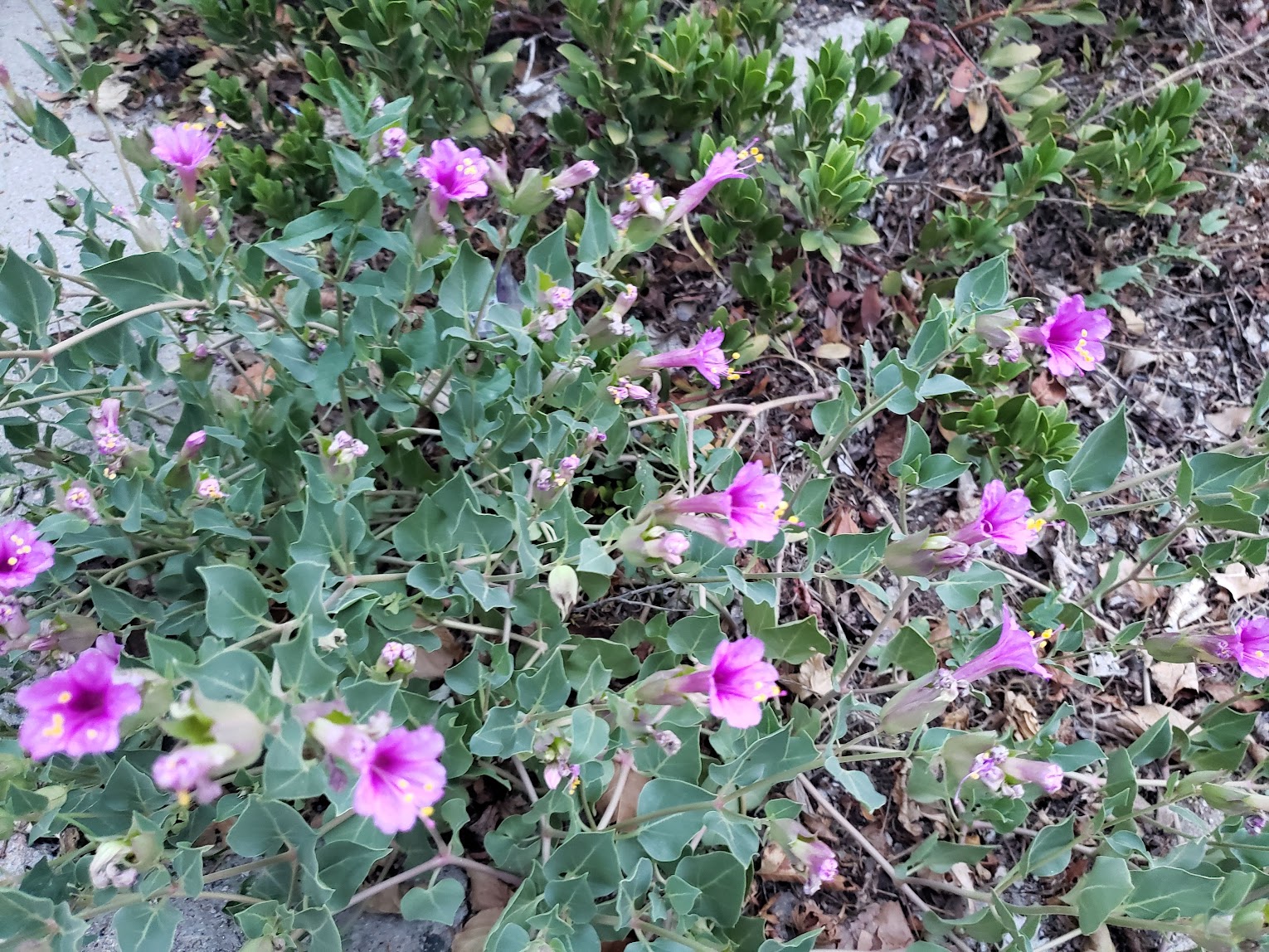
And there are some plants in flower. The guy I live with took this picture as we were going up the front walk. This is Mirabilis multiflora. The phone got the color wrong; it should be darker.
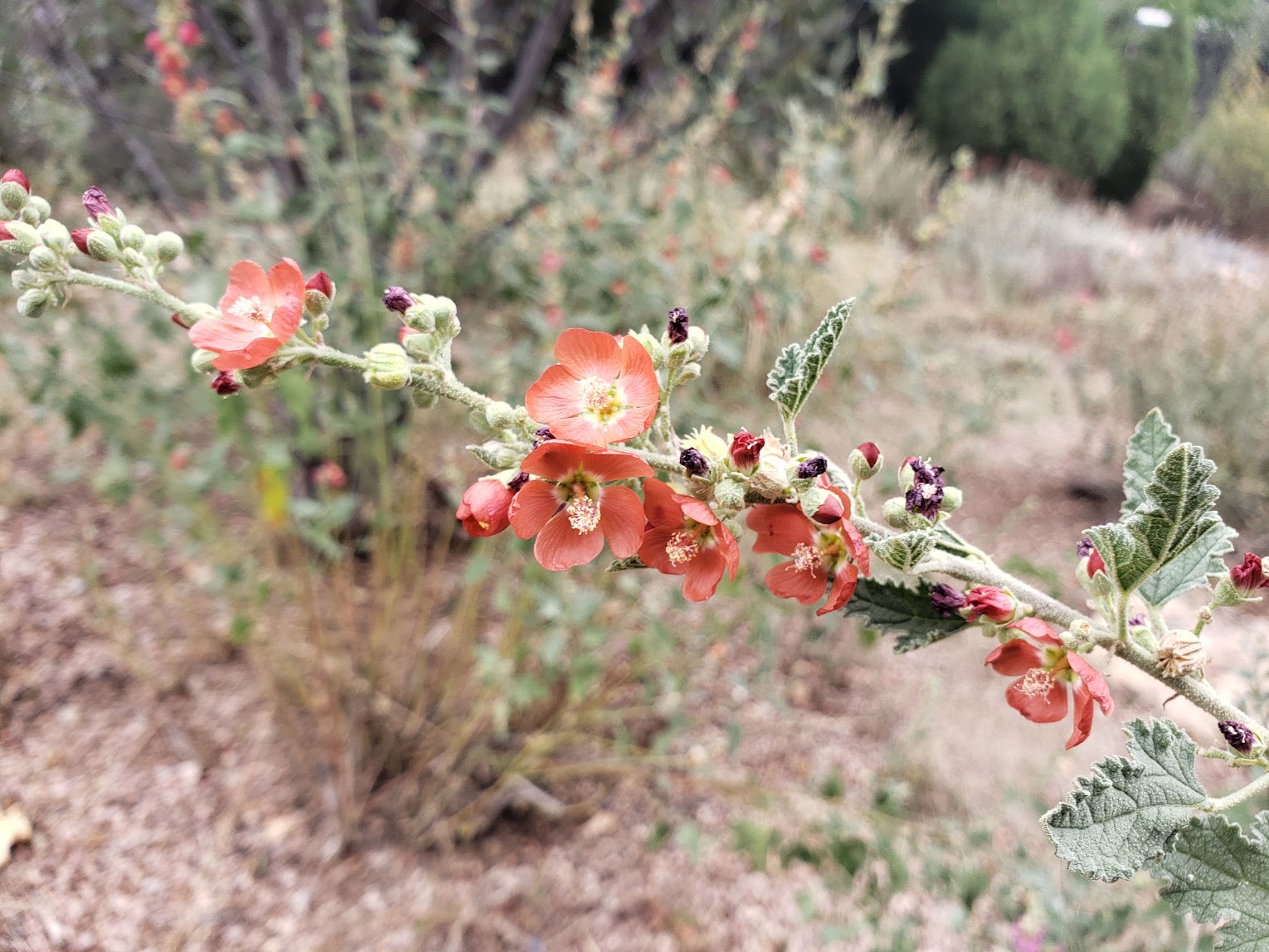
 Lots of sphaeralceas are in flower.
 What’s really funny is that the cyclamen are in flower. The guy I live with hasn’t watered the garden since early March, and wondered about the cyclamen, but here they are.
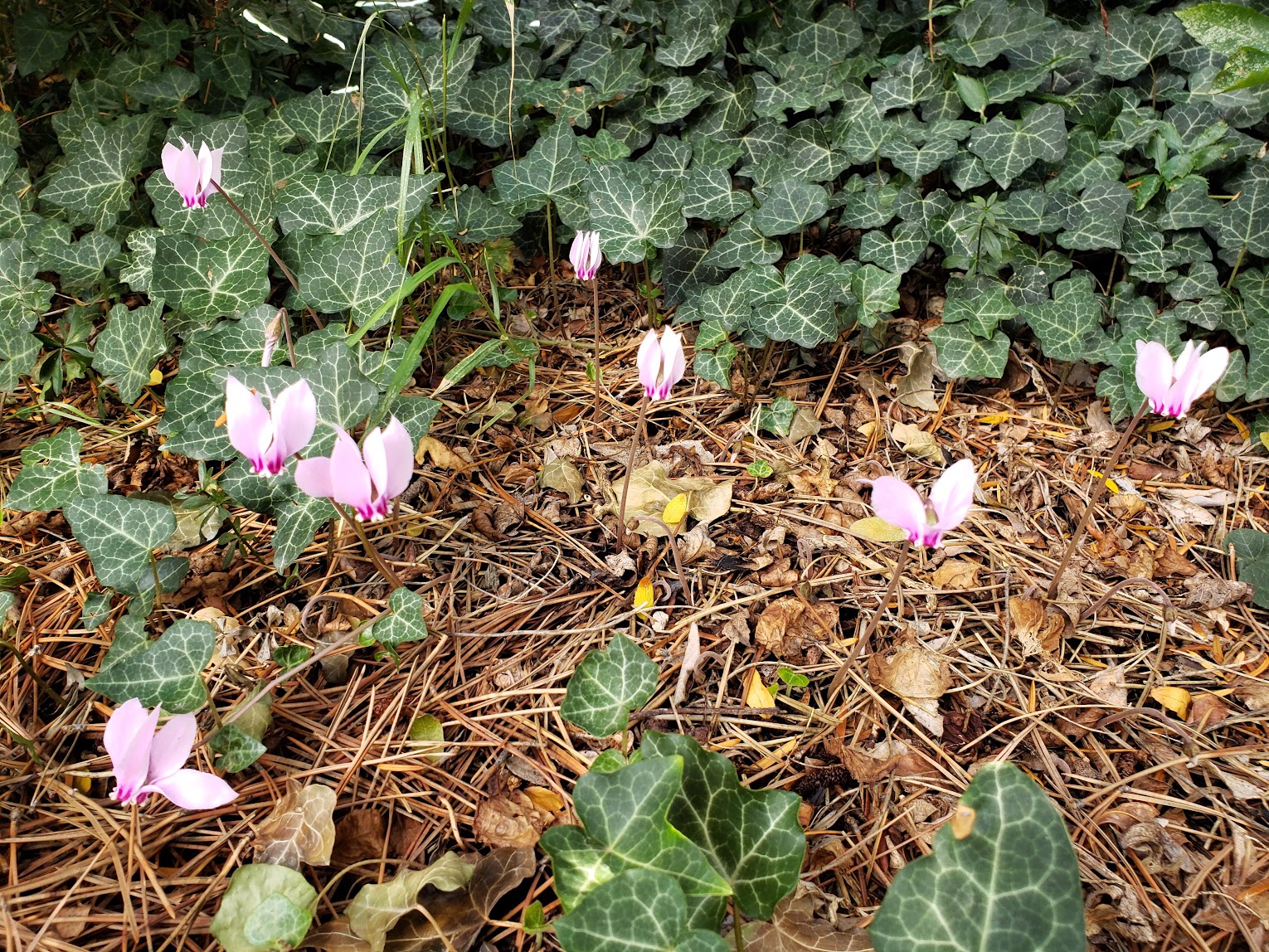 These are Cyclamen hederifolium, flowering with the ivy, Hedera helix, which the guy I live with says is a pretty heavy-handed “combination”; the ivy refuses to go away, even though he keeps pulling it.
The cyclamen are going to stay, but a lot of the “fancy” bulbs are going to Denver Botanic Gardens, because the guy I live with is “officially” bored with plants that need watering in order to flower, like the autumn-flowering crocuses.
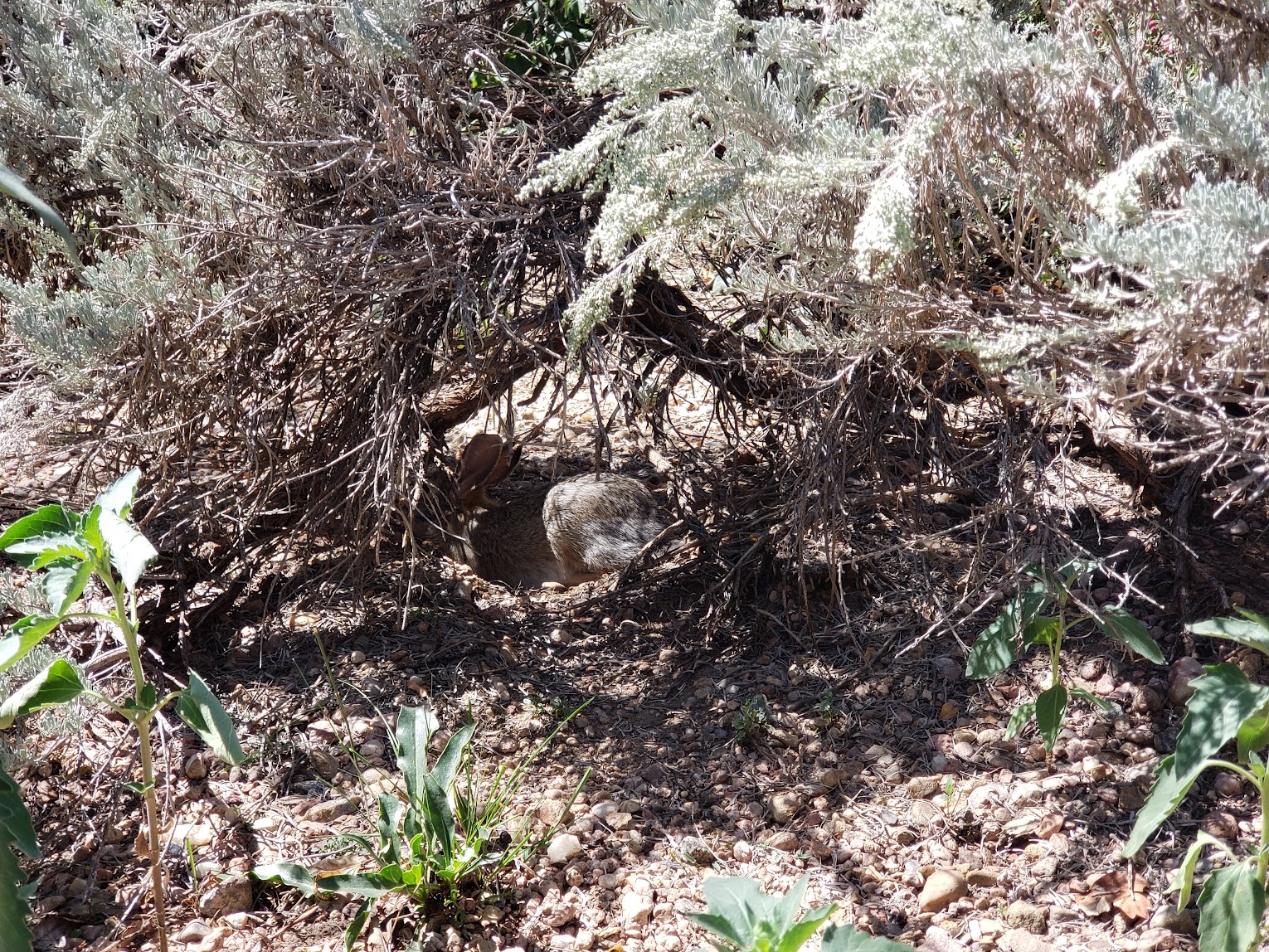
The crocuses need to have their overwintering leaves protected from rabbits, of which we have a few, since I decided to retire from rabbit pursuit.
You can see one here, napping under the sagebrush.
 Plants dug up and given away, new plants going in various places; it’s been very difficult to keep up with all of this.
And then last week the unexpected happened.
The guy I live with had been talking about going to Boulder for a while. His friend was busy, so he drove there alone.
He was very anxious about doing that (I could tell); he said that when his wife was here, they would just go. There are so, so many things he doesn’t do any more, and driving for over an hour was one of them.
But he went.
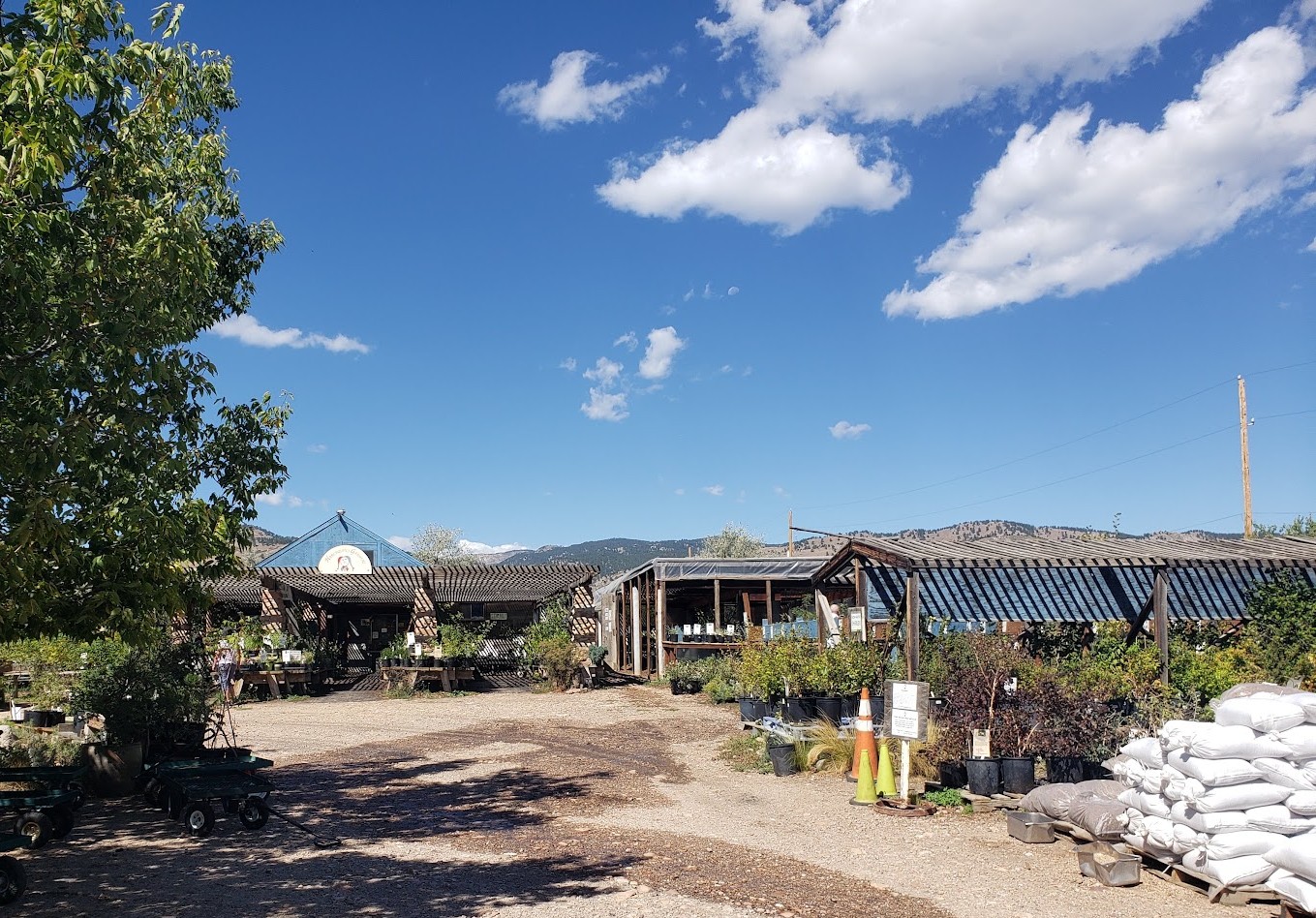 This is Harlequin’s Gardens. The guy I live with bought a lot of plants. All native dryland plants, because, as he told me, he wonders if things will ever be the same again, considering what passed for winter this last time, and considering how little rain we’ve gotten (a little over six inches in the last 120 days).
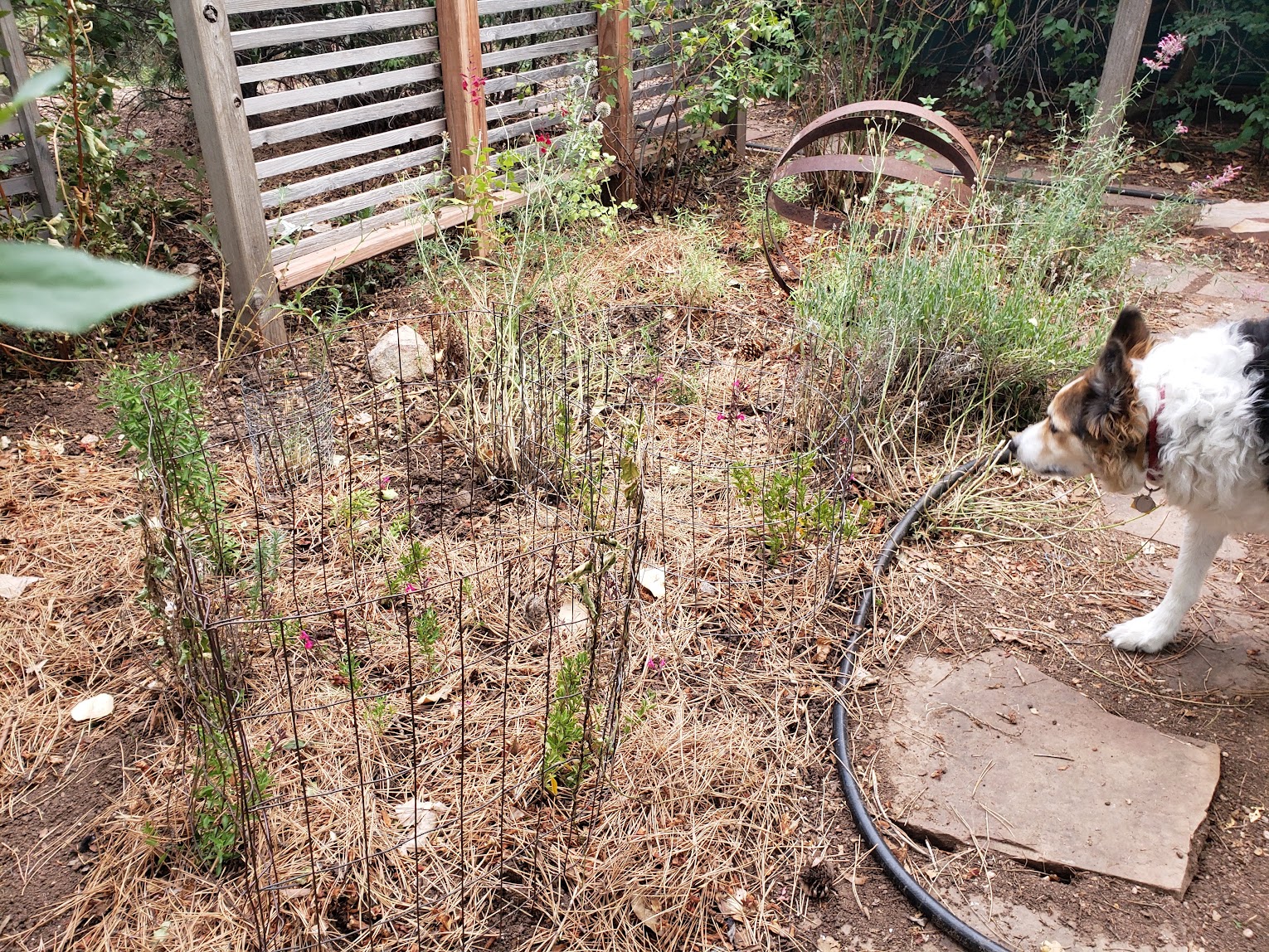
Planting often required removal of existing plants; I lay near the guy I live with while he removed dozens of seedlings of Melica ciliata, a pretty grass that seeds all over the place, so now he dislikes it. He used a lot of colorful language while scraping out the grass with his nejiri weeder.
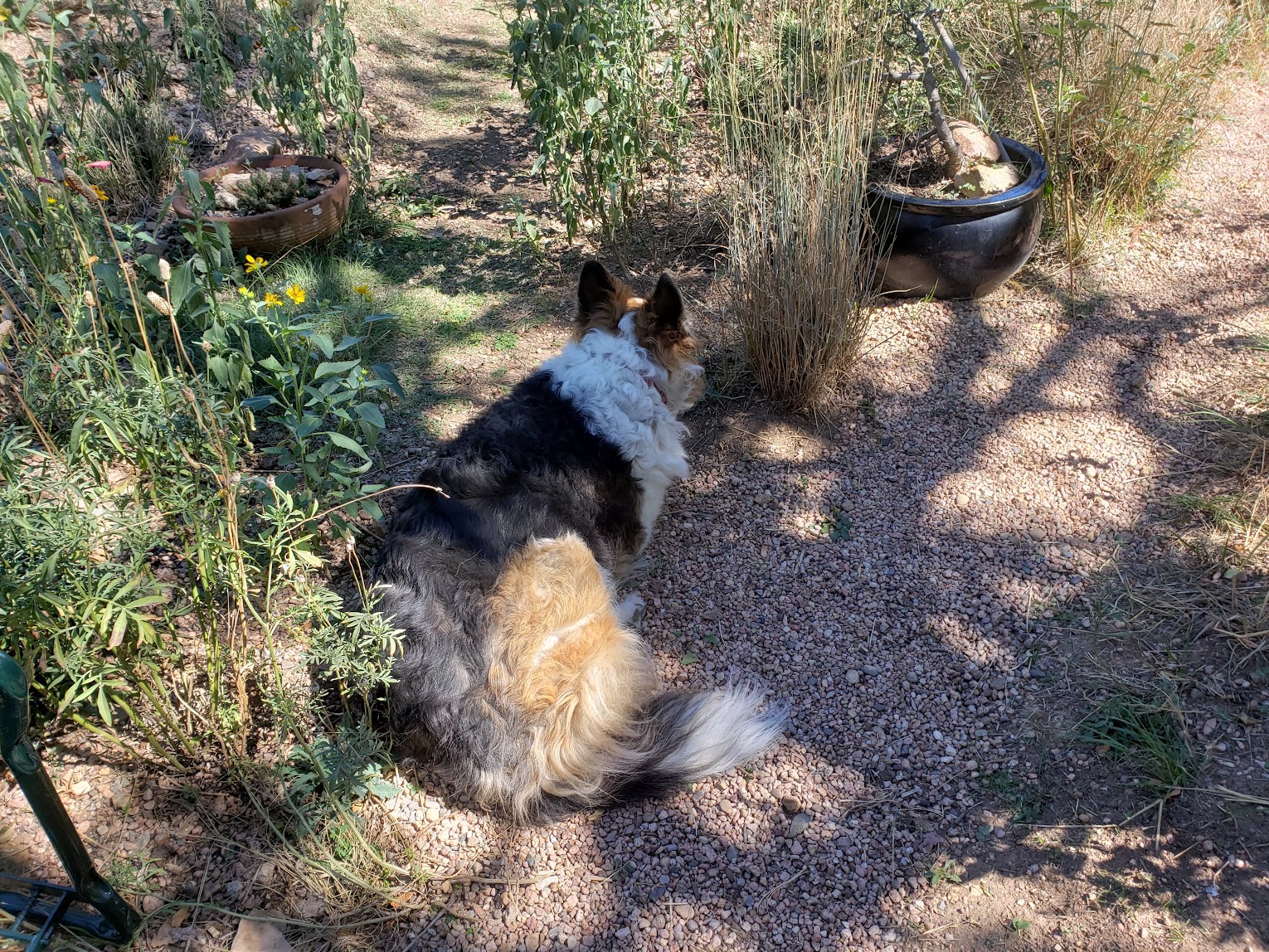 Sometimes it’s good to turn around to see what’s going on.
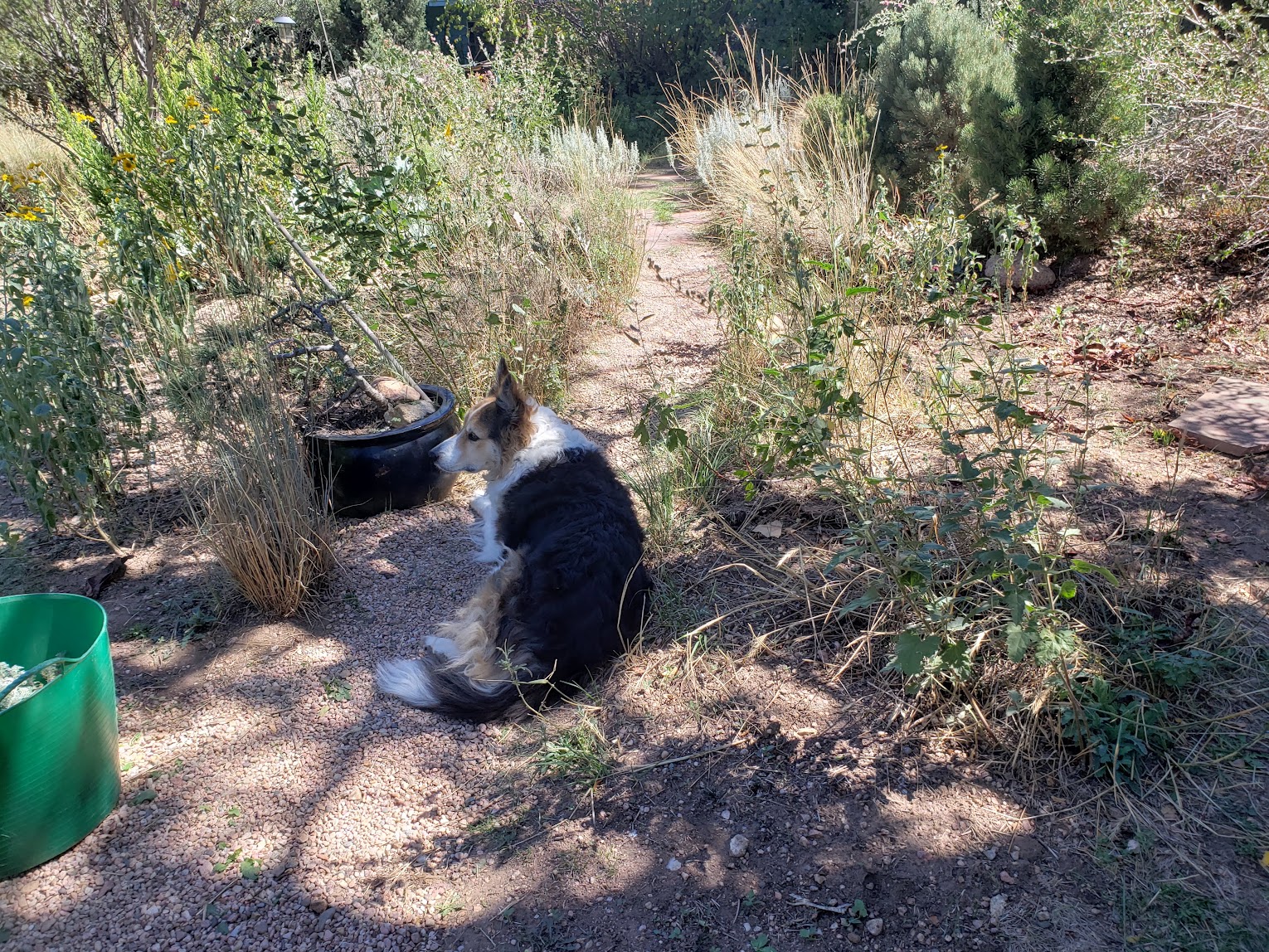 The guy I live with said that eventually I’ll see that there’s been a pattern to all this activity. “All will be revealed”, he said.
I can hardly wait.
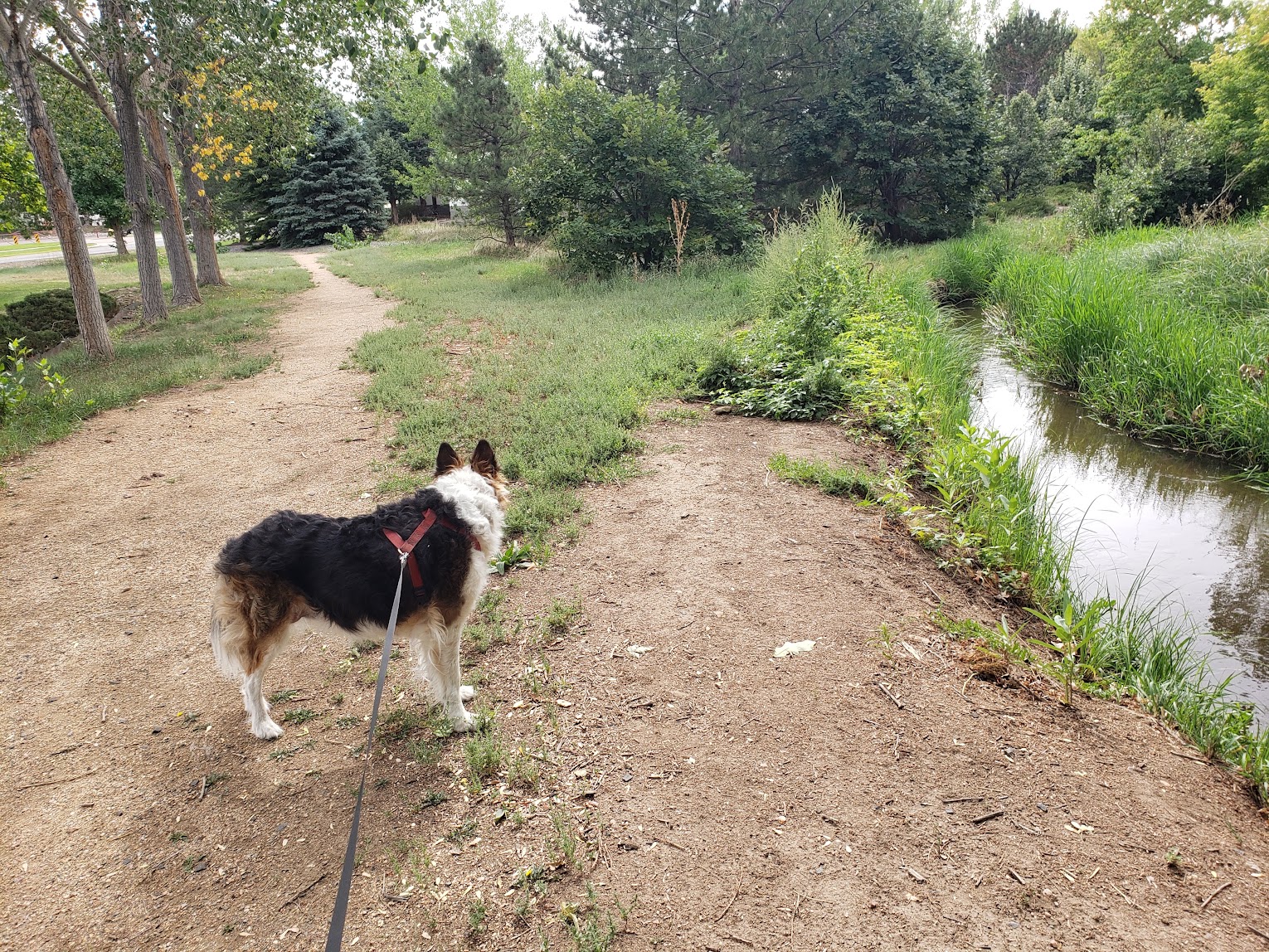
Until next time, then.