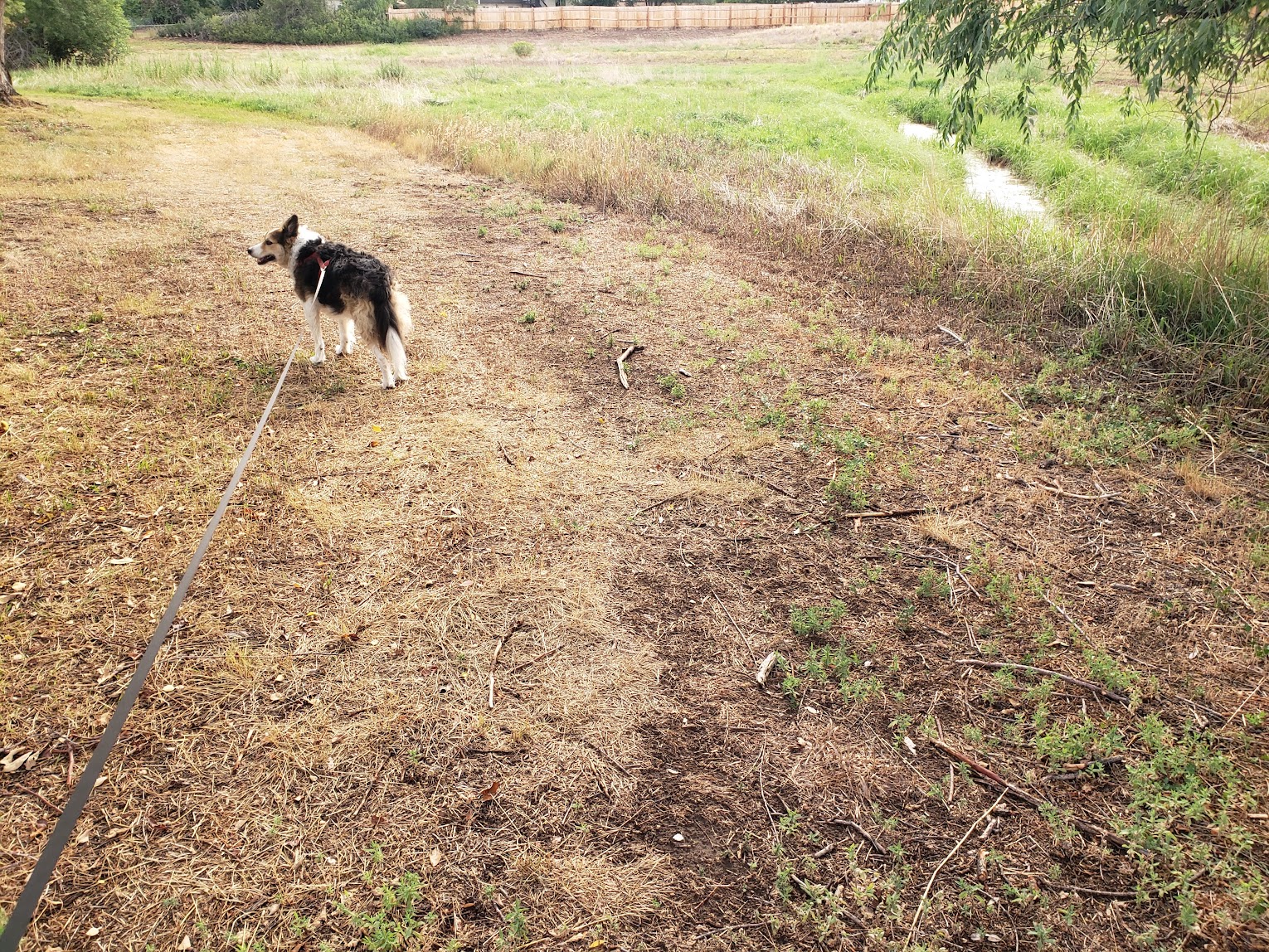
Greetings and salutations, everyone; yes, once again it is I, Mani the purebred border collie, filling in for the guy I live with, and here today to talk about something I don’t really understand, as well as some other things. You may remember me from such posts as “Another Weird Day”, among so many, many others.
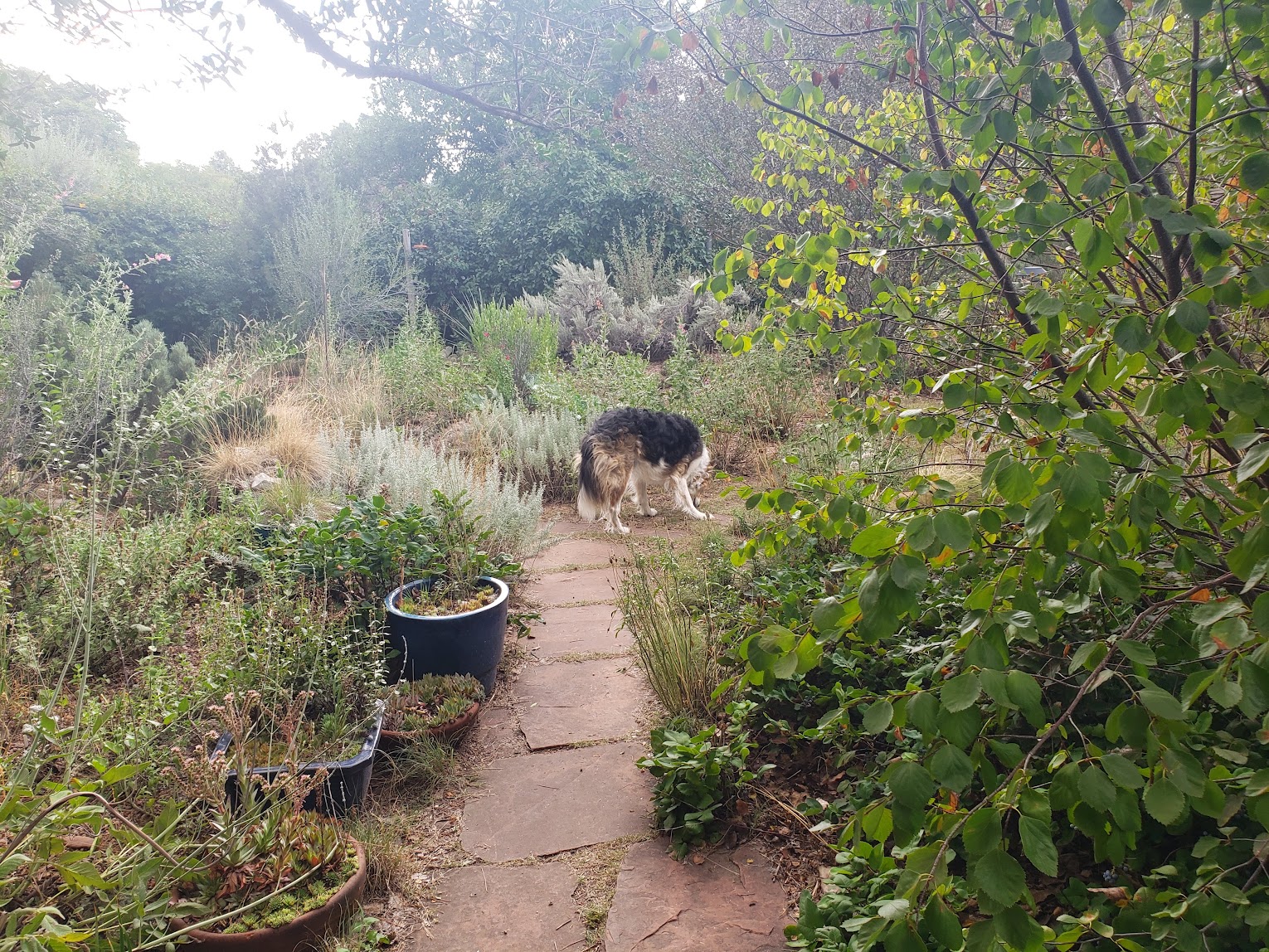
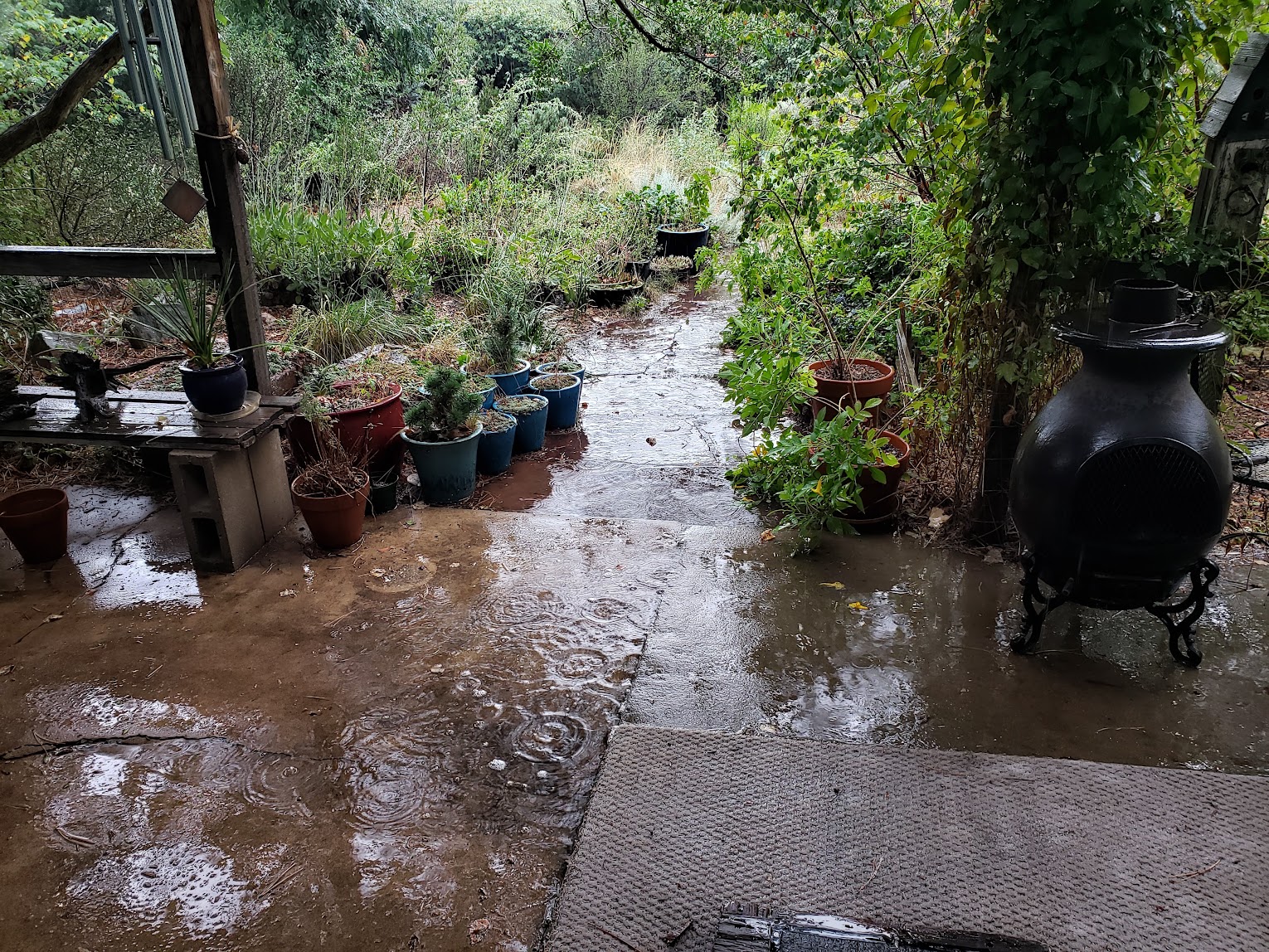
Here I am in a characteristic pose.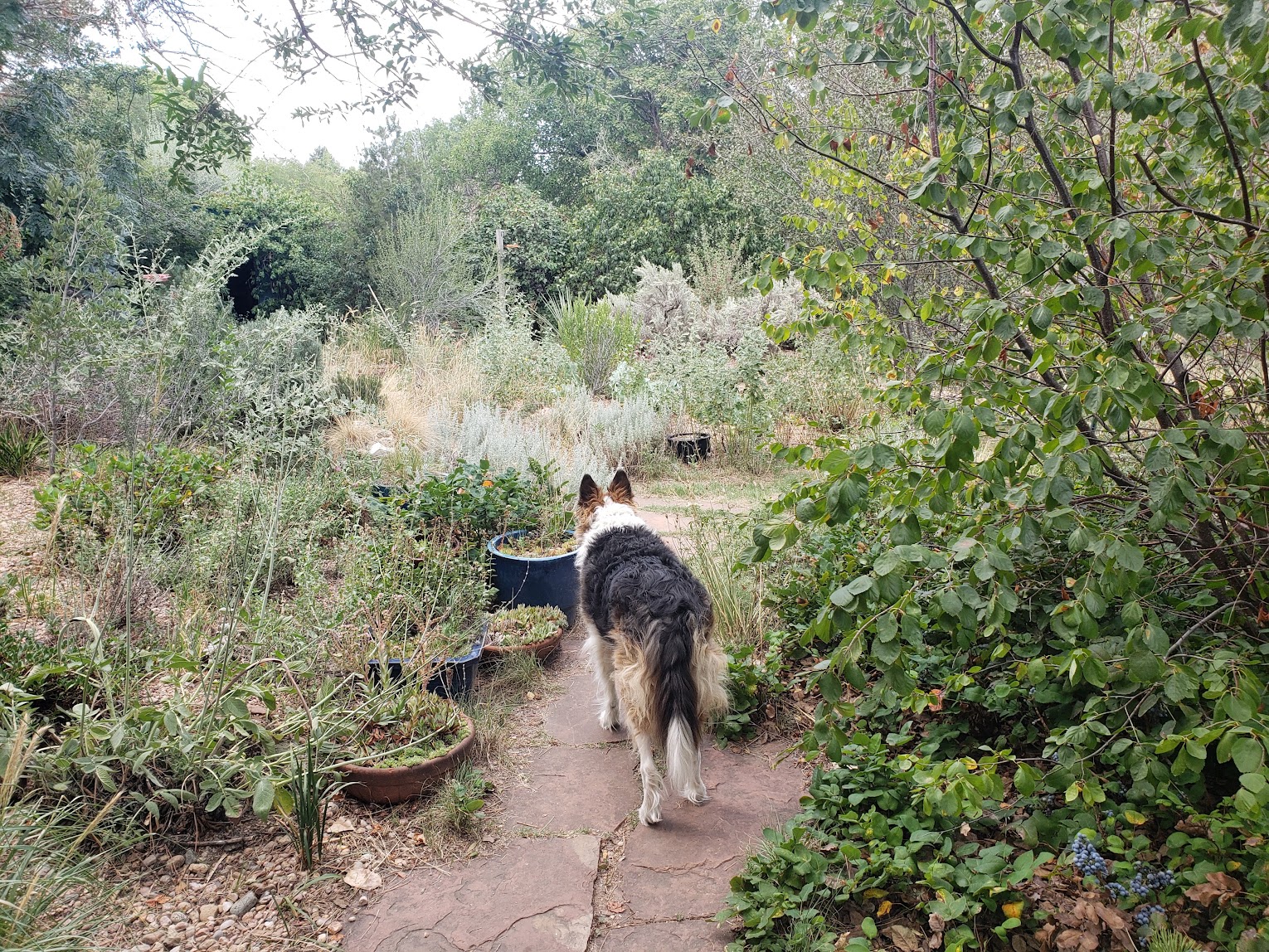 We’ve only gotten a teeny bit of rain every day, which is disappointing, but the guy I live with said “Whatever”.
There have been a number of crises here lately. The guy I live with decided not to focus so much on bulbs any more, and gave away a whole bunch of colchicums to the botanic gardens. He also decided not to use the DSLR cameras and the software that ties up our internet for hours, and plans to sell the cameras or trade them in for something.
The biggest crisis, though, had something to do with things like this:
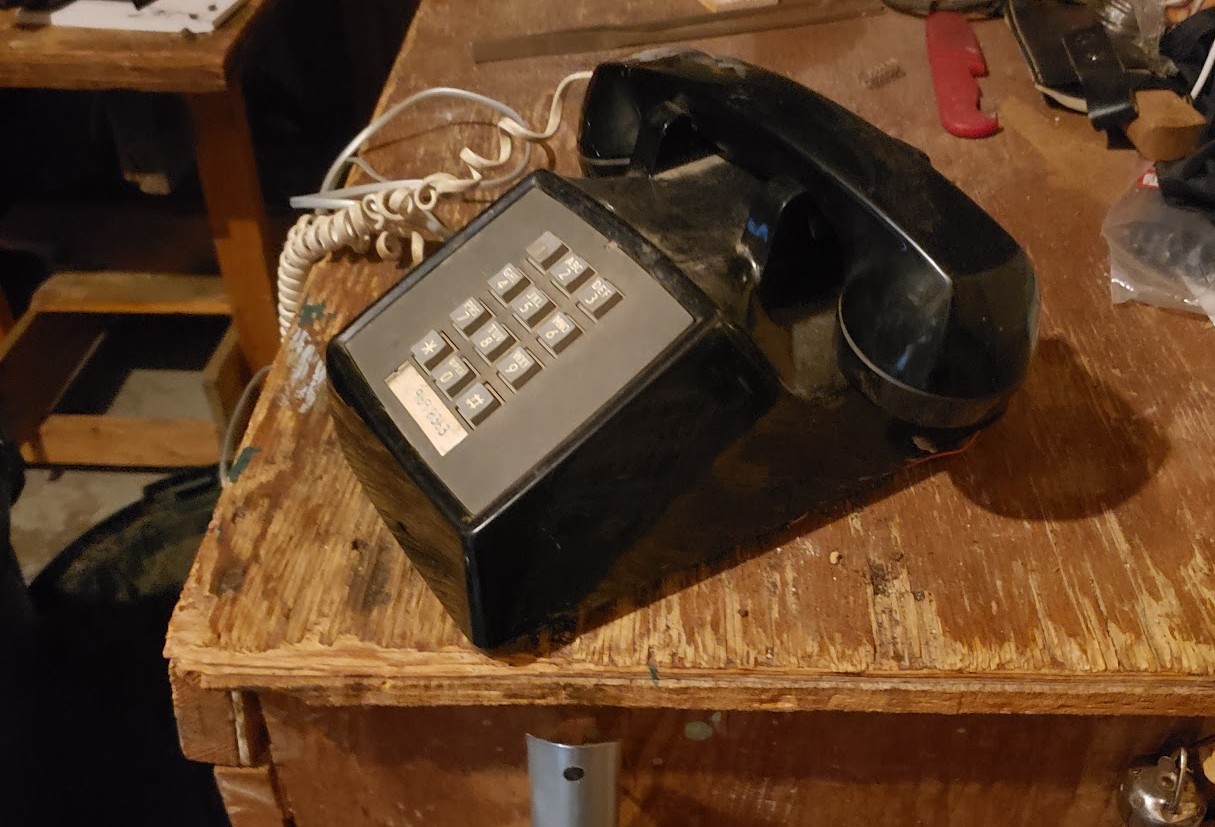 All I know is that this is a “Western Electric 2500 desk set”. The “handset cord” wore out so it was replaced with one of a different color.
I know the guy I live with would check this thing hanging on the wall, which he said was “a cheap, non-Western-Electric phone” for messages, even though there was rarely a message, and it was often for someone who doesn’t live here.
No one ever called him on that phone after his wife died.
He was notified that “plain old telephone service”, or “POTS” as they called it when he worked for the phone company, was going away. There was a choice between paying extra for a box, and keeping the phone number he’s had for forty years, or having the phone disconnected, which he decided to have done.
That was a big change, and a big deal for him, but he said that, like a lot of other things, it wouldn’t mean anything to anyone else. He met his wife working for the phone company. He would call her from work on that phone number. And now there’s no dial tone on that phone.
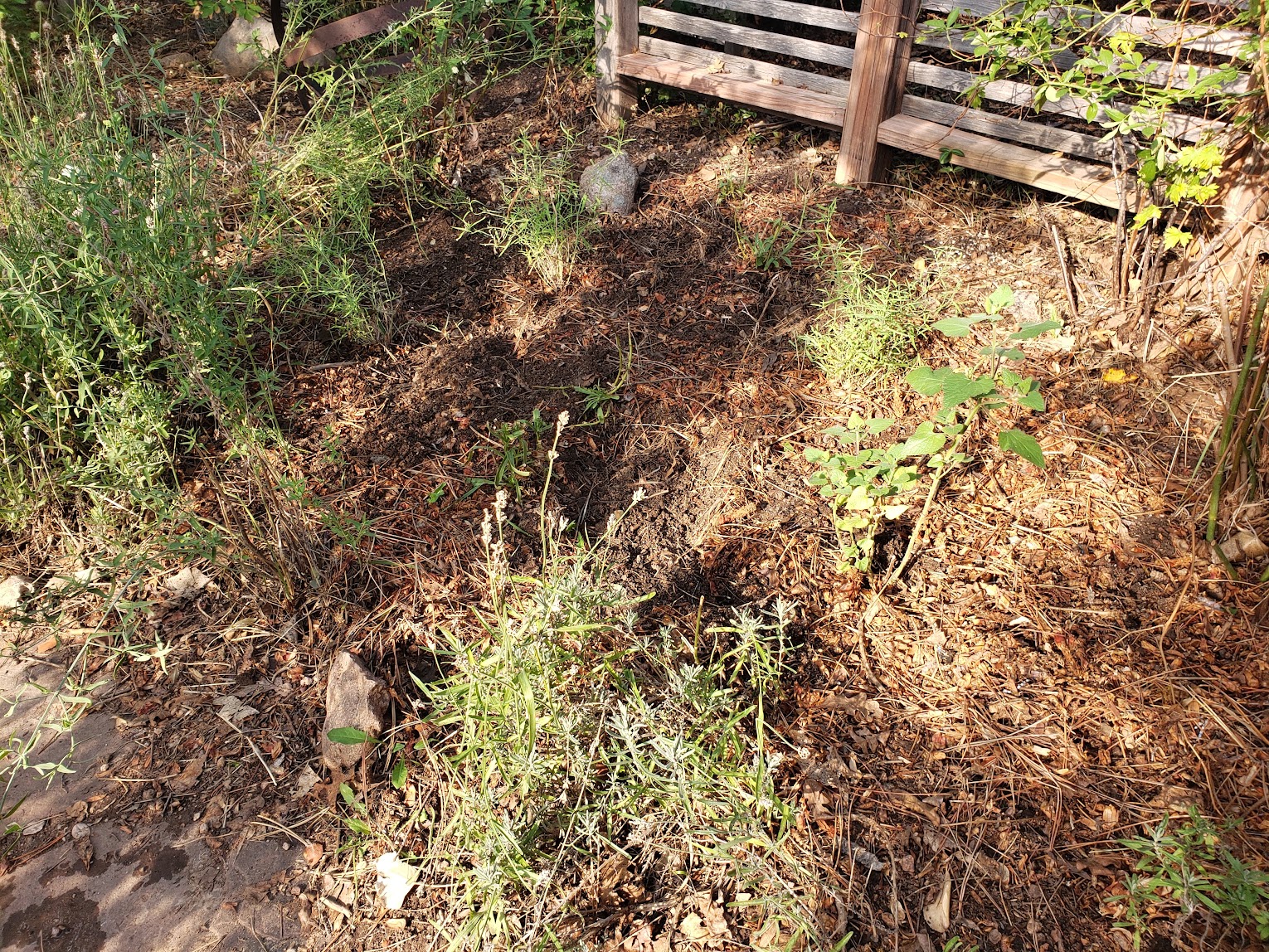
Even with all that, the guy I live with has been working in the garden.
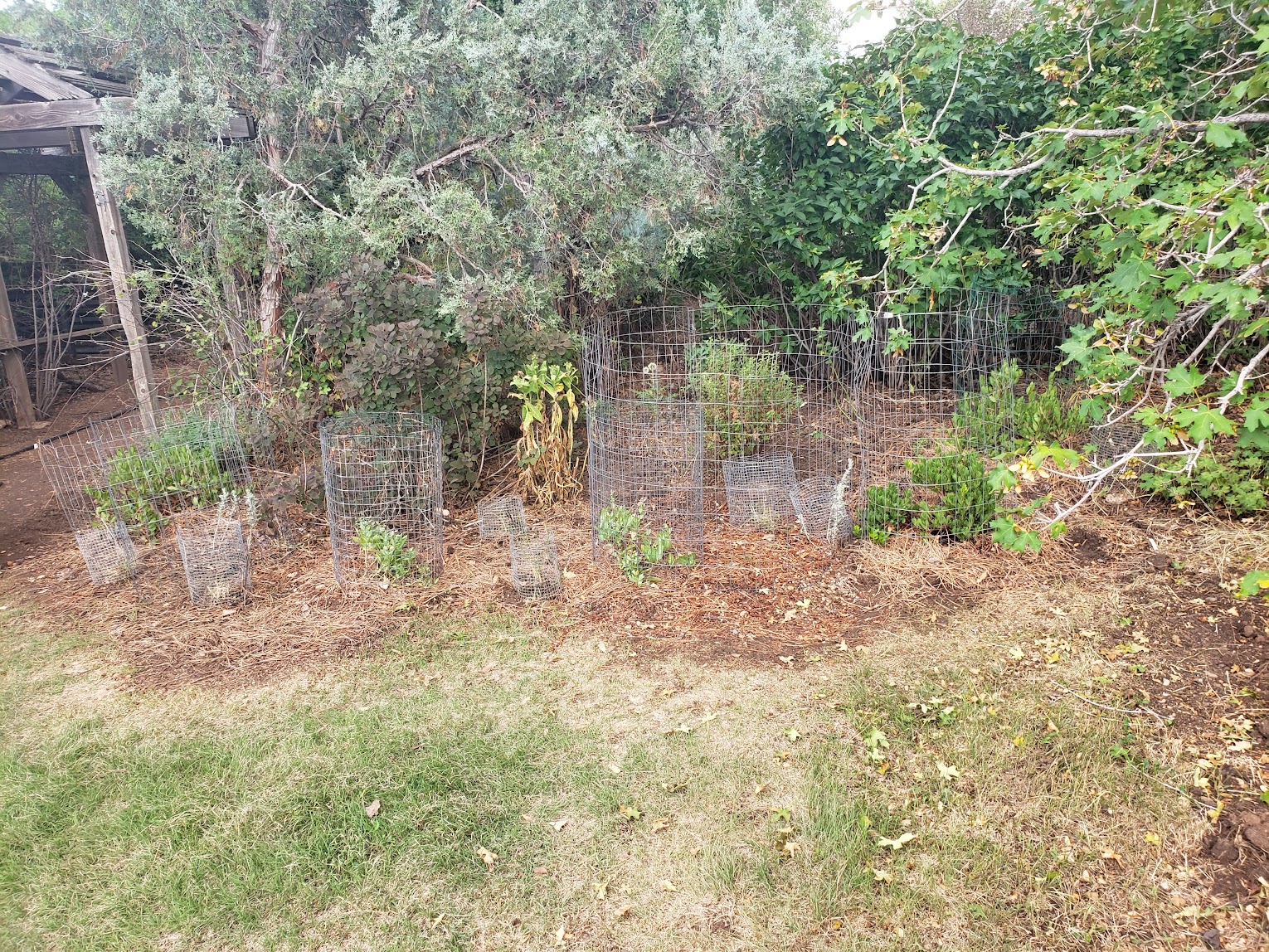
He took this picture of the enclosure a couple of mornings ago.
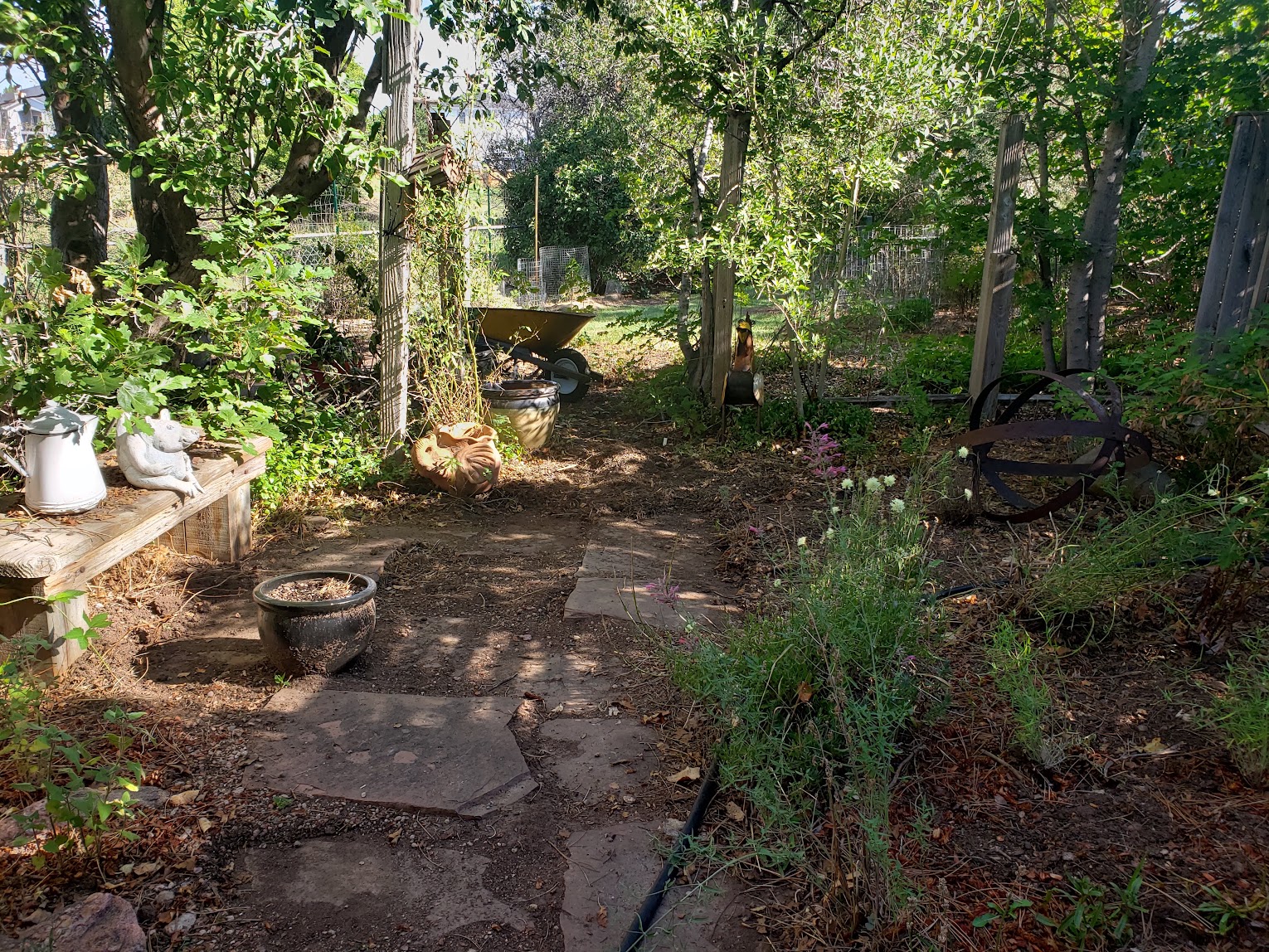 And my Private Lawn is looking pretty good, unlike most lawns around here.
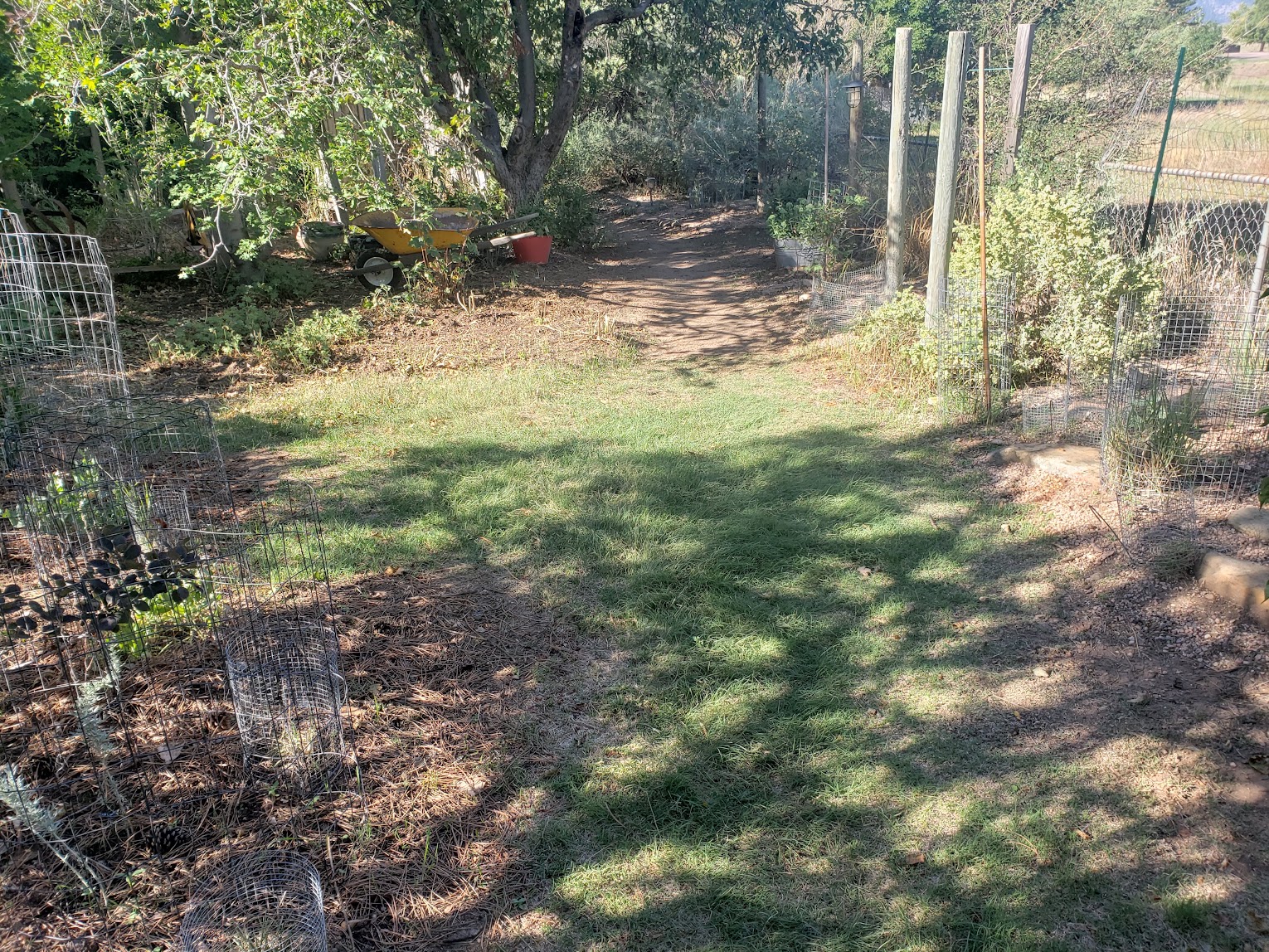 Another good rain would make the grass really green and lush. He said he might buy more buffalo grass seed next spring, even though it’s expensive, to fill in that triangular area at the end of the lawn, where the red bucket is, and maybe some of the path, too, though that will be difficult with both of us walking there all the time.
The guy I live with also said that they’re talking about banning lawn watering after October this year, but buffalo grass doesn’t need to be watered then, because it goes dormant.
The only other thing to talk about is that the rain we had a couple of weeks ago triggered Salvia greggii into flowering.
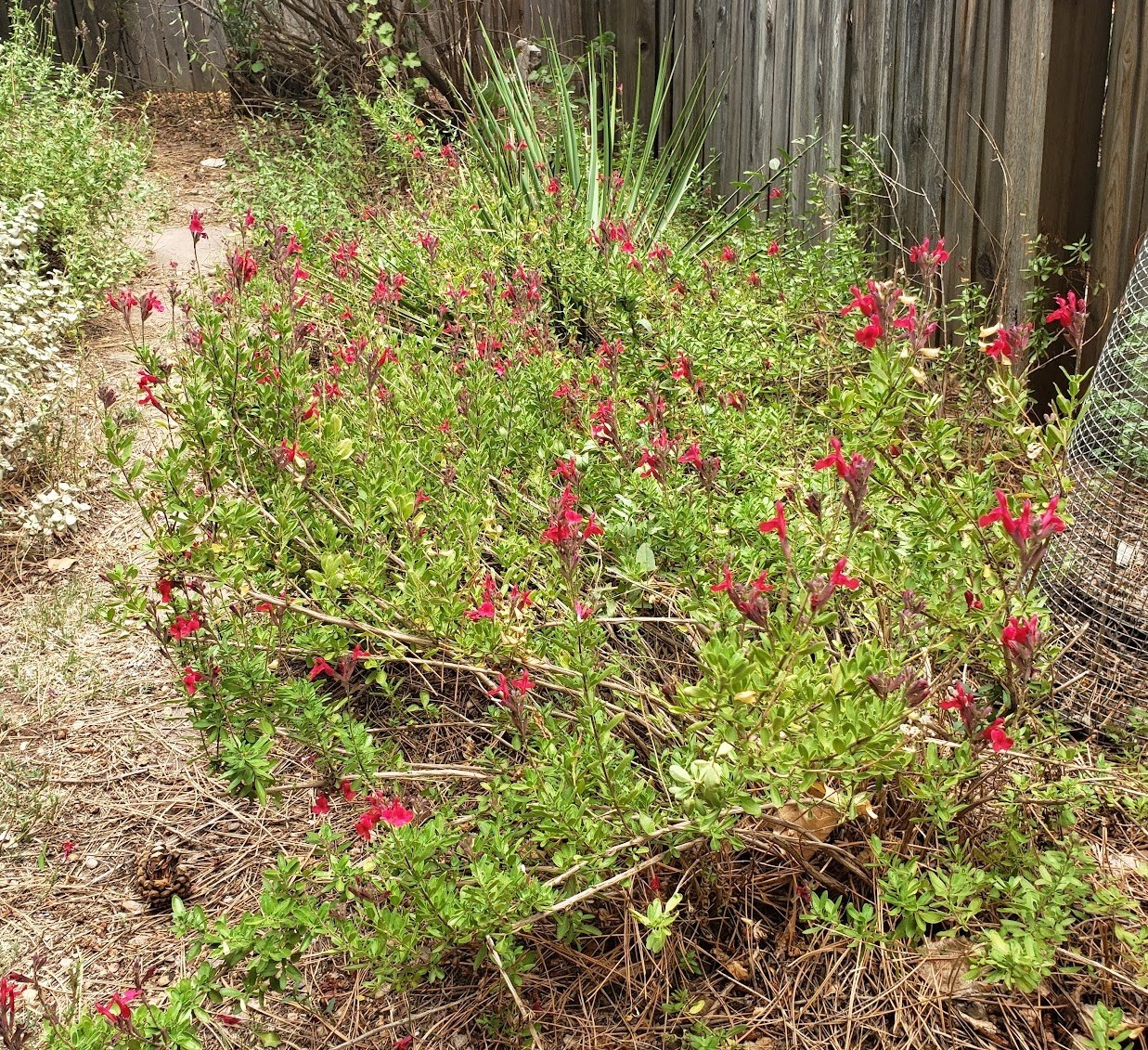 So the hummingbirds, after being more or less deprived of flowers all summer, now have something to check out.
That’s pretty much all for today.
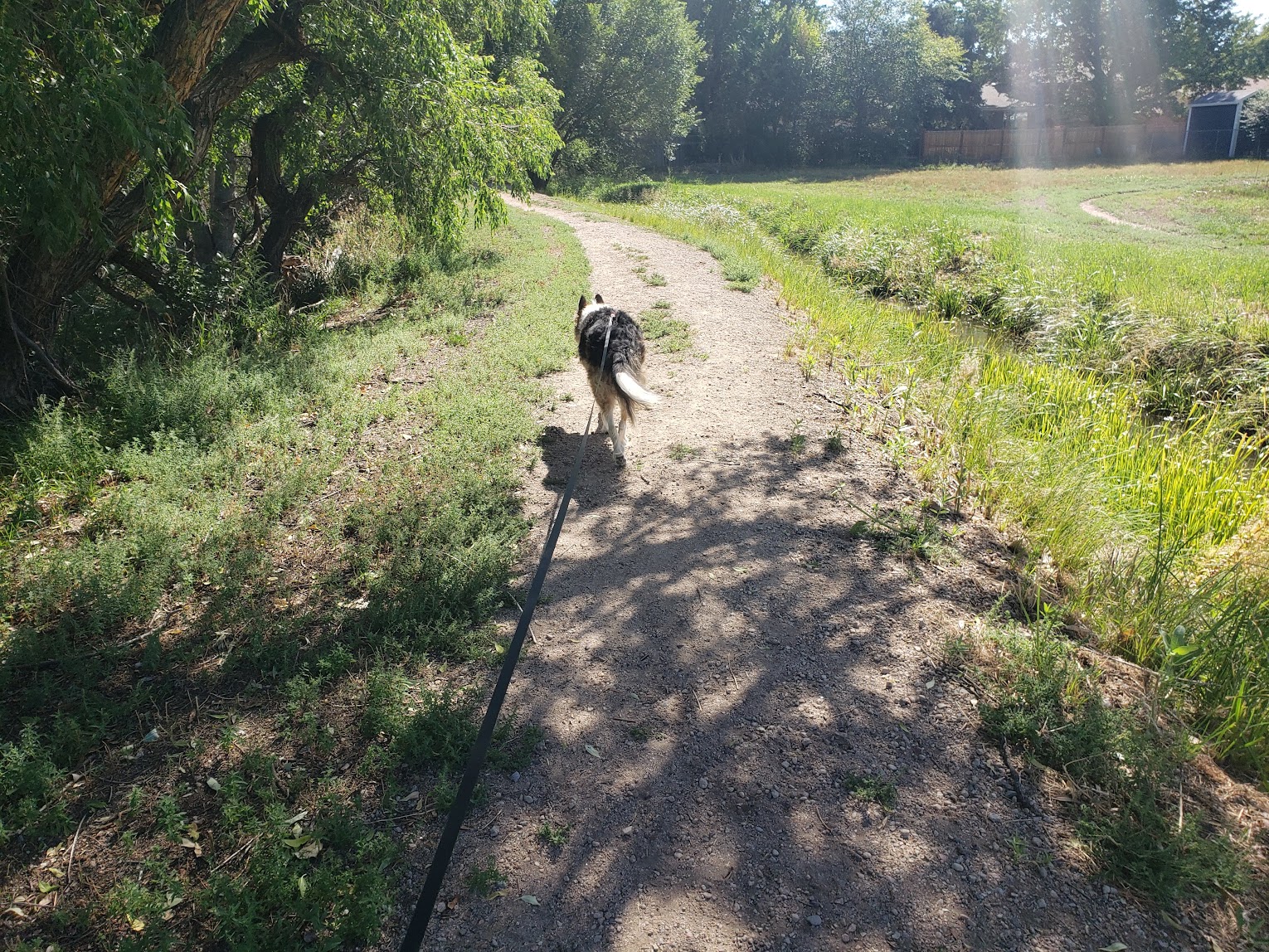
I’ll leave you with a picture of me, enjoying my morning walk.
Until next time, then.