
No longer an empty space. I decided to move the young Yucca faxoniana because there’s already one in the front yard, and two might seem like a Statement.
Note my complete lack of shame in taking pictures with the Coolpix in the blindingly bright Denver sun and posting them.
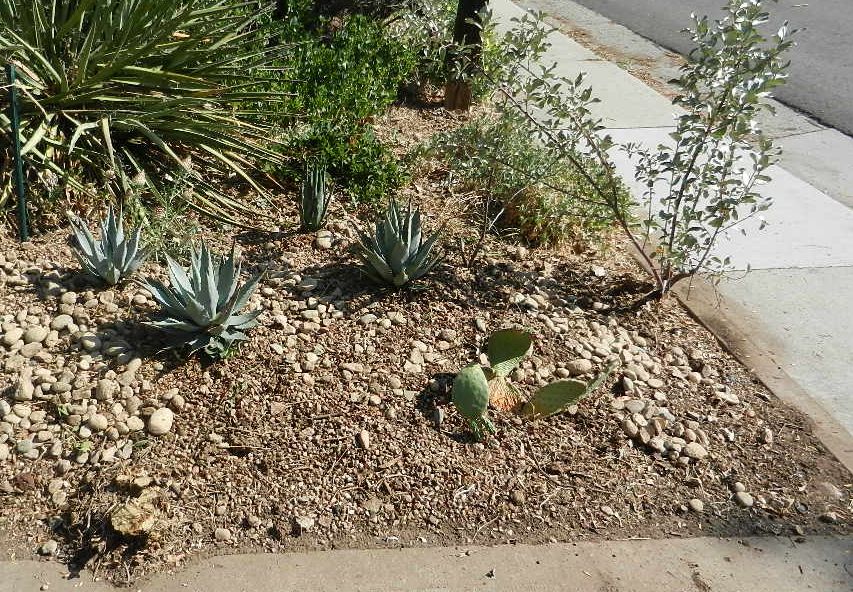
The formerly prostrate opuntia is now woozily adjusting to life as an upright plant, and I added an Agave palmeri in back, because, like any truly sophisticated gardener, I happened to have an extra one.
You may think I haven’t studied feng shui (you’d be right), and that four of something is wrong, since it’s supposed to be an odd number, which four is not. (That much I know.) But there is, in fact, a fifth agave, Agave parryi var. huachucensis, off to the left. (There were two more of these but they rotted after being smothered by rabbitbrush leaves in winter.)
The stump of the rabbitbrush is still there, of course. I must have my gardening staff dispose of it.
The choice of Agave parryi was easy. I already have a flock of A. havardiana
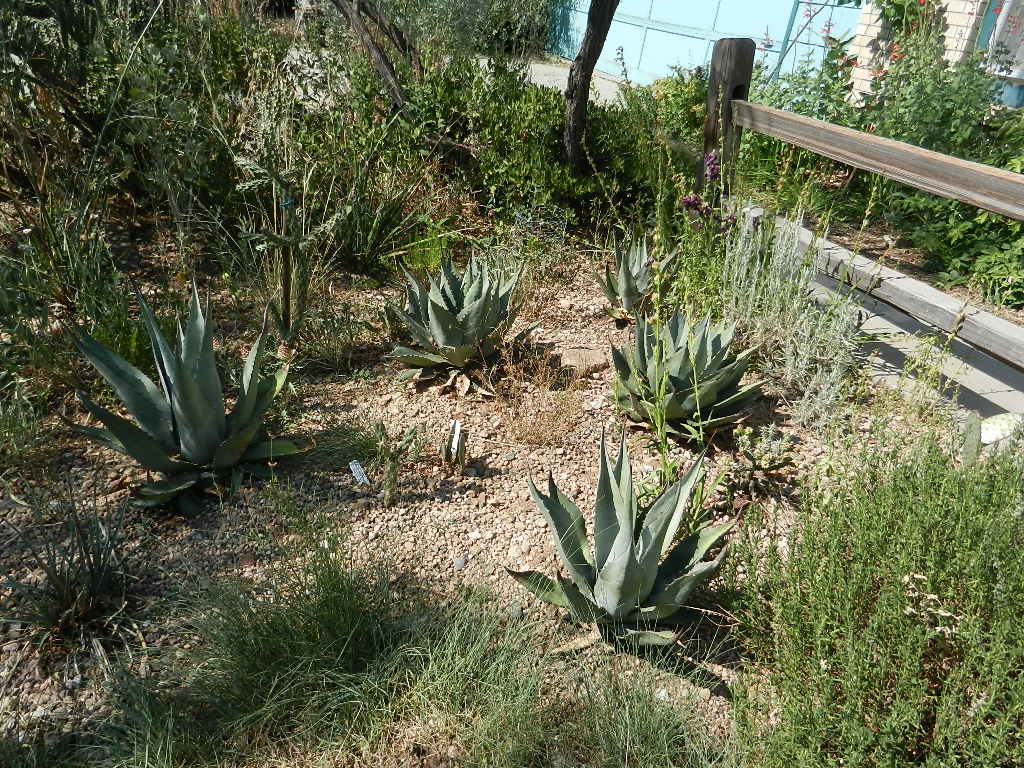
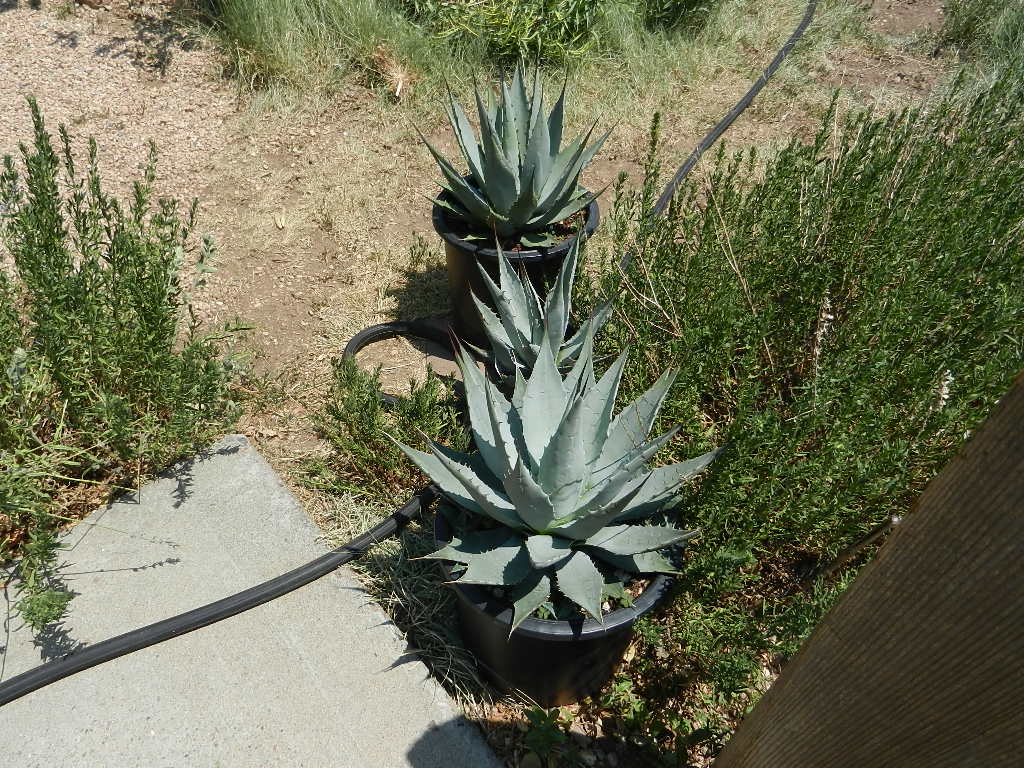
and, even though there are about forty plants of parryi in the back yard, pupping like crazy, I wanted the “Salman No. 2” especially, and they were on sale.
The most important factor in this decision (really an impulse, but “decision” makes it sound like thought went into this) is that this species will tolerate being covered with snow for weeks on end. Some won’t.
Since I have nothing to do in the winter except think about things, I wondered why certain agaves were cold hardy and others were not. The habitats of the hardy agaves are not especially cold, even by Denver standards (which is not as cold a place as people make it out to be, though it can certainly get cold, occasionally); the Agave havardianas come from the mountains of west Texas, which are not much higher than the nearby town of Alpine. The record cold temperature there is 17 above.
So I sent an email to Wendy Hodgson, the agave expert at Desert Botanical Garden in Phoenix, to see if she had any insight. Well, of course, people in Phoenix don’t concern themselves much with winter hardiness, but she did direct me to two books by Park Nobel, both of which I acquired, and sort of read.
The gist of it seems to be this. Agaves do not go fully dormant in winter. Cold hardening takes place within a few days of exposure to cold, but the roots are still capable of pulling moisture into the leaves. (In fully dormant plants, this doesn’t occur.)
Dry soil blocks the root hydraulic conductivity (Nobel’s term), preventing the solutes (the “antifreeze”) in the leaves from becoming diluted. If the roots are able to pull moisture into the plant, and subfreezing temperatures follow, the result is that the plant, to use a technical term, is mush.
The second critical factor is hardiness of the leaf cuticle. Some species are able to tolerate cold if they’re in bone dry soil, but the leaf cuticle is unable to repel this constant assault against it, with the result of yellow or white dry spots, usually at the tips of the leaves. Continual cover of wet snow, thawing during the day, freezing at night, will cause increasing spotting of the leaves, to the point where they eventually just dry up.
What all this means for a person like me, who needs more species of agaves and refuses to acknowledge that there’s no room for them in the garden, is that I have to design some sort of protective covering, a roof or cloche or something, to keep snow off the ones I would like to try. (Examples, Agave parrasana, A. montana, A. macroculmis.) Or just buy a snow thrower and then it’ll never snow again.
Anyway, that’s the story, briefly. I’m probably the only person in the world who cares. Typical.
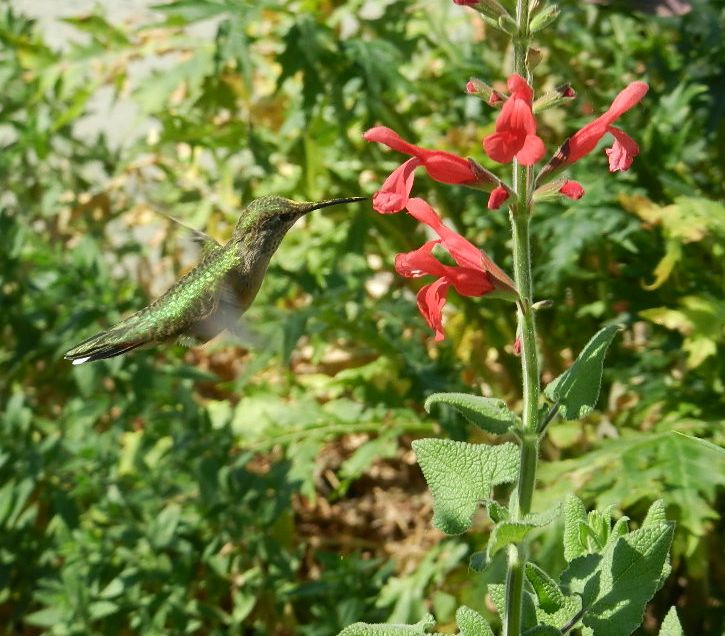
While I was taking pictures, I noticed a creature who cares nothing about agave hardiness, or anything else that humans worry about. I should take a cue from this.


 the miserable gardener