
Here is Kniphofia ‘DBG Early Gold’ in full flower in the little fenced garden my wife made for herself years ago. She was a “project” person, so almost nothing was ever finished, and after she died I looked at the empty east side of the garden and decided to plant it. The planting frightened me, because it was the area where she sat, so contentedly, and read; I removed all the plants and repotted them, waited for a few months, and then planted the garden again.
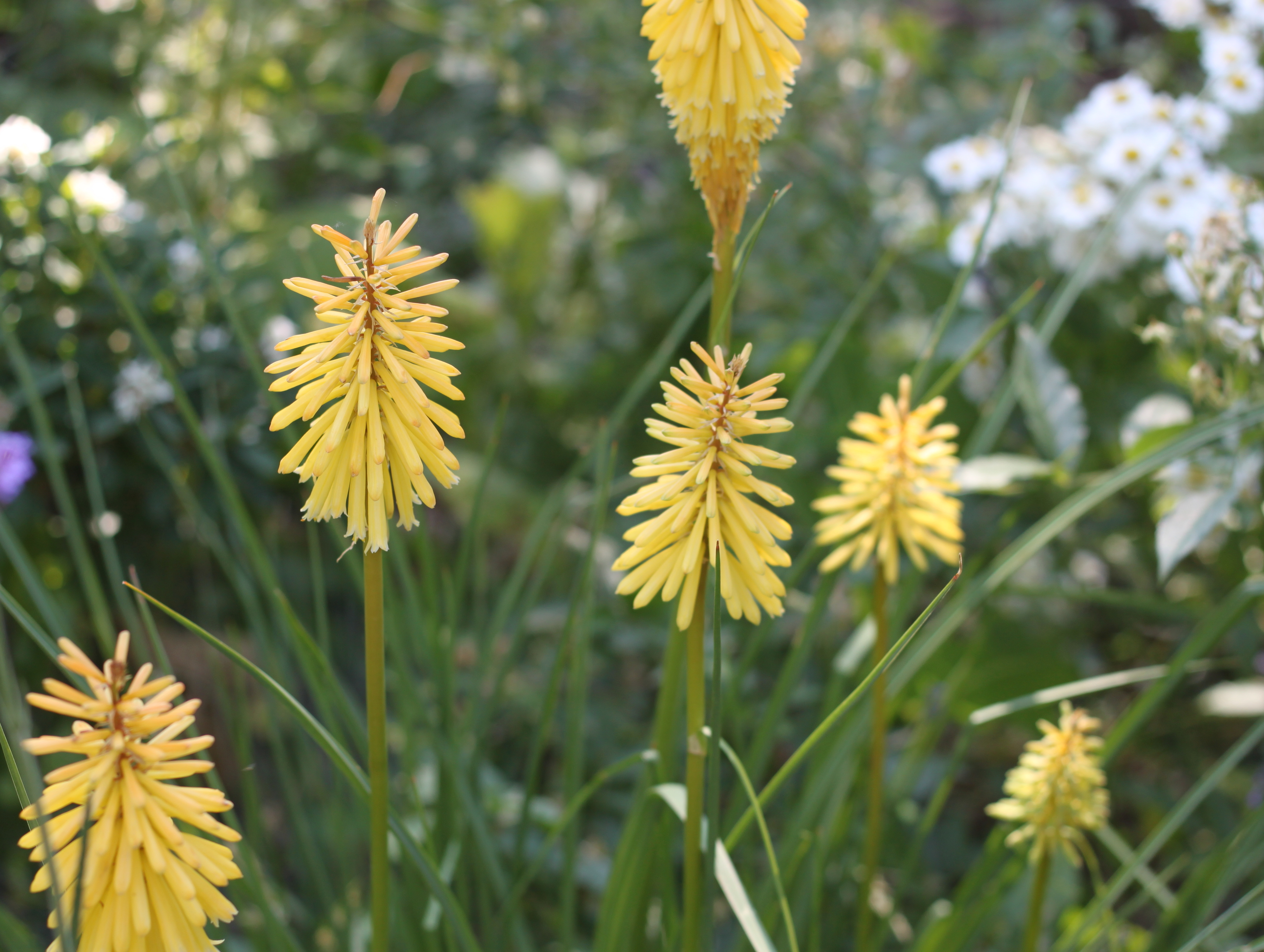
There are four ‘Darlow’s Enigma’ roses, some lavenders, sedums, etc., now enjoying more sun because I chopped out a mature Chinese lilac that shaded the garden, bloomed for a week, and the spent the rest of the growing season covered with powdery mildew.
I water the little garden about once a week with an old “frog eye” type sprinkler. In autumn, there are hundreds of Crocus speciosus.
I water because kniphofias like water in summer. They grow in the wild in wet places (check out the monograph on the genus, by L.E. Codd), and Graham Stuart Thomas says, in Perennial Garden Plants, that they “grow best in soil that does not dry out in summer”. In England, mind you. Here, they are considered “xeric”; I confess I have no idea what that means and not much interest in finding out. People who don’t indulge in this sort of horticultural magical thinking would understand immediately that plants that need moisture in wet climates can’t possibly need less moisture in our semi-arid one, but there’s as much point in arguing that as there is in arguing about which angels people really talk to.
Anyway, whatever, here are some pictures of other things in this little garden. It’s a pleasant place.
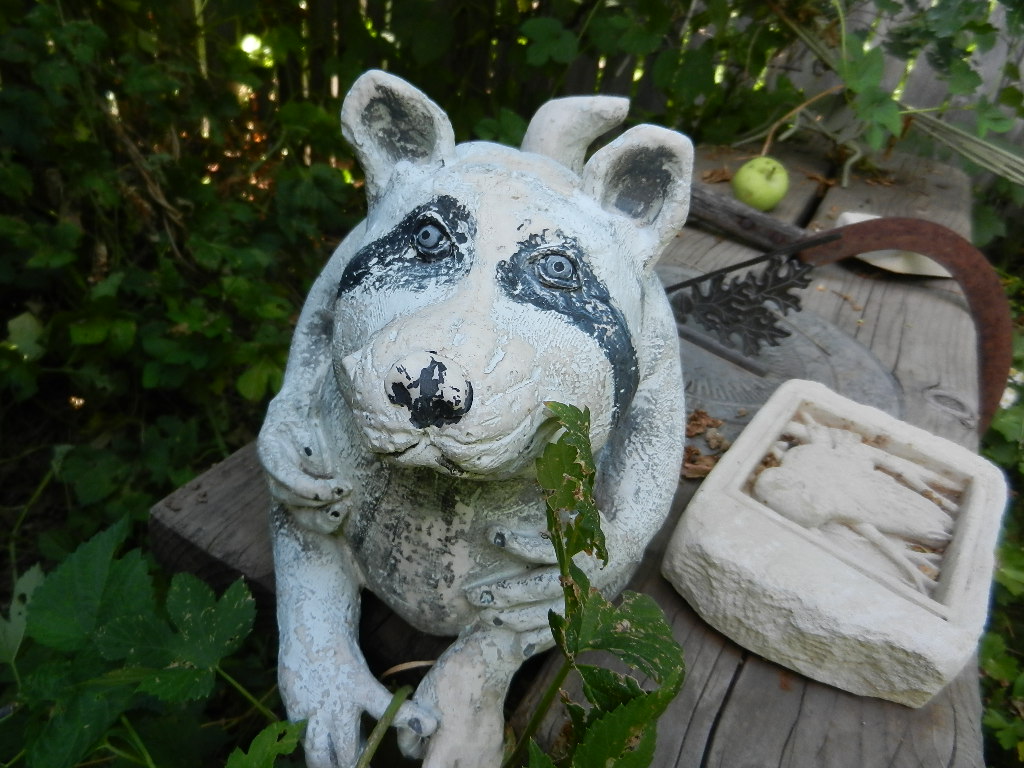
raccoon sitting on the bench she made
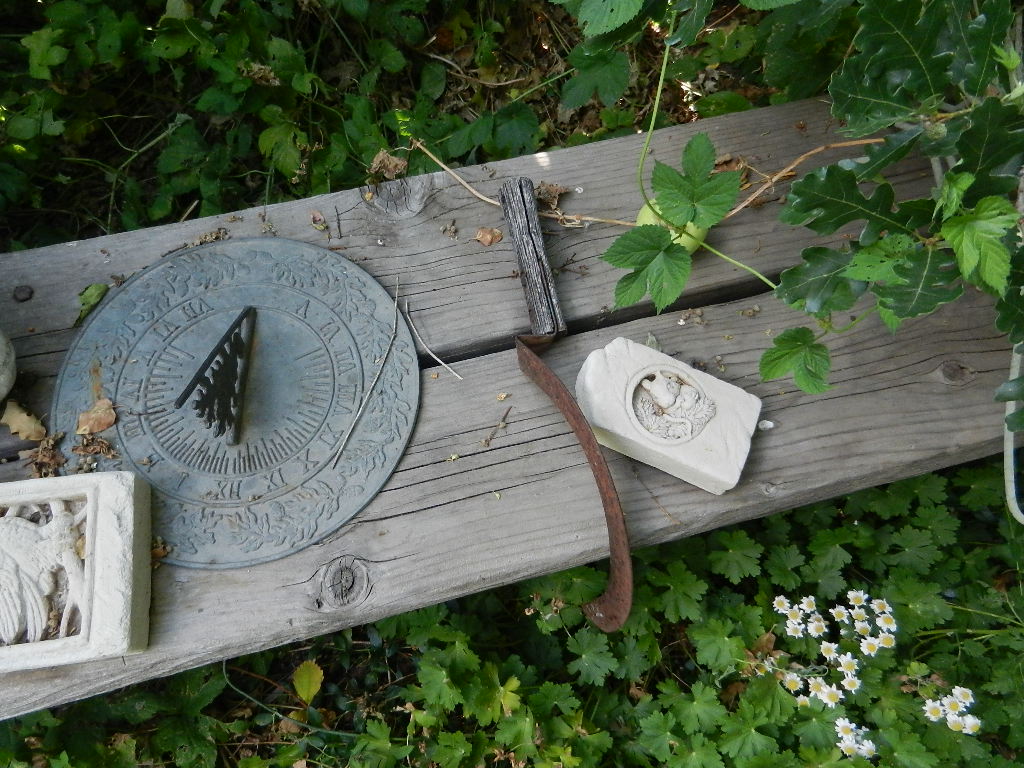
more stuff sitting on the bench; the sickle is about 80 years old
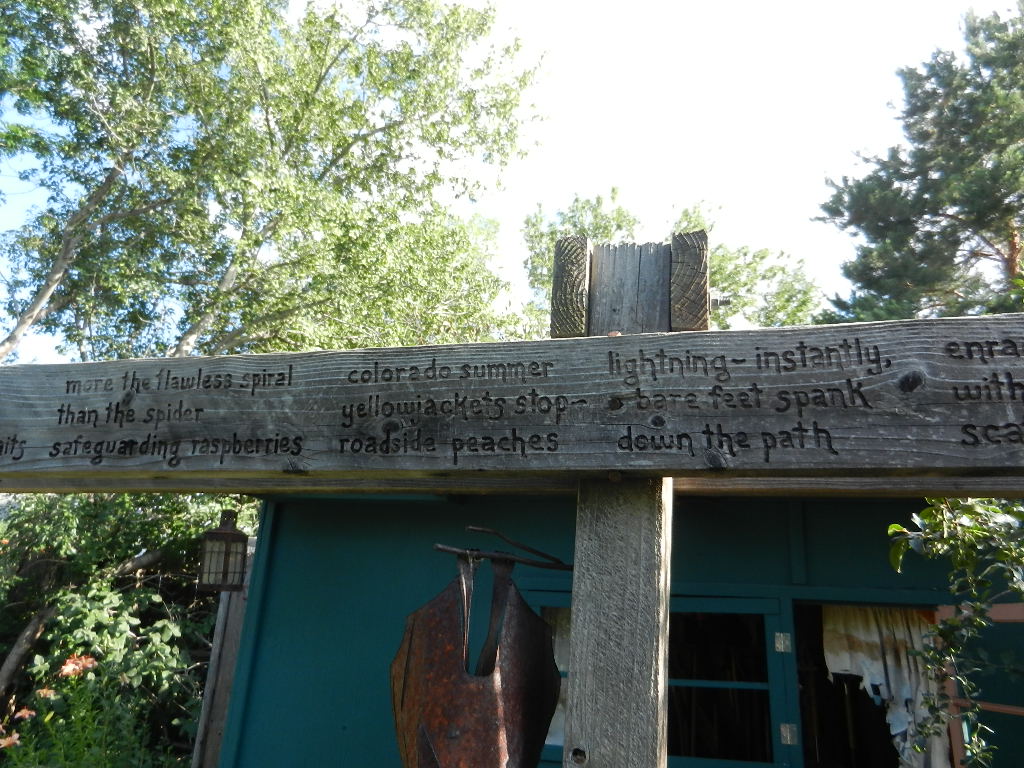
ad hoc haiku engraved with a Dremel tool
 the miserable gardener