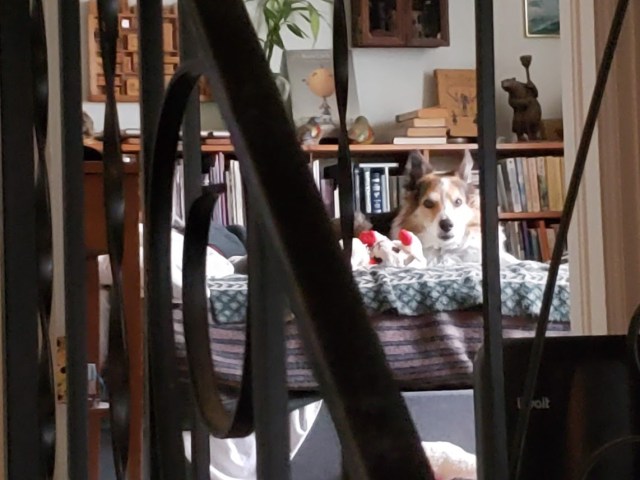
Greetings and salutations, everyone; yes, once again it is I, your popular host, Mani the purebred border collie, here today to bring you a post with the most unusual title ever, for Colorado anyway. You may remember me from such posts as “The Usual Stuff”, among so many, many others.
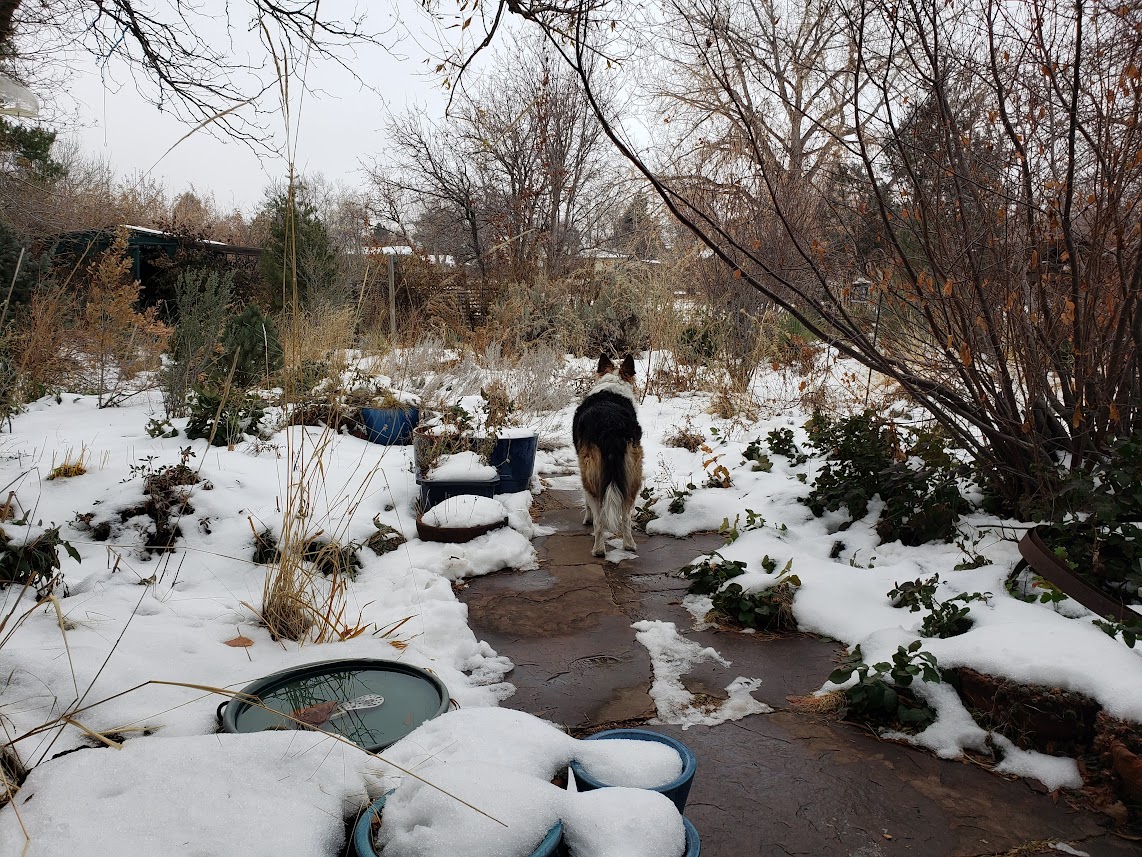
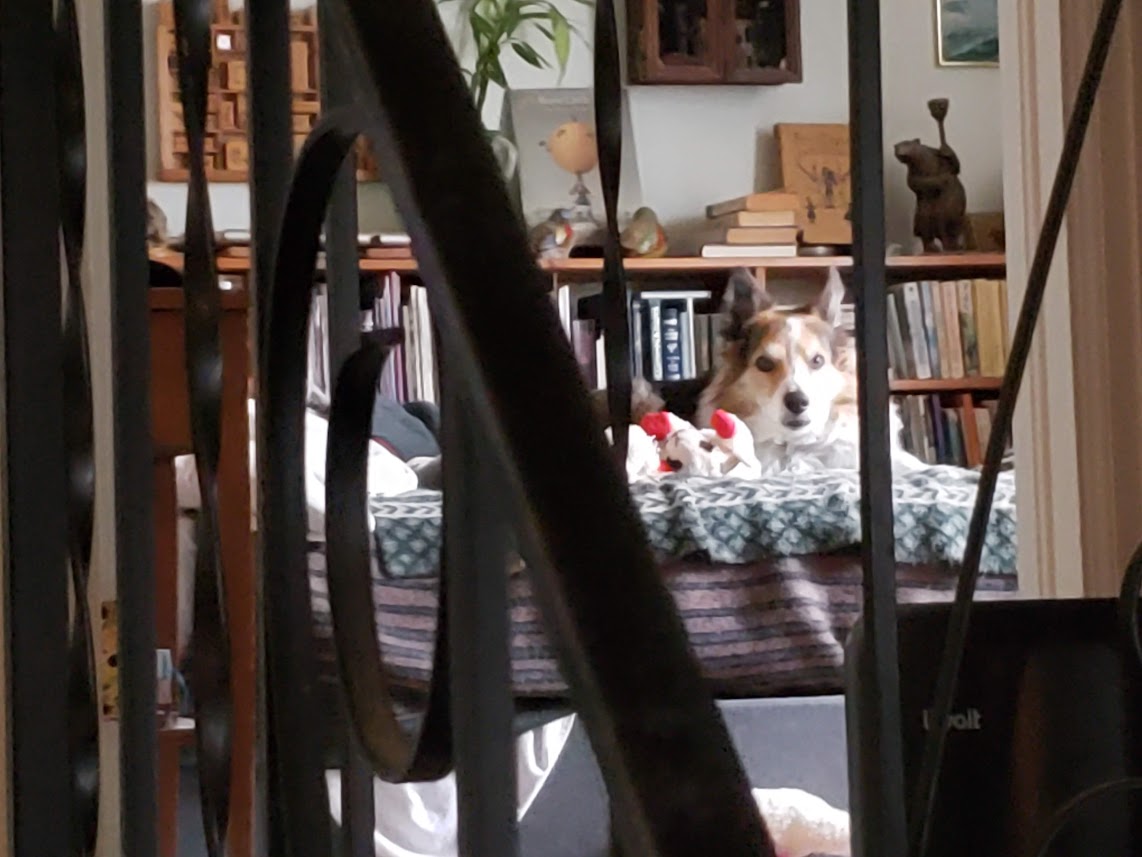
Here I am in a characteristic pose.  You may notice that you can’t see the foothills, or really much of anything else in the distance, because today has been quite foggy. We almost never have fog here, though the guy I live with says that fog used to be a lot more common here, especially in the wintertime.
The temperature is right at freezing, but the humidity is very high, so this is really different for us.
I like this kind of weather.
I thought I might show some pictures of shrubs and conifers, since these don’t always photograph well in our intense sunlight. I know I’ve shown some of these before.
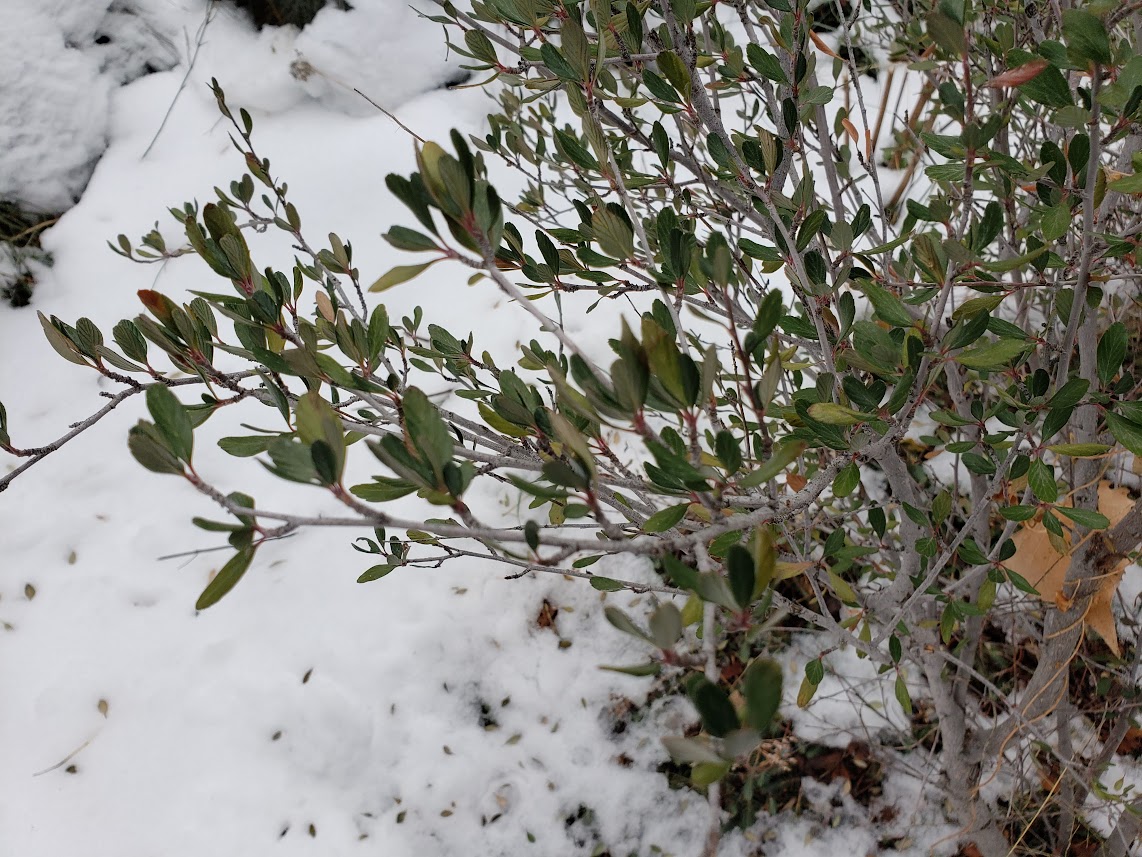
This one didn’t photograph well even today, but it’s an evergreen version of the usually deciduous Cercocarpus montanus, a common shrub in the foothills here.
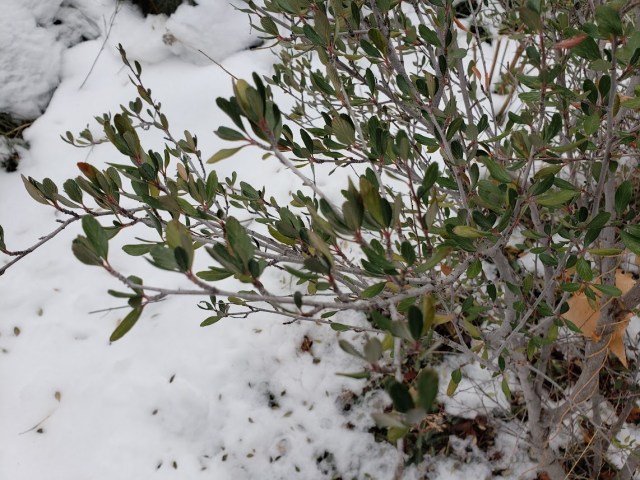
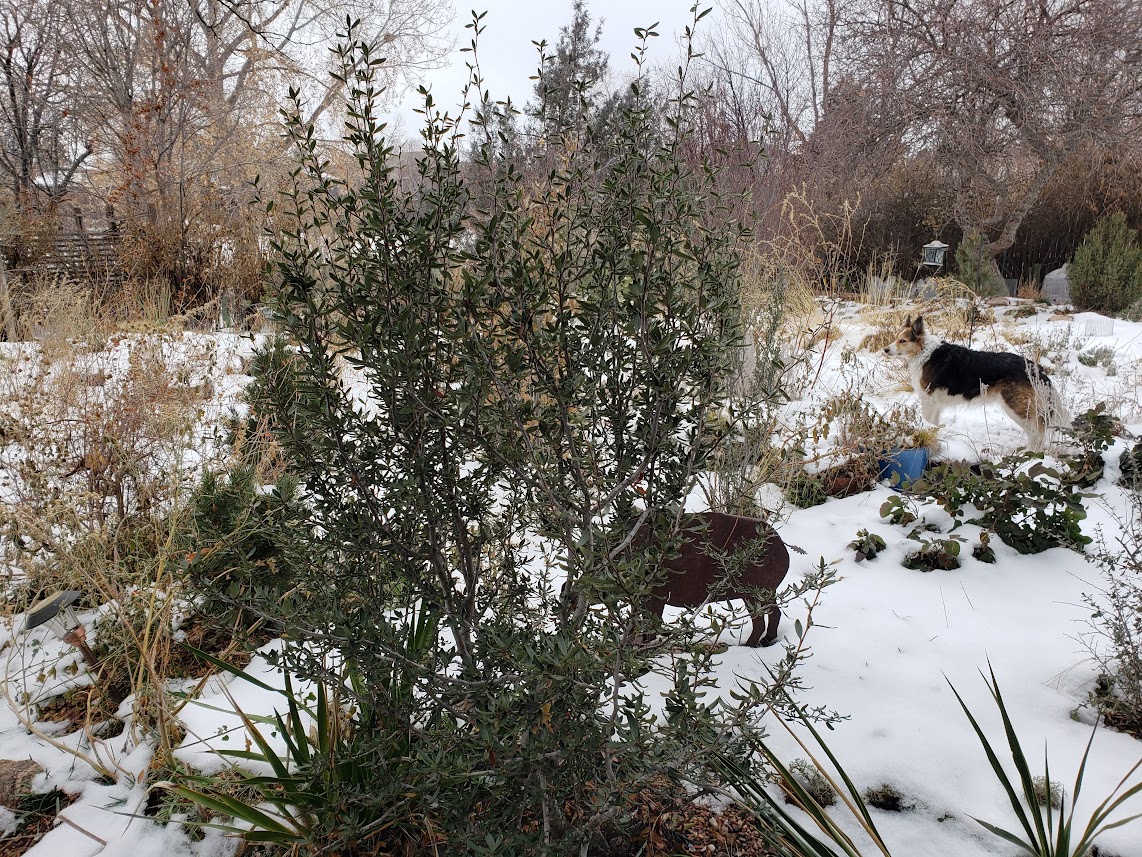
This is a fastigiate form of Cercocarpus ledifolius, which the late Jerry Morris gave to the guy I live with. Unlike me, this is very difficult to photograph. There are gigantic shrubs of this in the front garden. 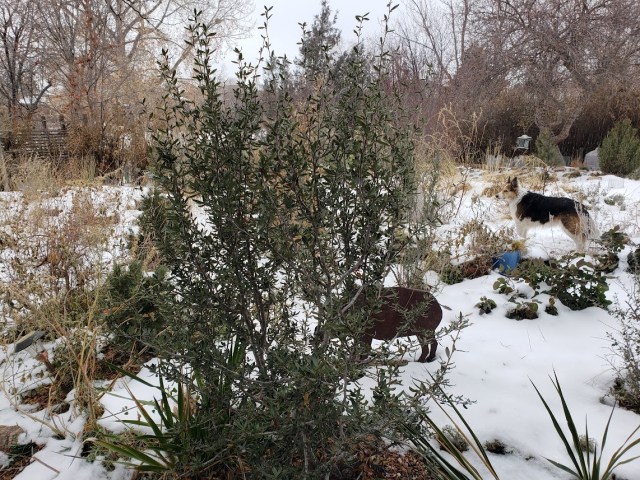 This is another Cercocarpus ledifolius which was given to him by a friend. It’s been plunged, as they say in the U.K., into the soil for the winter.
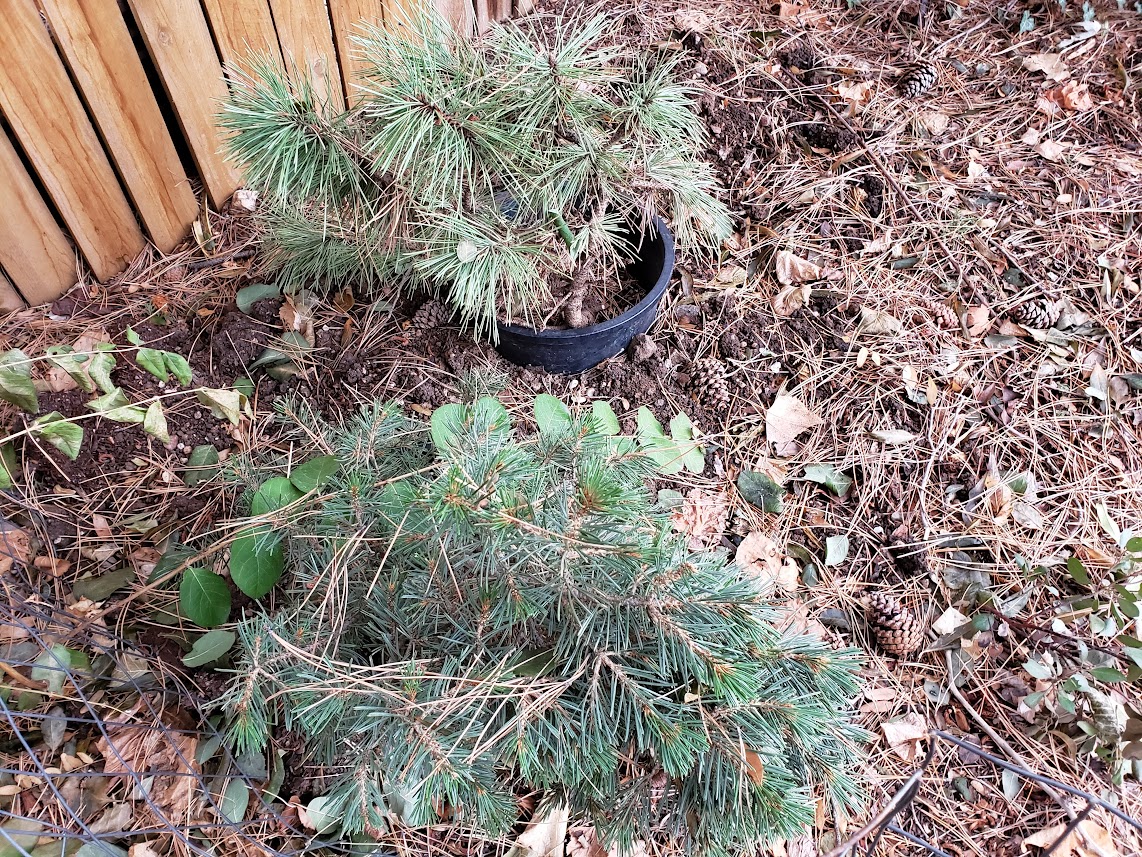
 I’ve shown these two dwarf conifers before; they were plunged into the soil after being dug up this past spring, repotted into his “special mix” (just a bunch of soil-less mix saved from troughs).
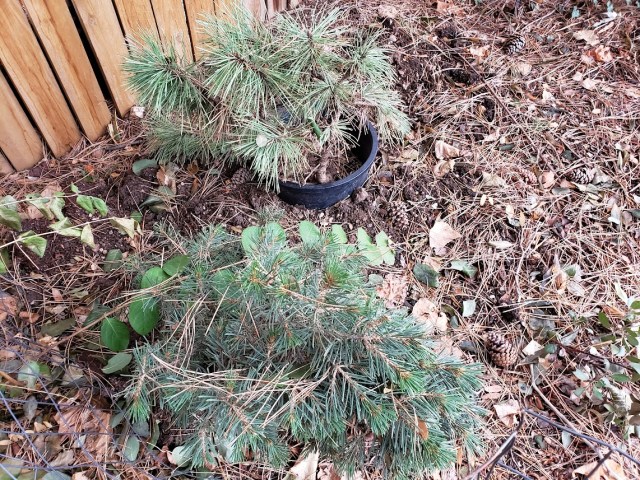 The guy I live with says this is a lot safer method of transplanting evergreen plants, instead of just digging them up and planting them somewhere else. The plants get almost a whole year of being watered and pampered, in partial shade, and then next year they’ll be hardened off to the sun maybe in May.
One of his late gardening friends, Allan Taylor, told him how to do this.The guy I live with said sometimes the “old ways” are the best.
This is Quercus grisea, a gift from Allan. It’s evergreen, but not totally, here, if we get a really cold spell.
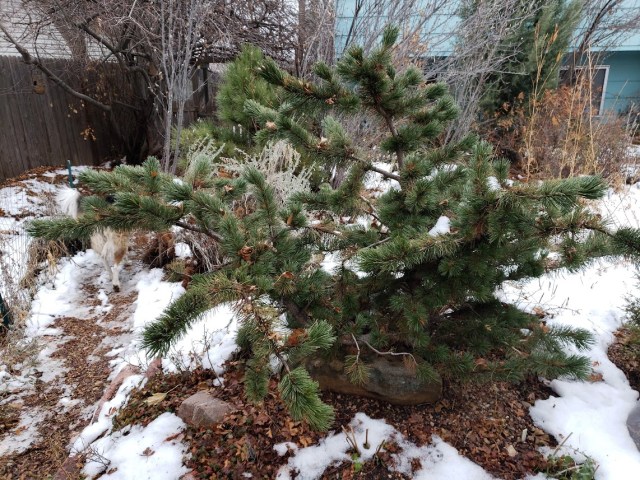
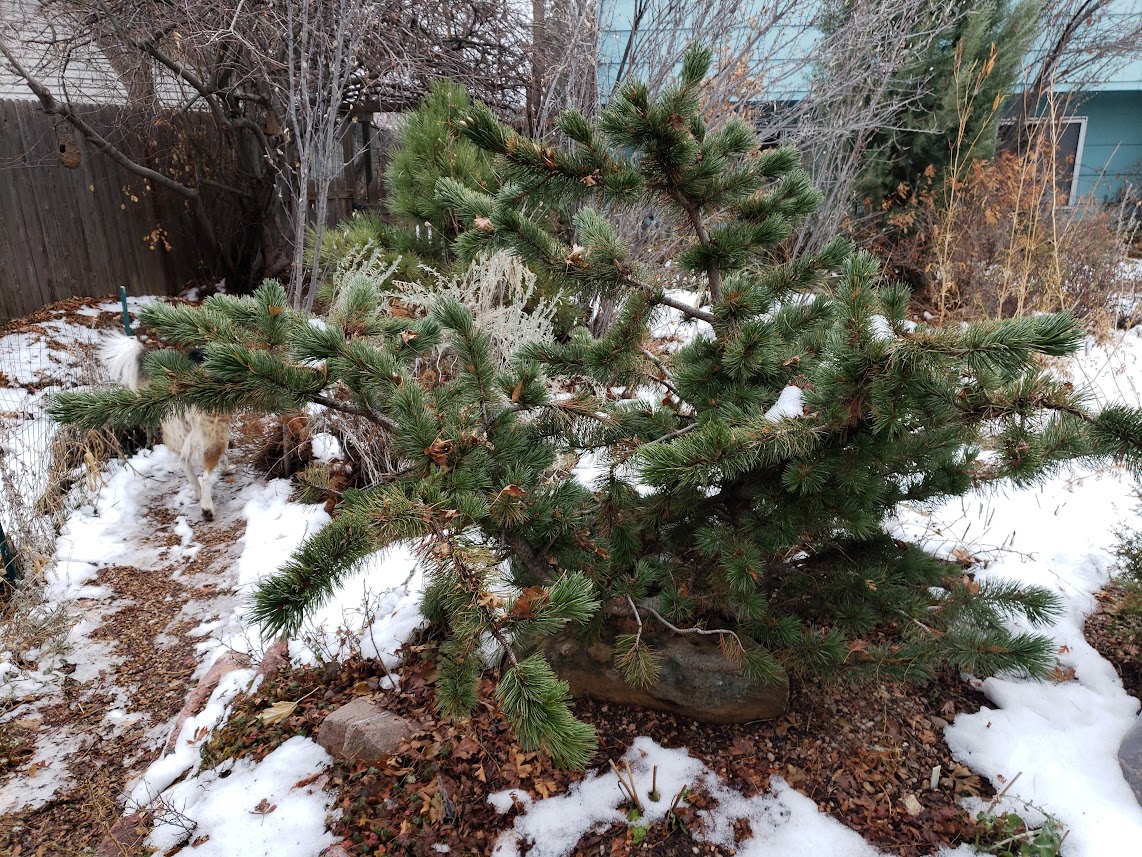
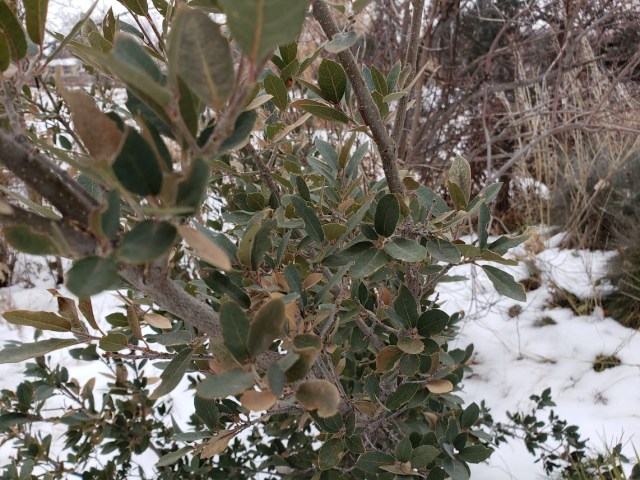 This is the dwarf Pinus aristata he got from Jerry Morris. It’s been growing kind of this way and that, so has been pruned.
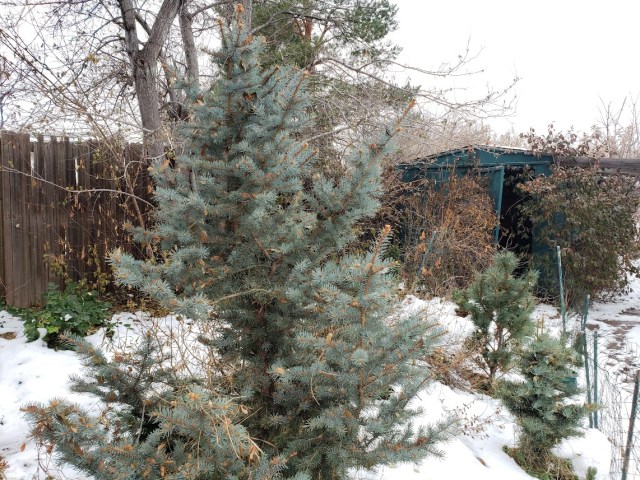
 And this, also from Jerry, is Picea pungens ‘Blue Beaut’. That’s right, Beaut’, as in “That’s a beaut'”.
This is the first time the guy I live with has gotten a halfway decent picture of this spruce. It’s very blue. He doesn’t know how large it’s going to be.
 So that was those things. (I hope you enjoy my elegant use of language here.)
Believe it or not, we have an Irish yew (Taxus baccata ‘Fastigiata’). It started out growing really slowly ten or so years ago but now it’s been growing faster.
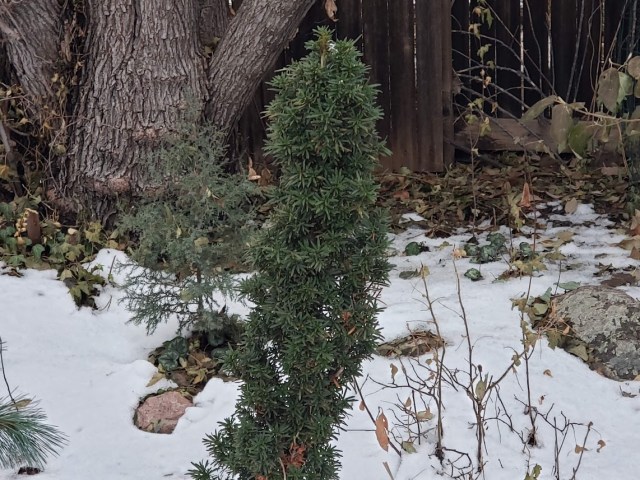 When the guy I live with looked at this picture he didn’t know what the conifer behind it was. Probably a seedling juniper.
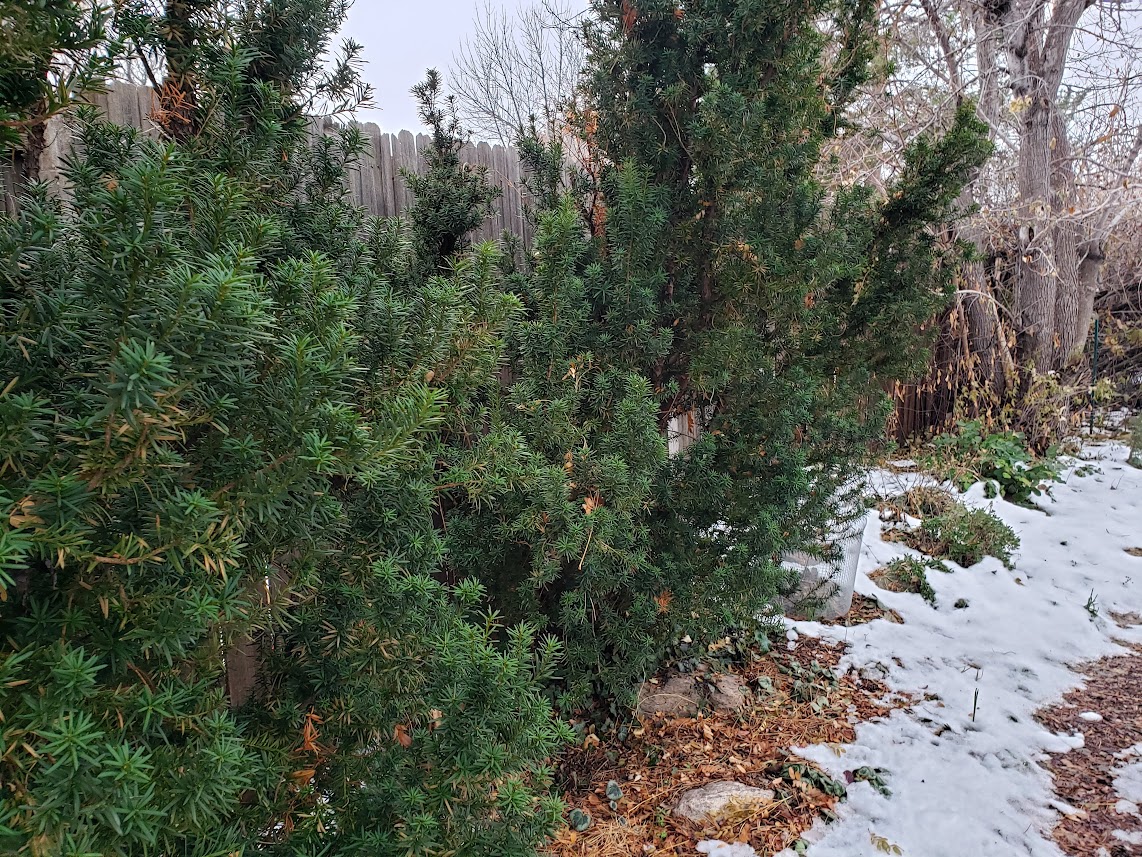
Saving the large yews for last, the guy I live with is at once very fond of these yews, and at the same time often overlooks them, which is a bit strange.
These are “Hicks” yews (Taxus × media ‘Hicksii’), which are a cross between Taxus baccata and the Japanese T. cuspidata. Red cones are produced every few years, and sometimes there’s damage to the branches on the south side, after a harsh winter, because of our intense sunlight.
 The guy I live with says these are “delightfully somber”, especially in the fog, and wishes there were more. He did plant another one, some years ago, but it died because the yew was rootbound and the “super genius” method hasn’t occurred to him yet. Yews have very serious roots.
Most of the cyclamen here are growing at the base of the yews, and then extending all the way to the maple in the background.
That’s all I have for today. I hope you enjoyed the slightly foggy tour around the garden.
Until next time, then.






 the miserable gardener