
I wrote an article about some western native plants years ago, for a national magazine, and the editor wanted me to add a sidebar telling the readers how to grow these plants in Vermont. I had a very difficult time wording a reply that was polite but at the same time indicated that I could not care less.
I’ve seen Vermont, across the water on Lake Champlain, when my paternal grandparents took us on a drive up to Fort Ticonderoga (saw the pencil factory too) in 1958. I order from the country store there, know it looks beautiful from photographs I’ve seen, and I hear it’s a progressive state. That’s all I know. Oh, the Green Mountain Boys, Ethan Allen, and the fact that it was once an independent republic.
The only climates I know are Southern California (dry in summer, rainy in winter) and here (so dry all the time they have to include snow in the precipitation amounts in order to make it not look like a total desert.)
So what business would I have writing about gardening in a place I’ve only briefly seen? I hesitate to suggest that I never write about things of which I know nothing, since someone might point out that I’ve already made 75 posts doing just that. (I direct your attention to the late H. Allen Smith’s How To Write Without Knowing Nothing for an answer.)
Anyway, I do have a point here, so I might as well get on with it. Not only do I know nothing about gardening climates that feature regular rainfall, I know absolutely nothing at all about the thing called “well-drained soil”. I don’t even know why anyone would want such a thing.
First off, plants need oxygen in the soil. Desert and semi-desert plants almost always grow in highly-oxygenated soils, and if you tried to grow them in the concrete that passes for soil in my front garden, and watered all the time the way people water lawns around here, the plants would suffocate. If you grew the same plants in a more porous soil, the plants would do fine, even grow bigger, but that doesn’t have anything to do with “drainage”, it has to do with aeration. Water doesn’t drain down infinitely deeply like to the planet’s core, it does stop somewhere, so aeration, not drainage, is the key.
Secondly, a lot of this drainage talk has to do with a thing called “winter wet”. (Getting even closer to the point, now.) I remember winter rain growing up in Long Beach, California, and we were in Manhattan in January once, and it rained.
In fifty one years of living in Denver I’ve seen rain in the winter maybe twice. This is a good thing, as far as I’m concerned.
At the Mother’s Day plant sale at DBG, there was a table of plants from California that Panayoti and Mike Bone had brought in. Almost all of those are in the garden here, now. Naturally. There were four or five species of Phlomis that looked like they were “rated” as hardy to Zone 9 or some such thing, and I have high hopes of them making it here.
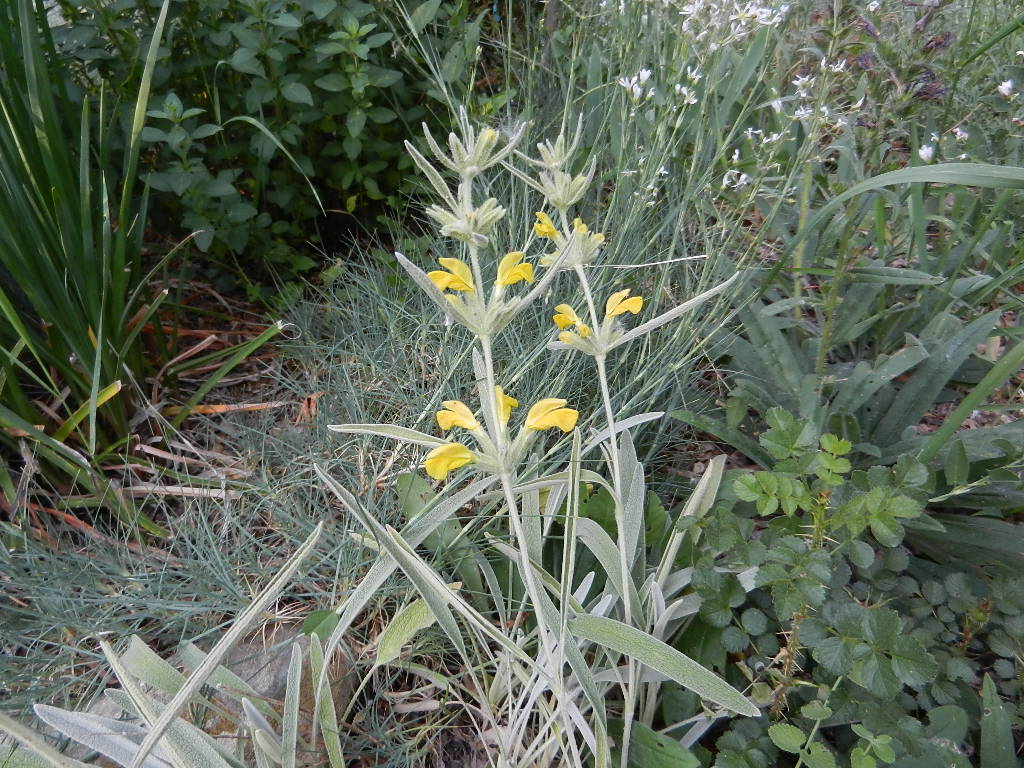
Phlomis armeniaca; a twenty year old plant
All because of the winter rain. (The point, finally.) Marginally hardy drought-tolerant plants can be successfully overwintered here if the soil is dry. Not “drained”, dry. The dry soil blocks the root hydraulic conductivity of the plant allowing it to simulate the same winter hardiness of plants that are adapted to cold by entering complete stasis in dormancy. (I’ve said this before, but it bears repeating.)
So there you are. From Vermont to phlomis, just like that. Here’s a picture, greener than it should be, of Phlomis fruticosa ‘Miss Grace’, that’s been in the garden for ages. In soil dry as a bone in winter.
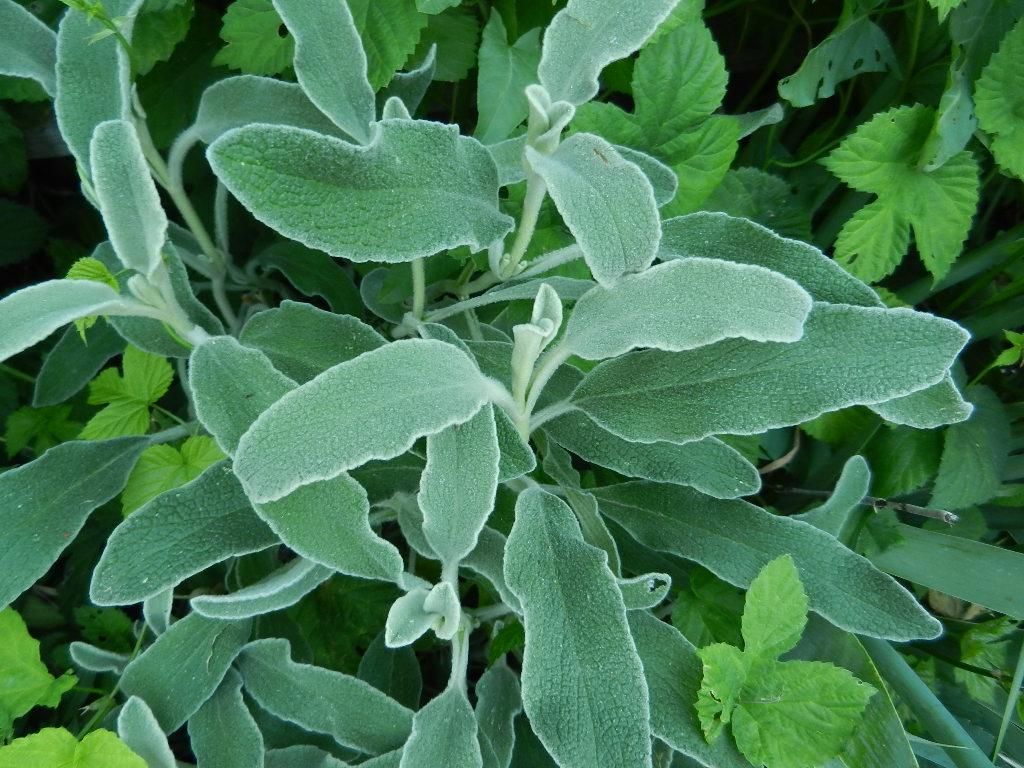
Phlomis fruticosa ‘Miss Grace’
 the miserable gardener