
When I was in high school I took a class in creative writing and one day we were asked to write an essay on a given topic, which was, “the process of living is the process of learning”. I thought this was the stupidest thing I’d ever heard, wrote a two-line essay saying as much, and got an F.
In fact, I learn something almost every second. Mostly they’re things I’d rather not know, but sometimes a real gem pops out of the dunghill, and those are the ones I feel like sharing.
So here it is. You may want to write this down.
No matter how many times you go out to look at newly seeded grass, it does not grow any faster.
And in fact, though it seems to me like nothing at all is happening, I realized just yesterday that I can see tiny blades of grass now, where a couple of days before there was just bare mulch.
The grass is, essentially, my new lawn, though I prefer to call it a “grassy sward”, since the word lawn carries so many negative connotations today. At least it seems to, in the world of garden writing and blogging. The grass is mostly blue grama, native and ‘Hachita’, with about ten other native grasses, and one non-native grass (Festuca mairei, which I find to be not terribly interesting, though I might change my mind later).
Here is last year’s bit of lawn. Blue grama, the fescue, and some other grasses.

The original point of having a lawn was something for the dogs to romp on, but now that there’s only one dog, who is much too spoiled to romp, or even drag himself outside to chase away squirrels and rabbits, I decided the time was right for a grassy sward. Almost, even, a meadow.
About ninety percent of what used to be the lawn is now mulch with tiny grass coming up, though there is a strip of old lawn bordering the new rock gardens, for the dog to use. It looks so ridiculous I won’t even take a picture of it.
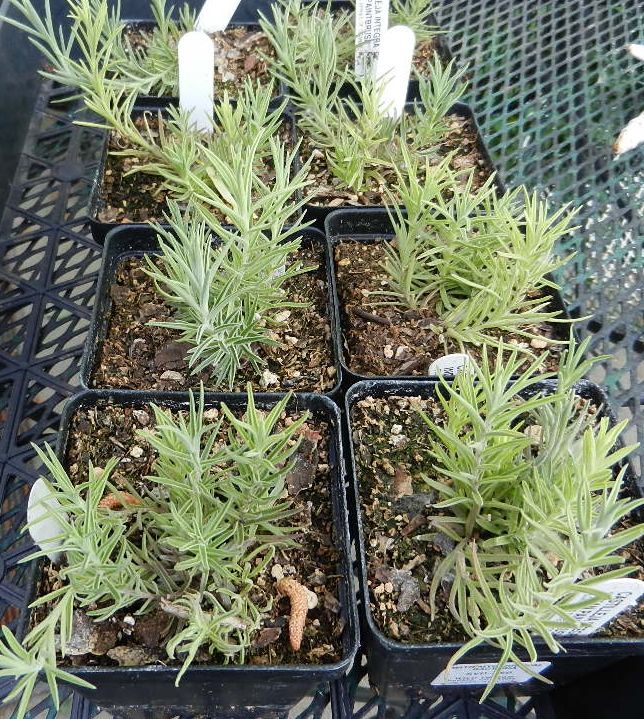
The beauty of blue grama is that, aside from the fact that it grows very quickly, only needs water once a month, no fertilizers or chemicals, and goes fully dormant in winter, it hosts cool things like the native paintbrush, Castilleja integra. The paintbrush is a hemiparasite; Artemisia frigida and even penstemons are said to work well as hosts. The paintbrushes can live without a host for a while, then they start to behave like me without coffee.

I bought a couple more paintbrushes yesterday to jam into empty places in the existing lawn. (This is my idea of a couple.) See, if you plant other things besides grass in this space, it can’t really be a lawn, since lawns are by definition nothing but grass. (I just made this up so I could try to make some sense of writing about my new grass and the paintbrushes.)
The new grass is growing right now. I think I can hear it, inching toward the heavens. Maybe I’ll go out, just to see.

 the miserable gardener