foresight, or lack of it

I got a mystery agave. It was pretty big, with the wrong label, and of uncertain hardiness. The thing is so attractive that my first thought of planting it out to see what might happen gave way to my second thought, that it could stay in a pot, and come outside when it was needed for decorative purposes.

Potting up large agaves, especially ones with more than their fair share of long spines, is not something you just go and do, it’s something you do almost in slow motion. Always aware of where you are in relation to those spines.

And since it was going into the intense sunlight at this elevation, with a third more ultraviolet than at sea level, it needed a little protection from the sun for its first week or so outside. (I don’t know how long that takes; usually it takes one day longer than you think.) Even agaves, yuccas, etc., that come from nurseries in Tucson and Phoenix will fry in Denver’s sun if they don’t get time to adjust to it. I usually just spray the plants with CloudCover (seems to work), and plant them, or build a little tent out of shade cloth and bamboo stakes, but this time I thought burlap would be a good idea.

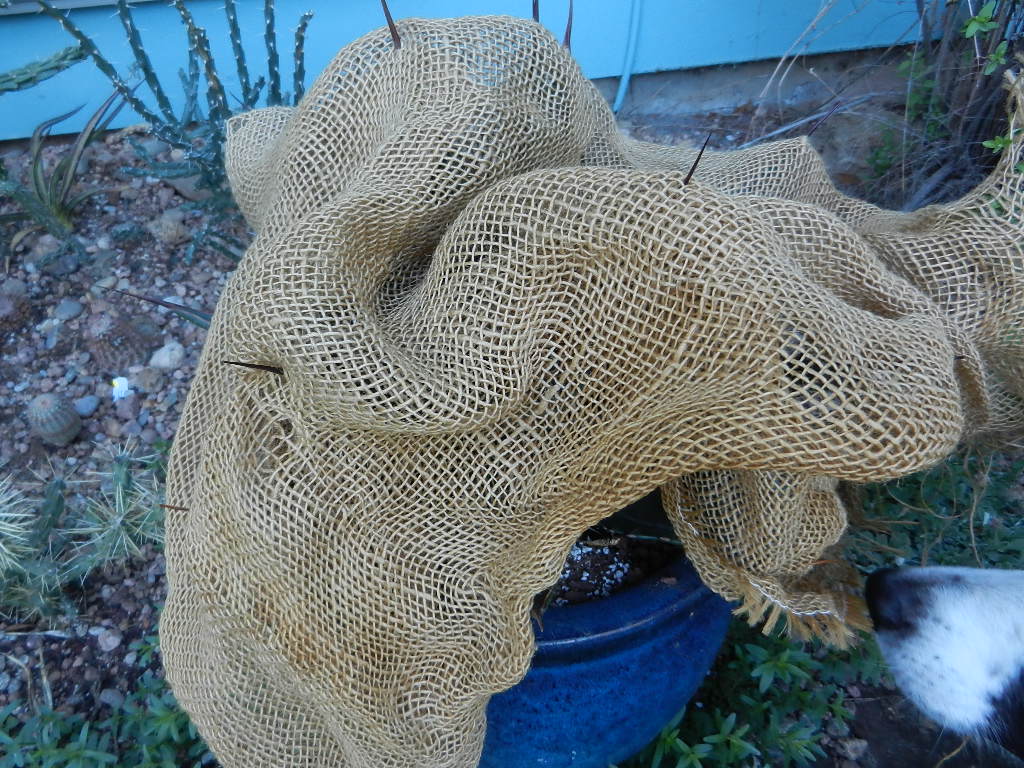
Well, the burlap is on, as is evident. Removing it will be a different story.
Posted in Uncategorized | Comments Off on foresight, or lack of it

trust me, this works

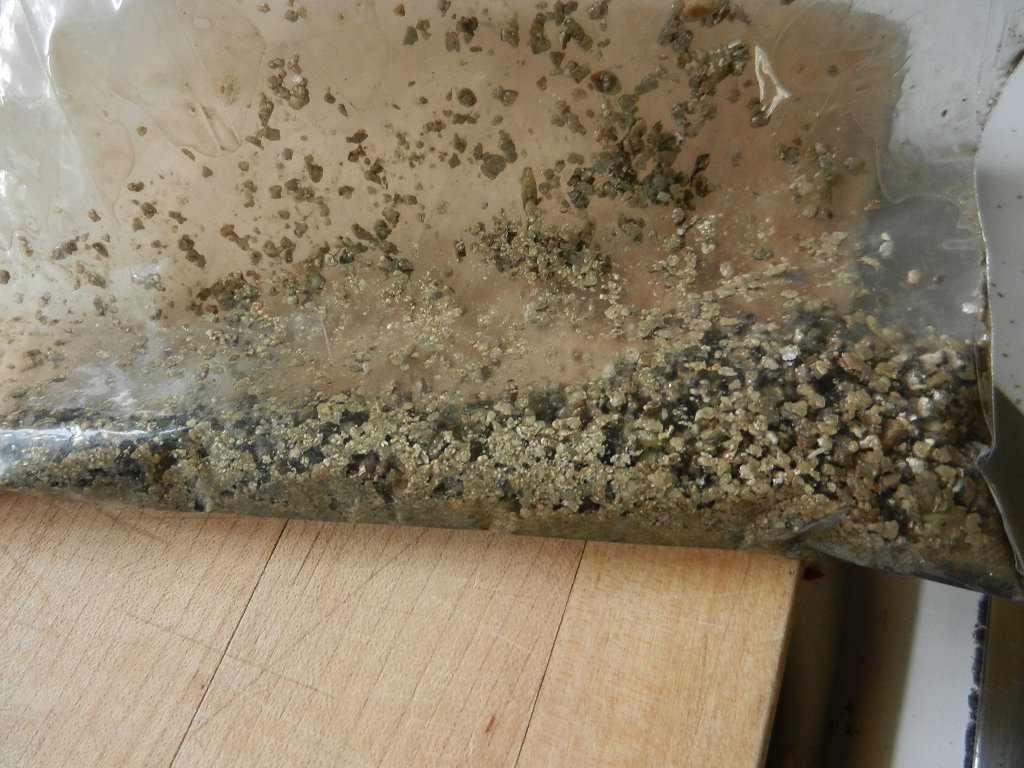
Found this baggie in the crisper drawer in the fridge. (I knew it was there.)

Very attractive. I know not to put it into a stir fry because it’s labeled “nuttallii white”, as in Calochortus nuttallii.  There are seeds in there, along with some pretty damp vermiculite and some Bordeaux mixture to keep it from turning into something from The X Files.

In her book on calochortus, Mary Gerritsen writes “The enzyme that degrades abscisic acid is activated by cold temperatures. It takes about four weeks at 4 degrees C [about 39 F] to activate this enzyme and degrade all the abscisic acid in the embryo.”

This prevents cold-hardy species from germinating at the wrong time. One thing to note here is that when people say that once seeds have fully imbibed (taken up water) they must not be frozen or they’ll die. Hearing that, you would wonder how seeds scattered from the plants in late summer or autumn make it through the winter.

The answer is simple. What people who say this really mean is that imbibed seeds should not be placed in the freezer. (Dry seeds are okay with this.) Freezers are much, much colder than actual soil temperatures, which in many cases don’t go below about +25F.

So it’s perfectly safe to sow seed of the cold-hardy species outside in the garden in autumn, just like would happen in real life. Best to label the area where you do that, though.

Now, back to the baggie. This is what you might call “controlled germination” instead of just sowing seeds with abandon, but there is a slight flaw in this plan. Can you see the seed? Nor can I. In fact, I have to scan each baggie every couple of days with a magnifying glass. If I see one seed germinated, I get excited, but not delirious. I wait one or two more days, and if a large percentage have germinated, then delirium sets in.

See, this works!

It’s at this point, unfortunately, where I have to be the most focused, because those little things (I guess they’re coleoptiles) are very, very fragile. I get some seed pots ready (filled with a mix of peat moss, perlite, and sand), make sure the mix is completely wet, tamped down (not level with the top of the pot), then fill the baggie with a little water and gently pour the vermiculite with the seeds onto the top of the pot, label it, and sprinkle a little sand on top of the pot.

Then they go under lights, in the laundry room, in a pan periodically filled with water, where they’re stay for at least a whole year.

Posted in Uncategorized | 1 Comment