antifreeze

Greetings and salutations, everyone; yes, once again it is I, Mani the purebred border collie, filling in for the guy I live with, and here today to talk about antifreeze–not the car kind, but the plant kind. You may remember me from such posts as “The Ghost In The Grapevine”, among so many, many others.

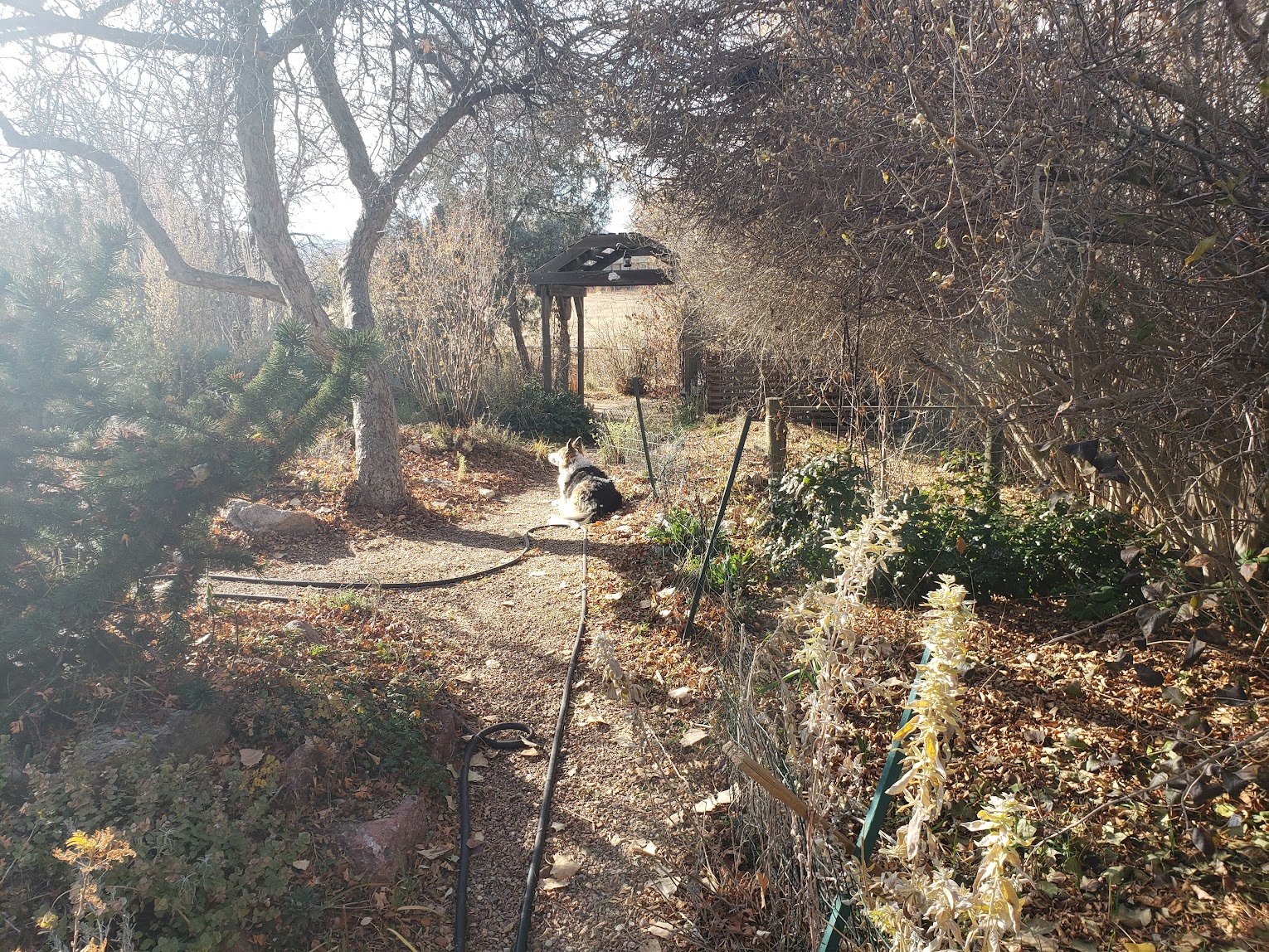
Here I am in a characteristic pose.
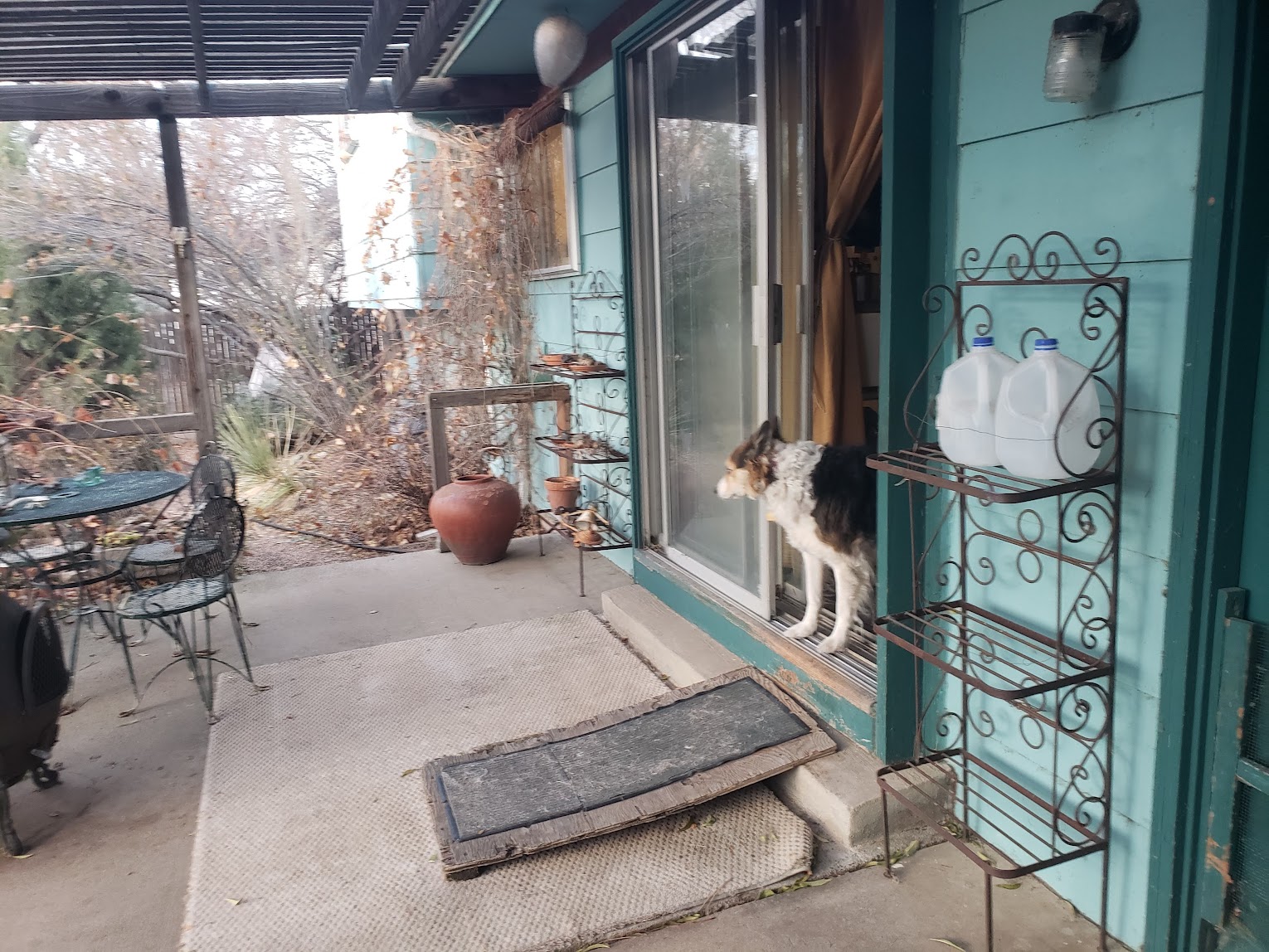
It was nice and sunny today, but last night it kind of froze. There was ice in the bird bath, anyway.
The other day, the guy I live with noticed that the pinyon in the front yard (Pinus edulis) had nuts.
He said he could sometimes find bags of these in Mexican groceries not very far from here, and that the roasted and salted nuts are very, very good.
You can also use these for making pesto.
I think he’s just going to leave these, since there aren’t very many. This may have been the first time these pines produced nuts.

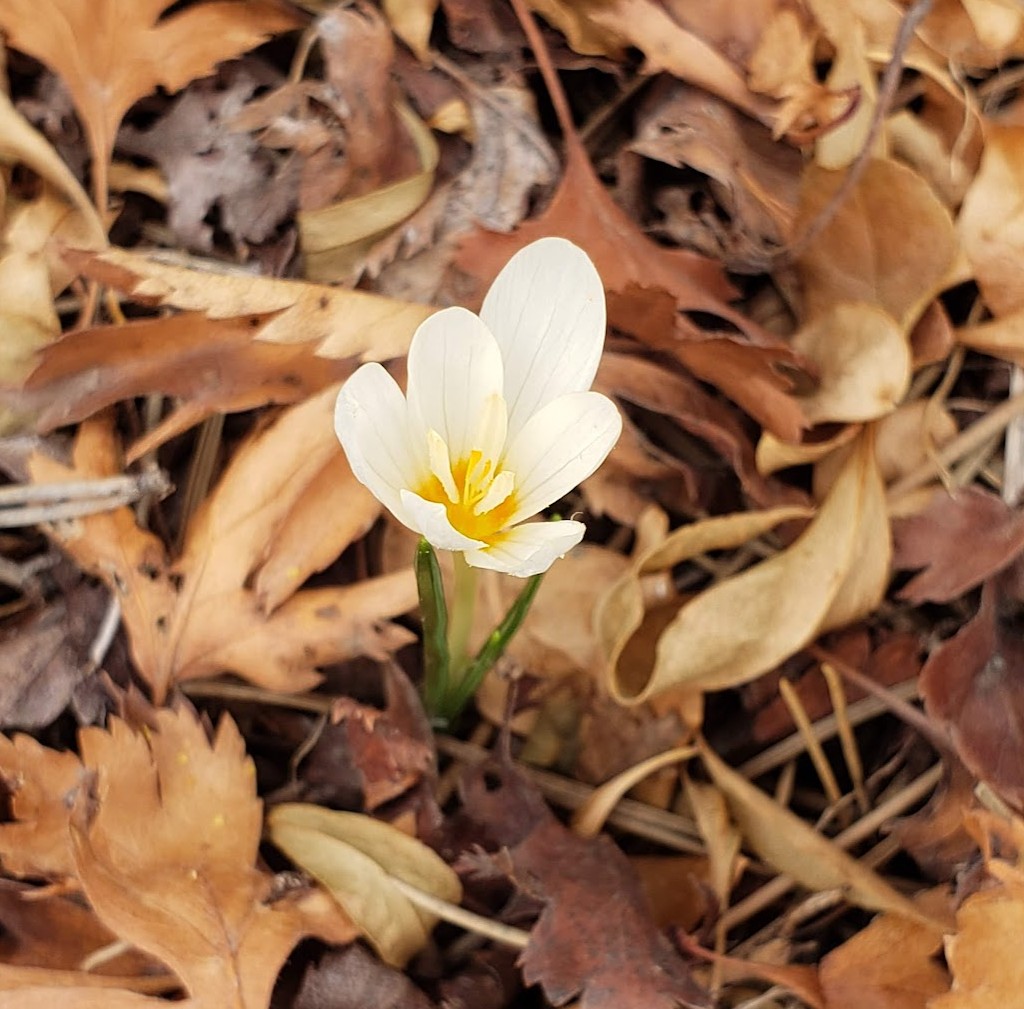
Of course there were crocuses in flower the other day.
This is Crocus oreocreticus. (The word oreocreticus is from the Greek oros, mountain, and creticus is Latin for Crete.)
It’s a member of the saffron crocus family.
This is the real saffron crocus, Crocus sativus (the commercial one, you might say; sativus means “cultivated”).
Those are crocus leaves behind the flower; you can tell by the white stripes.
The guy I live with forgot to collect the styles to get more saffron.

There were some Crocus speciosus still in flower, too.

Anyway, it kind of froze. I went around the garden to make sure things were okay.
So here we go.

The guy I live with saw a Facebook post showing Nerine bowdenii in flower, which it does now, and he asked the person when the leaves emerged. The answer was the following spring.
The guy I live with tried to grow this bulb many years ago, and it produced leaves just about this time of year, and of course the leaves froze and the bulbs died. He consulted a number of what he would call authoritative texts, and some said leaves over the winter, and others said leaves only in spring.
The plant is native to South Africa and a website from there said the plants are dormant in winter, so no leaves.
He said this was a complete mystery.

Plants with overwintering leaves in cold-winter climates manufacture “antifreeze” (sucrose, glucose, fructose) to prevent the water between the cells from expanding which would basically causing the plant to explode from freezing.
Lots of plants do this. Conifers do it, and in fact they can completely stop photosynthesis during cold winters. They just sit there; the pinyon pictured above can go eight months without photosynthesizing. They certainly don’t need to be watered; that should have been done before cold weather set in, since the manufacture of “antifreeze” is due to photosynthesis.
Basically any evergreen plant hardy in our cold winters makes “antifreeze”.  Otherwise they would die.
Hardy cactus do something different; they lose water and shrivel, and can’t take up water until the following spring.
(The guy I live with said I could include scientific references for all this, but I thought it would seem too pretentious. He also prefers the term “cryoprotective sugars” instead of “antifreeze”.)

Autumn-flowering crocuses with overwintering leaves manufacture “antifreeze”, and so do snowdrops.
Snowdrops are super-tough plants and are completely unfazed by being frozen.
This is Galanthus bursanus again, after being sort of frozen. (The leaves on the left are Lilium candidum, another plant that can deal with very cold temperatures; the leaves stay green all winter, though they may look a bit battered.)

I’m pretty sure that’s all I have for today.
The guy I live with said that the Big Scary Night was tomorrow (he has plenty of Kit Kats), but I’m so exhausted from all this antifreeze talk I may sleep through everything.

Until next time, then.

Posted in Uncategorized | 18 Comments

no classes for beginners

Greetings and salutations, everyone; yes, once again it I is, Mani the purebred border collie, filling in for the guy I live with, and here today to bring you yet another didactic post. You may remember me from such posts as “The Peony”, among so many, many others.

Here I am in a characteristic pose.
It was a pretty nice day, despite being depressingly, though not horrifyingly, dry.

The guy I live with did a tiny bit of work in the garden, being very careful about his back. One of the things he talked about was how there was very little precise information about things like planting bulbs. He said advice like “plant bulbs in well-drained soil” is beyond meaningless, since bulbs don’t grow in “well-drained soil” in real life; they grow mostly in clay soil, which is impenetrable to summer rain and protects the bulbs from drying out.
He said a more reasonable statement would be “If you live in an area with lots of summer rain, then you’re going to need to find a way to keep bulbs from getting too wet during their summer dormancy.”

So we were already off to a great start.

He said there’s very little precise information with some bulbs on which side is up. Tulips and daffodils are obvious, but some are not. Some even have no obvious “right side up”, like corydalis, but those are exceptions.
He got some bulbs of Brodiaea (or Triteleia) ‘Rudy’, and they were not super easy to tell which side was up, without looking very closely.
He did still plant some upside-down, but saw his mistake before he covered the corms with soil.

up

down

The guy I live said a lot of this was trial and error, also sometimes involving looking at bulbs with a 20X lens.
Some people say if you’re not sure which side is up to plant the bulbs on a slant, which he’s tried, with variable results.
“There are no classes for beginners in life”, he said, quoting Rilke.

With erythroniums, you plant them with the round end down, even if it looks like the roots are on the other end. (The guy I live with has planted erythroniums upside-down. They didn’t emerge the next spring.)

Just today, the guy I live with made a comment on Facebook  that the “saffron crocus” pictured on the post of a “garden influencer” were Crocus speciosus. He said to me that there was no wonder the “influencer” had never harvested saffron.
Crocus speciosus like these:
The picture below has been posted before. This is Crocus speciosus, a watercolor done by the guy I live with’s late wife when she was a member of the Guild of Natural Science Illustrators.
This hung in the Smithsonian for a while.
You can see in the lower left that the corm and cormlets (or cormels) have roots.

Since he’s been checking bulbs growing in pond baskets to make sure they have roots before winter sets in, he took these corms of Crocus laevigatus out of a basket.
You can see that new corms have emerged from the dry husk of last year’s corm, with flowering shoots. The species name laevigatus means “smooth”, referring to the smooth tunic on the corm, which is very appearent.
You can also see that something is missing. The energy of the emerging flowering shoot is going to be sapped if the corm can’t pull water from the soil via roots, so he replanted these and watered them thoroughly. Maybe we’ll check on them in a week.

I know it’s a surprise that the content of this post has turned to crocus, but here’s Crocus cartwrightianus again. The guy I live with thinks this is the selection called ‘Marcel.
And this is Crocus cartwrightianus ‘Halloween’ again.
Maybe not too much difference between the two, but ‘Halloween’ is always later by a week or two.

Here’s a Crocus mathewii, too. Another saffron crocus.

I think that brings today’s didactic post to an end. Just another day of the two of us not doing much, though I did get to chase a rabbit. That was highly enjoyable; I didn’t catch the rabbit if you were worried.

Until next time, then.

Posted in Uncategorized | 15 Comments